
Still need introduction for Launchings from Matt…
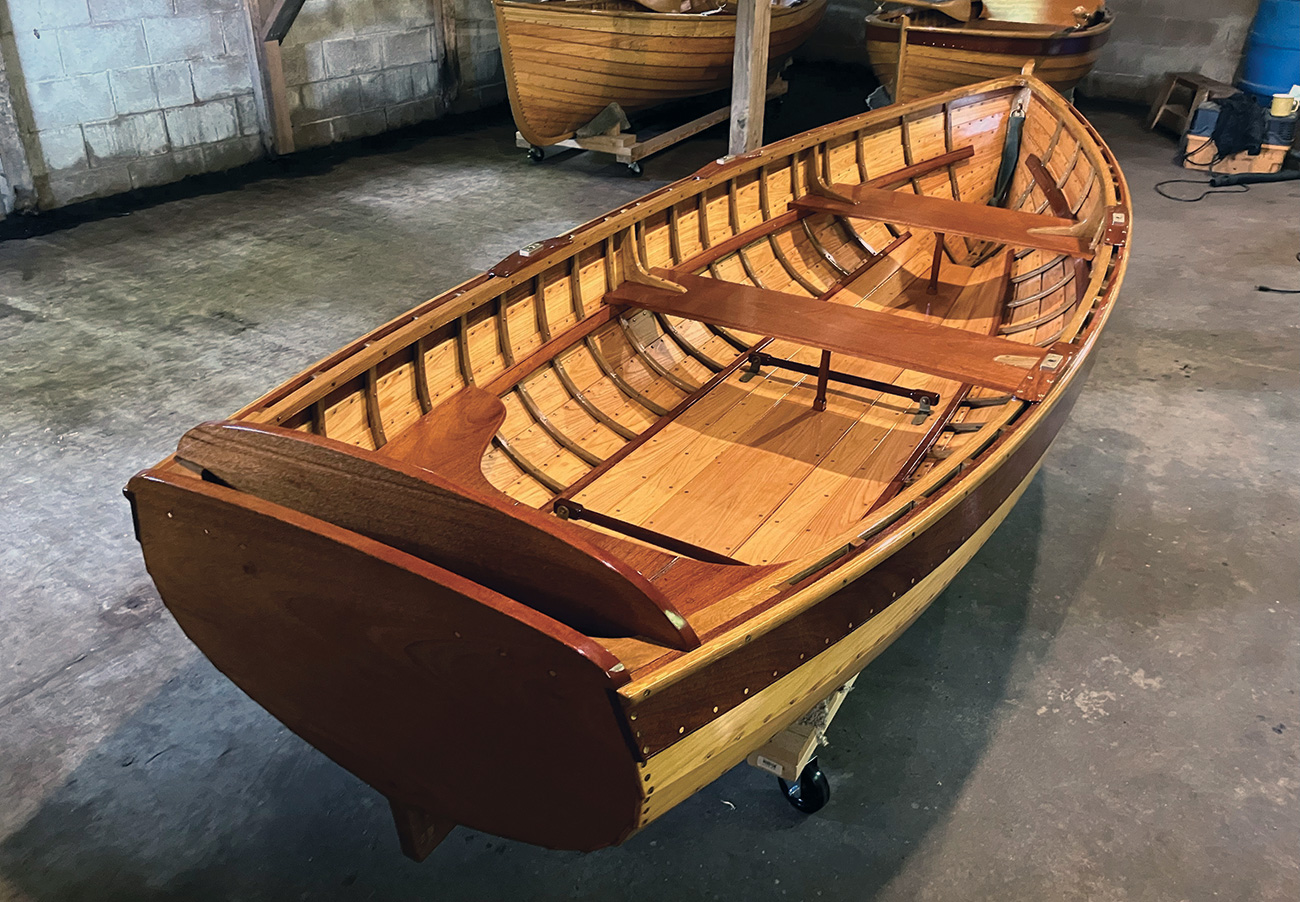
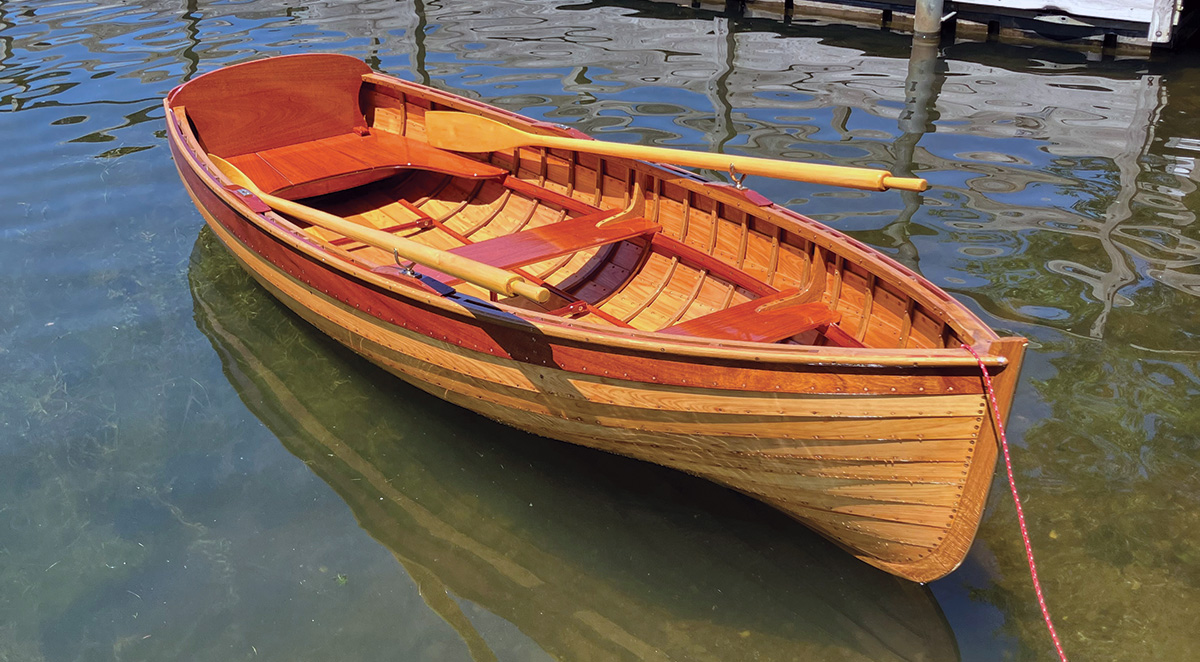
DAISY MAE
Photos by John Schellinger
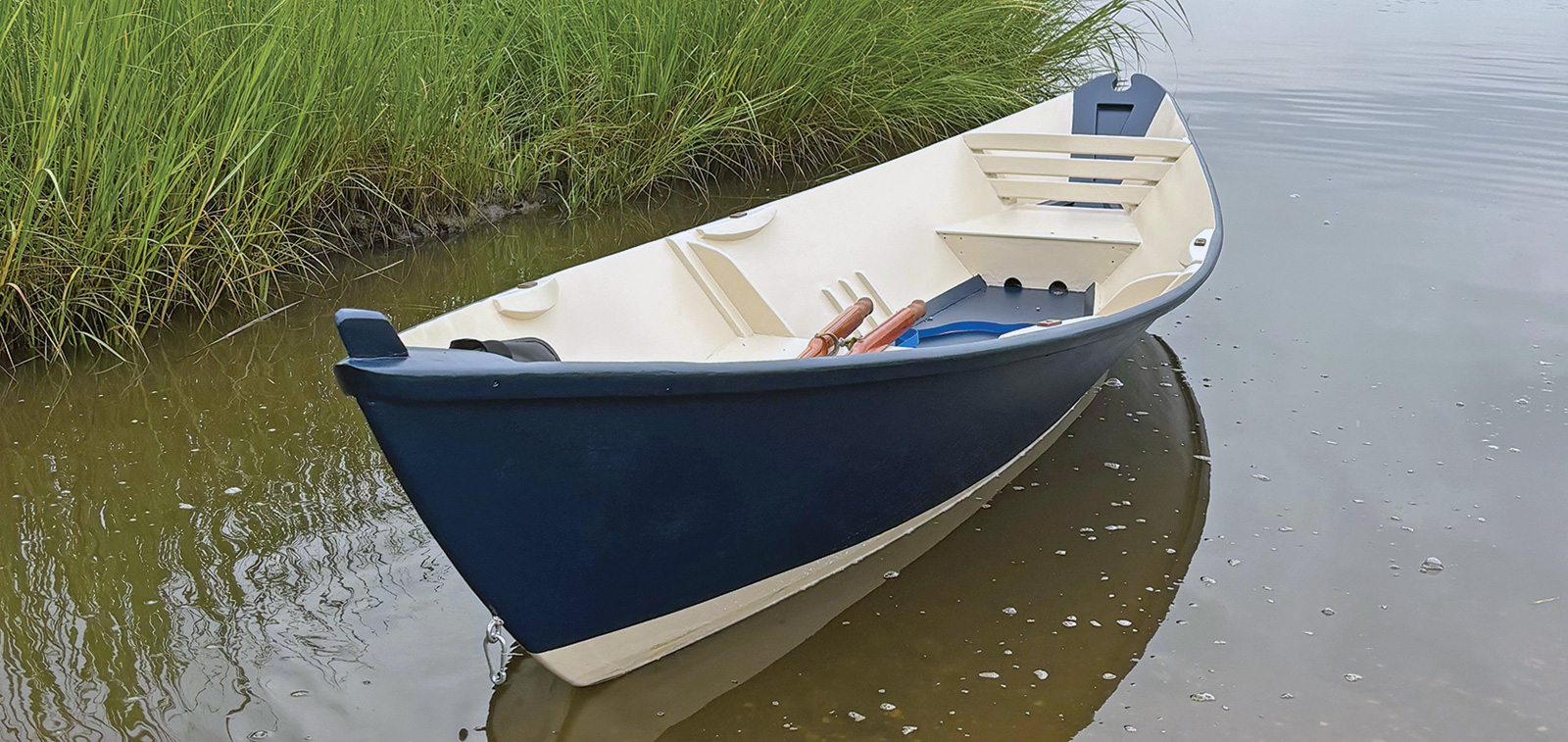
For the past 35 years, John Schellinger has nurtured a passion for traditionally built wooden skiffs. To date he has built 15 of them. The two Lawton tenders he built in 2022 and 2023 appeared in the Launchings section of WB No. 298 in 2024. His latest is an 11′2″ version of the 12′ Lawley yacht tender detailed in John Gardner’s Building Classic Small Craft, Volume 2. Schellinger, now a full-time cabinetmaker, builds his boats in his free time in what was once a hay loft in the barn near his home in Avon, Minnesota. The lower levels of the barn are where he keeps his woodworking machinery and the boats he has kept for himself. His Lawley tender has Atlantic white cedar planking and mahogany sheerstrakes on a white-oak backbone and steam-bent frames. Twenty months after he began the project, John launched DAISY MAE in July 2025 and rows her on the many lakes around Avon.
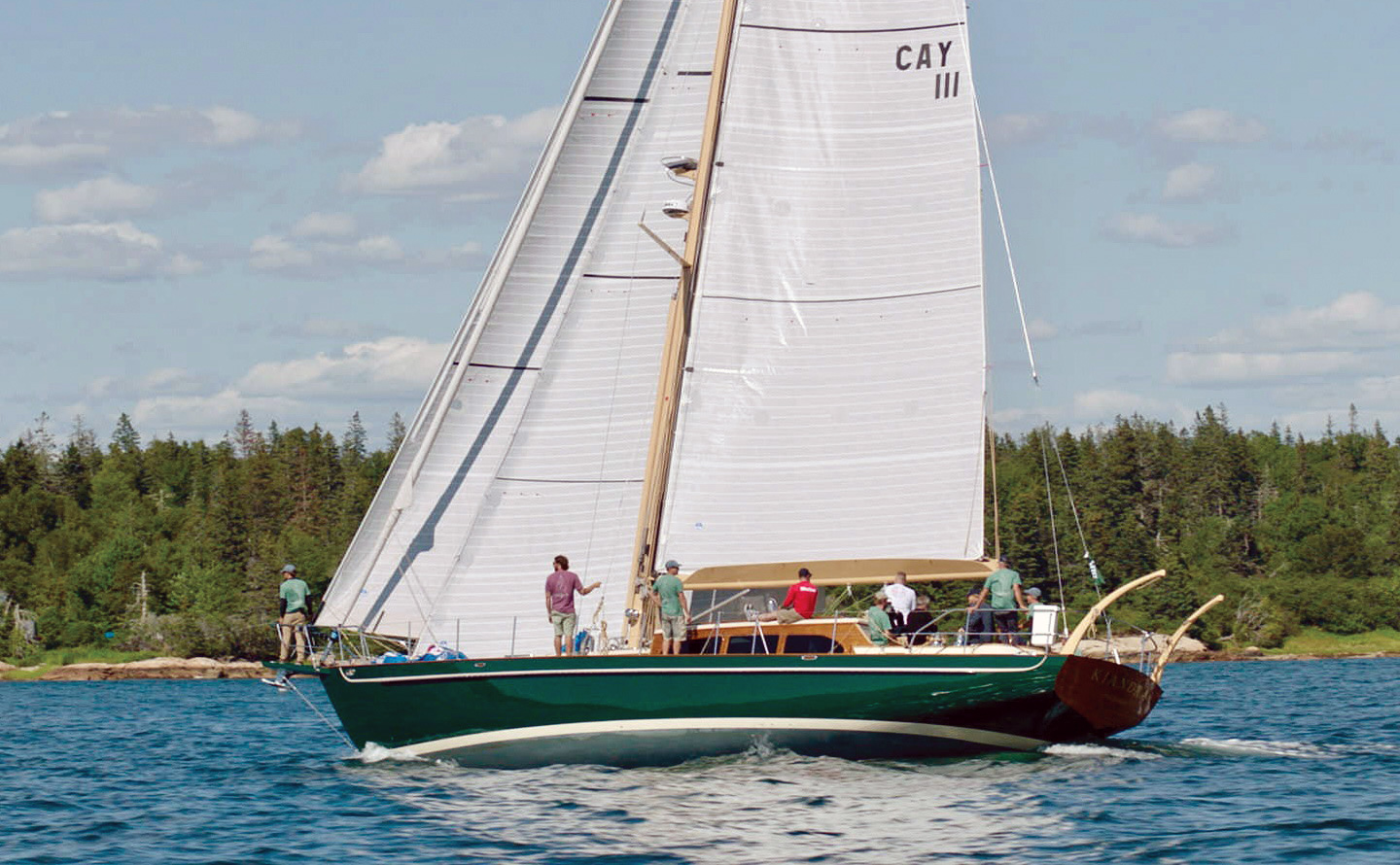
KIANDRA
Photo by Luke Lorentzen
In July 2025, Maine’s Brooklin Boat Yard launched KIANDRA, a 56′ by 15′9″ deckhouse cutter for offshore cruising. Designed by yacht designer Mark Fitzgerald of Thomaston, Maine, the boat is cold-molded using Douglas-fir and western red cedar with sipo, a durable and sustainable African hardwood, as the outer laminate. Construction began in April 2024 and concluded 15 months later. KIANDRA is designed for cruising in comfort rather than racing, equipped to be sailed by the owner’s family, and outfitted with a dive tank and surfboard to suit the family’s interests. KIANDRA will cruise the coasts of the United States and beyond.
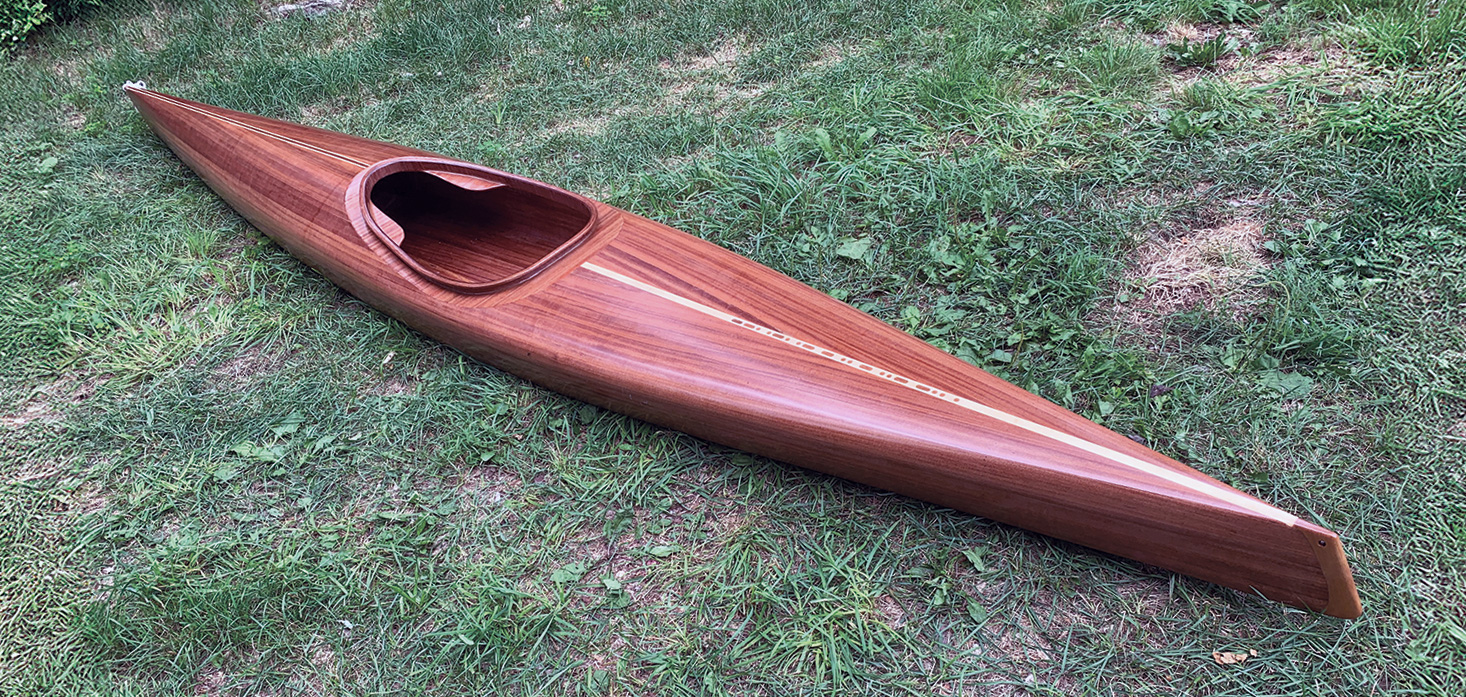
GRATITUDE
Photo by Christopher Warren
While Christopher Warren is busy in his West Simsbury, Connecticut, home workshop, he often feels grateful that he has the time, tools, and skills to build wooden boats. He enjoys his projects so much that he makes it a point not to keep track of the hours he spends on them. In July he finished his fifth boat, a 15′6″ Micro Bootlegger Sport Kayak designed by Nick Schade of Guillemot Kayaks. Working during winter 2024–25, he avoided having to open the shop door to rip the strip planking from 16′ mahogany boards by cutting a “mail slot” in the door. White pine and cherry provide accents to the cedar. Five months after beginning the build, he launched the kayak on Highland Lake in Winsted in June 2025. Contrasting inlays on the afterdeck spell out, in Morse-code dots and dashes, the kayak’s name: GRATITUDE.
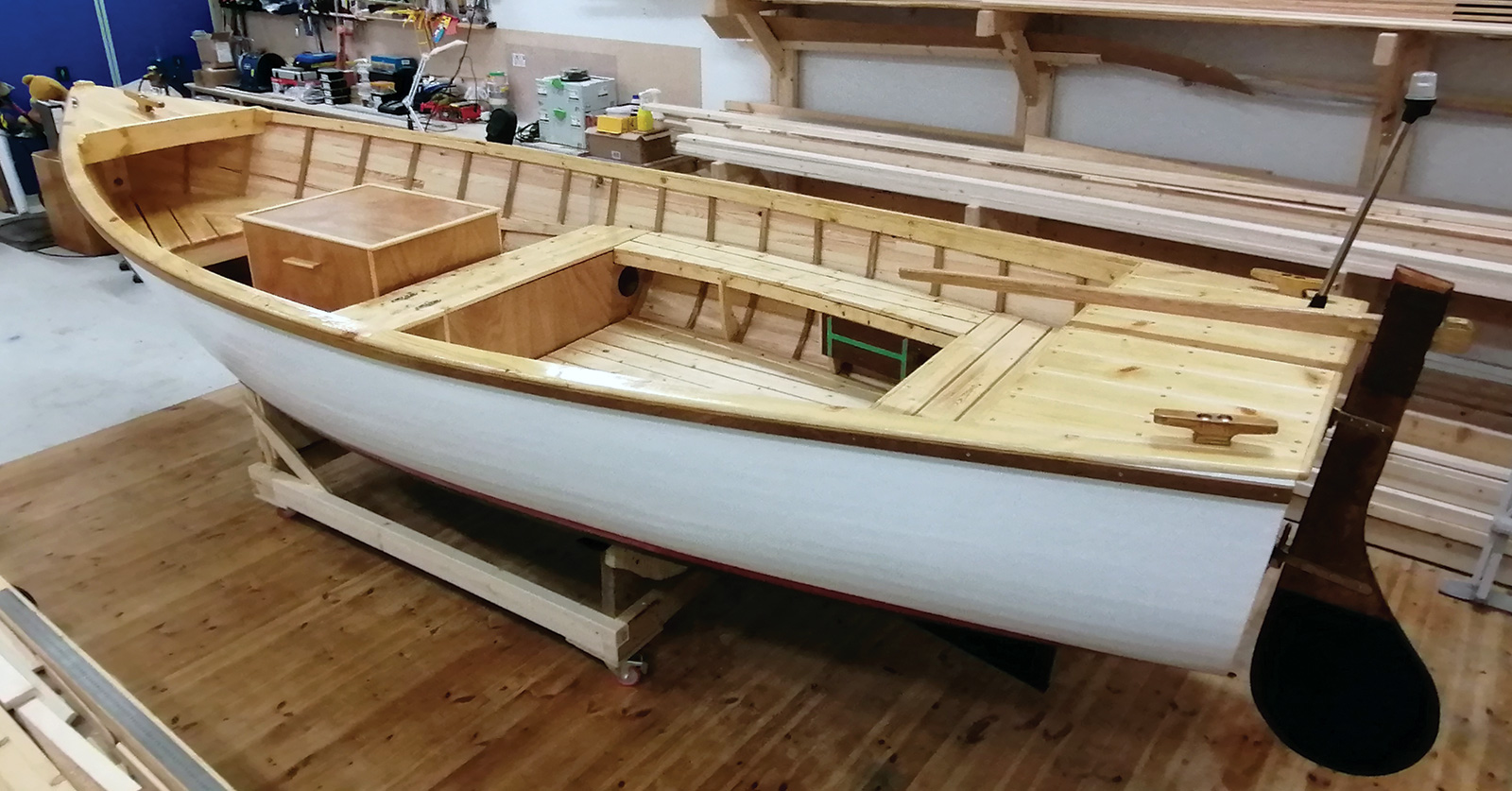
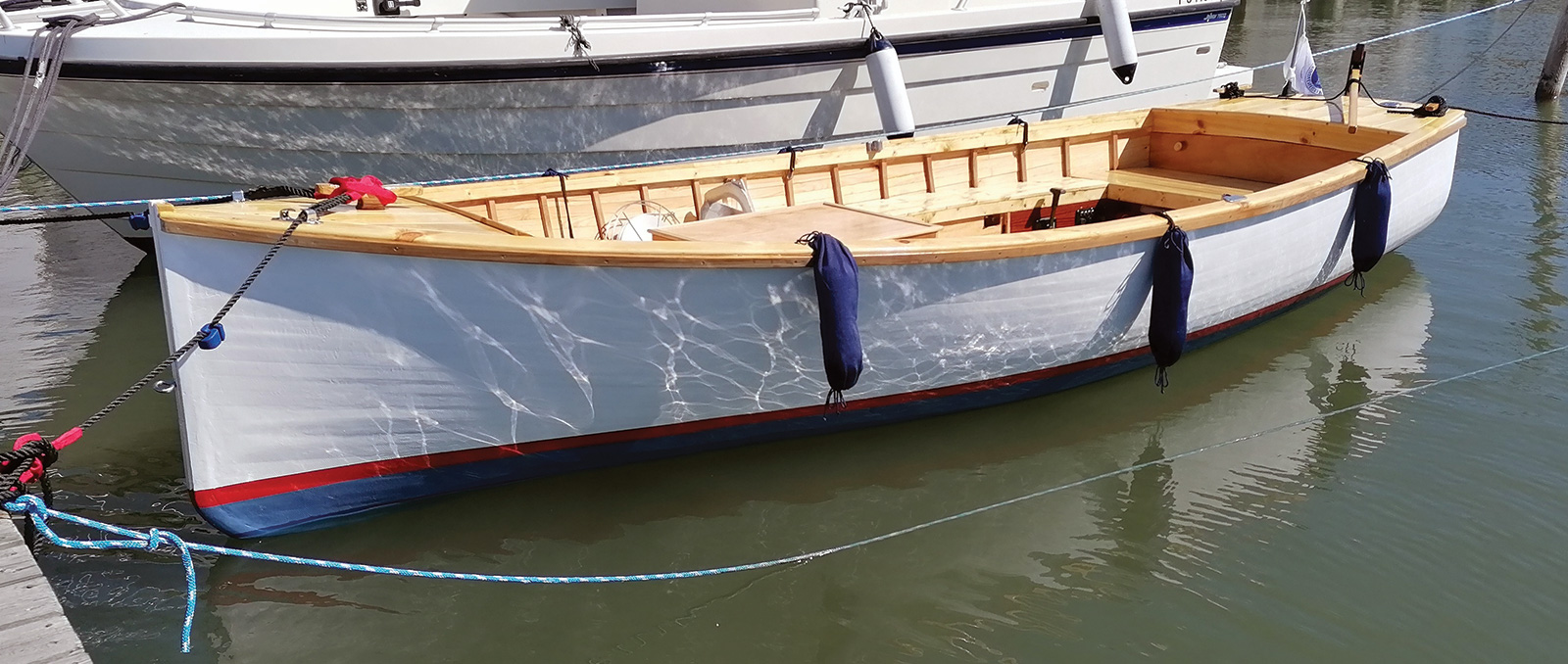
An inboard-powered craft called the Sirpale
Photos by Pekka Rautala
In spring 1905, an inboard-powered craft called the Sirpale appeared on Helsinki’s waters as one of Finland’s first mass-produced motorboats. The carvel-planked boat had been developed by journalist Eero Erkko and engineer Kosti Markoff while both of them were living in the United States. Upon their return to Finland, they established a boatyard in Helsinki, which had brisk sales of the Sirpale from 1906 to 1907. The company quickly prospered and grew, becoming the Helsinki Motor Factory, but a fire in 1907 ended operations. The plans for the Sirpale were lost and no original boats survived. In 2023, inspired by the boat’s place in history, enthusiasts began building a replica using new plans derived from images in period advertisements. Constructed from pine strip planks like the original, the hull was ’glass-and-epoxy sheathed. The replica was completed in October 2024 and later fitted with a modern single-cylinder diesel engine. The new Sirpale was launched in Uusikaupunki on the southwest coast in May 2025, returning a historic Finnish motorboat to the water.
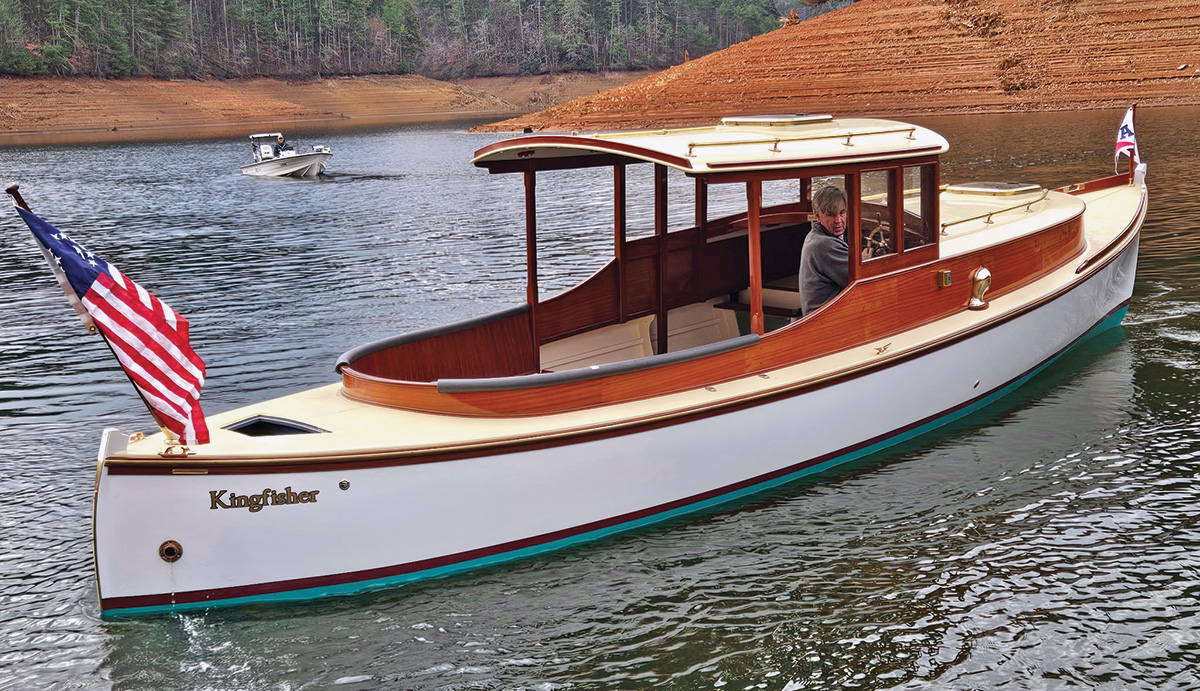
KINGFISHER
Photos by Bruce Mierke
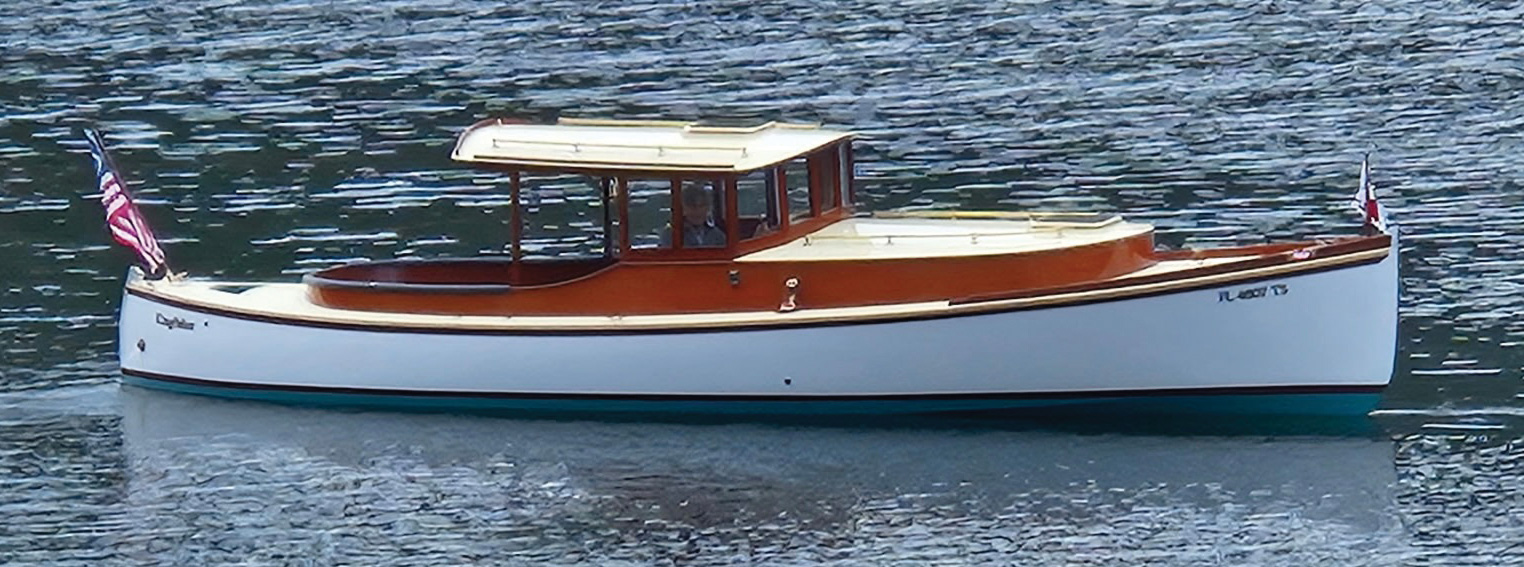
As Michael Matheson tells it, “I own a two-man boatshop in North Carolina, and the other man knows what he is doing.” That other man is boatbuilder Bruce Mierke. The two have been working together for 37 years, and Bruce has built four boats for Michael and his wife, Ann: a 42′ Joel White cruising launch, a 28′ Devlin Surf Scoter, a 34′ Devlin cruising garvey, and most recently this 29′10″ Aroha Coastal Launch designed in a collaboration between Peter Sewell, Brooklin Boat Yard, and Off Center Harbor. Construction of the launch began with a kit produced by Off Center Harbor, which included precut plywood for the frames, bulkheads, building jig, and several other structural parts. The skin is composed of three layers of meranti plywood sheathed in fiberglass and a 38-hp diesel provides power. After a build that spanned five years, KINGFISHER was launched in November 2025 and now serves the Mathesons as a day boat on Florida’s St. Johns River.
DYNA
Photo by Debra Volante
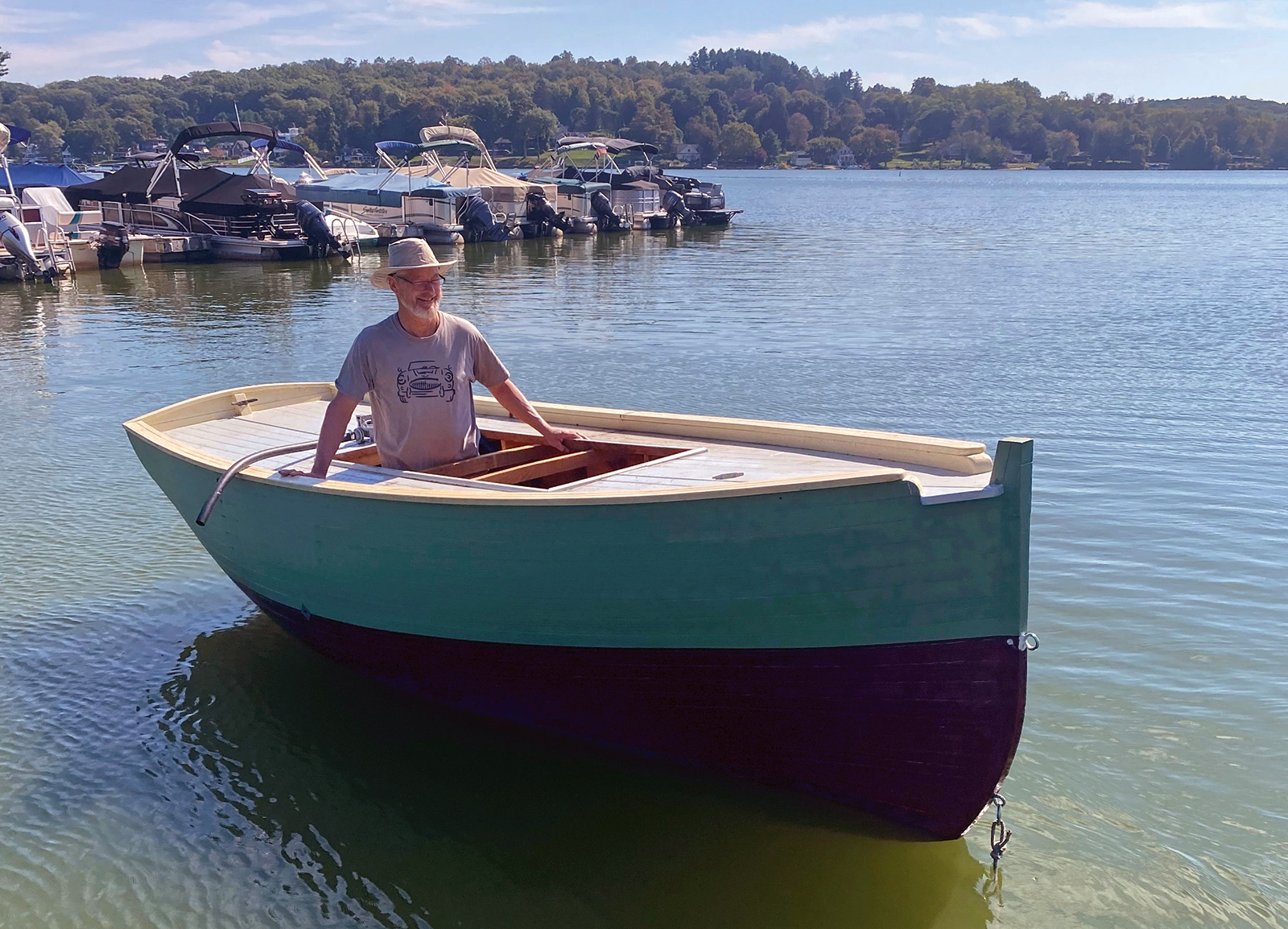
In 2018, Guy Gabrielson of Woodbury, Connecticut, set out to learn how to build a boat. His approach was decidedly old-school, quite likely influenced by TIRZA, his Wianno Senior, hull No. 7, a 25′ gaff-rigged sloop built in 1914. The book he chose as his boatbuilding primer was C.P. Kunhardt’s Small Yachts, Their Design and Construction, first published in 1885. In a 1985 reprint, WoodenBoat’s founder, Jon Wilson, noted the book “marked the beginning of serious yacht design in this country.” Guy chose Kunhardt’s drawing of DUECE, a yawl small enough for singlehanding, and lofted the lines of the hull, shortened from 17′ to 14′, on the floor of his barn. Favoring a single mast, he chose a cutter rig. With a beam of 5′ and a draft of 3′, her displacement is an impressive 3,200 lbs. After completing the hull—western red cedar on mahogany frames and a Douglas-fir backbone—Guy launched DYNA on a local lake in September 2025. Guy’s study continues in 2026 with the addition of the rudder and sailing rig.
CAPTAIN GIGI
Photos by Valerie Bittner
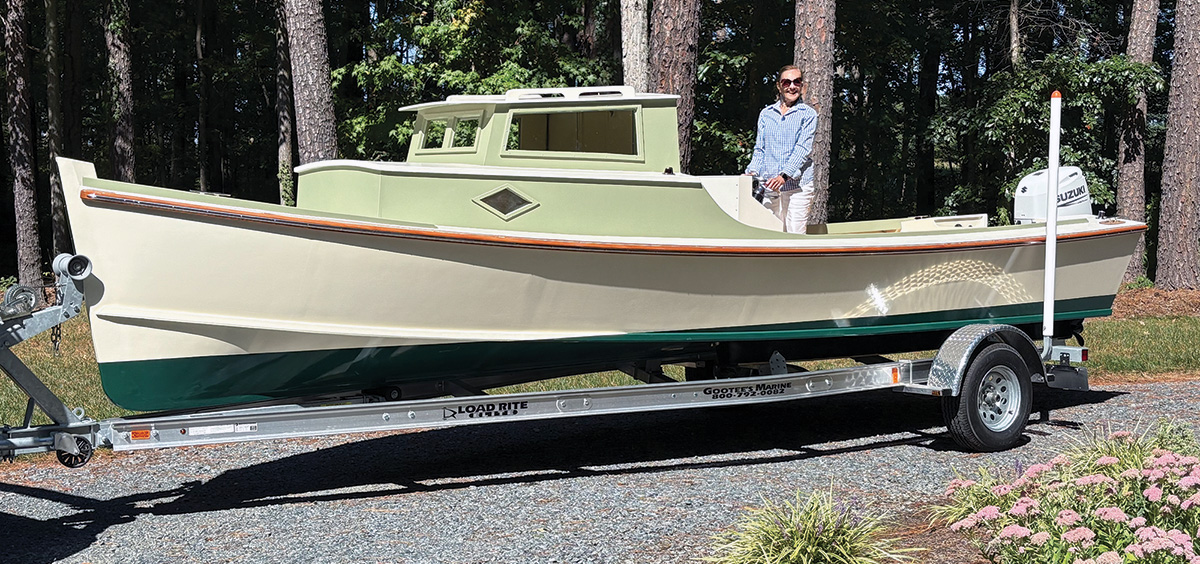
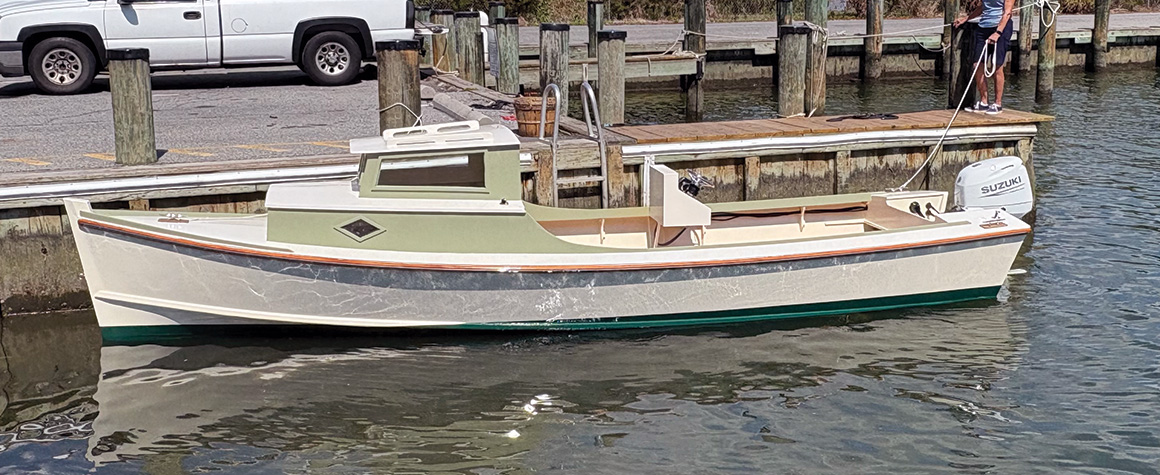
When David and Valerie Bittner built their house in Royal Oak, Maryland, they also built a shop for building boats. They had owned and operated large commercial wooden boats—a ferry and an excursion boat, both 65′—and had a 65′ steel ferry built, but the shop was for building smaller boats for their family. They have produced three kayaks and one 10′ and three 12′ outboard skiffs; most recently they built a Point Comfort 23 for their daughter, Gretchen “Gigi” Bittner Looney. Designed by Doug Hylan, the 23-footer is modeled after traditional Chesapeake Bay workboats but has a plywood hull on Douglas-fir framing and is powered by a 50-hp outboard. The launching took place in September 2025 in Bellevue, on the Tred Avon River, and the boat was christened CAPTAIN GIGI after Gretchen, who earned her 100-ton captain’s license when she was just 19.
TENDER MARGARET
Photos by Mark Condon
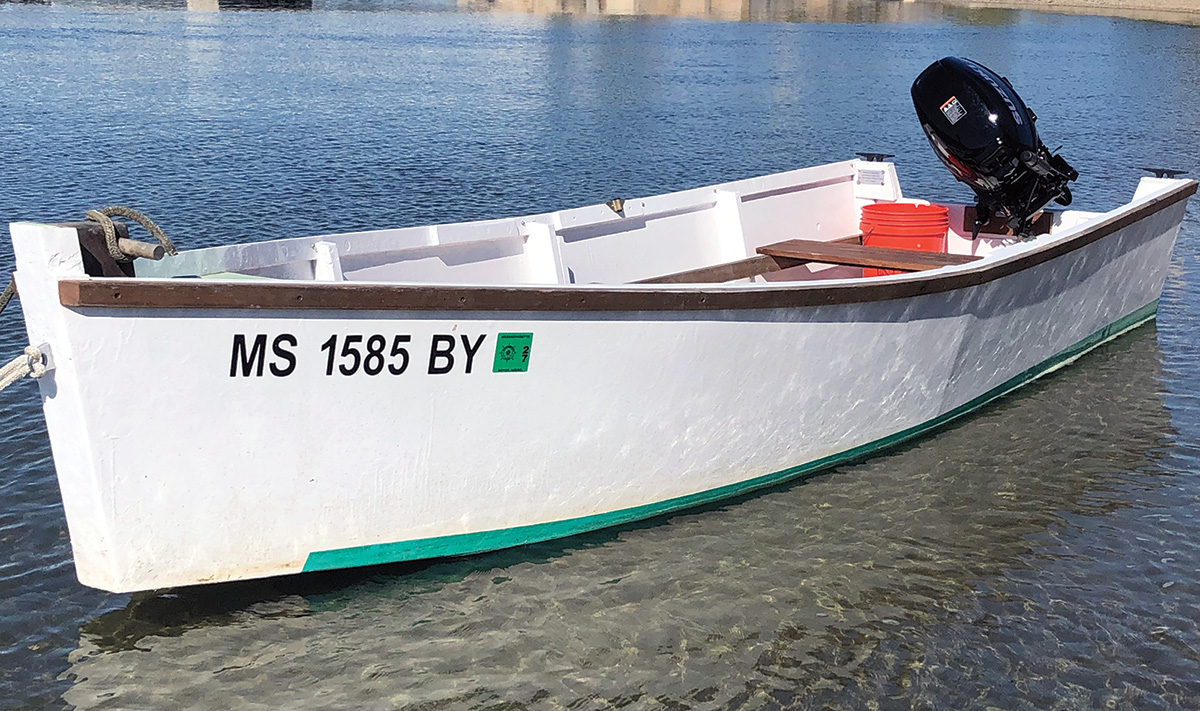
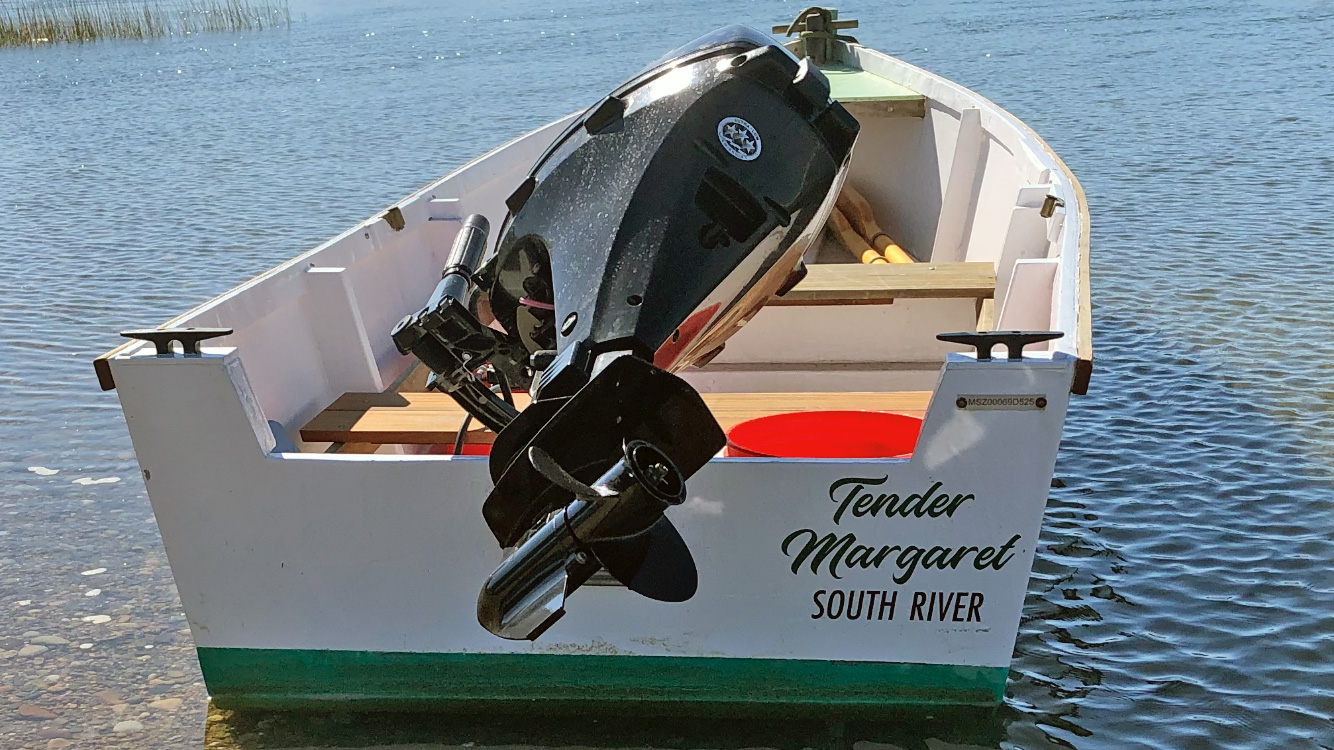
After building four dories and a dinghy to plans that he’d bought, Mark Condon, a retired scuba-diving instructor living in Humarock, Massachusetts, decided to design a tender to get from his riverside home to one of his larger boats, which he keeps moored in deep water about 2 miles away. He decided on plywood planking and Douglas-fir framing for a hull 14′2″ long with a beam of 4′6″—a size that would fit in the back of his pickup truck for easy launching. He drew up a hull shape that would lend itself to rowing as well as outboard power and have the capacity to haul passengers and scuba gear to the larger boat for the diving outings he still enjoys. Mark and his wife, Margaret, began construction in December 2024 and launched the boat in May 2025, christening her TENDER MARGARET.
MISS PRIM
Photos by John Flowers
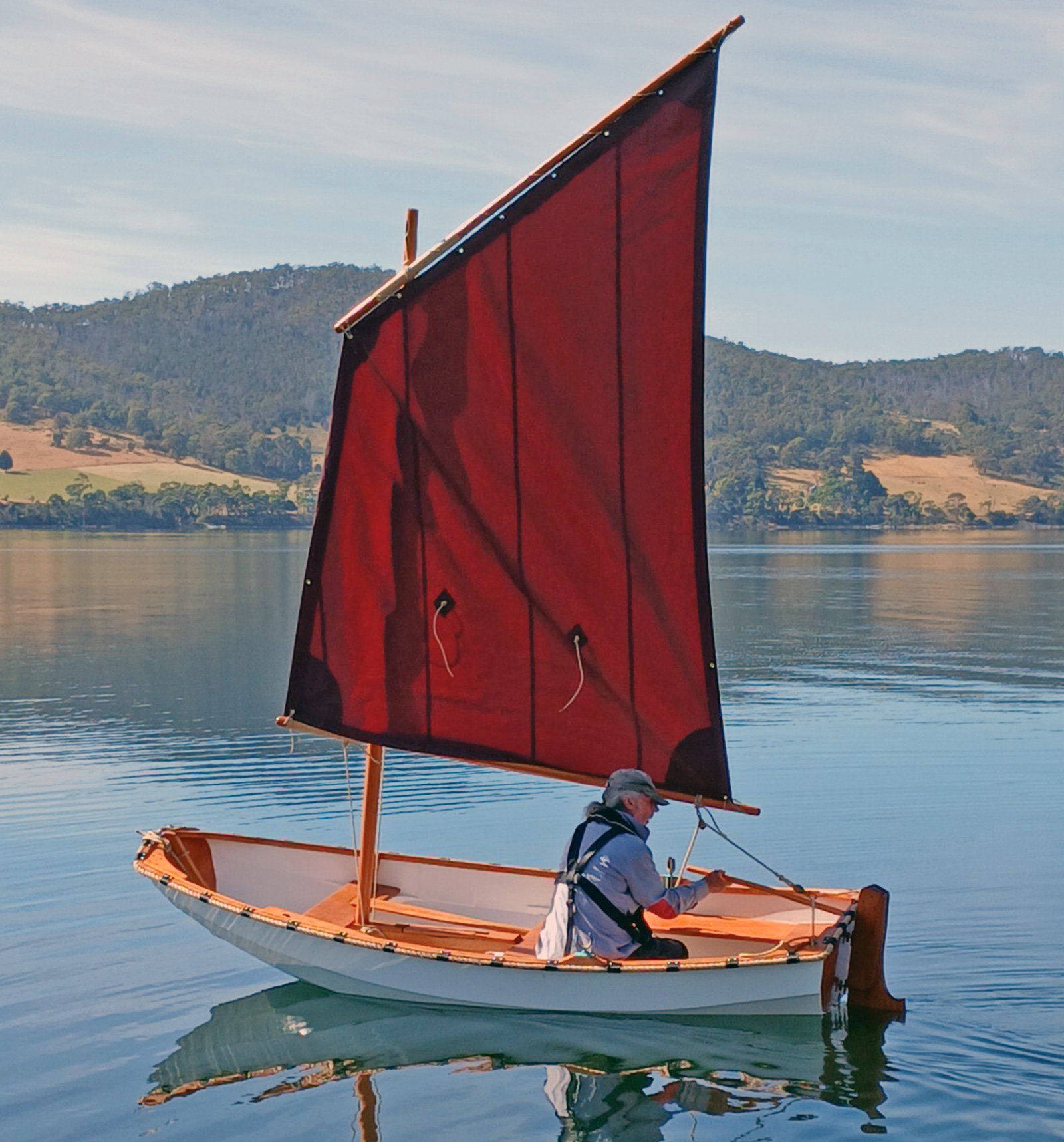
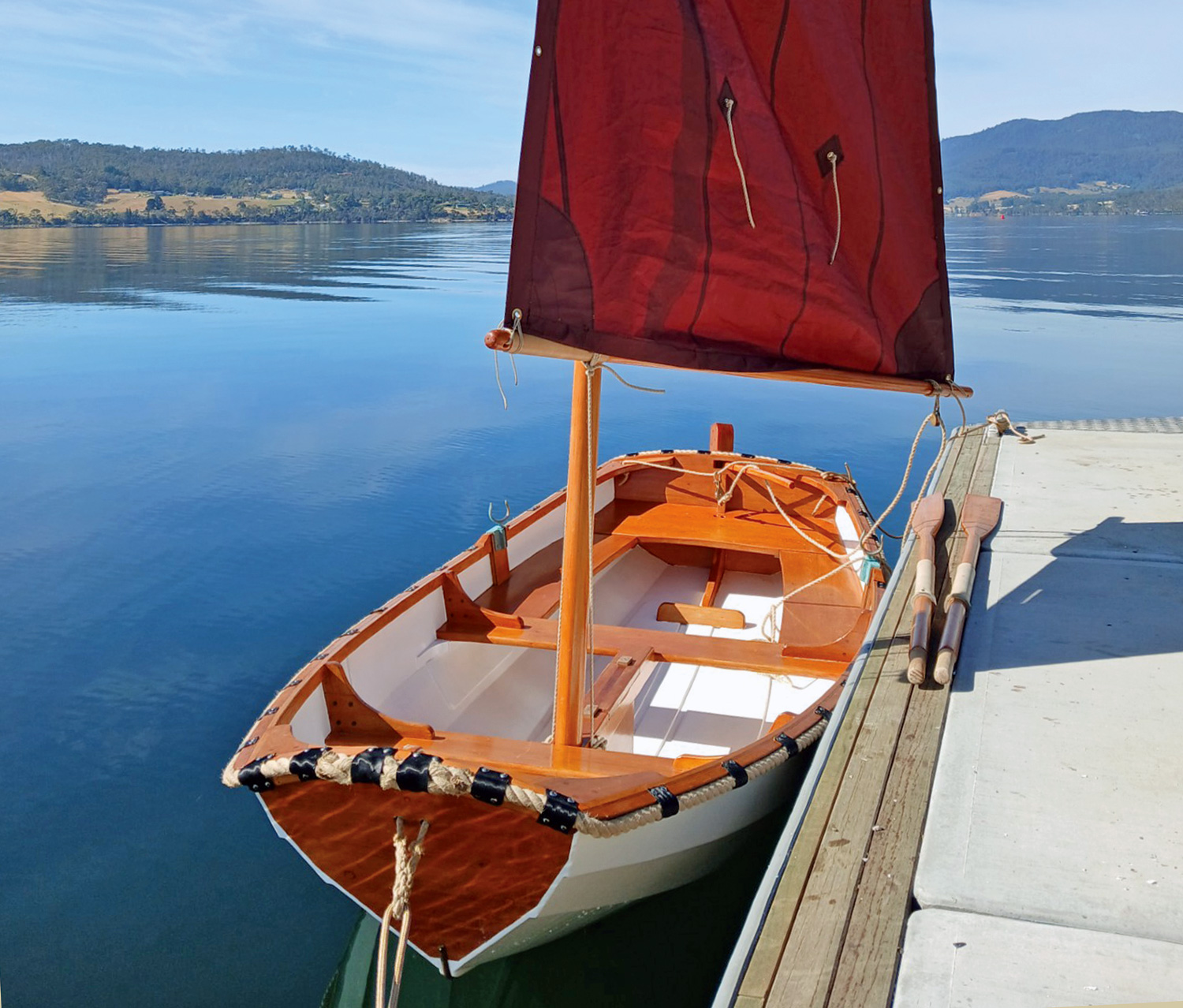
Brad Madigan counts himself lucky that he has friends who are skilled boatbuilders. Among them is Roger Harwood, a highly regarded builder of traditional wooden boats in Tasmania, Australia. Brad commissioned Roger to build an Iain Oughtred–designed Granny Pram. Work began on the 9′4″ by 4′ flat-bottomed lapstrake hull in September 2024, with Brad regularly lending a hand. The boat is planked with marine plywood and has transoms of King Billy pine. Late in the construction, while Brad was working on the interior, the boat fell off the strongback and slammed onto the concrete floor. The impact split a gunwale and some of the planking. Another friend, Tom Blue, who specializes in restoring and repairing wooden boats (usually after they’ve been finished and put into service), came to the rescue. MISS PRIM was put back to rights and launched on the Huon River in January 2026.
CHAPASQUAN
Photos by Ryan Mannion
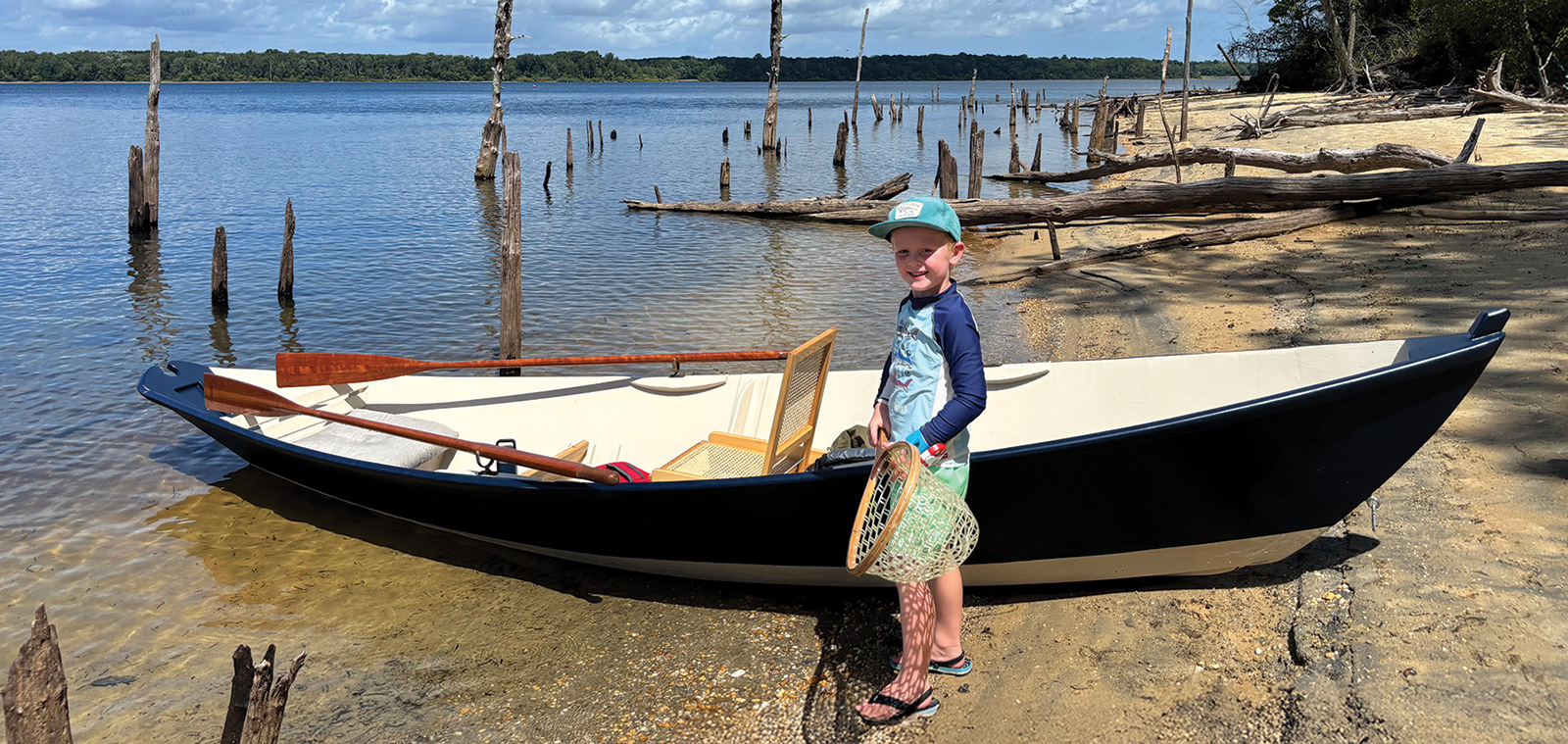
The apartment in New Haven, Connecticut, that Ryan Mannion moved to in 2012 was small, but it had one great advantage: easy access to New Haven Harbor. Inspired to take up rowing, he bought a 20-year-old Phil Bolger–designed Gloucester Light Dory from its builder in Fairfield. It was Ryan’s first proper rowing boat, and he was on the water at every opportunity. Most mornings before work, he rowed solo on Long Island Sound. When work took him to Washington, D.C., he couldn’t continue rowing and had to put the boat away under a tarp behind a boatshed at his family’s lake house in Pennsylvania. It stayed there for eight years, decaying. During the Covid-19 pandemic, Ryan moved to Manasquan, New Jersey, and retrieved the dory for a restoration he started in 2024. He stripped the boat back to bare plywood, made repairs to rot, and sheathed the hull in fiberglass cloth set in epoxy. He relaunched the dory in August 2025, christened it CHAPASQUAN, and now rows her on the local creeks and inlets, no longer alone but with his kids.
SNAFU II
Photos by Dr. Daniel Delvecchio (above) and Henry Churbuck (below)
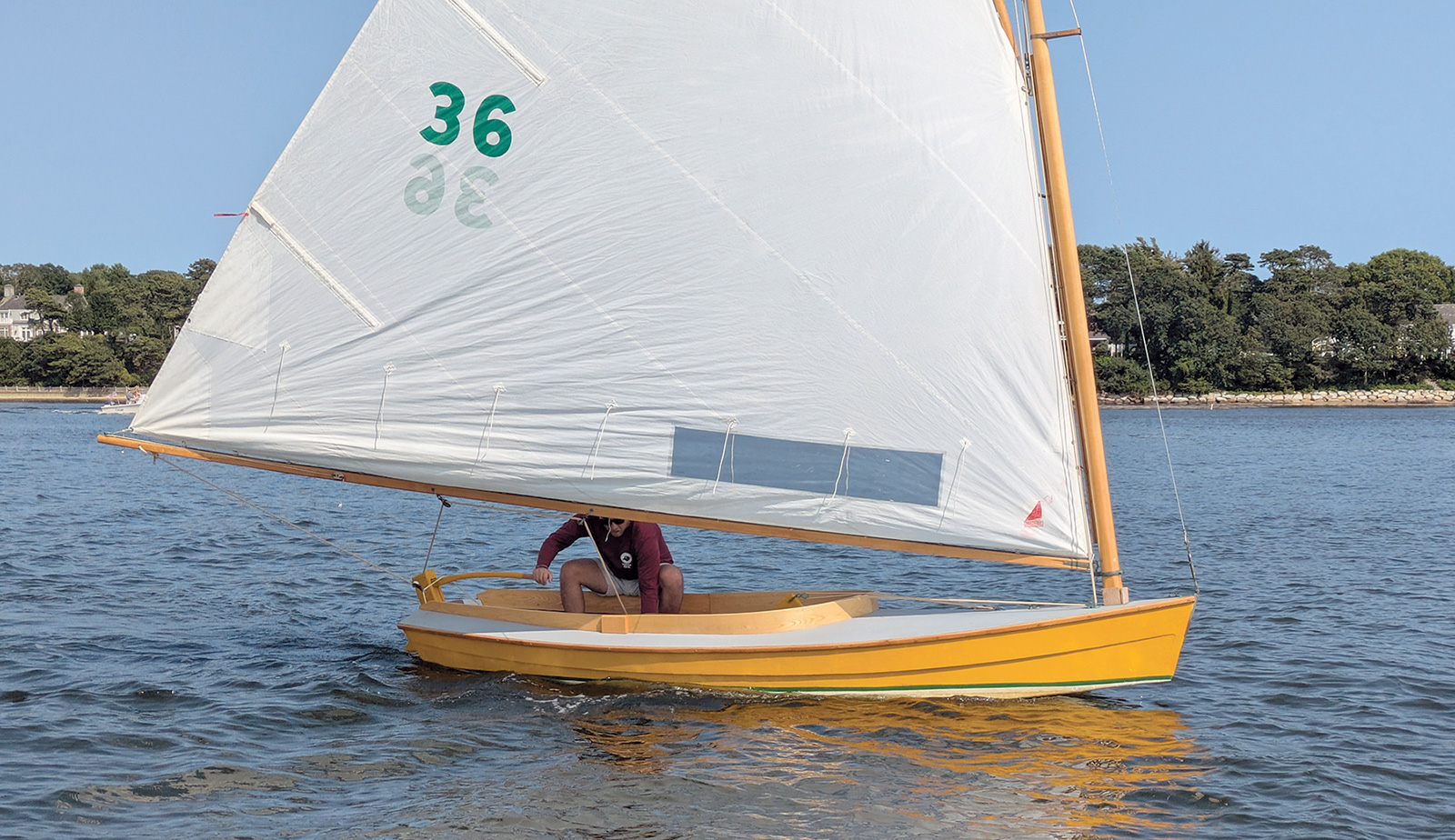
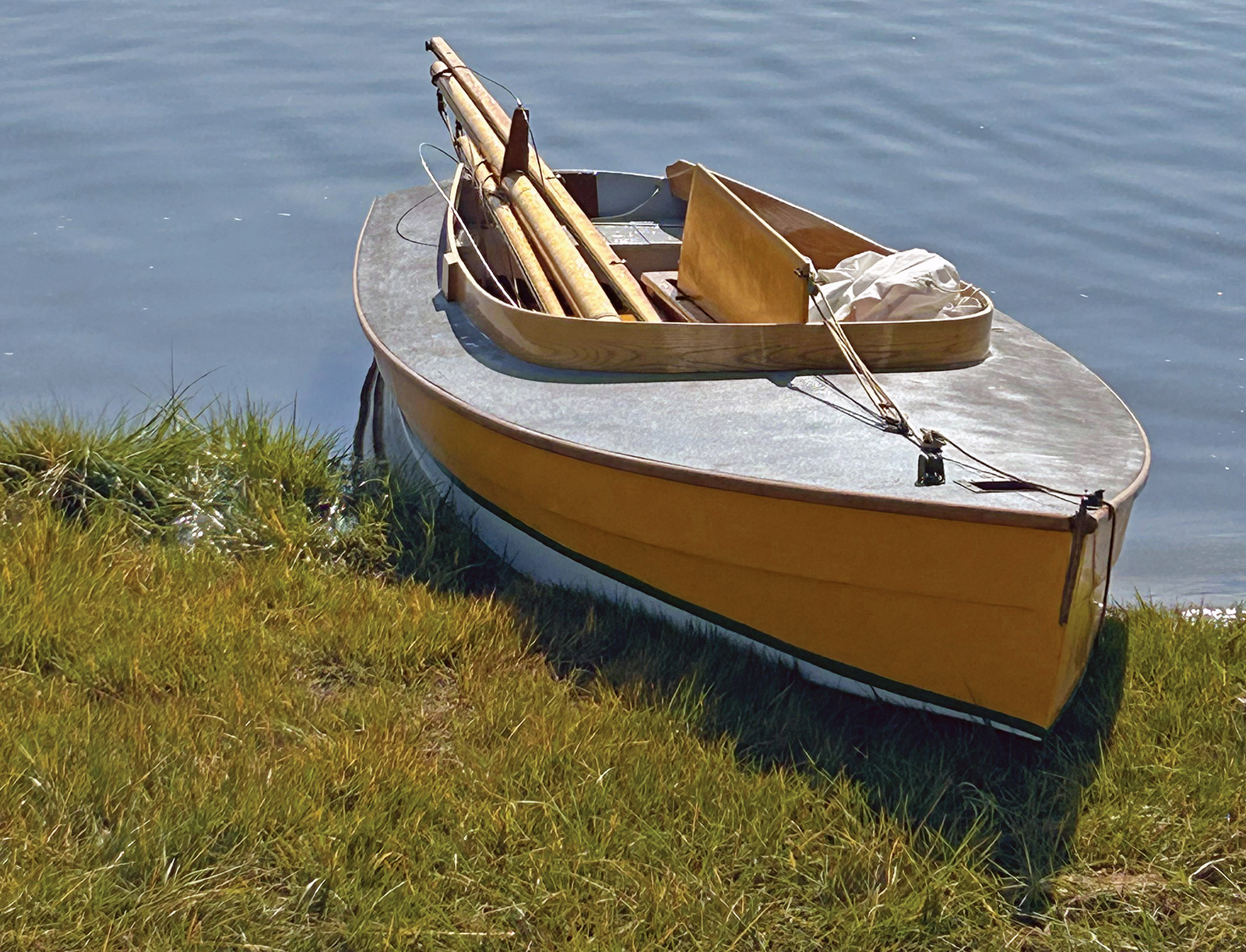
Between 1946 and 1949, Henry Chatfield Churbuck built 13 Cotuit Skiffs as class racing for the gaff-rigged catboats resumed in Cotuit, Massachusetts, after the end of World War II. One of them, SNAFU II, was for his son, Tony, who raced the 14′5″ by 5′3″ centerboarder into the 1950s. The boat was then sold but returned to the Churbuck family in the late 1960s and underwent a partial restoration then and another in the early ’80s. The boat was raced by Henry’s grandsons through the ’70s,’80s, and ’90s but then spent 20 idle years in a dirt-floored shed. Henry’s grandson, David Churbuck, and great-grandson, Fisher, began a more thorough restoration in 2024. They replaced the oak transom, rubrails, and tiller and made a new steam-bent ash coaming. They stripped everything to bare wood for sealing with epoxy, fairing, and refinishing. The father-and-son team relaunched the skiff in July 2025.
These pages, along with the Boat Launchings section of www.woodenboat.com, are dedicated to sharing recently launched wooden boats built or restored by our readers. If you’ve launched a boat within the past year, please email us at launchings@woodenboat.com, or write us at Launchings, WoodenBoat, P.O. Box 78, Brooklin, ME 04616.
Please include the following information:
- The boat’s length and beam;
- The name of its design class or type;
- The names of the designer, builder, owner, and photographer;
- Your mailing address along with an email address or phone number;
- The port or place of intended use;
- Date of launching; and
- A few sentences describing the construction or restoration. Send no more than five photographs (jpg images at 300 dpi) and enclose a SASE if you want anything returned.
Hints for taking good photos of your boat
- Set your camera for high-resolution images. We prefer jpg format, at 300 dpi minimum.
- Stow fenders and extraneous gear out of the camera’s view. Ensure the deck is clean and uncluttered.
- Take your photographs in mid-angle sunlight for best results. Mid-morning or mid-afternoon usually work well.
- Keep the horizon level and the background simple and scenic so your boat stands out from its surroundings.
- Take some pictures of the boat underway and some at rest. Often a vertical format works well for sailboats. Shoot a lot of images, then send us your five favorites.
We enjoy learning of your work—it affirms the vitality of the wooden boat community. We receive so many submissions that there is not room in the magazine for all of them to be published. Launchings not printed in the magazine can be seen at www.woodenboat.com/boat-launchings. 