
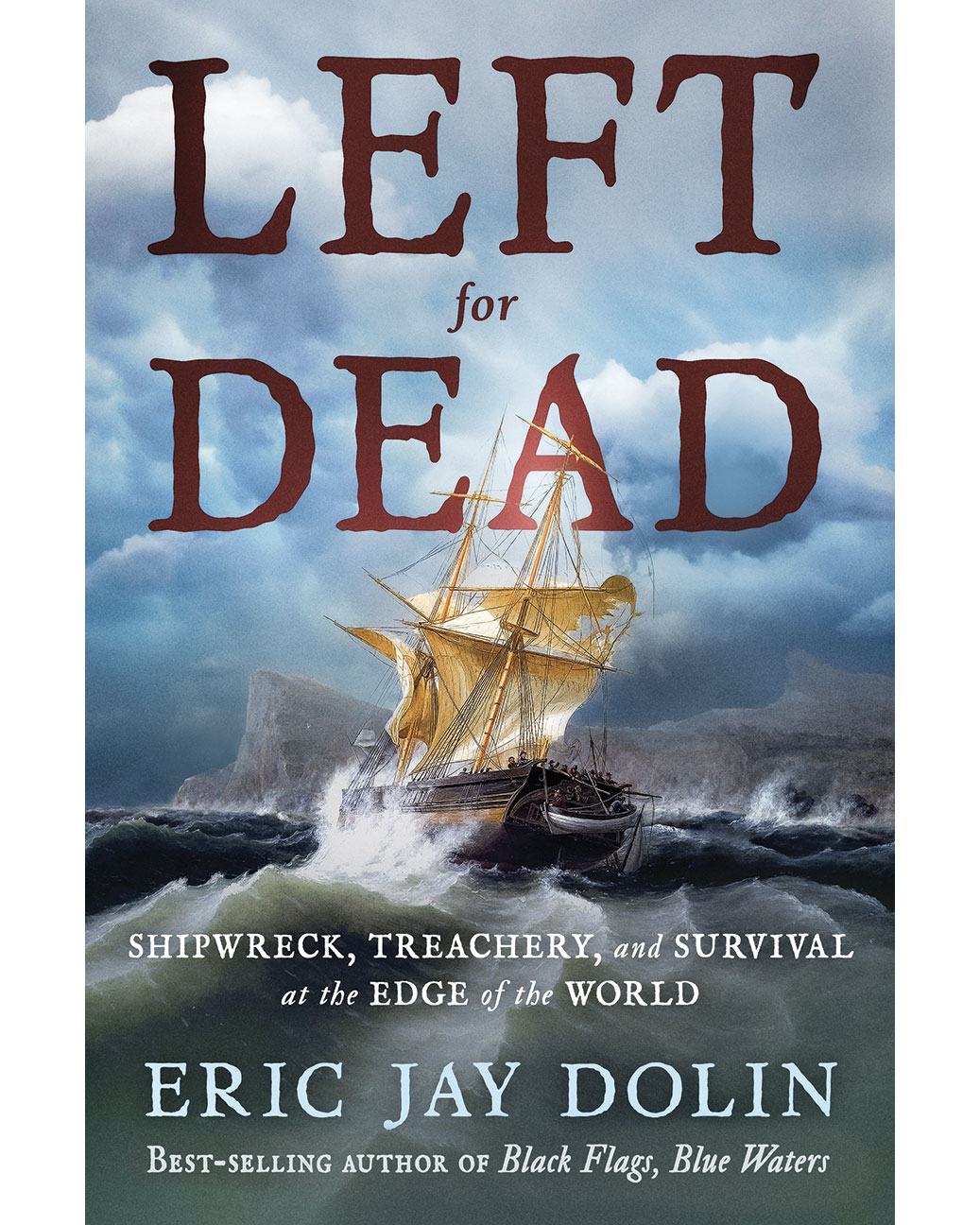
Left for Dead: Shipwreck, Treachery and Survival at the Edge of the World, by Eric Jay Dolin, Liveright Publishing Corporation, a Division of W.W. Norton & Company, 286 pages. Hardcover. Illus., notes, index. $29.99
The entertainment news website “Screen Rant” defines today’s popular TV “survival reality” shows as offering a “fascinating narrative that satisfies viewers’ desires to connect with nature and strip back modern complexities…showcasing real threats and providing valuable survival insights….” One doubts that the characters involved in the real-life survival story that is Left for Dead would be amused.
When reading this tale, the thought soon arises that, seriously, you couldn’t make this stuff up. Imagine: the 73′ sealing brig NANINA departs New York City on April 12, 1812, on the eve of the year’s eponymous war. On September 7, the vessel reaches the Falkland Islands, where seal rookeries offer rich rewards given the then-insatiable demand for sealskin garments. NANINA carries a knocked-down shallop—LITTLE NANINA—in her hold. This will be the primary hunting boat.
As NANINA’s 13 men commence their bloody business, the British brig ISABELLA departs Sydney, Australia, on December 4, bound for England. Aboard are 42 people: officers, crew, royal marines, and passengers. On February 8, 1813, gales, a drunken captain, and perhaps destiny brought ISABELLA to grief at, you guessed it, the Falkland Islands, 110 miles southeast of the American sealers.
Left for Dead, like the author’s previous works, is based on primary source journals and other materials that enliven it with a “you were there” sense of immediacy. Key among the sources was the book published in 1829 by NANINA’s Charles Barnard. That book’s florid, 19th-century-style title outlines Left for Dead’s central story: A Narrative of the Sufferings and Adventures of Capt. Charles H. Barnard in a voyage around the world in the years 1812, 1813, 1814, 1815, 1816; embracing an account of the seizure of his vessel at the Falkland Islands by an English crew who he had rescued from the horrors of a shipwreck; and of their abandoning him on an uninhabited island, where he resided nearly two years.
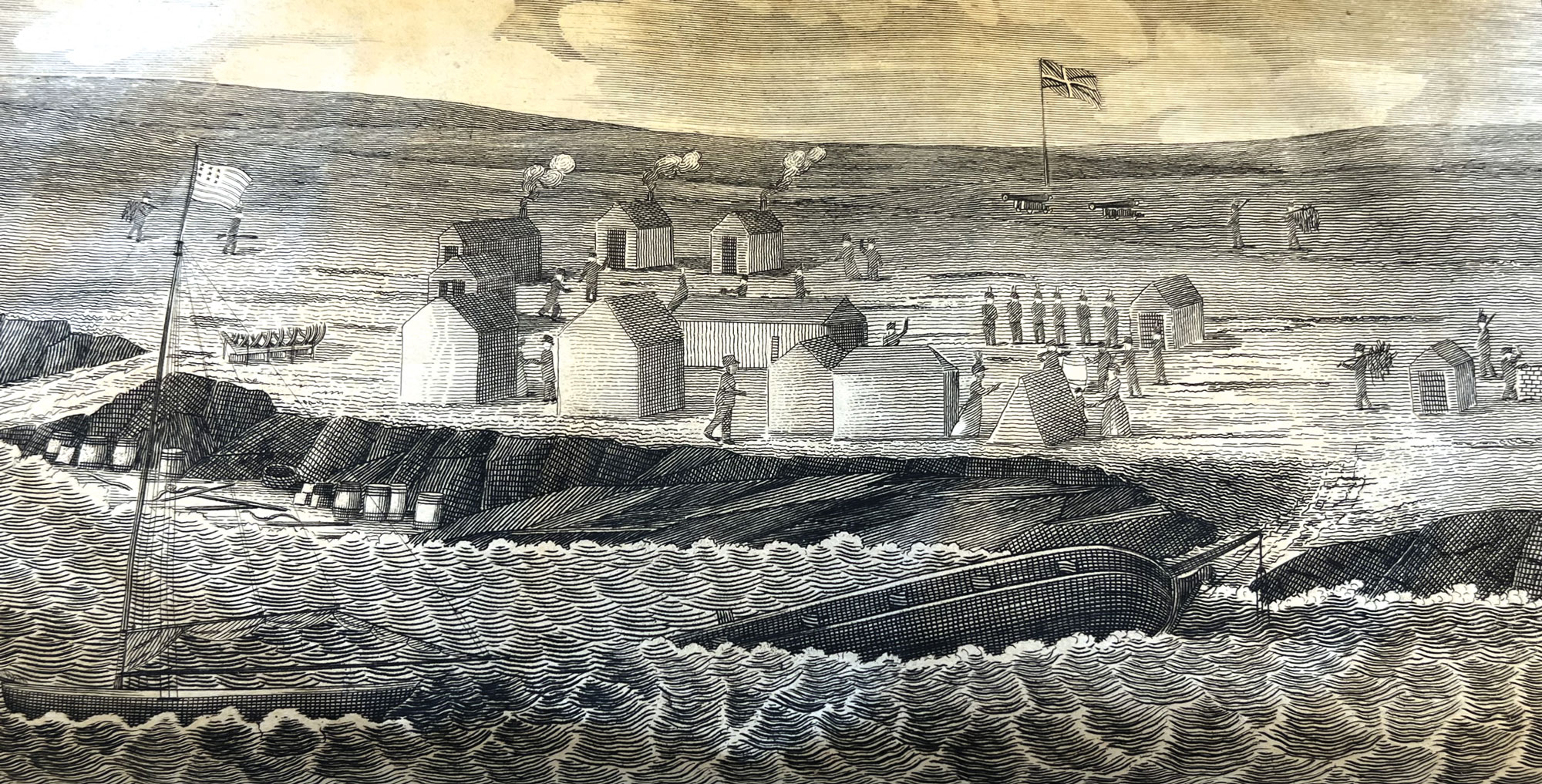
The wreck of the ISABELLA and Newtown Providence camp, engraved by T.R. Whitney. Reprinted in Left for Dead; included in Charles H. Barnard’s narrative of his experience in the Falklands, 1829.
The events leading to the abandonment are among Left for Dead’s “you can’t make this stuff up” events. Facing their own survival ordeal, six men from the wrecked ISABELLA sailed her 17′ 6″ longboat 1,200 miles to the mainland in 13 days and eventually reached Buenos Aires. There they met British Capt. Peter Heywood who, as a young man, had sailed with none other than Capt. William Bligh aboard HMS BOUNTY. Heywood promptly dispatched Royal Navy Lt. William Peter D’Aranda to rescue ISABELLA’s people. While all this was going on, LITTLE NANINA, busy sealing, discovered the shipwrecked British, and Barnard offered the overjoyed company every assistance. This good deed did not go unpunished.
When D’Aranda arrived aboard HMS NANCY and discovered the American sealers, he saw the opportunity to become a wealthy man. D’Aranda seized LITTLE NANINA and when the unsuspecting NANINA showed up later, the brig and her valuable cargo were claimed as a prize of war.
At the time, Barnard, his dog, and four companions were off hunting, expecting to rejoin NANINA at an appointed location. Instead, supported by ISABELLA’s more odious characters, and despite the pleas of others, D’Aranda abandoned Barnard. On July 27, 1813, HMS NANCY and the captive NANINA towing LITTLE NANINA sailed off to Buenos Aires.
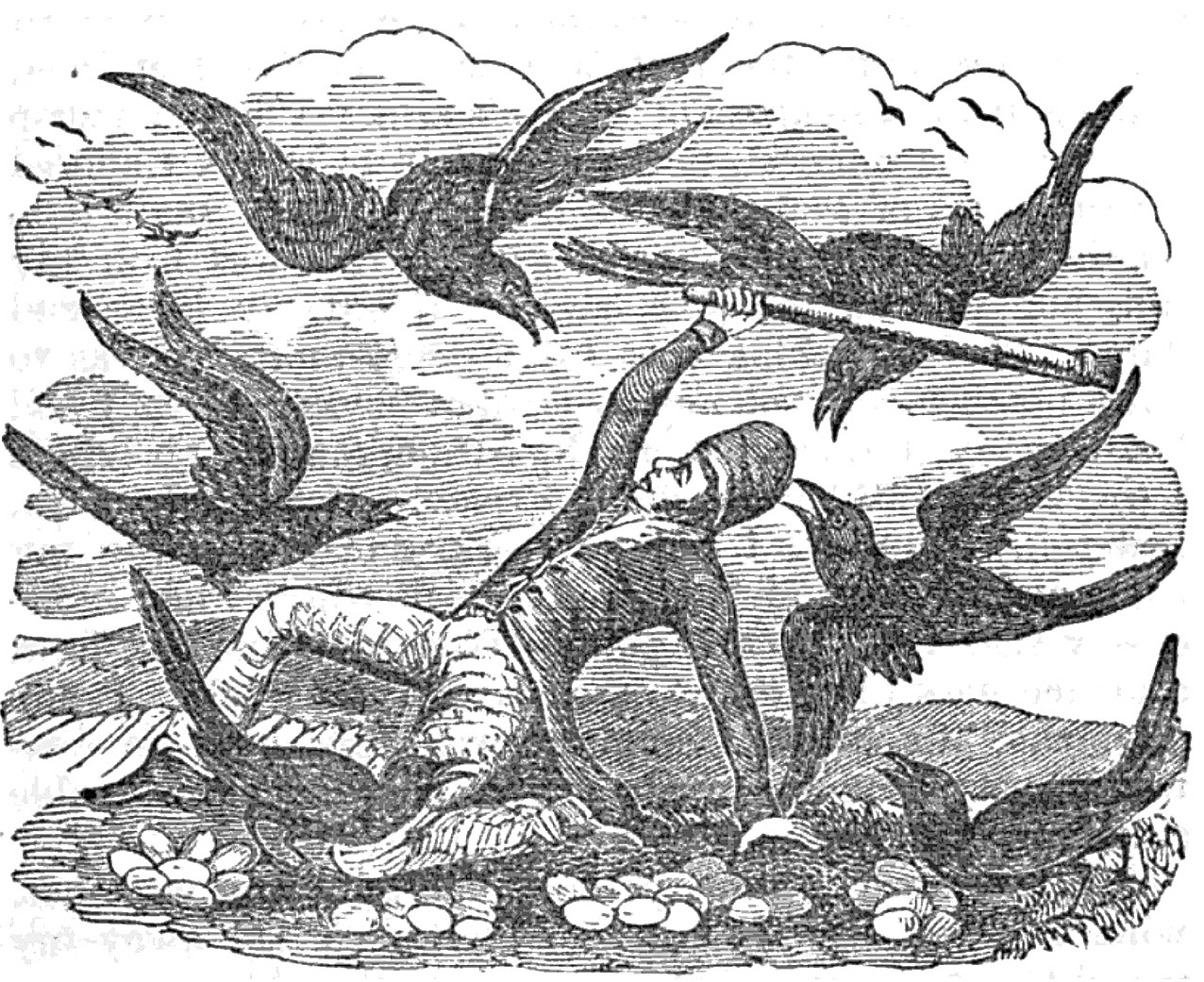
Charles Barnard is annoyed by rooks (Striated caracaras), as depicted in Robinson Crusoe’s Own Book; or, The Voice of Adventure, 1843, by Charles Ellms.
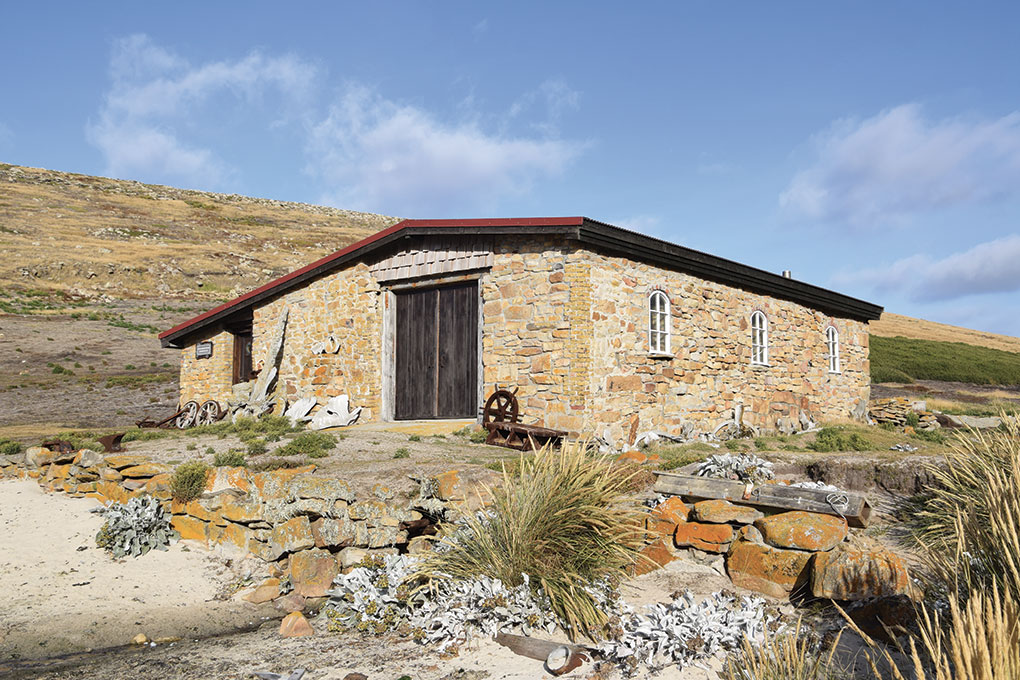
Now began the ordeal. Dolin chronicles the ingenuity and, eventually, faith that it took to survive. With a single needle and a pocket knife, the men tailored sealskins to make warm clothes. The softest skins from pups became parchment on which Barnard kept a log using homemade ink and a goose-quill stylus. With Barnard’s dog, the castaways hunted dangerous wild hogs. They snared and clubbed birds, collected eggs, and grew vegetables. A shelter was built of stone, with a sealskin roof stretched over a framework of whale ribs found on the shore. Potentially deadly interpersonal antagonisms were resolved.
The book’s 40 chapters are of comfortable length and structured so that the end of each raises curiosity to find out what comes next. Excellent maps depict the story’s many locations, and both the islands’ 19th-century and modern names are given. Color and black-and-white photographs reveal the Falklands’ rugged terrain. There are many period drawings of seal species and wildlife known to the castaways, and engravings of various events from Barnard’s book.
 ALISON BARTON
The Captain Charles H. Barnard Museum on New Island.
Readers fascinated by vessel design, nautical usage, and seamanship will find these aspects minimized. In the book, ships don’t run aground or founder but “crash” like automobiles; lapstrake small-craft planks are called clapboards, etc. Relevant ships and boats get modest pictorial exposure. There’s a nice drawing of a brig but no sail plan, although several specific sails are mentioned in the text. There’s no picture of a shallop—unfortunately defined simply as “a boat with a mainmast and two sails”—like LITTLE NANINA.
Left for Dead is about human endurance, a morality story depicting the best and worst in us, and a chronicle of the cruel but lucrative sealing industry. “It was wanton slaughter,” wrote Jack London in his classic 1904 novel The Sea Wolf set aboard a sealing schooner. Such was the demand, Dolin writes, that “the scope of the trade in sealskins was almost beyond belief.”
After 534 days, the castaways were rescued by two British ships on November 29, 1814. But not until October 1816 did Barnard finally make it home to New York. The book’s epilogue describes that circuitous adventure and the post-rescue lives of key characters, and it ties up other loose ends including the February 1818 decision of the British Admiralty Prize Appeals Court case brought by NANINA’s owners.
In the epilogue, Dolin includes advice that Charles Barnard, who died in 1863 at age 83, shared at the conclusion of his own book. The tough-minded mariner urged “patience and perseverance to all in adversity; and gratitude to every American for all the inestimable privileges he enjoys.”

Stan Grayson is a regular contributor to WoodenBoat.