
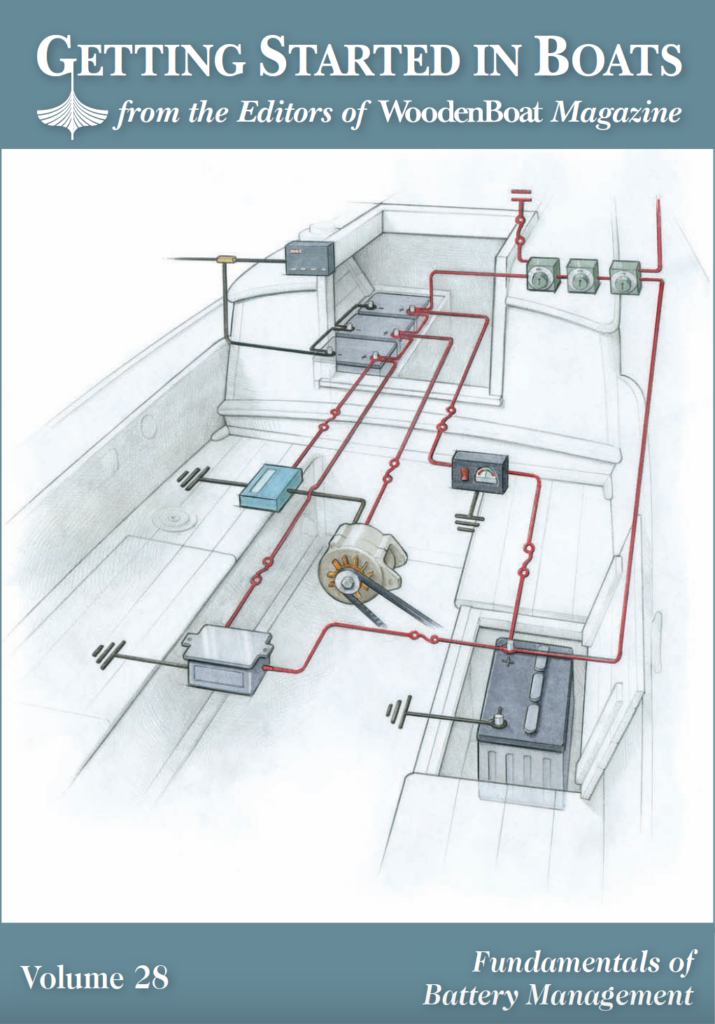
Beginners Guide to Boat Batteries
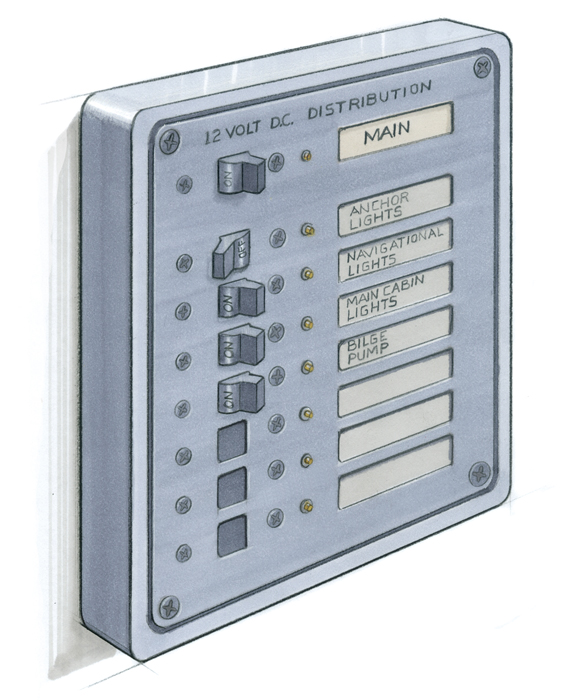
A proper onboard DC electrical system includes a distribution panel, which allows individual circuits to be switched off when not in use. The panel in this drawing includes three blank switch locations for the addition of circuits as needed.
The well-proven battery system design found on many recreational power- and sailboats has remained essentially unchanged for decades. As common as these arrangements are, however, their proper use can be a mystery to a beginning boater. And even for an experienced person, there are still many design and installation details that must be considered to make a battery bank and its systems reliable, seaworthy, and safe. There are also decisions to be made by the installer and user regarding redundancy, versatility, and compliance with commonly accepted guidelines such as those established by the American Boat and Yacht Council (ABYC). While typically considered voluntary, such guidelines may be mandated by federal agencies in certain circumstances. Gasoline-powered boats, for instance, are required to meet a series of standards under the Code of Federal Regulations (CFR), many of which relate directly to batteries and other electrical components. Insurance companies may also insist upon compliance.
Batteries and their management are anything but a black art. Choose them carefully; ensure they are installed properly, safely, and in compliance with the appropriate guidelines; then make sure they are charged in a manner that suits their design, and your engine will always turn over and the cabin lights stay on.