
 Paul Gartside
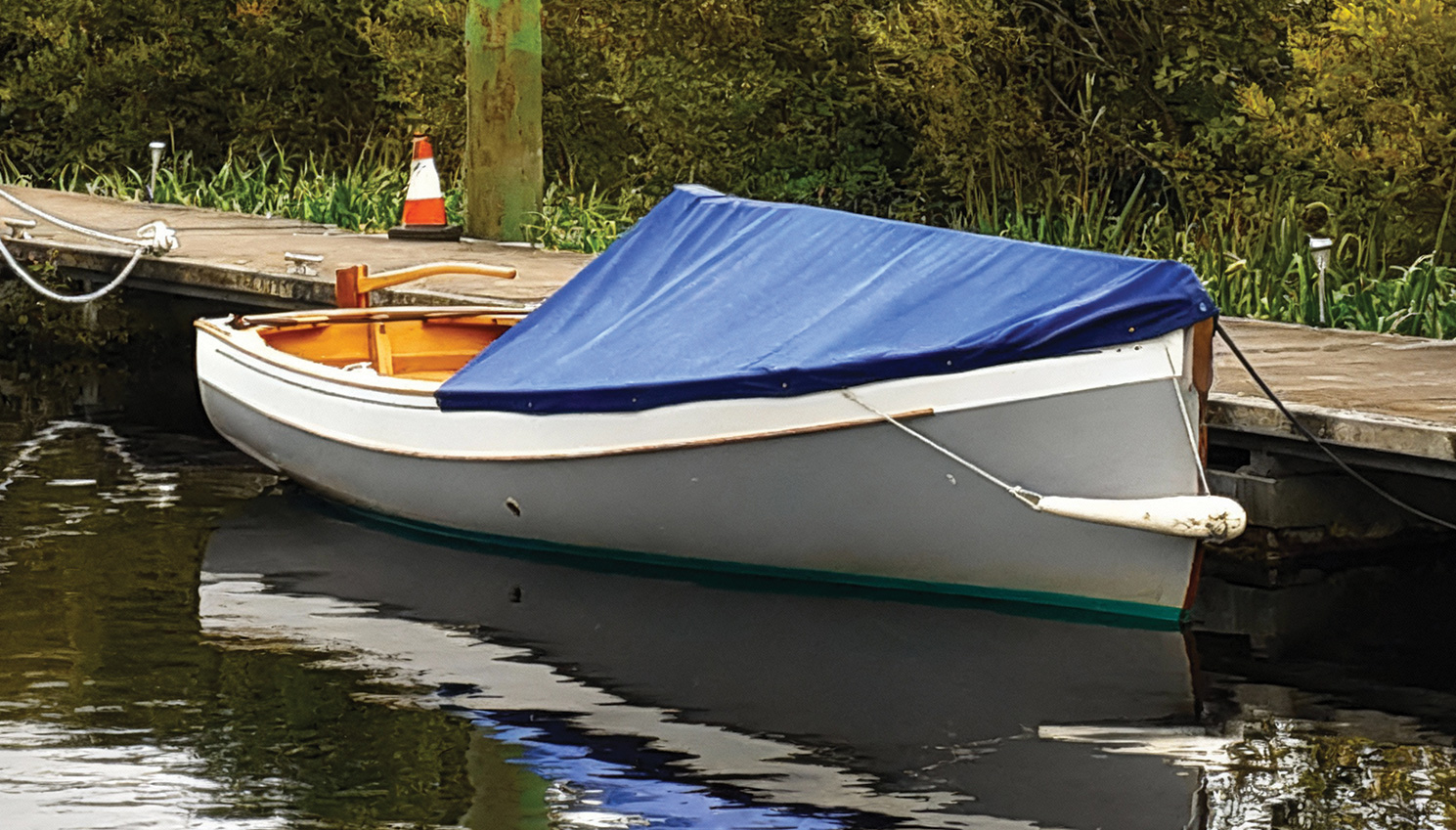
For his Workboat design, Paul Gartside began with lines he’d taken from an inboard lapstrake utility boat he’d known in his 1960s youth in Cornwall, England.
The idea for this launch followed designer Paul Gartside from his 1960s youth in a Cornwall boatyard, through his eventual move to the West Coast of Canada and then to the United States. Painted dark blue with a gray interior, the boat in his memory is of lapstrake construction. An air-cooled Lister diesel furnishes slow-turning, reliable power.
Gartside holds fond thoughts for the old launch: “Of all the boats built in that yard, she was the most successful in terms of fitness for purpose and value for cost. She was in constant motion for 20 years on the 10 miles of river between Truro and Falmouth. A string of oily fenders adorned her, and every surface showed the wear of heavy usage. That’s how she looked many years ago when I last saw her, but she was sound as a bell. The faithful Lister was still bonking away. I’d not be surprised if she’s plugging about the upper reaches of the Fal today. Regular use is the key to making a wooden boat last.”
One spring, when the launch had been hauled for a refit, Gartside measured her hull and drew the lines on paper. He suspects that the shape had been modified from a design found in Motor Boating Manual or a “similar fount of wisdom.” Years later, when the request for a small workboat came the designer’s way, the old drawings served as a starting point.
 Paul Gartside
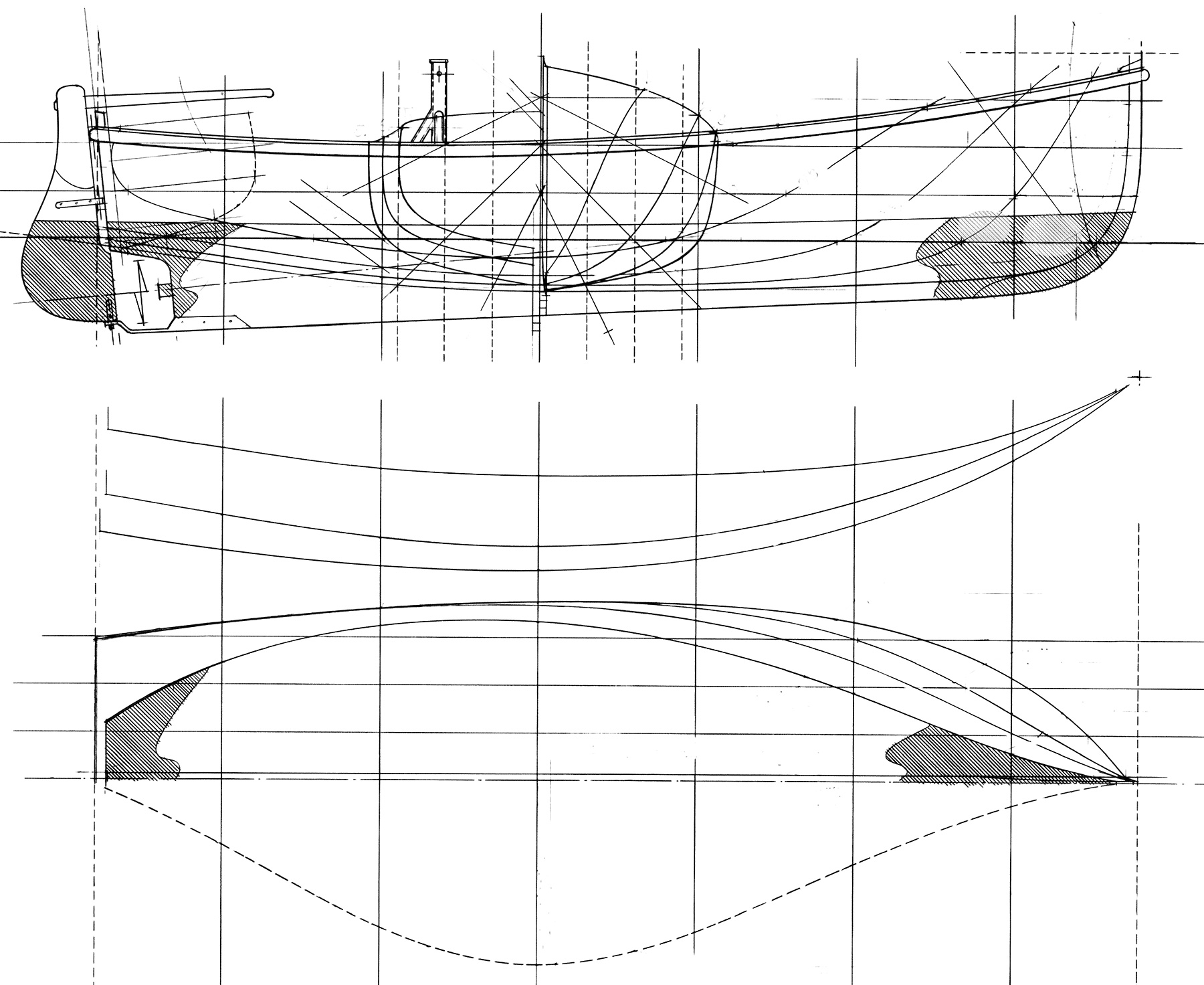
In Workboat, Gartside used the length, depth, breadth, and sheer of the boat from his youth, but added flare to the forward sections.
Gartside took the sheerline from the original boat and added some flare to the hull’s forward sections. “She will have a different look than the original,” he explains, “but the important stuff—the proportion of length, breadth, and depth; the deadrise to the bottom; and the immersion of the transom are straight from the old boat. Those were good genes, and I’m happy that we might be able to propagate them.” He predicts that an 8-hp Yanmar diesel will push this launch at an easy 5 knots with ample power for light towing. If we prefer to go with electric propulsion, the designer allows that 10kW would be “about right.”
 Paul Gartside
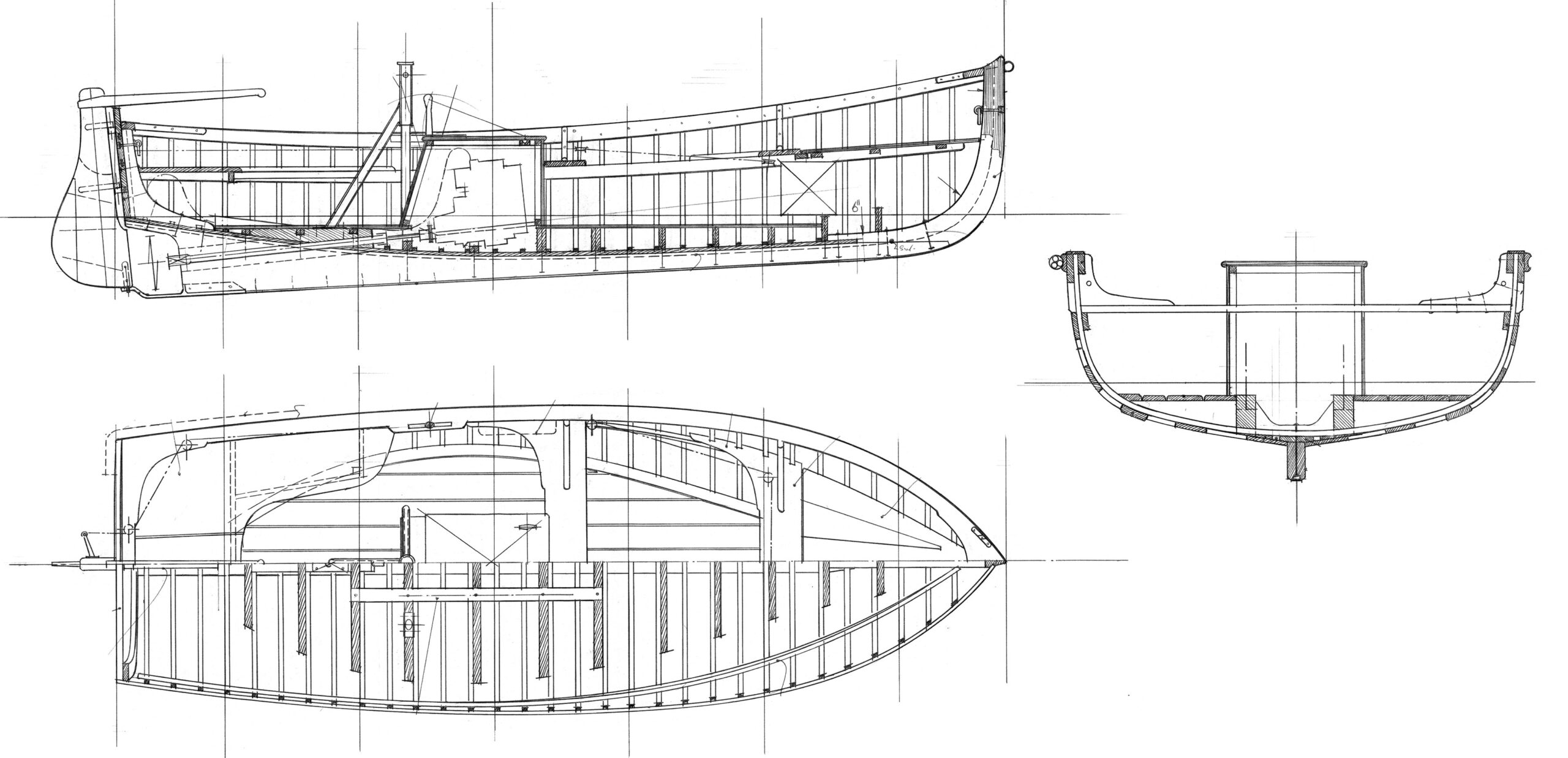
The smooth-skinned hull is planked mostly in ⅝″ cedar, with ⅞″ in the bilge and for the sheerstrakes. The steam-bent frames measure ¾” × 1⅛” and land on 6” centers. Plank fastenings are copper rivets.
Gartside specifies upside-down construction, though acknowledges that “[t]here is something pleasant about watching a boat grow that is lost when it all happens upside down.” Right-side up is an option.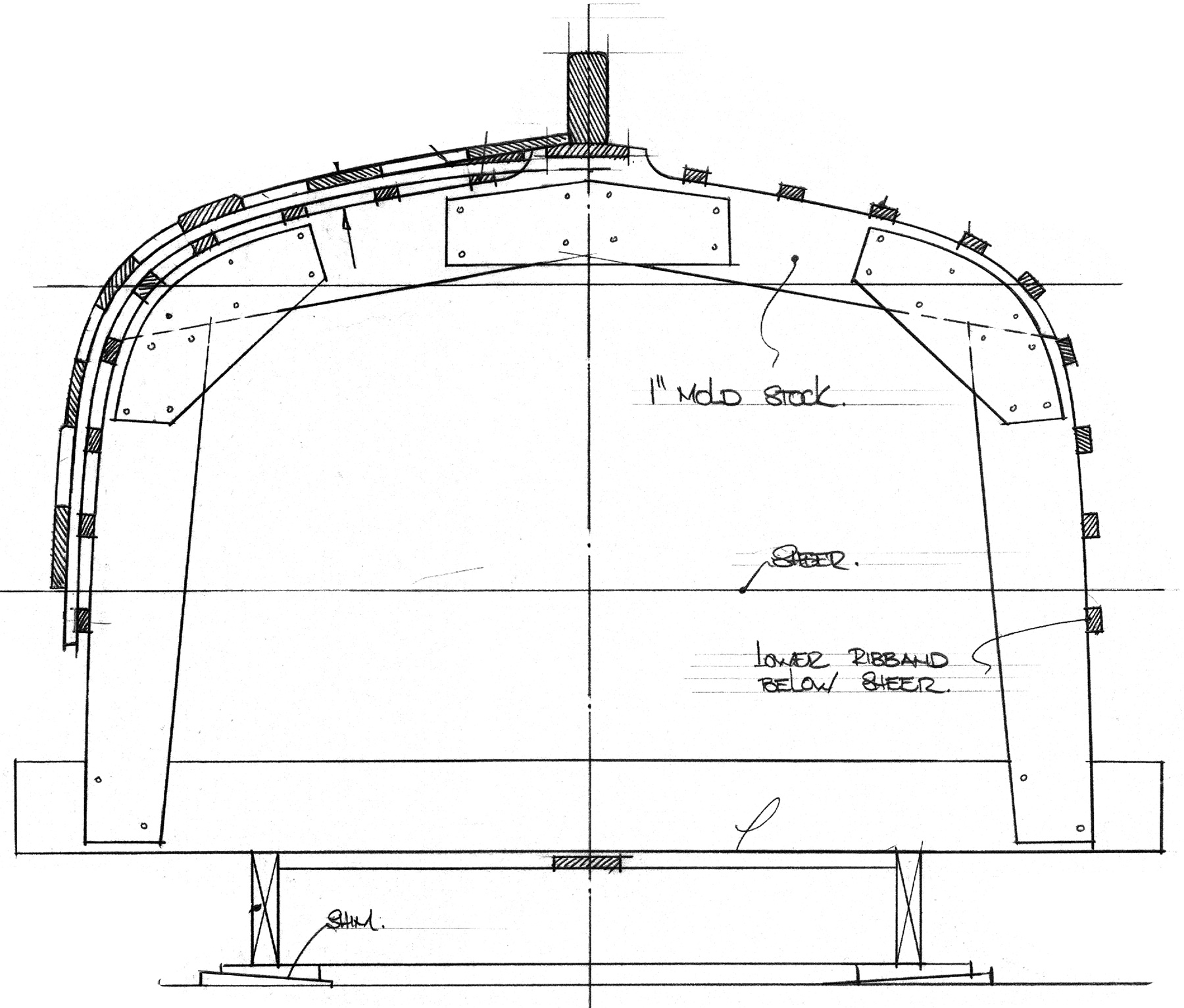 Paul Gartside
Some of us will choose to build this hull upside down. Other builders will work the project right-side up. Our method (upside down) allows for easier alignment for the jig and backbone, easier framing, and easier planking. Working “down” on the job also reduces physical stress. On the other hand, the upright approach lets us better evaluate the sweep of sheer and the run of the planking. Gartside specifies that we build this launch inverted on its molds. Yet he has reservations: “There is something pleasant about watching a boat grow that is lost when it all happens upside down.”
In any case, the designer believes that this project will be good fun: “There is some glued work in the stem and centerline (and the gunwale cap should be glued to keep fresh water out of the frame heads). But, for the most part, this is boatbuilding as it used to be…that is, without latex gloves.”
Particulars
- LOA: 16′6″
- LWL : 16′
- Beam: 5′5″
- Draft: 1′6″
- Displacement: 1,680 lbs
- Engine: 8−15 hp
The designer expects that the new boat will measure up to the old. Both have the right shape for the given power and speed. Along the banks of the Fal estuary, consensus suggests that these lines make for good boats. 
Mike O’Brien is boat design editor for WoodenBoat.
Paul Gartside teaches boat design at WoodenBoat School each summer. Plans for this launch, and completed boats, are available from him at 29 Malone St., East Hampton, NY 11937; 631–276–7275; info@gartsideboats.com; www.gartsideboats.com.