
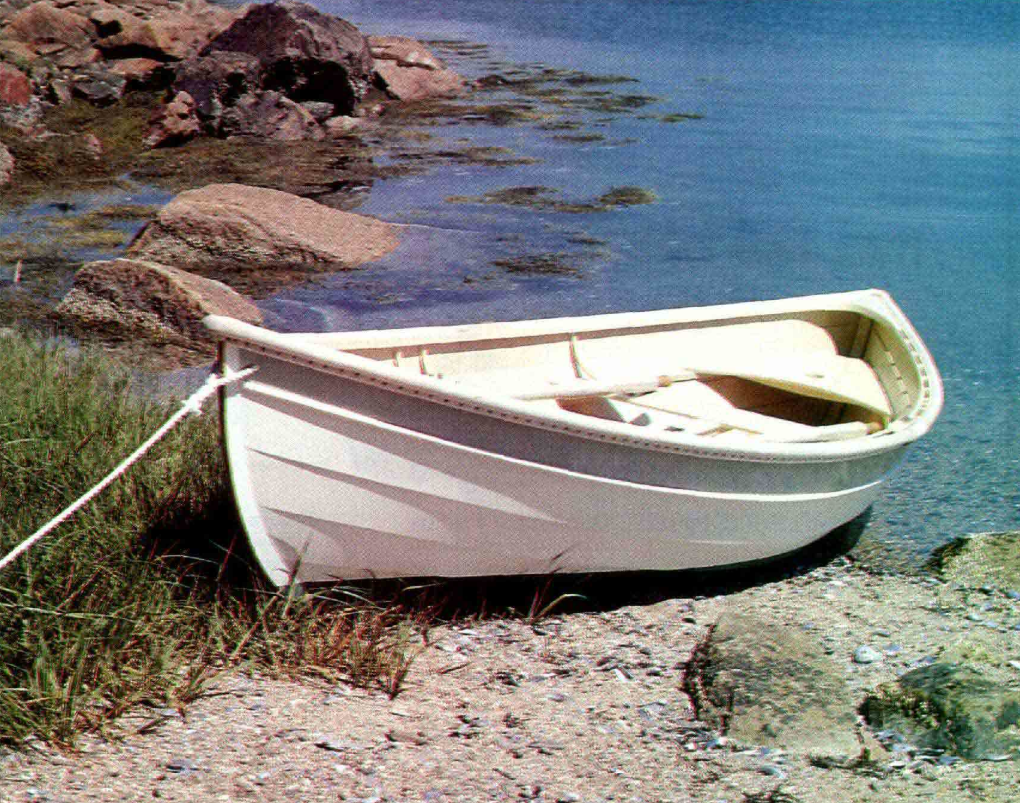
Peapods are great little boats. They were developed as inshore workboats, and you could see them all along the Maine coast at the turn of the century. Used for lobstering, clamming, and all kinds of waterfront work, the old pods were usually 13' to 16'. Burdensome and stiff, they could carry a big load, and lobster traps could be hauled right over the side with ease. Even heavily loaded they would row easily. A peapod loaded almost to the gunwales with a fisherman standing up and pushing on the oars in the late-afternoon slanting sunlight—it was a common sight years ago. Of course, that was when men were men!
Today, men are...well, still men, but they like their rowing even easier than before—and they're not so interested in being able to carry 1,000 lbs of gear. I've drawn Beach Pea a bit shorter and with more flare to the topsides for good looks and reserve buoyancy. She is somewhat lighter and, with a bit of rocker to her keel, somewhat handier than her traditionally built ancestors.
At 13' long, Beach Pea is a bit small as peapods go, but she's big enough to retain the good qualities of the type. She has good stability and will carry a big load and row easily. Why? Well, she is probably longer than the dinghies most people are used to rowing, and you know how waterline length affects ease of driving. That extra length also allows for a finer entry, so perhaps you're doing a little more cutting and less plowing. But probably the biggest reason is that there is no transom. Lots of dinghies are great with one person aboard; but, as soon as they're loaded down to where their transom is even slightly immersed, they start trying to suck the ocean around behind them.
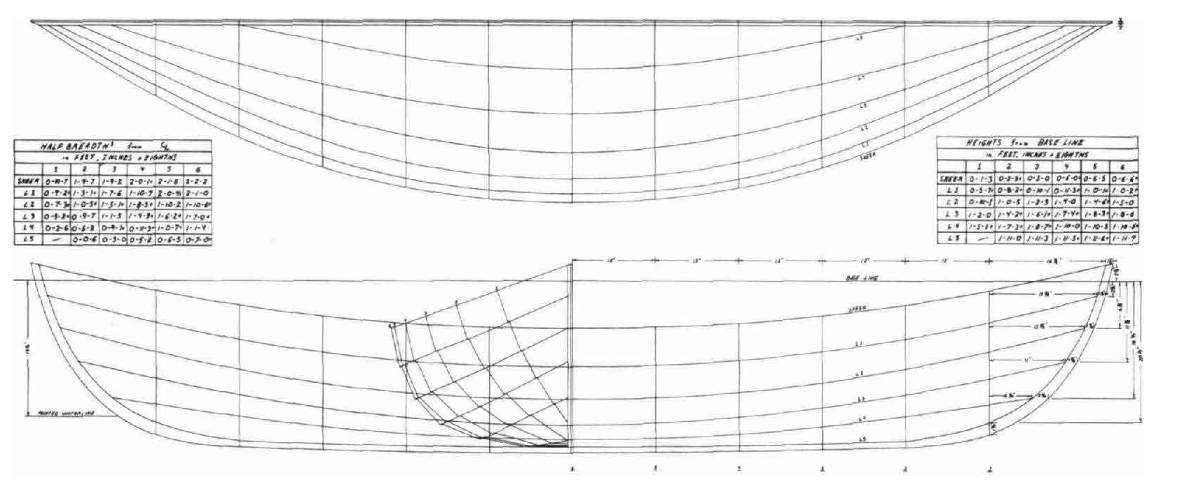
There are other benefits to a double-ended boat: seaworthiness, for one. I'm sure you've noticed that lifeboats are almost invariably double-ended. A well-handled Beach Pea will be comfortable in conditions that would make you wish you were closer to shore in most transom-sterned boats her size. Another advantage is push-rowing—if you get tired of pulling on the oars and looking over your shoulder, you can turn the boat around and push. You'll proceed at a more modest rate, but the view forward will be welcome. Proper trimming (so that the boat is either level or slightly down by the stern) is easy in a pod. If your particular combination of passengers and gear won't allow the boat to trim properly going in one direction, just make the other end the bow.