
 Paul Gartside
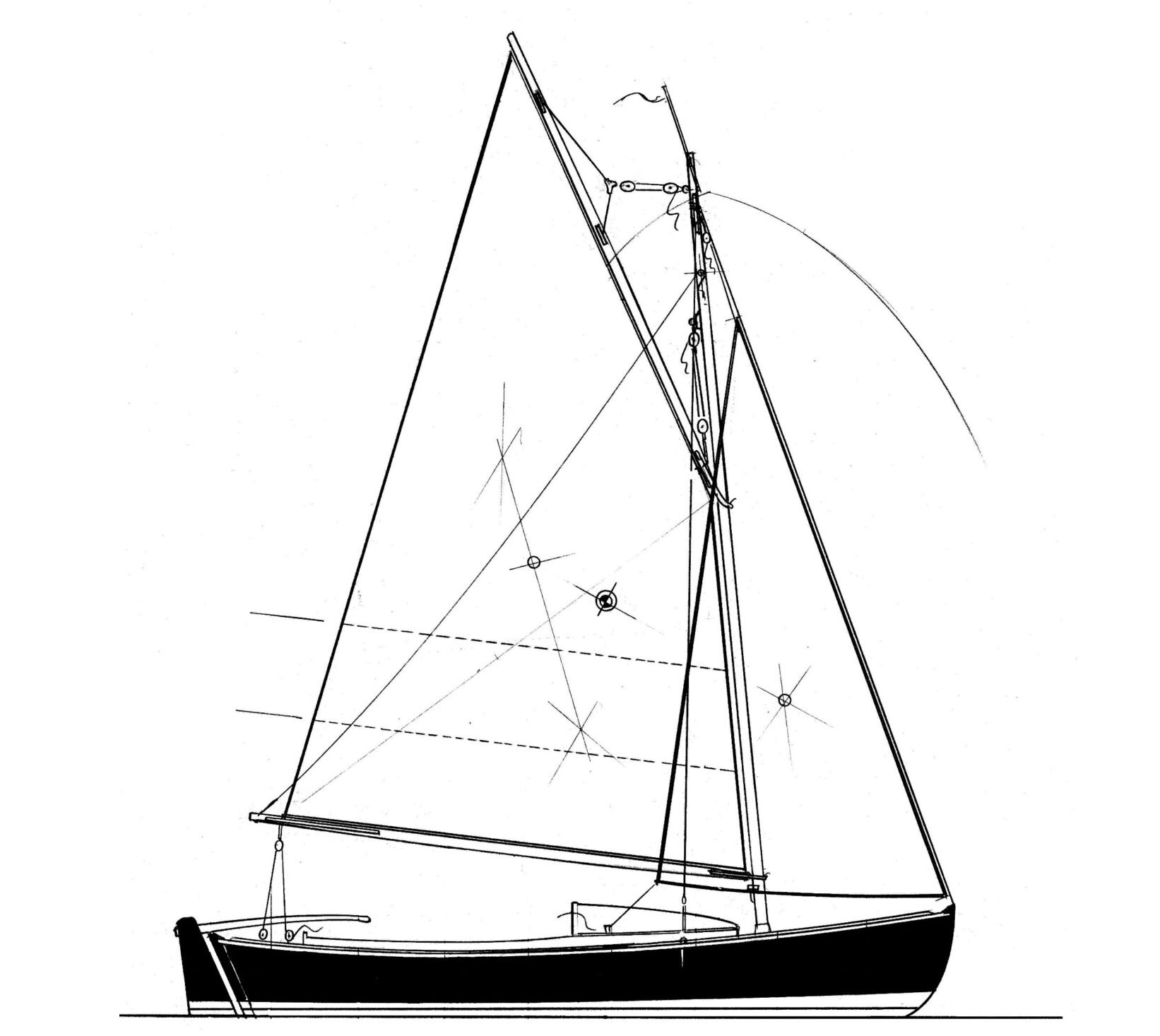
This 19’ sloop from Paul Gartside is a handy daysailer that offers minimalist accommodation for camp-cruising.
This good-looking 19′ double-ended sloop came to life on Paul Gartside’s drawing table. He describes it as an ideal family camp-cruiser: small enough to live on a trailer, yet large enough for “adventurous coastal cruising.”
 Paul Gartside
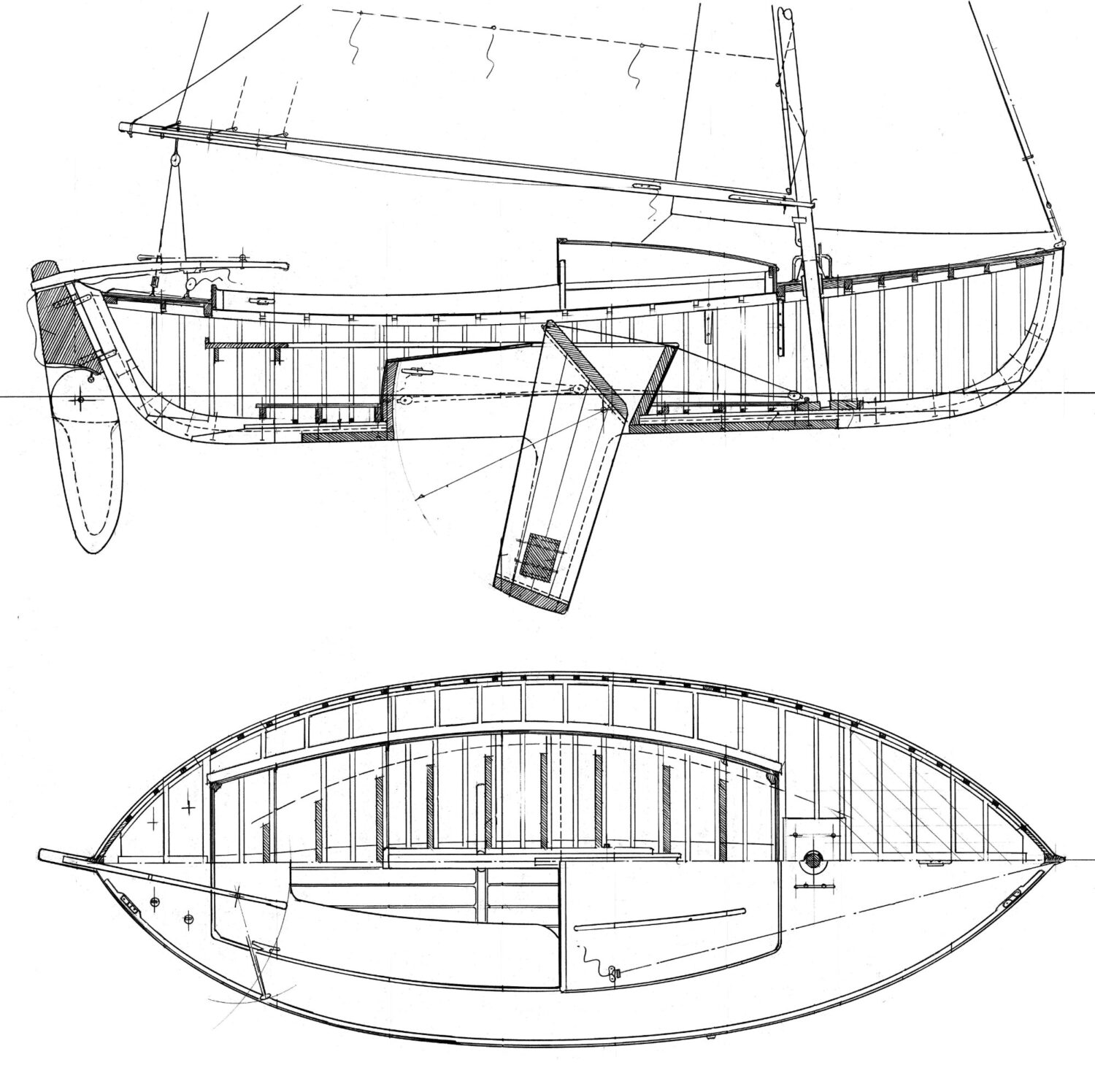
The cockpit is deep and comfortable, and the belowdeck space is a dry place for gear. The large centerboard trunk provides a handy footrest right where it’s needed.
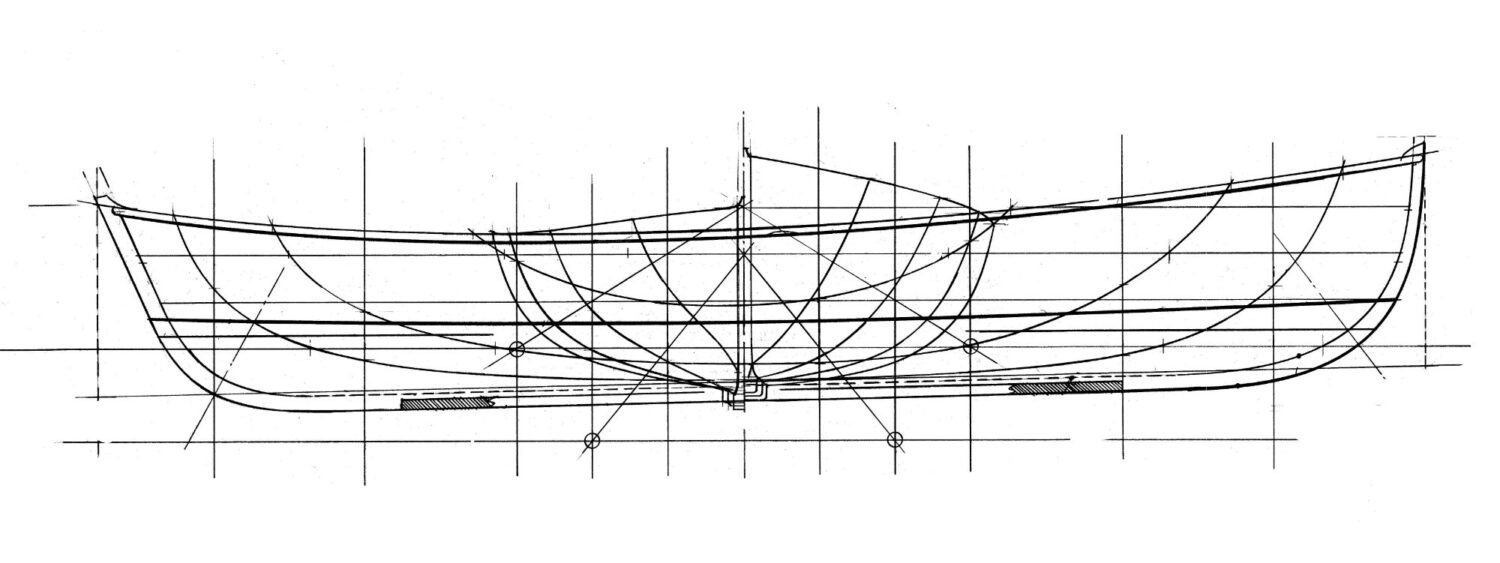
The lines drawings show a shoal-draft hull with relatively firm bilges. This shape, combined with about 600 lbs of lead ballast on the keel, should result in a friendly stability curve. However, the designer cautions that proper positioning of crew weight and early reefing will be important when singlehanding.
The cockpit is deep and comfortable and not self-bailing. Some folks might view the necessarily large centerboard trunk as an intrusion. We might better consider it a solid and well-placed footrest.
 Paul Gartside
The shoal-draft hull has relatively firm bilges. This feature, along with 600 lbs of lead ballast bolted to the keel, should yield ample stability.
The tiny cuddy, while far too tight for habitation, offers dry and secure stowage for our gear.
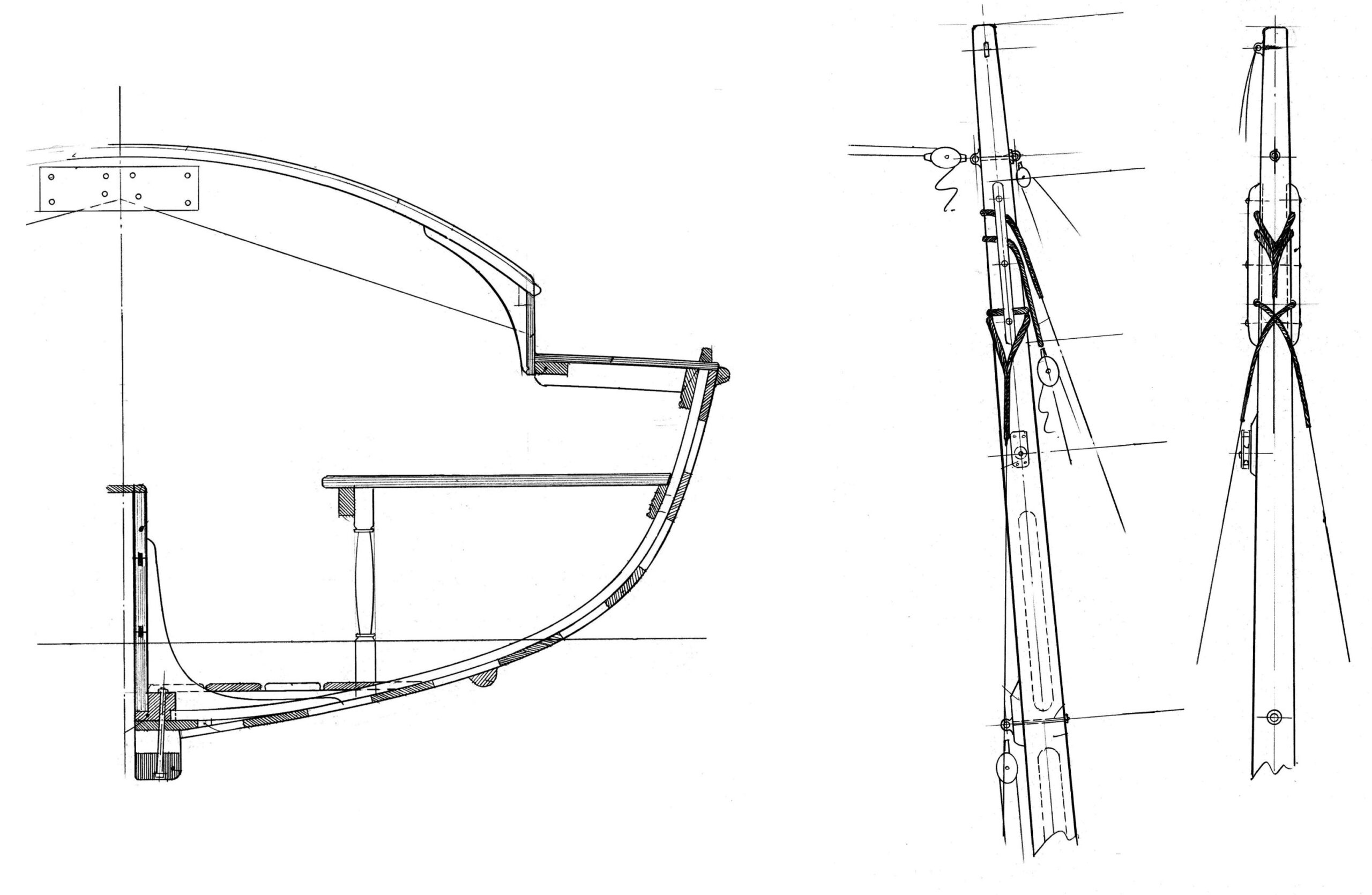
This gaff rig is fairly simple, and its details are particularly well described on the plans. The gaff is nicely peaked up. This, combined with an efficient angle of pull for the peak halyard (allowed by a mast that extends well above the gaff jaws), will keep the gaff from sloughing off excessively to leeward. The lightweight hollow mast will ease trailering.
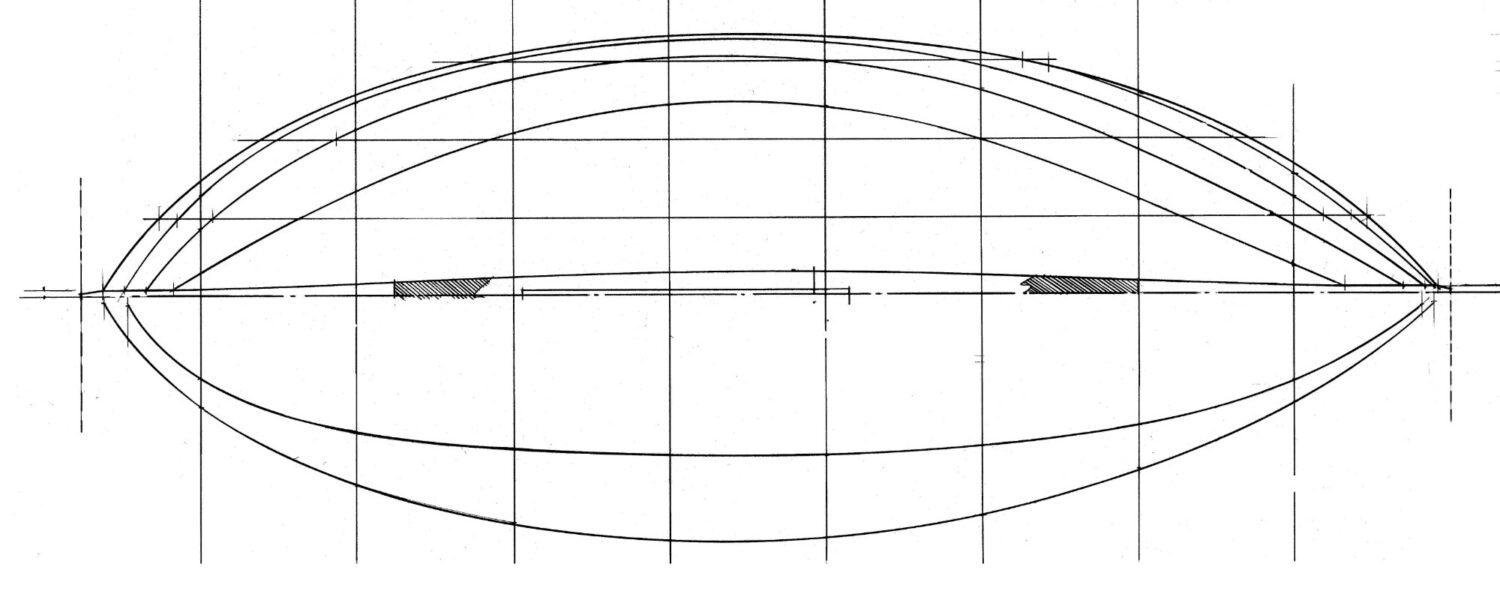
The construction drawings show caulked carvel on bent frames, which the designer describes as “the most pleasant way to build if appropriate planking material is available.” He suggests cedar as a good choice if we can find a reasonable source. For builders seeking the “elusive and overrated” dry bilge, his plans include a fully glued option.
All of the drawings for this sloop were made in the traditional pencil-on-paper manner. Some builders might find this unusual in an age dominated by full-color 3D computer renderings. Yet these straightforward plans are clear and striking.
 Paul Gartside
Caulked carvel planking is the design’s standard specification (left), though a glued-planking option is also offered. Gartside’s plans are meticulously hand-drawn, and include considerable detail.
Paul Gartside seems quite taken with hulls that are pointed at both ends, but he offers a few cautions about this configuration:
“We give up a lot when we sharpen both ends of a hull, especially in small boats. Right away we lose a chunk of righting moment and hence sail-carrying power. It is also harder to arrange for auxiliary power in a double-ender.”
Why then are many of us attracted to these hulls? He suspects that their “simple power of symmetry” might overcome rational argument. 
Mike O’Brien is boat design editor for WoodenBoat.
Paul Gartside teaches a boat-design course at WoodenBoat School each summer. Drawings for this sloop (plan No. 257), and completed boats, are available from him at 29 Malone St., East Hampton, NY 11937; 631–276–7275; www.gartsideboats.com.