
SOCKEYE
Photos by Riley Hall
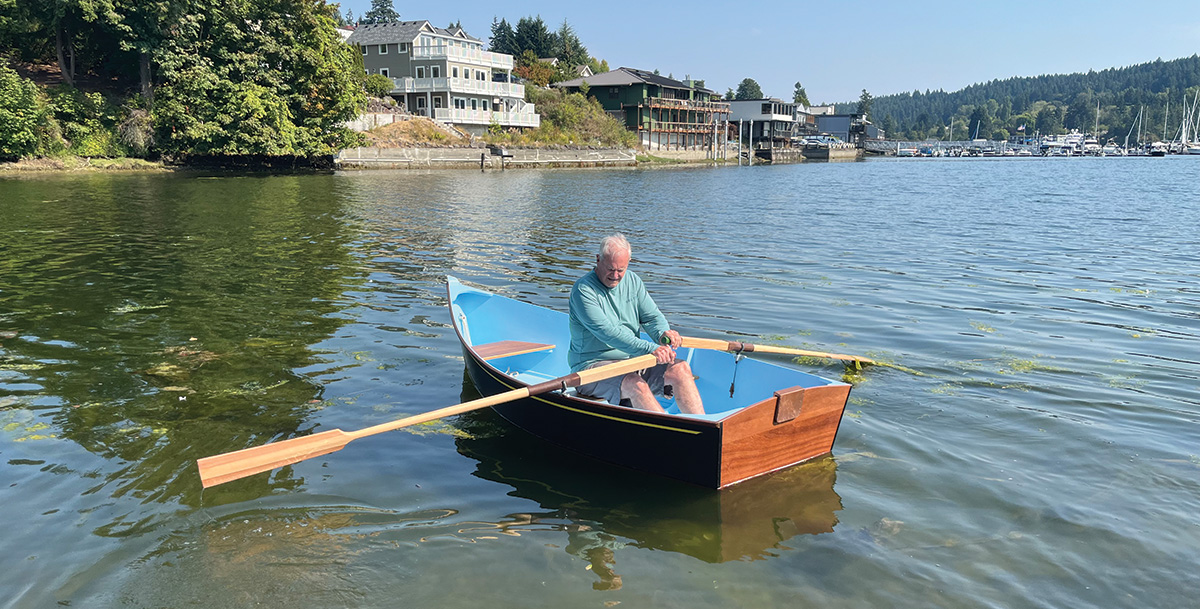
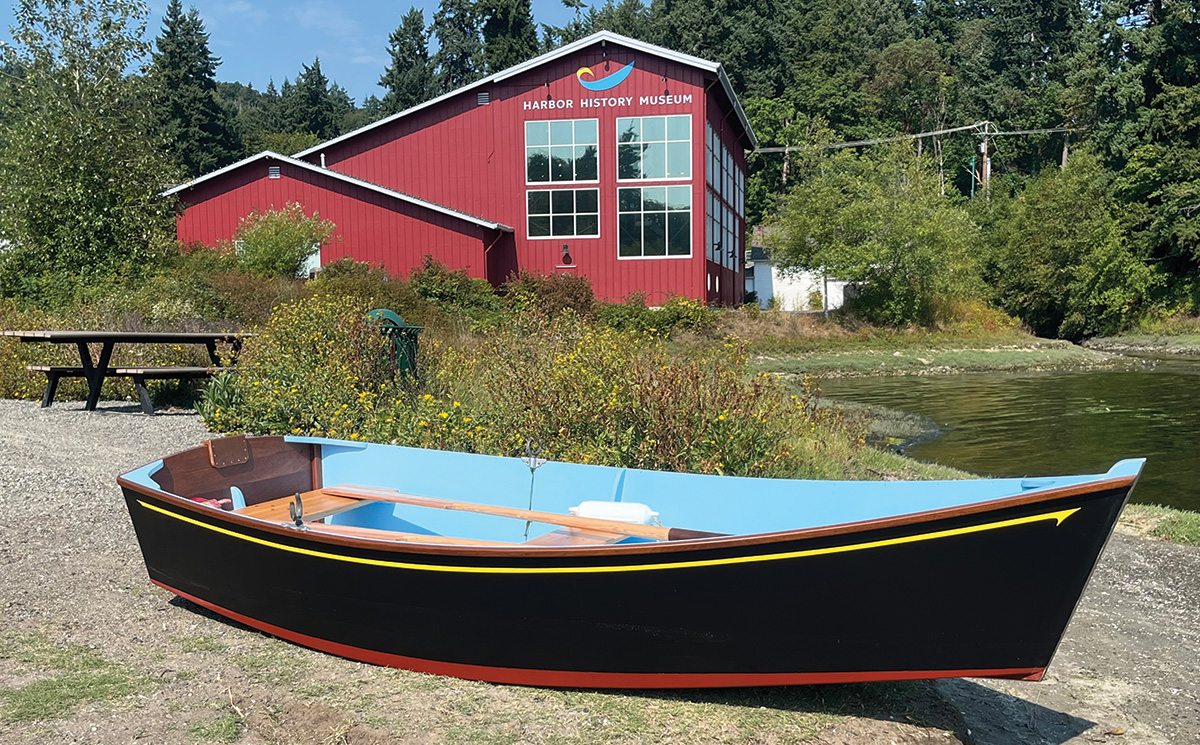
At the Harbor History Museum in Gig Harbor, Washington, the largest exhibition space, the Maritime Gallery, houses SHENANDOAH, a 65′ purse-seiner built in Gig Harbor in 1925. The ongoing restoration of the boat, led by shipwright Riley Hall, produces a lot of leftover plywood and offcuts of good lumber. To put them to good use, Riley designed the Salmon Skiff for the museum. As work on the 10′ flat-bottomed rowing skiff progressed, Riley and volunteers Duane Huan, Ken Hoy, and Curtis Hall employed a “three-man rule”: whenever making any changes to the skiff’s shape and aesthetic characteristics, all had to agree. The boat was painted with the same colors used for SHENANDOAH; it was finished after three weeks of work and left to sit for a week while the paint cured. On August 28, 2025, the skiff was launched and christened SOCKEYE after the salmon SHENANDOAH fished for.
CORA
Photo by Ron Berry
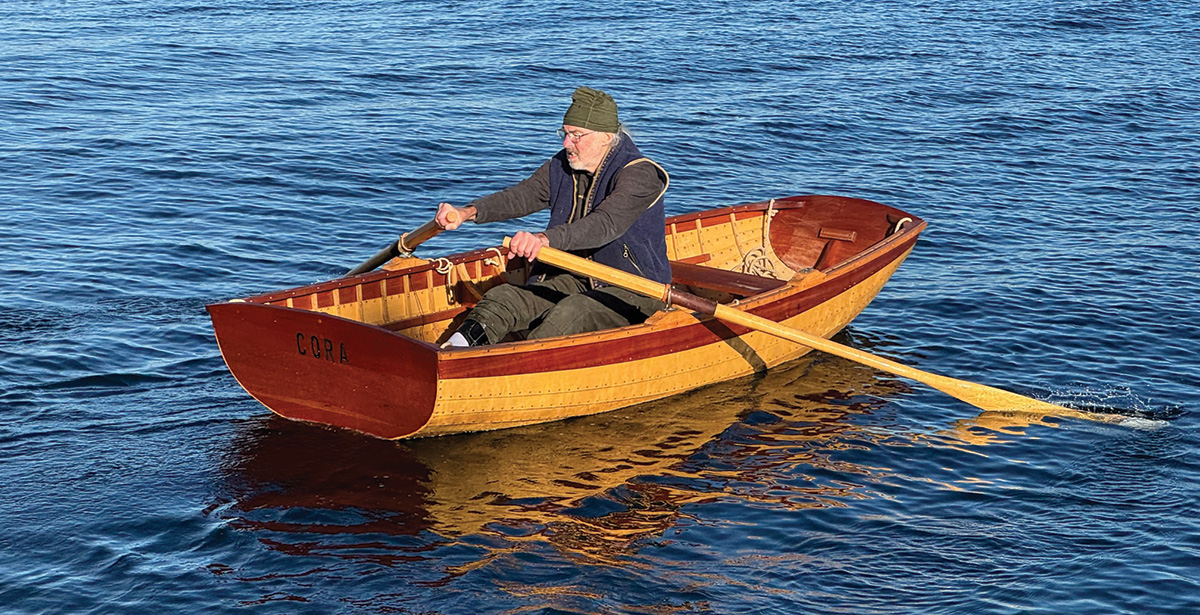
Jay Haavik of Seattle, Washington, has spent more than 50 years as a woodworker, making carvings in the Viking and Northwest Coast Native styles, but didn’t build his first boat until he was 81 years old. He ordered plans from Jordan Boat Works for the Dulcibella design, a 10′ rowboat inspired by Norwegian prams. Having worked on Viking ships in Norway, Jay had a passing acquaintance with lapstrake construction, but to make sense of the plans and the boatbuilding manuals, he had to learn the language of boats and their construction. He followed the instructions for a traditional build—Alaska yellow cedar copper-riveted to steam-bent white-oak frames with mahogany for the transoms, keel, and sheerstrakes—and found that most of the mistakes he made were attributed to reading the text incorrectly. After 1,000 hours of work, Jay launched his pram, named CORA after his grandmother.
TREASURE
Photo by Denise Appleton
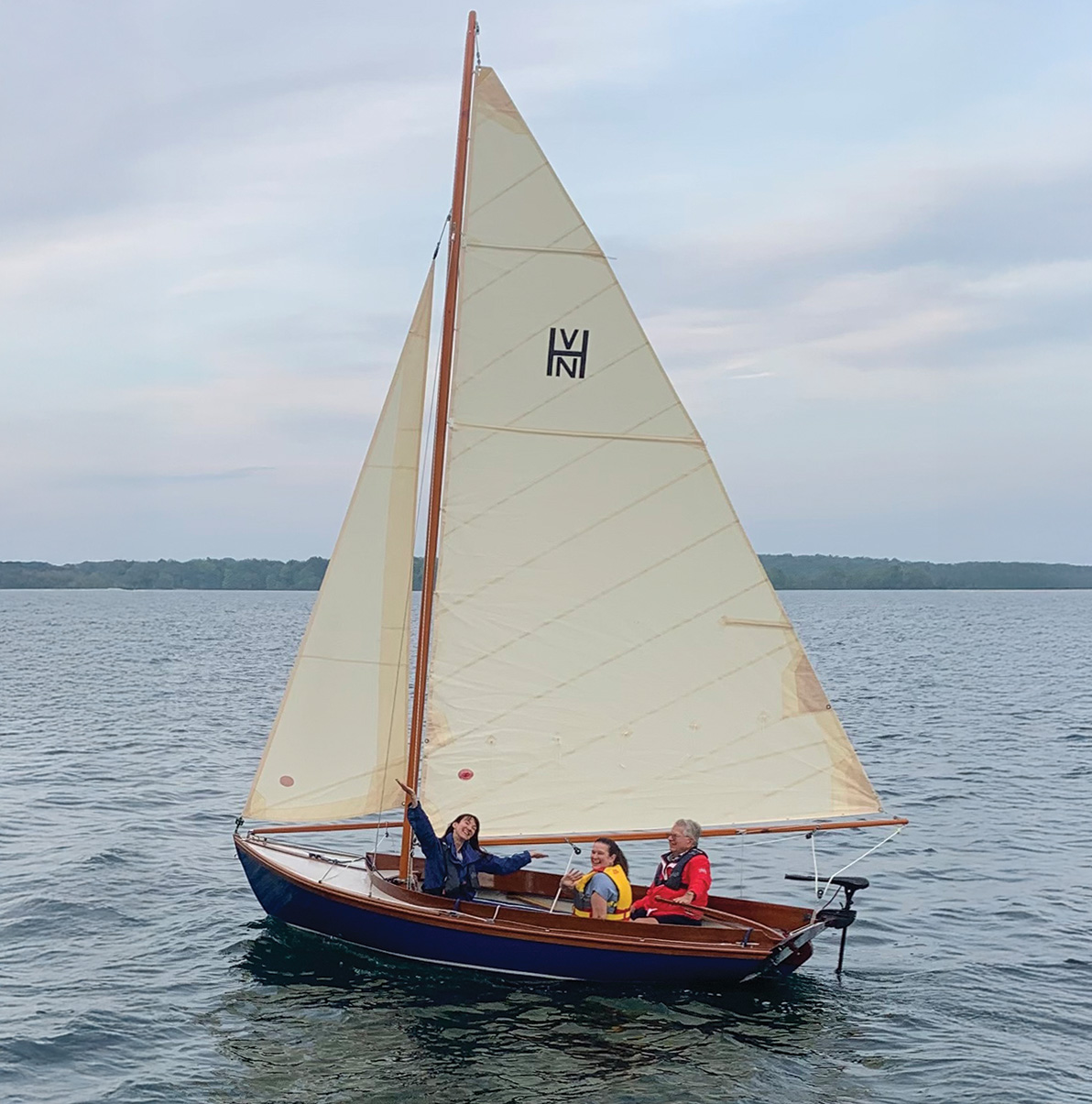
When Andrew Appleton of Kingston, Ontario, Canada, ordered plans for the 16′ Haven 12½ from The WoodenBoat Store, he didn’t expect 15 years would pass before he finished building the gaff-rigged sloop designed by N.G. Herreshoff and Joel White. He took a leisurely approach to the project and let it idle for several years while he built another boat with a grandson and took another few years to cruise the Caribbean aboard a ketch that he’d restored. Andrew cold-molded the hull with three layers of ⅛″ western red cedar sheathed with fiberglass inside and out. He used modern stainless-steel fittings in lieu of bronze and fitted a roller-furler for the club-boomed jib. In June 2025, Andrew launched TREASURE, which he sails among the Thousand Islands on the Saint Lawrence River.
RUTH M. KENNEDY
Photos by Buzz Kuhns
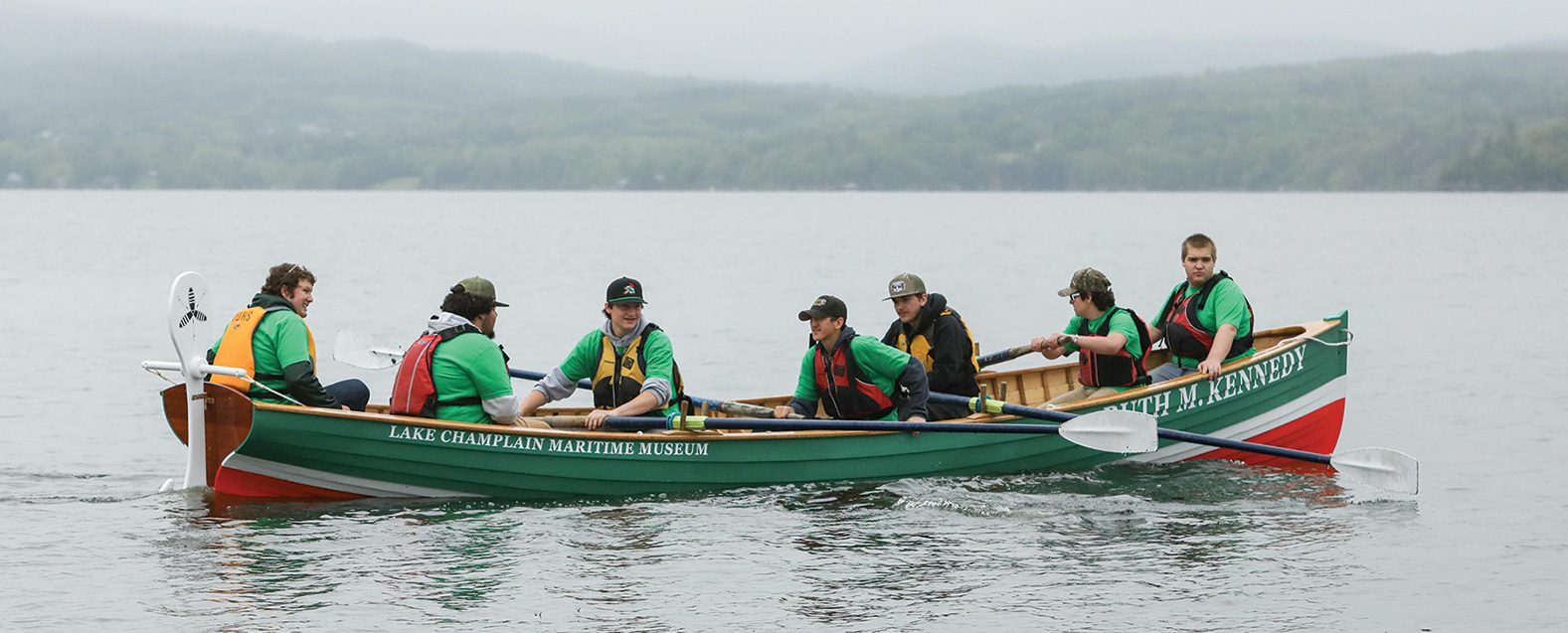
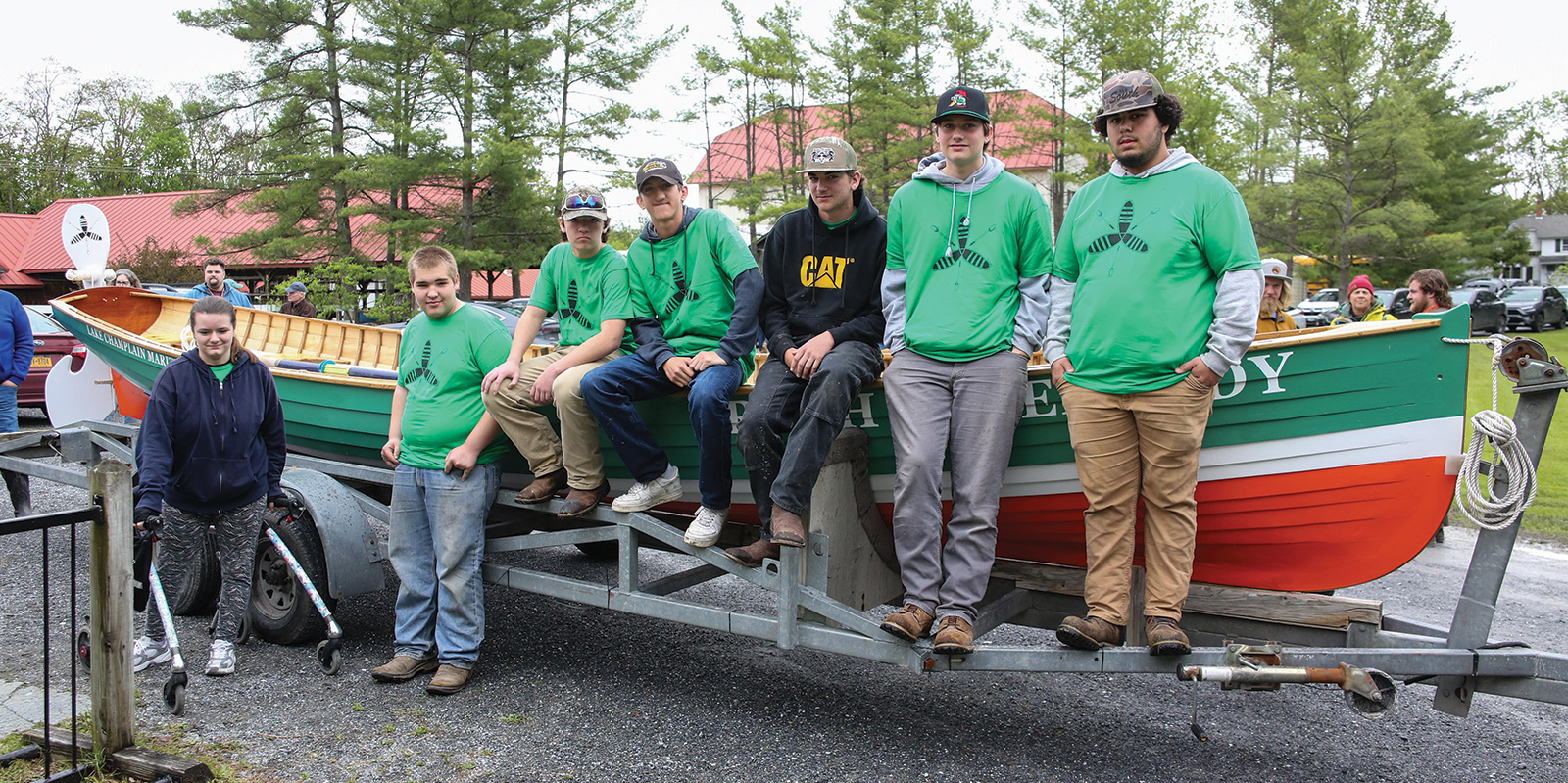
The Lake Champlain Maritime Museum of Vergennes, Vermont, offers its Champlain Longboats program to introduce high-school students to boatbuilding and rowing. The project for 2025 was the construction of a four-oared 25′ rowing gig designed by Mike McEvoy. During the school year, 14 students from two high schools came to the museum workshop two or three times each week for the project. The first task was a visit to a forest to look at the kind of trees that would yield suitable lumber. Later, back at the museum, they helped a sawyer mill white-pine, white-oak, and black-locust logs with a portable horizontal bandsaw mill. The gig was planked with the pine and framed with steam-bent oak. The locust was laminated to make the stem and sternpost. The finished gig, RUTH M. KENNEDY, was launched in May 2025 and joined the museum’s fleet of 18 gigs used in the Longboats program.
7′9″ Prams
Photos by Patrick Werner
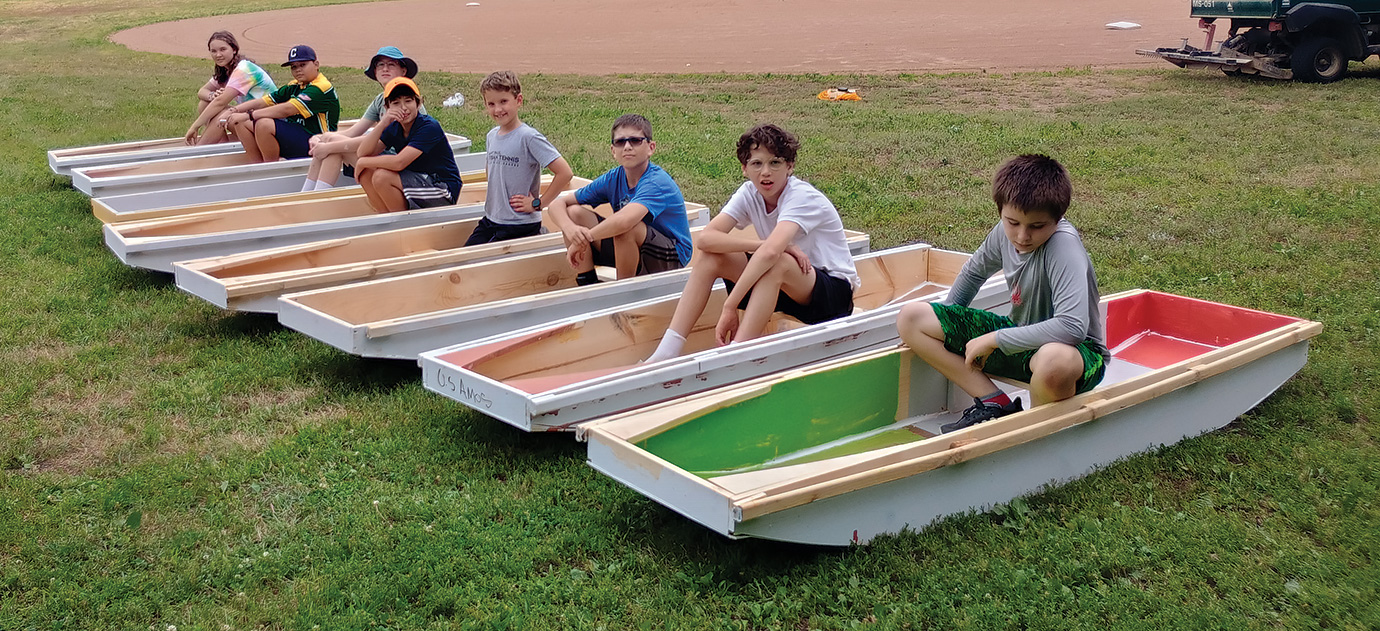
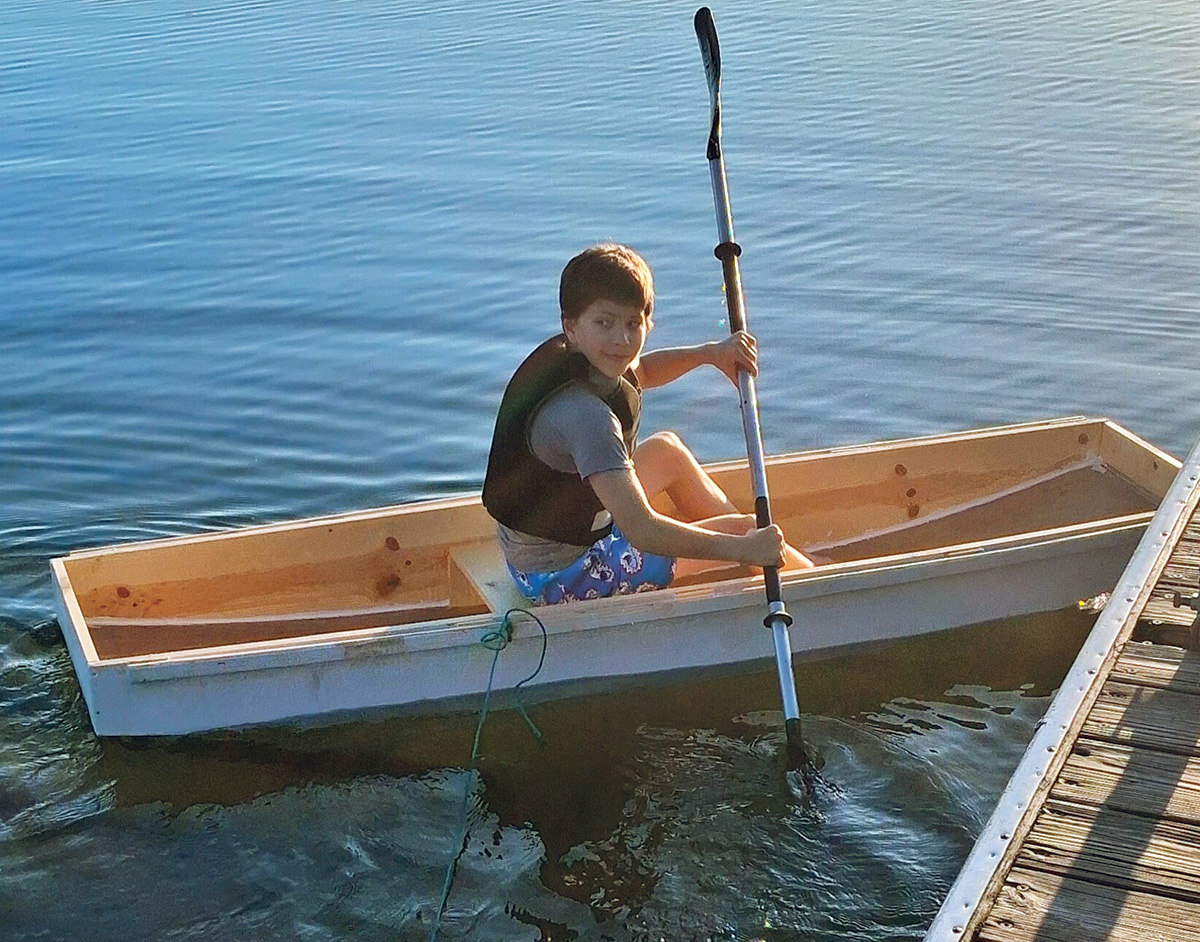
For the past eight years, Patrick Werner of St. Paul, Minnesota, has been helping kids build boats at the city’s Linwood Community Recreation Center. Some years they build double-paddle solo canoes, others they build outboard-powered Mini-Max hydroplanes. For four days in summer 2025, eight kids aged 8 to 16 built eight 7′9″ prams. Patrick had drawn the plans over the previous winter and made a few modifications suggested by the kids before they began construction. The sides for each boat were cut from 8′ long 1×10 boards and ¼″ plywood was used for the bottom. The 22″-wide bow and stern transoms were cut from the 1″ stock and the thwart spreads the sides to a beam of 24″. The kids made double-bladed paddles using 1″ PVC pipe for the shafts and plywood for the blades. The boats were launched October 1, 2025, on McCarrons Lake, just north of St. Paul.
SAN JUAN
Photos by Mendi Urruzuno
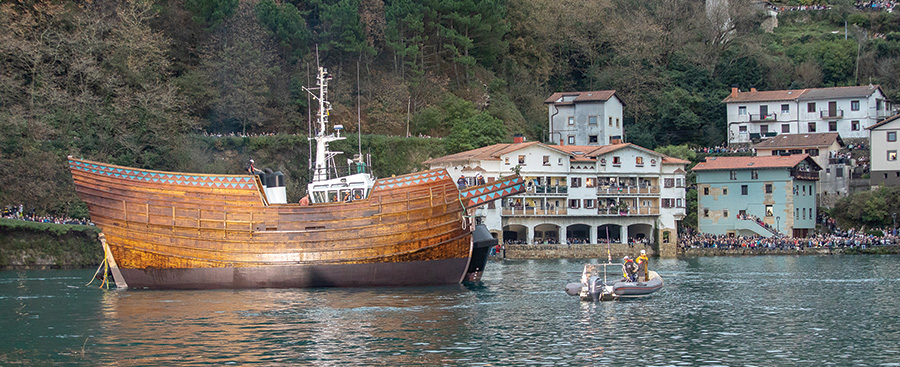
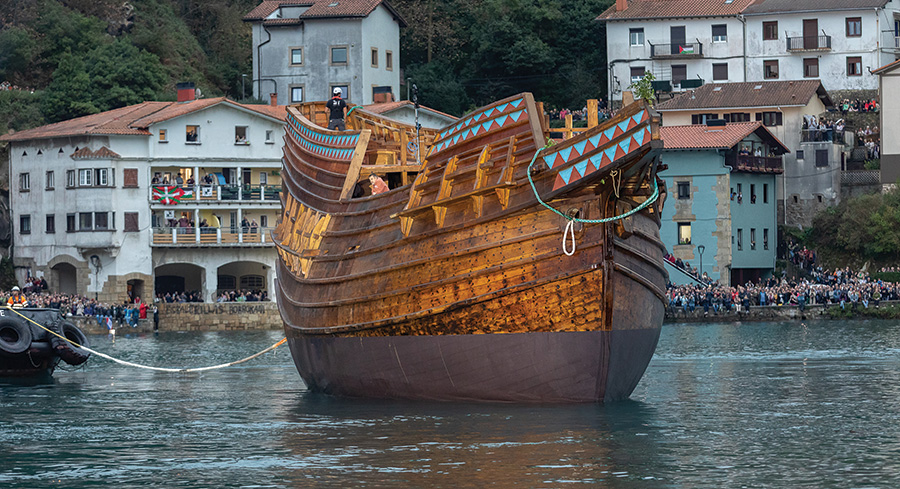
The Albaola Maritime Culture Factory is a Basque working shipyard museum situated in the Basque Country on the coast of the Bay of Biscay, between Spain and France. For the past 12 years, shipwrights there have been building a replica of the 92′ galleon SAN JUAN, a 16th-century Basque whaling ship that sank in Red Bay, Labrador, Canada, in 1565. The wreck was discovered in 1978 and the thousands of pieces that archaeologists found buried in the mud provided a wealth of information for the accurate replica. Construction of the new SAN JUAN began in 2013 with a 50′ beech keel and some 200 oak compass timbers harvested with shapes to match the ship’s frames. The hull was planked with oak. The new SAN JUAN was launched on November 7, 2025. The spars, made from 20 fir trees felled for the project, have yet to be installed and rigged. The goal is to set sail for Red Bay in 2027.
Rangeley Lake Trout Boat
Photos by Joel Pagel
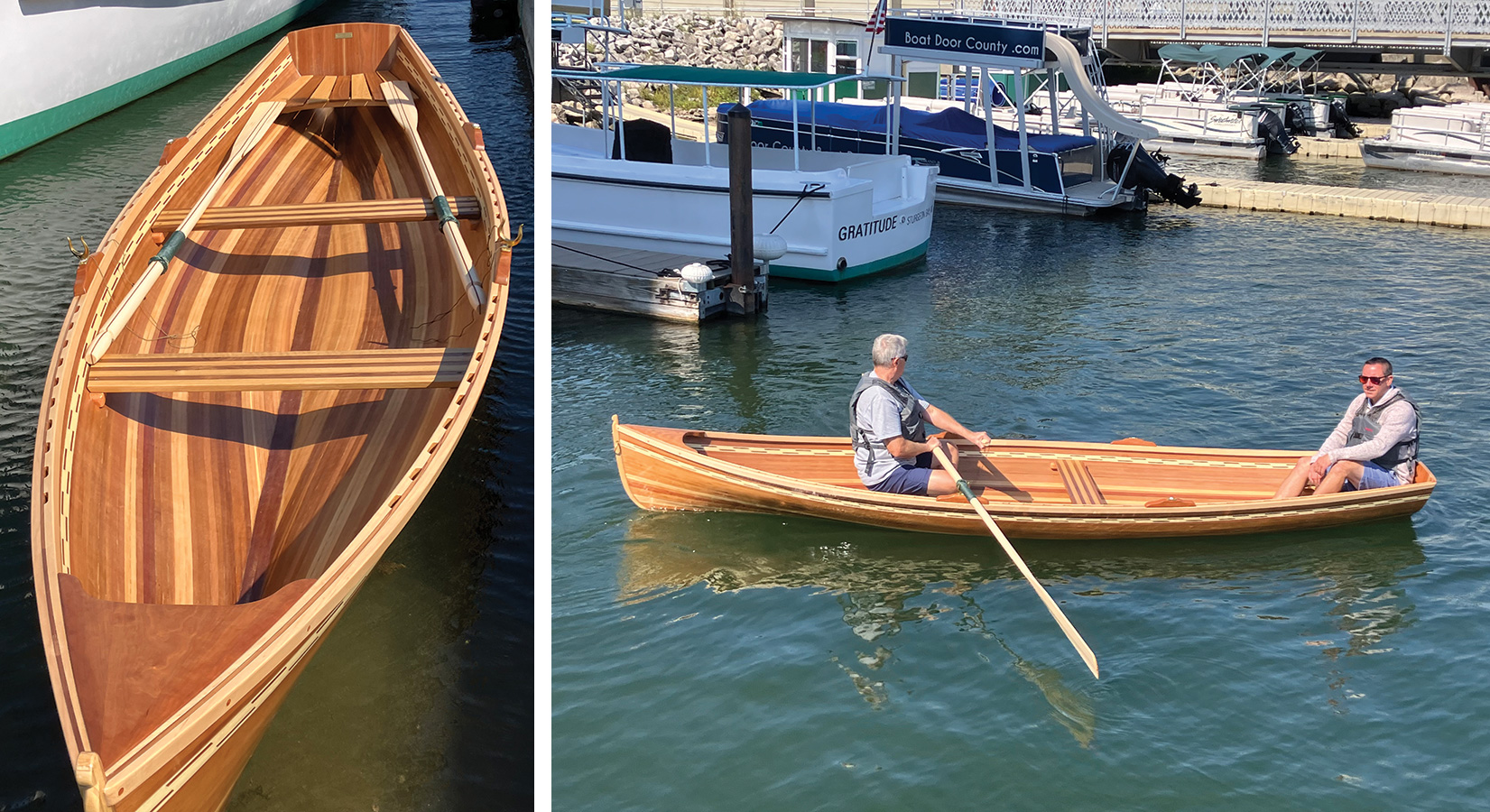
For the past 30 years, the Door County Maritime Museum in Sturgeon Bay, Wisconsin, has hosted an annual class to pass boatbuilding skills on to the local community. In October 2024, a class of seven, consisting of three returning students and four instructors, began work on a Rangeley Lake Trout Boat using plans from Newfound Woodworks of Bristol, New Hampshire. Aside from the western red cedar used for much of the strip-built hull, the builders used local wood species: white ash for the keel; cherry for the breasthook and transom; walnut and white oak for the seats; and maple for the inwales, outwales, and their spacers. For the oars, they used wormwood maple, and the boathook was laminated of spalted maple with a cherry center layer. The boat, launched unnamed at the museum in June 2025, was built to be raffled off to raise money for the museum’s mission of preserving the county’s rich maritime traditions.
OUZEL
Photo by Russell Kaye
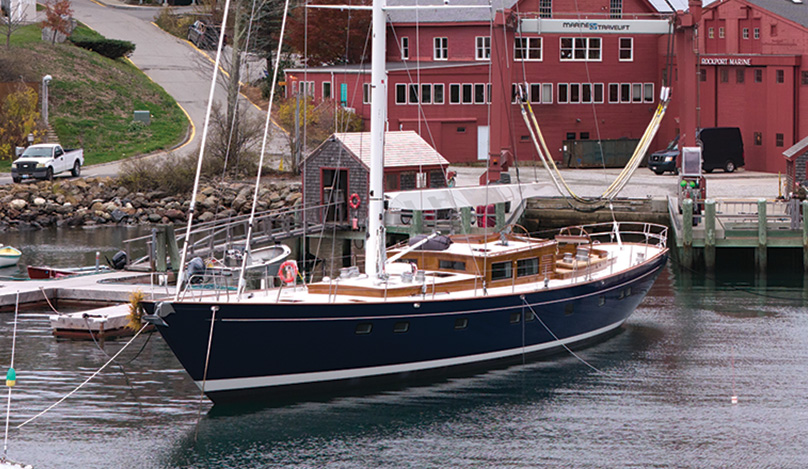
OUZEL, a 95′ sloop-rigged superyacht with a beam of 20′6″, was launched November 9, 2025. The boat was built by Rockport (Maine) Marine in collaboration with project managers at MCM of Newport, Rhode Island, naval architects and yacht designers at Langan Design Partners, also of Newport, and interior designer Mark Whiteley of Lymington, England. OUZEL’s hull is cold-molded using western red cedar and Douglas-fir in combination with fiberglass, carbon fiber, and foam coring. Above the waterline, she has the look of a classic pilothouse cutter but below the hull is decidedly modern. The rudder is a deep high-aspect-ratio foil, and the fin keel carries a streamlined sand-cast-lead ballast bulb. The steel-framed and -sheathed fin serves as a tank for additional fuel for the 400-hp diesel engine. The owners, experienced sailors, will use OUZEL for wide-ranging cruising.
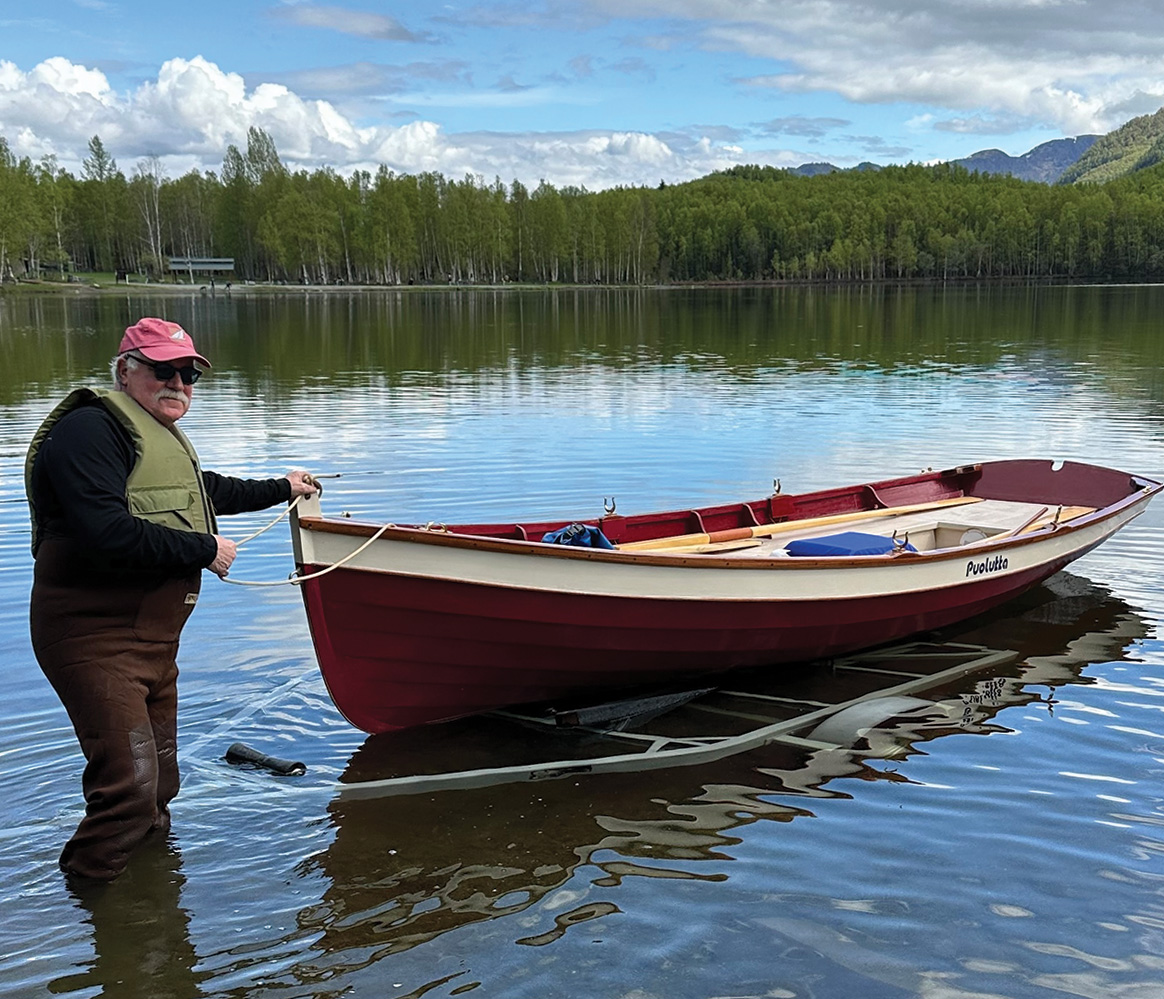
PUOLUKA
Photo by Brad Fleener
As a youth, Brett Joel helped his grandfather restore a decked canoe but hadn’t done much woodworking since then, aside from a few rough-hewn tables and a Murphy bed. Inspired by reading WoodenBoat for years, in 2016 he attended WoodenBoat School in Brooklin, Maine, and learned about glued-lapstrake construction from Arch Davis. It was the first time Brett had used a bandsaw. After the class, he bought a new bandsaw, acquired a used tablesaw, and built a router table. Tooled up and recently retired, Brett set to work on a Penobscot 17, a 17′ sail-and-oar beach cruiser designed by Davis. He planked the hull of ¼″ meranti plywood on a keel and stringers of Douglas-fir. Using Sitka spruce, he made the two masts, their spars, and two pairs of oars. After working 2,000 hours over four years, Brett launched PUOLUKA—the Finnish word for lingonberry—and now sails and rows her on the inland waters of south central Alaska.
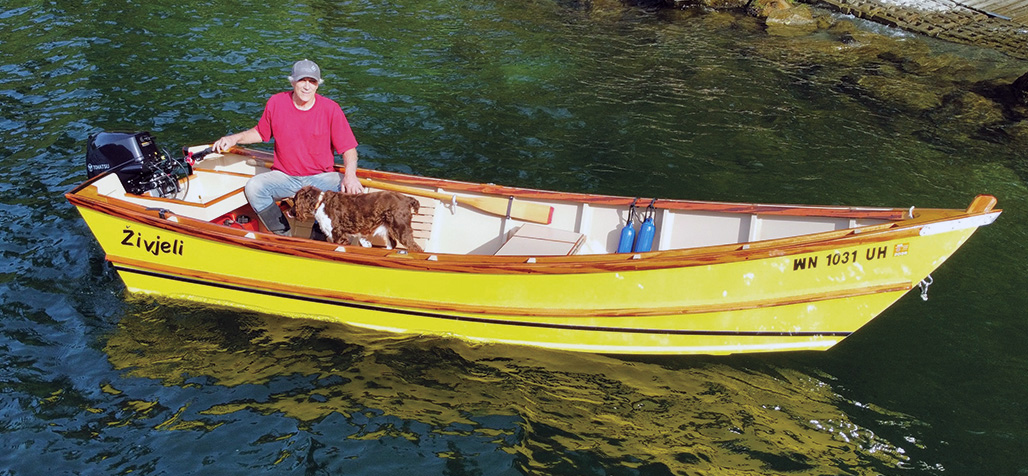
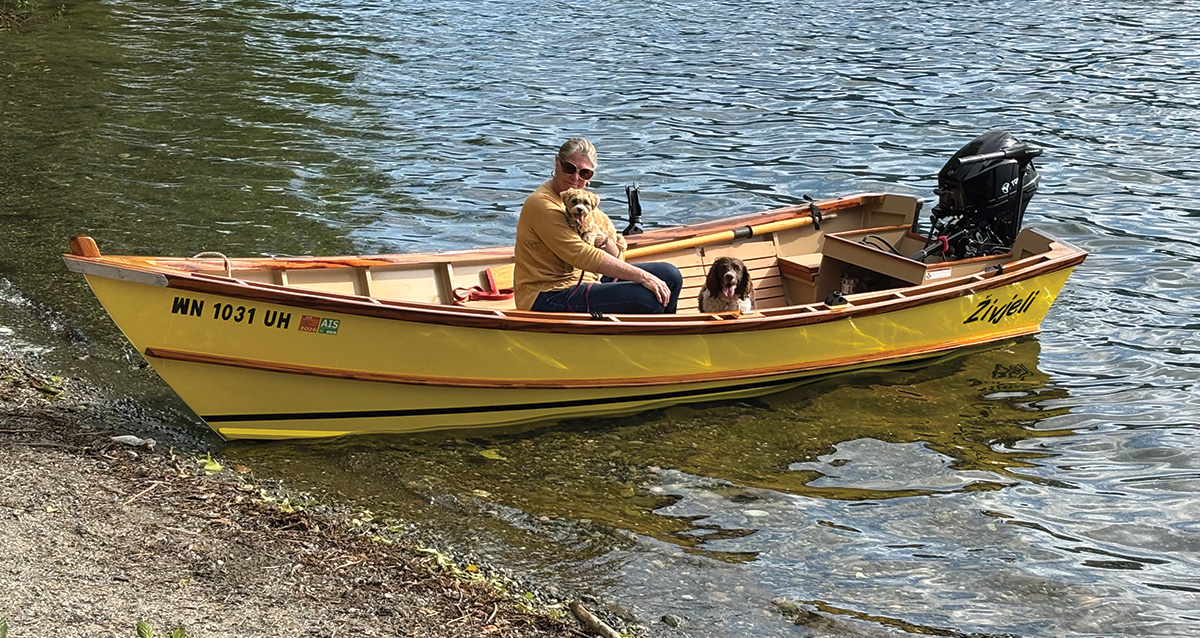
ŽIVJELI
Layne Brennick Anthony (above), Nick Ivancovich (below)
Dreams of building a boat don’t die easily. Nick Ivancovich of Sedro-Woolley, Washington, kept his alive for 50 years. Through the 1970s, ’80s, and ’90s, he crewed on commercial fishing boats and ran a construction company. While remodeling a church, he salvaged lots of clear Douglas-fir 2×2s with vertical grain; other jobs supplied leftover tigerwood decking. All the while, he collected the tools and manuals he’d need to build a boat. When he retired, he bought plans for the San Juan Dory designed by Dave Roberts of Nexus Marine in Everett, Washington. When Nick began working on the 16′ flat-bottomed planing skiff in September 2024, he enjoyed adapting his woodworking skills to the challenges of boatbuilding. He launched ŽIVJELI, a Croatian toast meaning “live life,” in June 2025 and now uses the skiff for crabbing and fishing around Puget Sound.
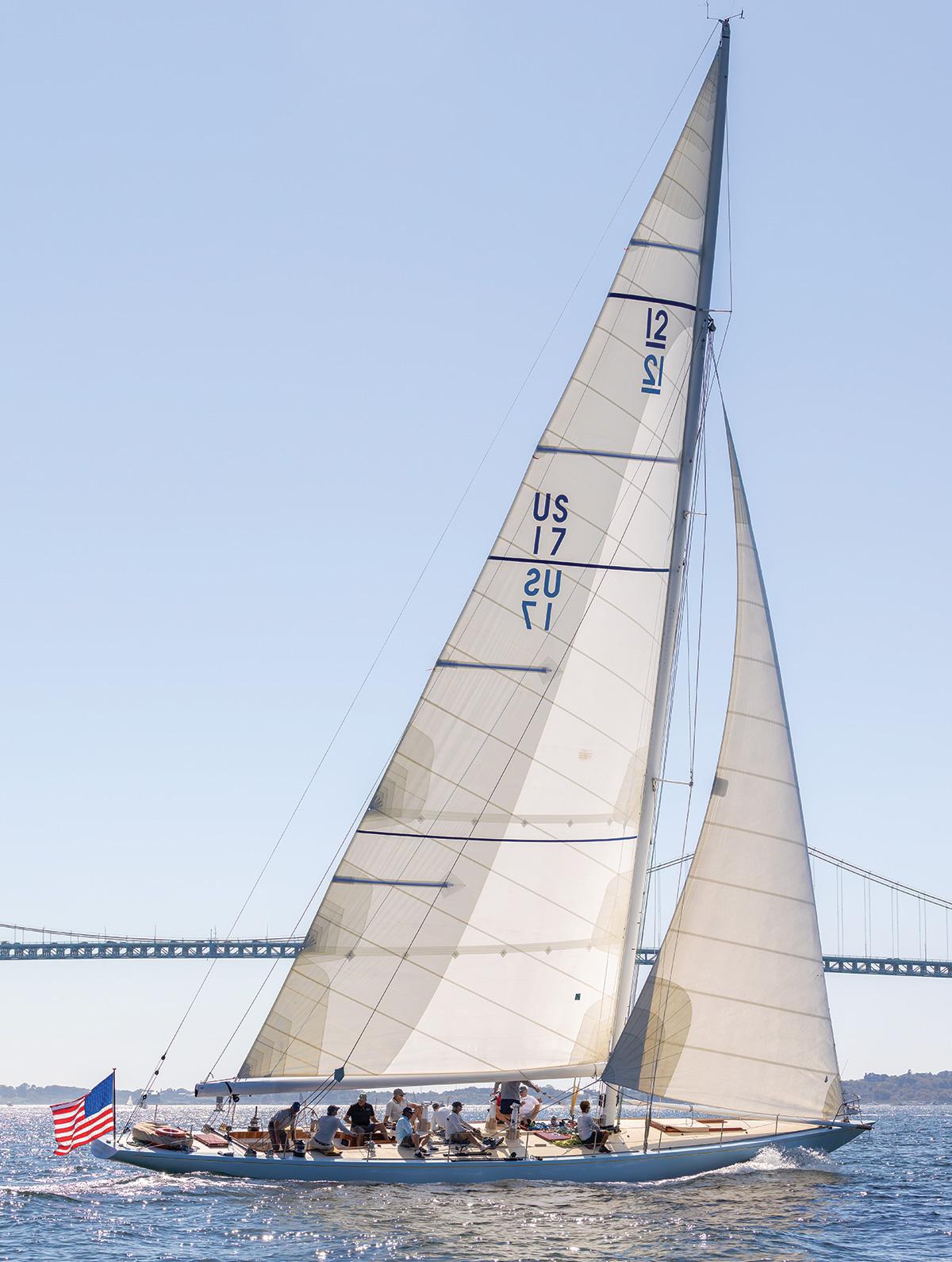
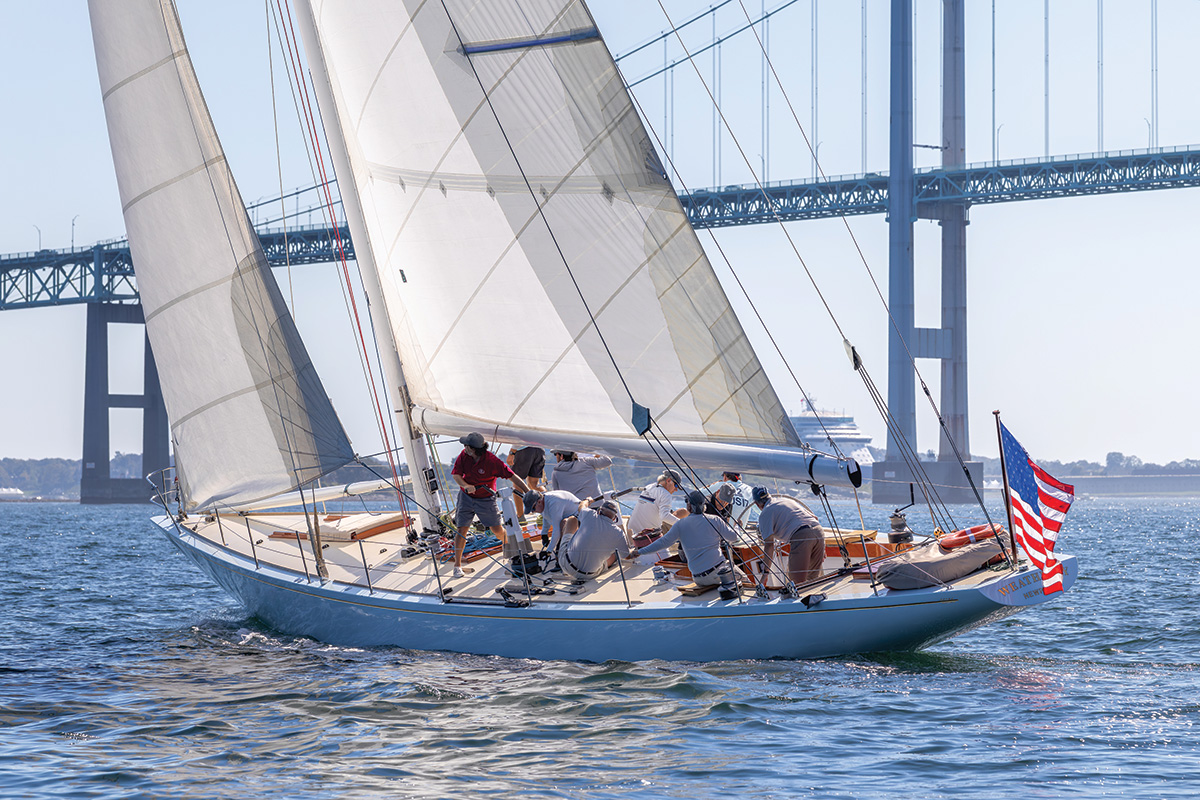
WEATHERLY
Photos by Tyler Fields
The 12-Meter-class sloop WEATHERLY was designed by Philip Rhodes and built by Luders Marine Construction in Stamford, Connecticut, to defend the AMERICA’s Cup in 1958. She was eliminated in the trials that year but redeemed herself at the next contest, held in 1962, by winning the Cup. She competed three more times; after the 1970 challenge she was converted for offshore racing. Her current owner, Steve Eddleston of Bristol, Rhode Island, had her hauled out by Bristol Marine of Somerset, Massachusetts, for an extensive refit. The to-do list was a long one and included work on a damaged rudder, recaulking the garboards, replacing the deck and several deckbeams, rebuilding the original Barient coffee-grinder winches, and moving the helm forward. William Gammel of Grand Prix Resources provided project management for the refit, which spanned 22 months. WEATHERLY was relaunched in July 2025 and now races and charters out of Newport, Rhode Island.
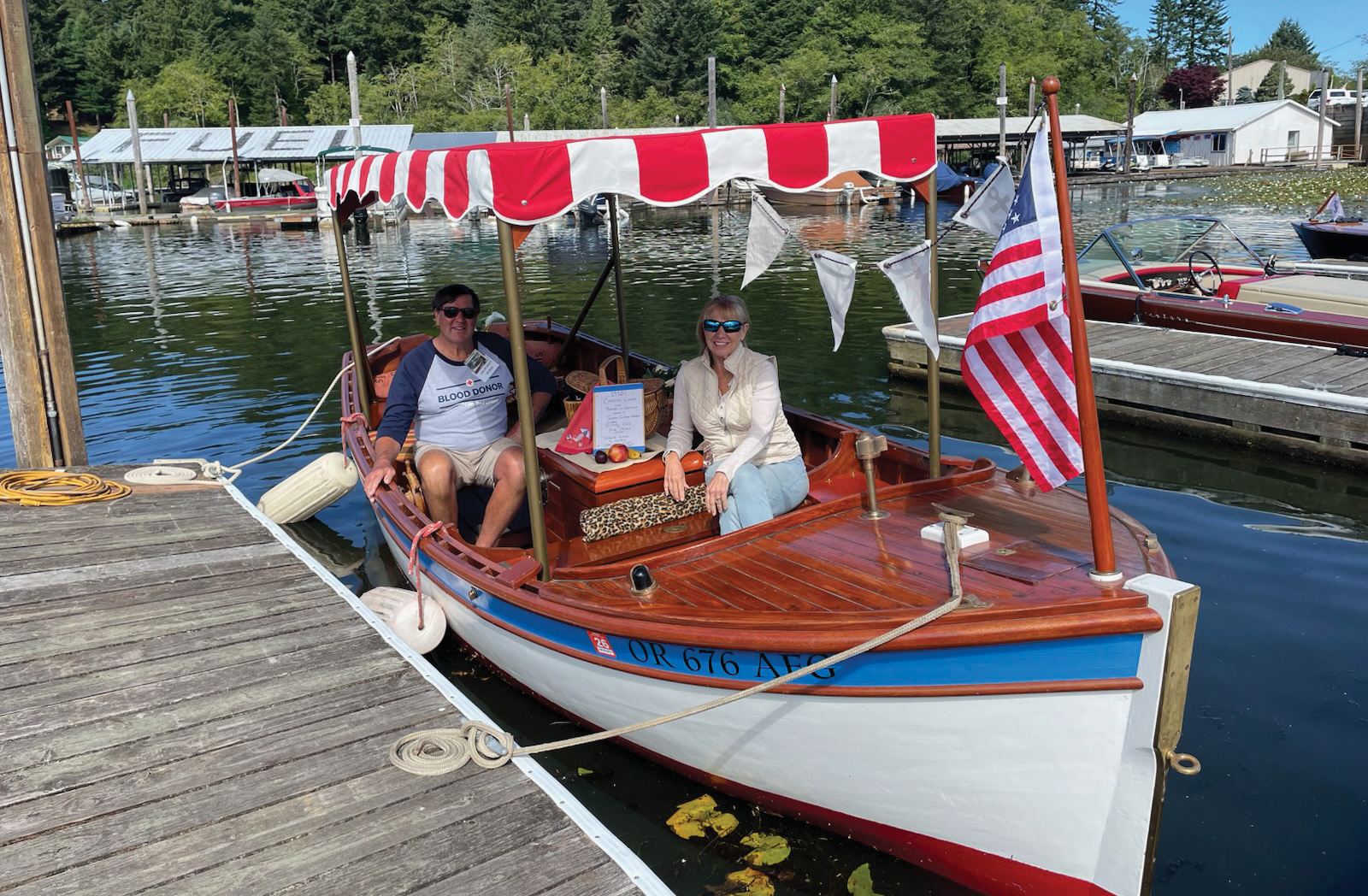
MID CENTURY RUMORS
Photo by Margaret Horn
Michael Stevens was looking for a picnic boat in which he and his wife, Linda, could enjoy the waters around their home near Wilsonville in northwestern Oregon. In 2016, while scanning eBay, he found a classic-looking boat that he could restore and modify to serve their purpose. The boat was in Southern California, but he bought it sight unseen; his brother-in-law in San Diego was able to pick it up and later trailer it north. The launch, built in the late 1930s or early ’40s by the Monson Boat Company in Seattle, Washington, looked to Michael like it would be better suited for burning than boating. However, the planking splines that he set with epoxy in the seams of the cedar-on-oak hull strengthened it and began to restore its integrity. The boat’s Universal Atomic 4 gas engine, however, dated back to the late 1970s and was beyond restoring, so Michael made the conversion to an electric motor from Minnesota-based Electric Yacht. At the end of the six-year project, the addition of a surrey top completed the picnic-boat look. Since her relaunching, MID CENTURY RUMORS has been drawing admiring looks at boat shows.
These pages, along with the Boat Launchings section of www.woodenboat.com, are dedicated to sharing recently launched wooden boats built or restored by our readers. If you’ve launched a boat within the past year, please email us at launchings@woodenboat.com, or write us at Launchings, WoodenBoat, P.O. Box 78, Brooklin, ME 04616.
Please include the following information:
- The boat’s length and beam;
- The name of its design class or type;
- The names of the designer, builder, owner, and photographer;
- Your mailing address along with an email address or phone number;
- The port or place of intended use;
- Date of launching; and
- A few sentences describing the construction or restoration. Send no more than five photographs (jpg images at 300 dpi) and enclose a SASE if you want anything returned.
Hints for taking good photos of your boat
- Set your camera for high-resolution images. We prefer jpg format, at 300 dpi minimum.
- Stow fenders and extraneous gear out of the camera’s view. Ensure the deck is clean and uncluttered.
- Take your photographs in mid-angle sunlight for best results. Mid-morning or mid-afternoon usually work well.
- Keep the horizon level and the background simple and scenic so your boat stands out from its surroundings.
- Take some pictures of the boat underway and some at rest. Often a vertical format works well for sailboats. Shoot a lot of images, then send us your five favorites.
We enjoy learning of your work—it affirms the vitality of the wooden boat community. We receive so many submissions that there is not room in the magazine for all of them to be published. Launchings not printed in the magazine can be seen at www.woodenboat.com/boat-launchings. 