
 Harry Bryan
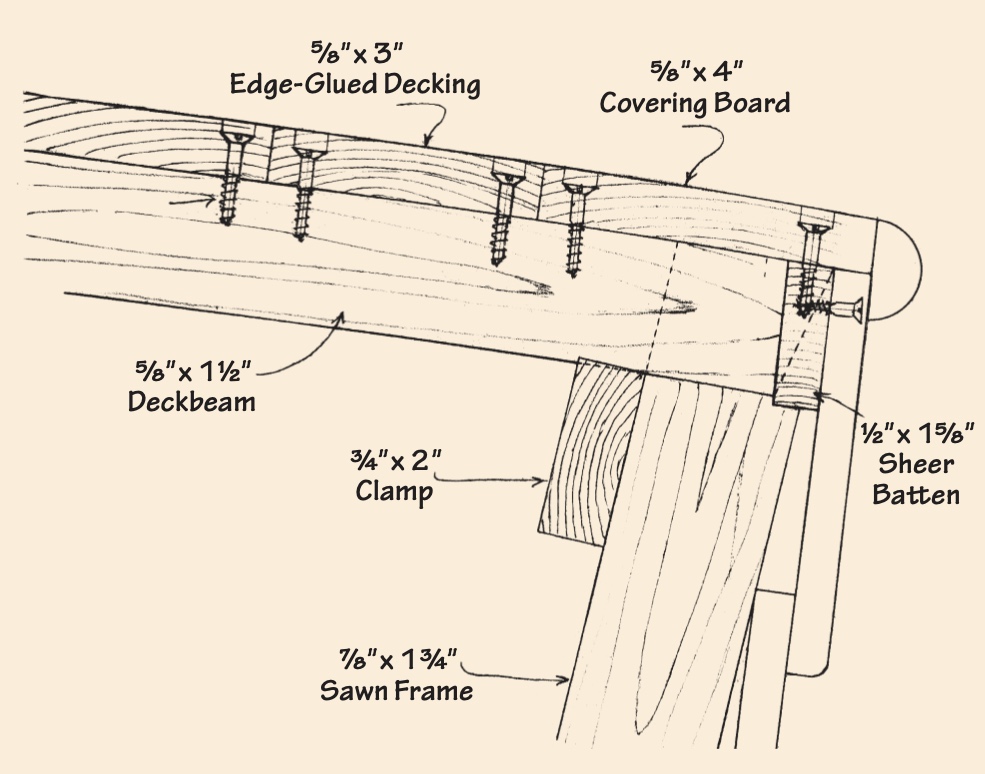
Figure 1—Deck framing at the gunwale for a lapstrake boat with edge-glued decking. Note the use of the sheer batten to receive plank, deck, and guardrail fastenings. The deckbeams fit into a slanted mortise cut into the sheer batten
Many small boats are partially open with only a foredeck and narrow side decks, or have areas of decking both fore and aft connected by side decks. Decking adds strength and stiffness and helps keep water out. It also adds weight and expense, so its advantages must outweigh these inevitable negative properties. There are several approaches to construction: plywood, tongue-and-groove, wood strips, or edge-glued planks.
Many boatbuilders deck their boats with plywood, which is readily available and adds a stiffness and strength that is inherent with the use of wide panels. Its dimensional stability helps assure a long-lasting bond with whatever sheathing material is used over it, such as fiberglass. Plywood decking has been well covered in past issues of this magazine, so I won’t dwell on it here.