

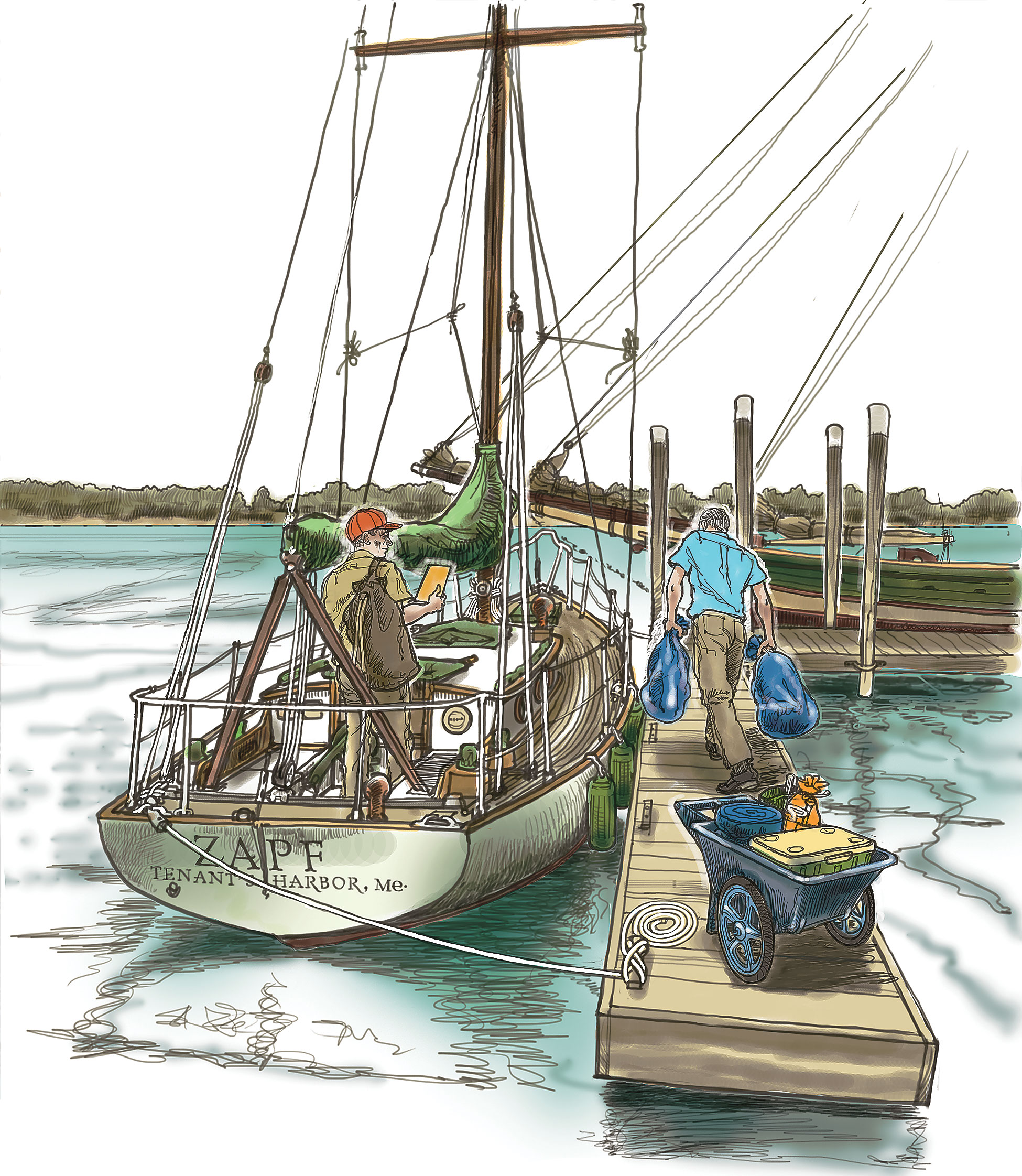
Sailors cling to tradition. It’s well known that we salute the quarterdeck when we board a boat. Perhaps it’s a bob of the head, the shadow of a bow, certainly a smart salute when in uniform. We offer a moment of respect for the ship, for the dangers of even the smallest voyage. The nod is also acceptance of the caution and humility we share with the Old Fellahs, our watery continuum.
Less well known is the same salute given as we leave the ship. This may be a more complex and general observance: This nod acknowledges thanks for bringing us back, miraculously dry-shod; it gives thanks to the ship itself for carrying us safely and giving us the renewing gift of perspective on the shore; and it acknowledges that the voyage could easily have gone so differently.
As we get started in boats, let’s pause a moment before we make our bow to the boat and head inland. How well do you leave her?
A friend of ours flew off to New Zealand on winter holiday. A message reached him that his boat had sunk at its mooring, diesel fuel was leaking, and the Coast Guard was contemplating a $40,000-per-day fine unless an immediate salvage plan was put in place. Your take-away lesson from this mishap (which was rectified and repaired) is that disaster isn’t usually a catastrophic collapse of structure or system but a tiny sliver of failure, the proverbial 56¢ part or a momentary lapse of attention as you put your boat to bed overnight or over a season.
Good Boatkeeping
“How does he keep his tools?” This is one way we regard a craftsman. Do you trust a craftsperson whose chisels, files, and Vise-Grips are jumbled into a drawer together? Perhaps there are exceptions, but generally a fine woodworker or machinist has near-obsessive respect for his tools and puts them away with a care beginners might view as exaggerated.
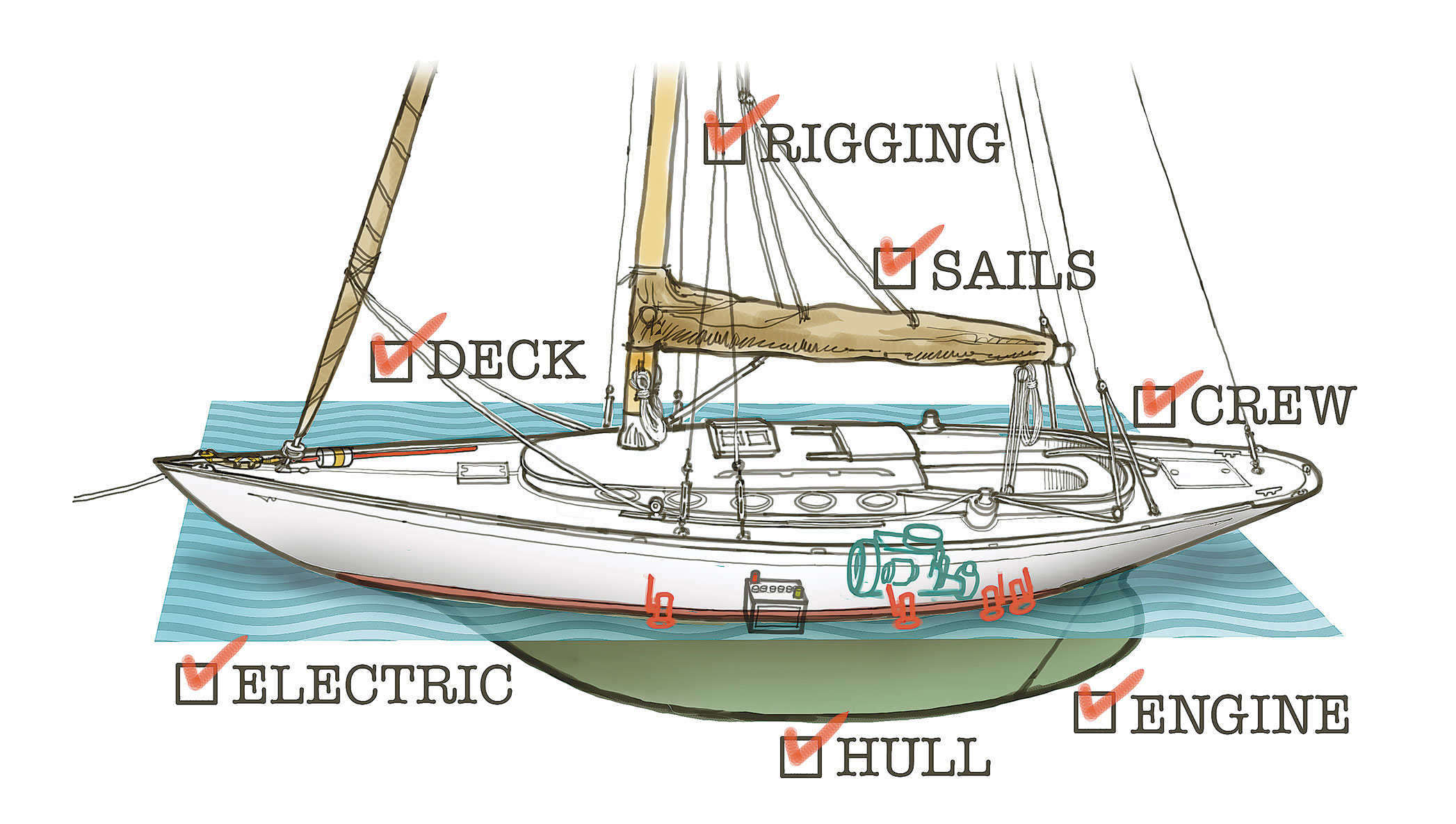
The way you put away your boat reflects your judgment, respect, and skill. It’s a skill you learn, not truly difficult but painstaking and detailed. Good skippers won’t trust their recollection at the tired, dehydrated, fumbling end of a day on the water; they rely on a harbor-list. They tick off the items one by one, involving the crew in bringing the boat to a point of safe stasis and future readiness.
Since you’re beginning in boats, resolve not to take counsel of your tired and frazzled self, but to obey your sharpest decisions laid down in a personal checklist compiled with foresight and probably with help from experienced shipmates. It must ultimately be personal, since every boat and every skipper differs. It’s an important document and mnemonic.
Composing your checklist isn’t easy, and you’ll go through successive iterations until you’re wholly satisfied. A good place to start: break down the tasks into areas of concern.
Hull
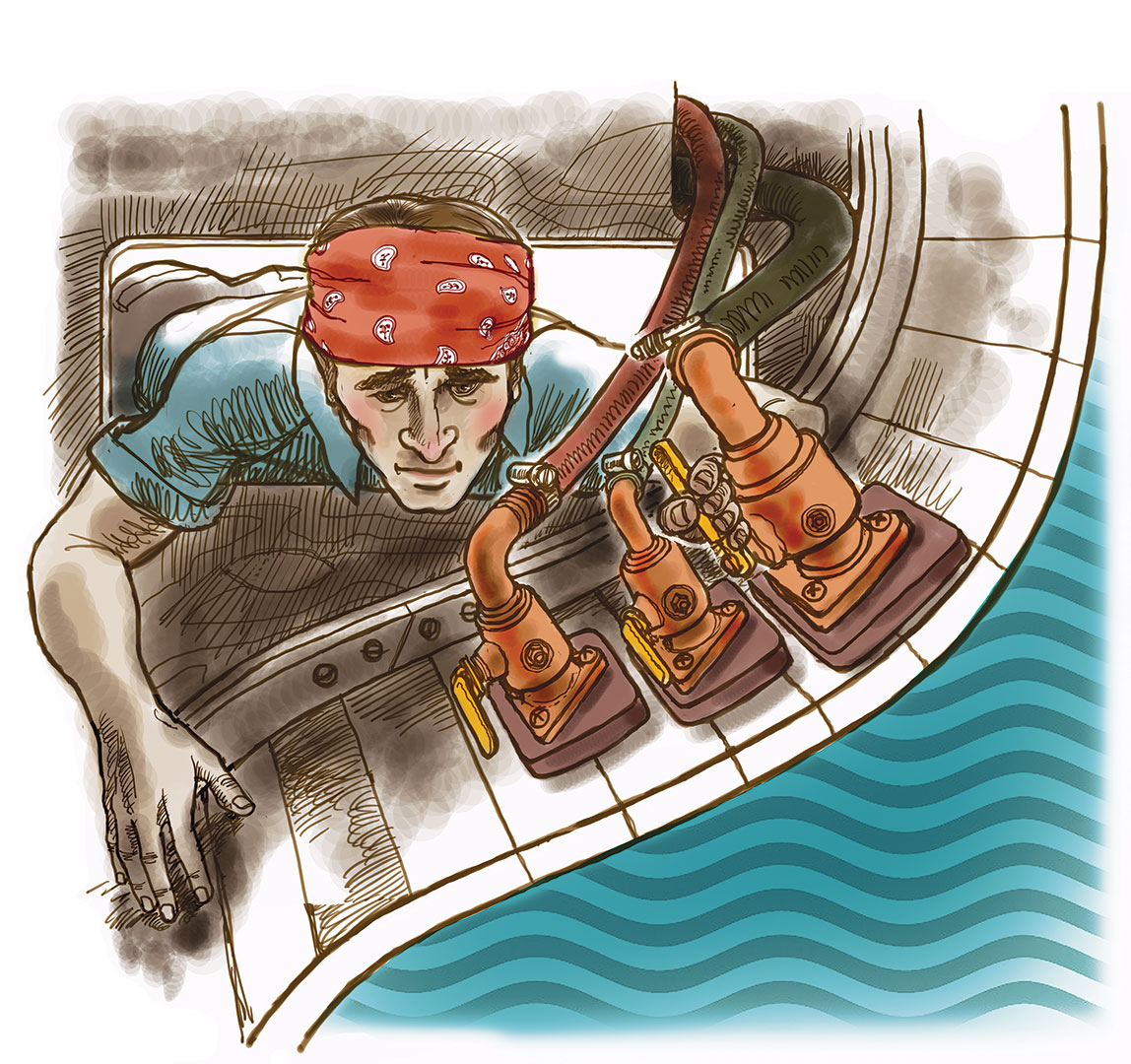
How do you leave your hull? What through-hull valves must you close? The raw-water heat exchanger is potentially dangerous. Water can siphon through the head. Sink and cockpit drains are also suspect. Do you have a depthsounder or knotmeter that is pulled at the end of a voyage, and is its plug secured? Portholes and hatches are parts of your boat’s weatherproof integrity.
Possible checklist entries:
– Close through-hull fittings A, B, C, etc.
– Check knotmeter plug
– Close and dog all ports (give number to be closed)
– Close and secure main companionway hatch
– Close and secure forward bunk hatch (and, individually, other hatches)
Docking/Mooring Lanes
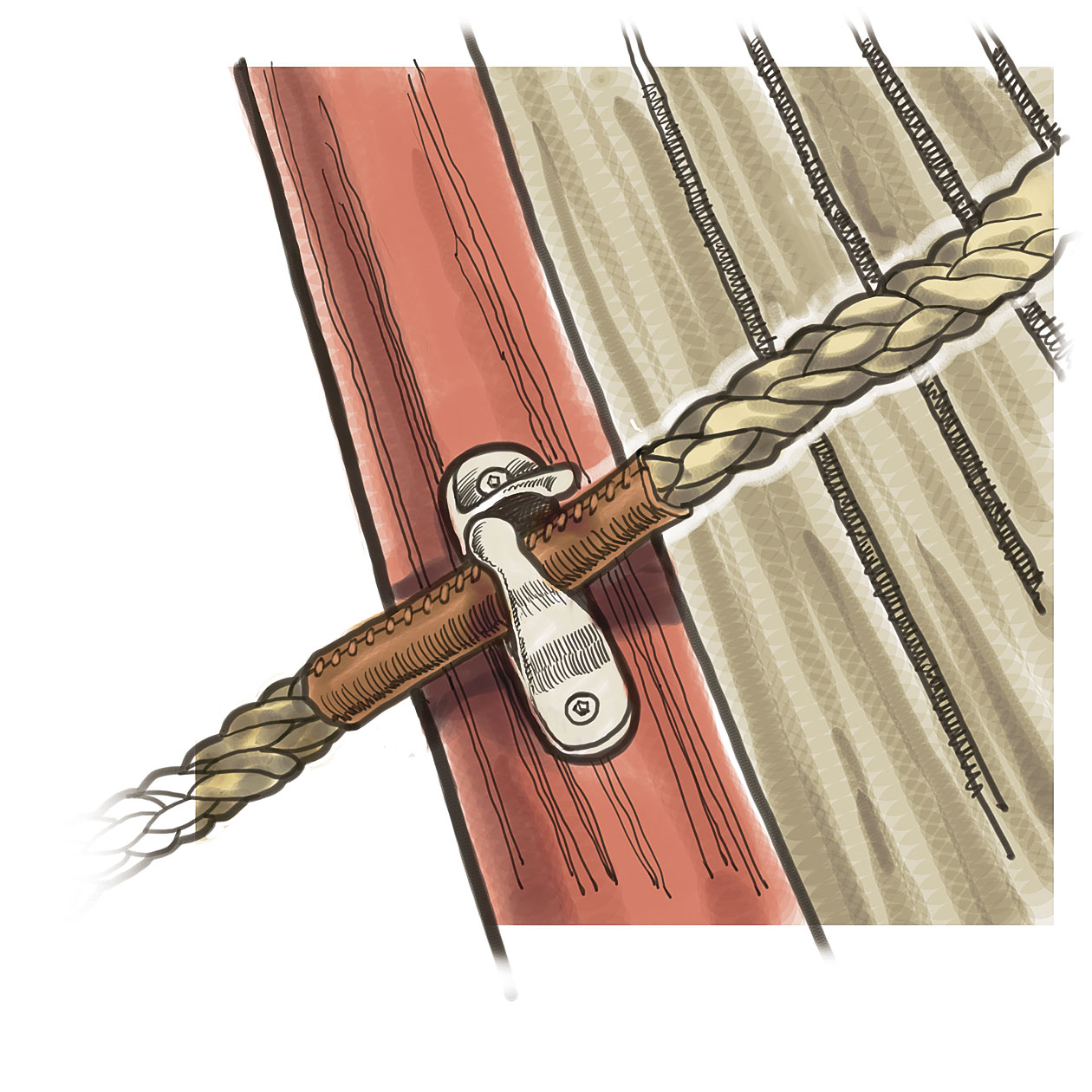
A boat is designed to balance itself moving through the water. When it stops, its stability depends on its holdfasts— and on its fittings: Check the through-deck bolts that secure the cleats regularly. On a mooring, mouse the buoy-line (secure it with smaller line, often with the pendant of the pick-up buoy). The principal hazard here is chafe; the line will be tugged hard against the fairlead more than four thousand times overnight. Provide chafe guard. At a dock or slip, the effects of stout timbers against a frail hull are immediate. If only one of your docklines fails, the tension system that holds your boat clear is likely to fail. Chafe guards are necessary for peace of mind. You’ll sit easier in your easy chair at home if you’ve seen to comfortable placement of the biggest fenders you can stow, well secured at stanchions and not hung from lifelines.
– Chafe guards on mooring lines
– Mouse mooring lines
– Fenders secure and at proper height
Engine
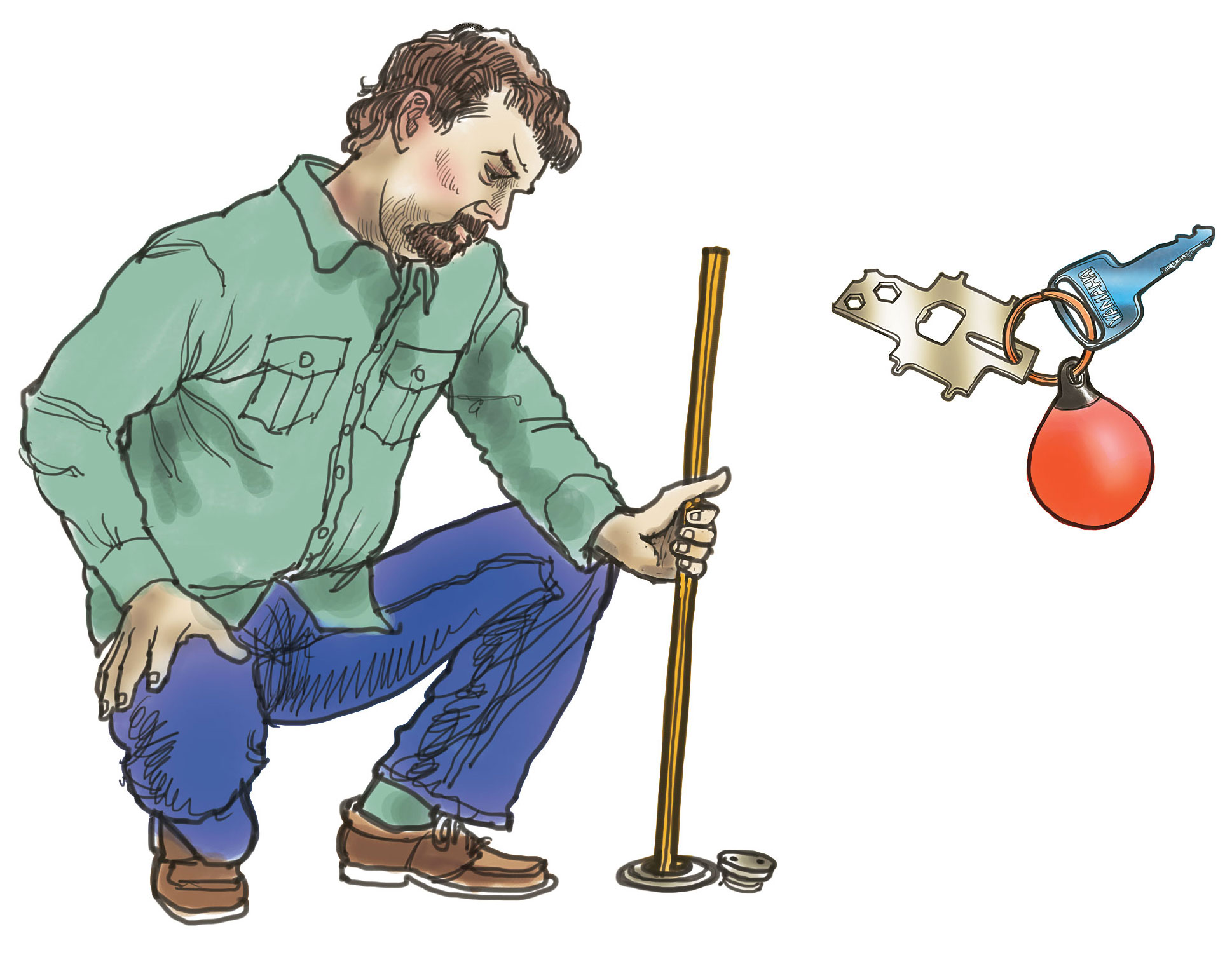
You may wish to note the engine hours, check the crankcase oil, and inspect the engine for any fraying belts or loose fittings that need attention before another start. Be sure the ignition is off and the key is below in its designated spot.
– Engine fluids and belts checked
– Note engine hours
– Stow ignition key
Electric
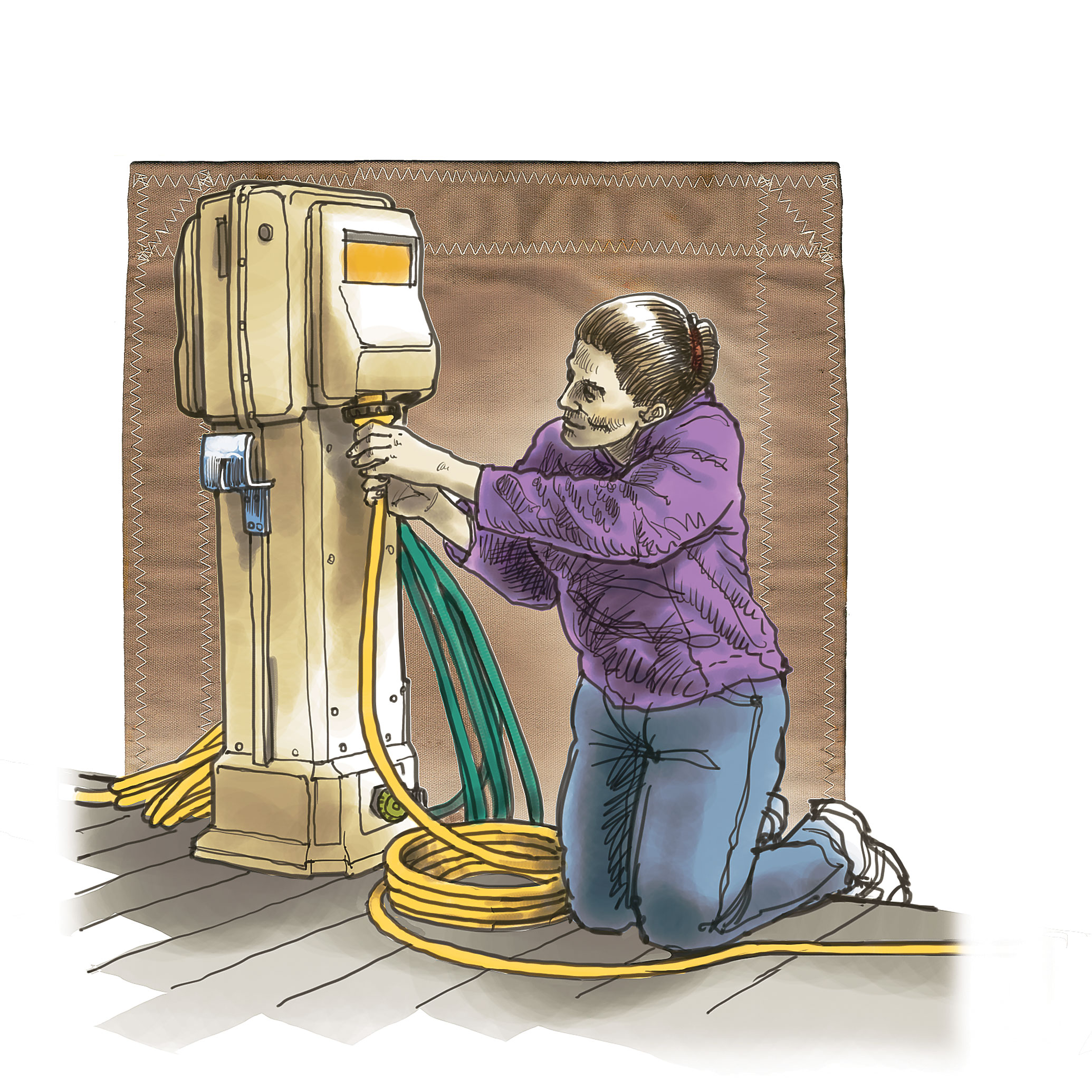
Power down all instruments in logical order and satisfy their programming protocols to save settings. Carelessly leaving instruments on drains your batteries and diminishes their worklife. When you’ve powered down everything but the emergency bilge pump, switch your main electric switch to “ALL OFF” and check your fuse/breaker board for compliance. At a dock or slip, you may be shifting to shore power to top up your batteries; establish the procedure for connecting the shore power line, making the transition from DC to AC, and note voltage and/or amperage on your AC panel. At a mooring, many boats trickle-charge batteries with a bank of solar cells; establish the protocol for setting this system.
Some skippers keep an incandescent bulb burning below; this is for the heat, not the light, as it sets up convection currents that help dry the boat.
– Power down radar, autopilot, course plotter, etc.
– Main battery switch to All Off
– Shore power plugged in, dock switch On
– Solar charger set up and operating
– Designated cabin light on
– Emergency bilge pump on; float switch checked
Cabin
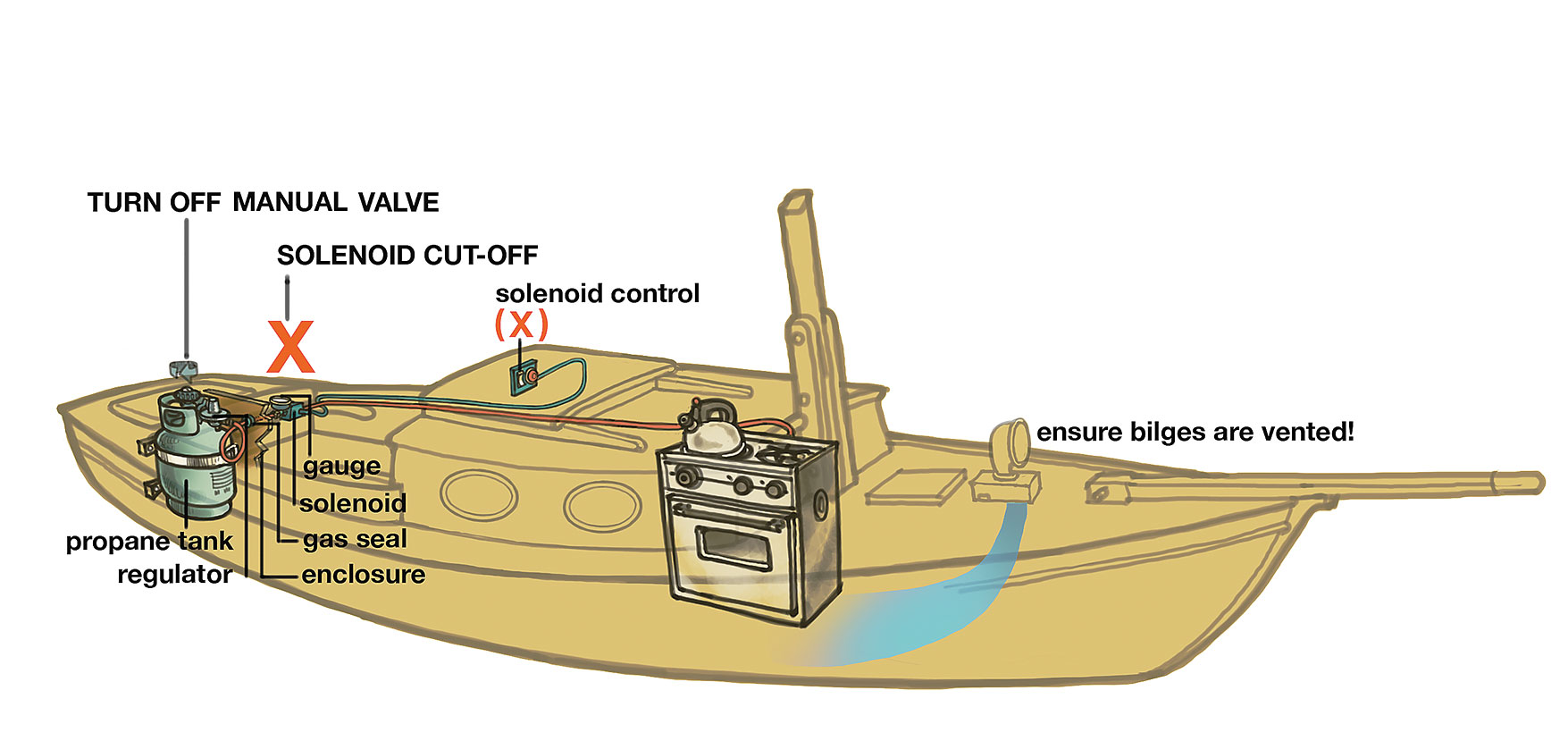
Drain and rinse out the ice chest, which will seize on any small bit of overlooked food, even labels, to ferment and cause a mighty stink. Unsealed food of any kind is an invitation to wharf rats and insects. Be certain everything is out of the oven and/or microwave. Garbage and recycling must be taken ashore to keep a fresh, welcoming cabin. Check for crew items inadvertently left behind; missing small things (cell phone, reading glasses, prescription sunglasses, prescriptions, etc.) can be especially inconvenient, and fetching them from a moored boat or a locked, restricted dock can be difficult.
– Galley clean
– Oven clear
– Propane switch Off
– Ice chest empty, rinsed, and propped open to dry.
– Final check for crew items: drawers, lockers, head
– Waste and recycling bagged and ready to go ashore
– All halyards tensioned away from mast
– Wash-down hull, deck, ports, dodger, cockpit
– Snap-on canvas covers over handholds, dodger windows, binnacle, winches, etc.
On Deck
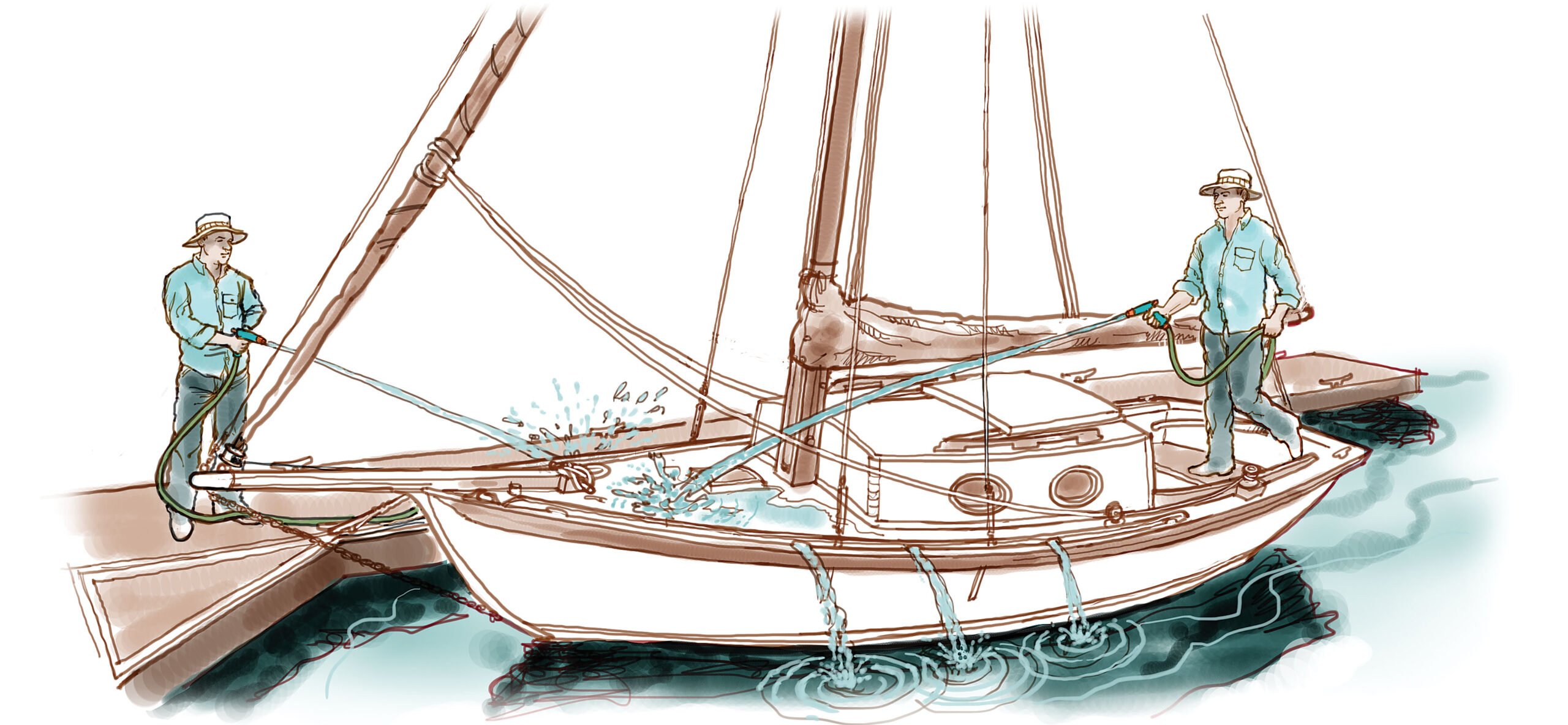
Secure your main (and mizzen) halyard shackle to a convenient, safe holdfast, usually off-mast). Use a short length of line to bunch your halyards, flag pendants, guylines, and topping lifts with several round turns or with a rolling hitch, then secure this line to a shroud to tension them away from your mast. The wind chimes of your slapping halyards may sound good to you, but they will impose themselves on the sleep of everyone in the harbor. At a dock where fresh water is readily, cheaply available, fastidious skippers hose away the inevitable gurry and salt-cake, to leave the deck, the hull (which has passed through the harbor’s crud), and most particularly the dodger and porthole “glass” clean and clear. Among the last bedtime chores will be the installation of various protective canvas covers, if you use them.
Sails
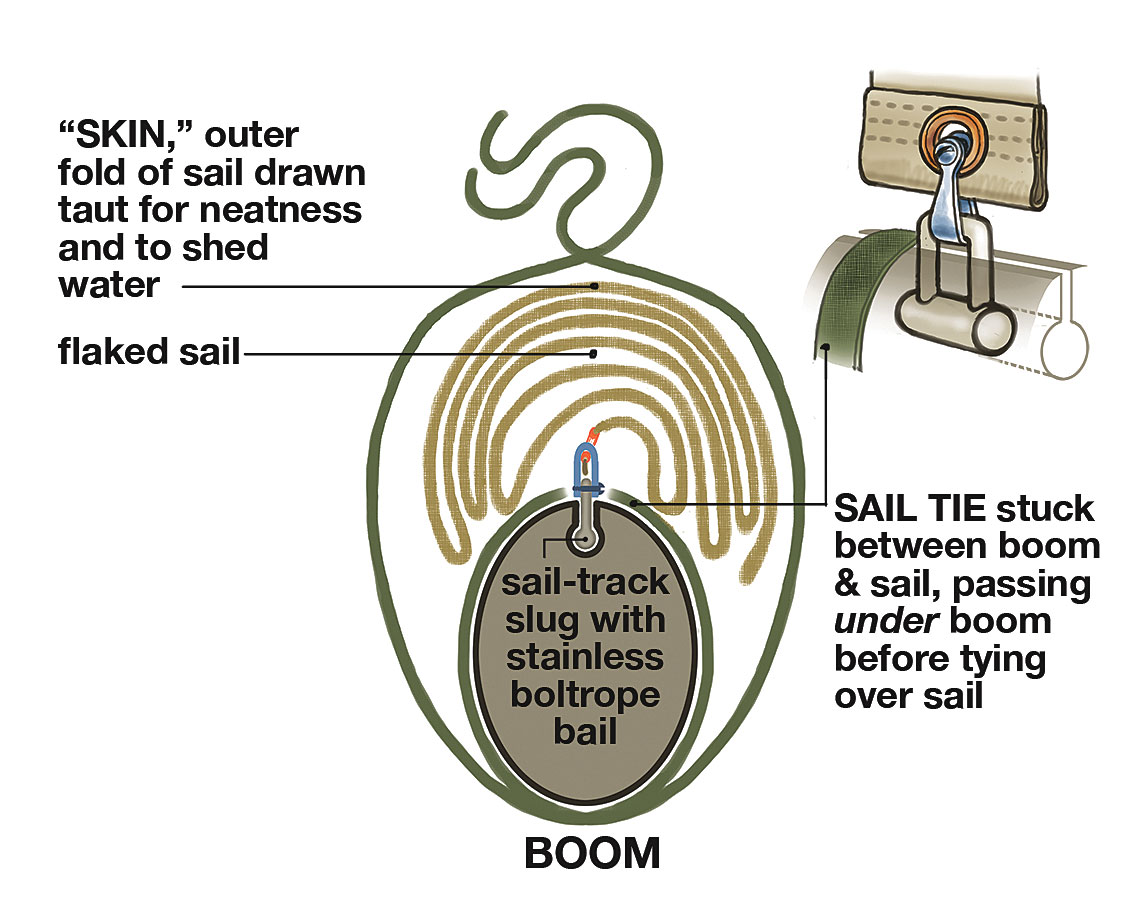
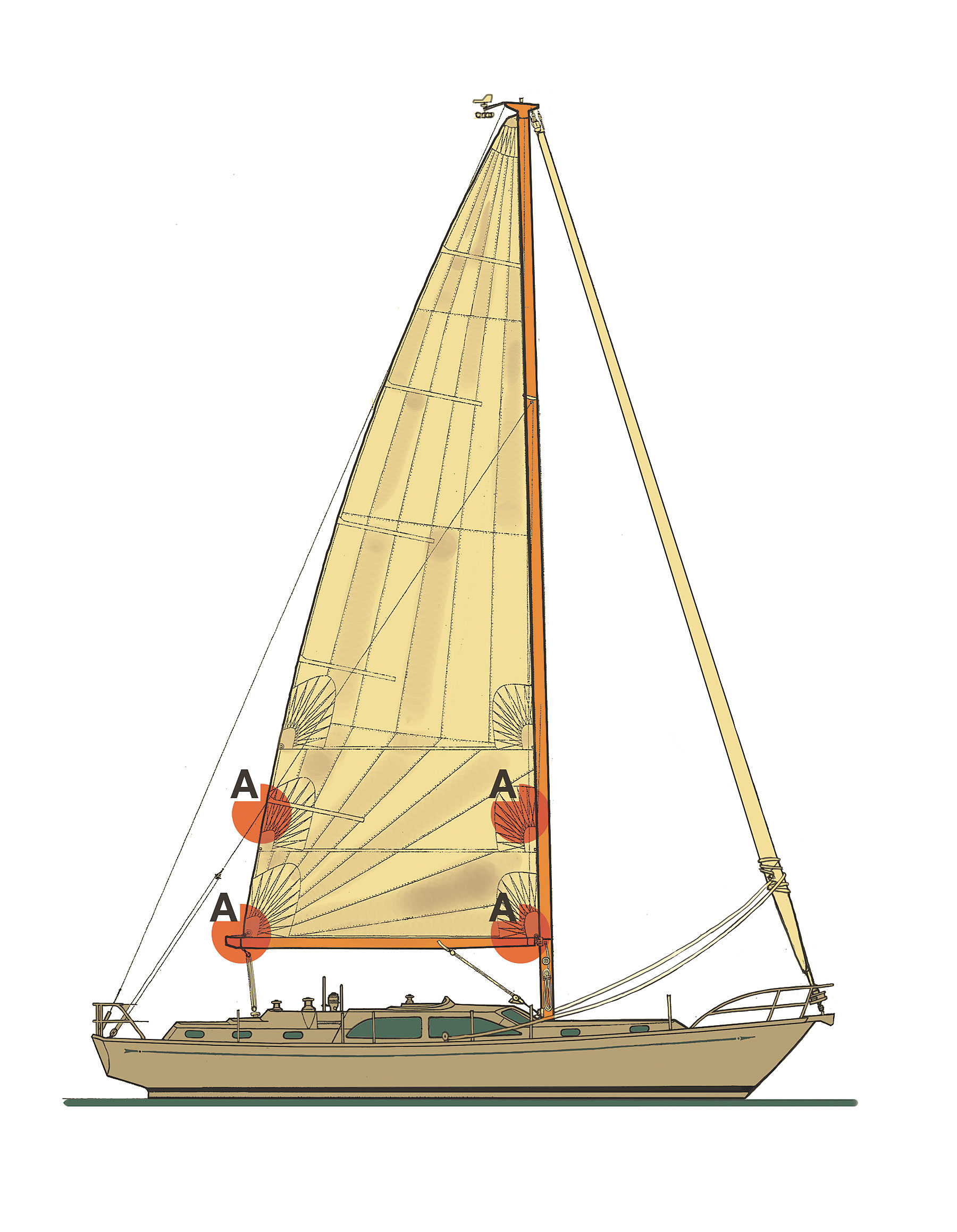
Relieve the tension on outhauls, downhauls, cunninghams, etc., to avoid altering sail shape. If you fly a roller-furling genoa, tension both sheets equally and firmly, and belay them. Flake and harbor furl the mainsail and other boomed sails with a final-flake “skin” that sheds water. Stow bagged jibs or staysails below in their designated bags. Rig the traveler amidships and belay it to avoid boom-swing; or lash booms onto their gallows. Deploy sailcovers and secure them smoothly; they’ll prolong your sails’ working lives by years. Tension topping lifts and lazyjacks— just because it looks better. Coil and arrange sheet-ends neatly; you may be reboarding at night; why leave a mess in the cockpit? Some skippers lock the wheel, some don’t; the size of your rudder and the sturdiness of its pivot should help you determine which you’ll choose.
– Un-tension outhaul and downhaul
– Pair up genoa sheets and belay
– Coil and stow all running rigging
– Harbor-furl and secure mainsail (and, specifically, any other sails)
– Haul traveler amidships and belay it
– Rig sail covers securely
– Even-up lazyjacks (and, specifically, other rigging lines)
Checklist Formats
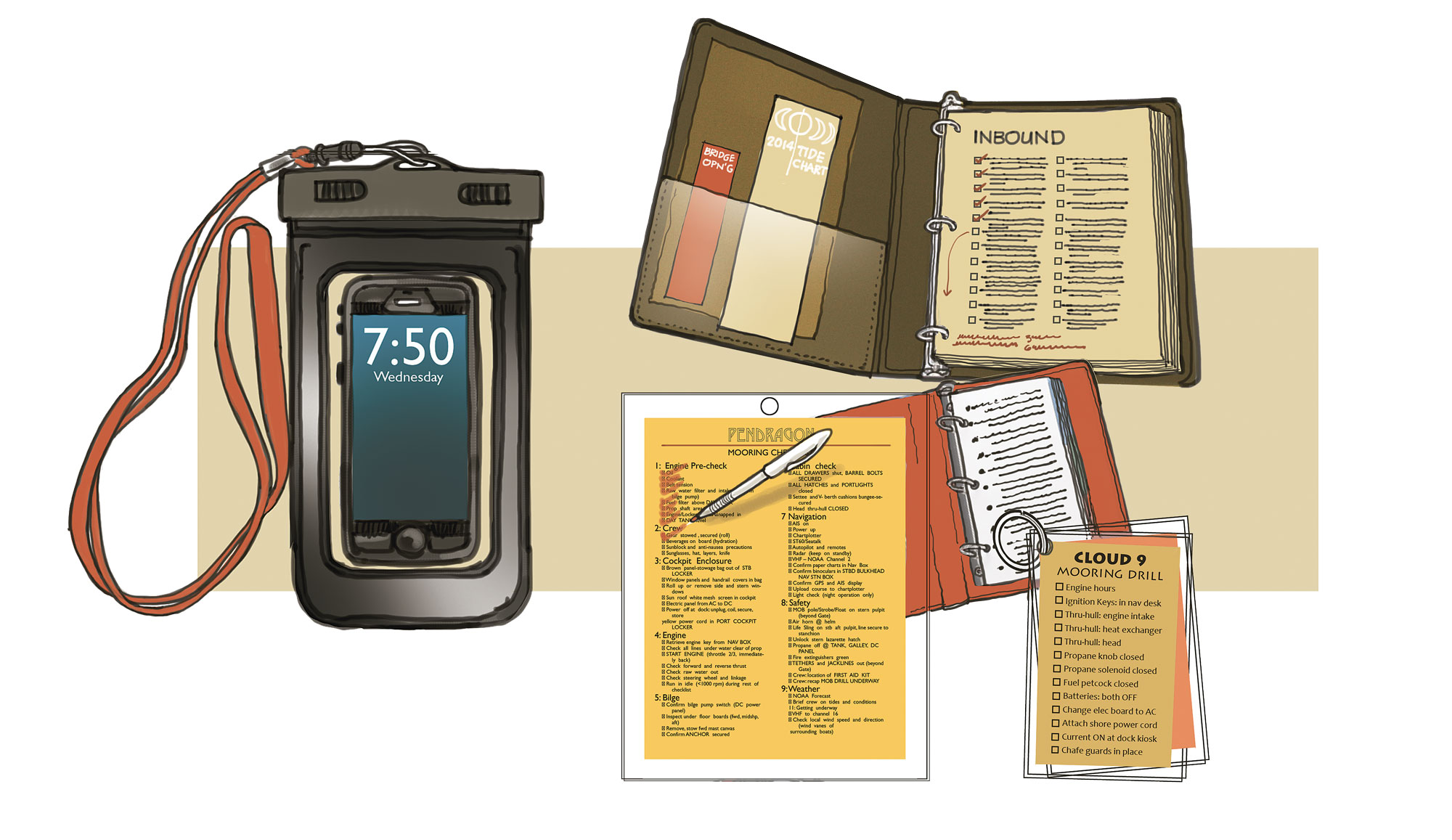
Many skippers have their checklists laminated, and they check off the items with a whiteboard marker. Some have them printed and three hole punched, one for each voyage, as part of a ring-bound log. Choose a style that works for you.