
 Bioaqualife
Shrinkwrap generates an enormous amount of non-recycled plastic waste each year. The Rhode Island-based company Bioaqualife aims to mitigate this problem with a high-performing product that breaks down in landfills.
Every autumn, boats in cold climates are covered in white plastic long before the first snowfall. Shrinkwrap season creates an ominous landscape of plastic waste—posing a threat to the very oceans upon which these boats travel. It’s a bad look for boatyards. Still, customers request shrinkwrap every year, and we’re in the business of providing customer service.
Most of us would welcome an alternative that works for both the customer and the yard. But shrinkwrap waste seems like a necessary evil, which may be why our industry’s first efforts to go greener have been through recycling this material instead of eliminating it. A handful of grassroots resource-recovery efforts around the country have grown into major operations that are responsibly removing hundreds of thousands of pounds of shrinkwrap from landfills annually. If your boatyard hasn’t had the opportunity to become part of one of these programs, you’re missing out. These processes have become so streamlined that it’s often easier to pay for recycling services than to pay for an extra dumpster every spring.
In fact, cost doesn’t have to be a barrier at all to going greener with shrinkwrap recycling. Admittedly, extra labor is unavoidable because all doors, zippers, and ties must be separated from the plastic. However, participation in a state- or organization-sponsored recycling program tends to be inexpensive at roughly $12 to $14 per boat.
Most of the costs charged by recycling facilitators go toward moving the shrinkwrap from yard to processor to recycler. According to Victor Horton of the Maine Resource Recovery Association, the 44,000 lbs of shrinkwrap amassed annually for recycling in Maine moves through one of two processors in the state that collect it, bale it, and load it onto trucks. Rhode Island Marine Trades Association’s Jen Huber says their system offers an alternative to centralized collection facilities to make it easier for yards to participate. RIMTA members’ 190,000 lbs of shrinkwrap are picked up directly from the boatyards by PF Trading of Massachusetts and then processed off site. From there, trucks in both states—among others—are filled to the brim with bales of plastic wrap and then head to the recycling “marketplace.”
 Bioaqualife
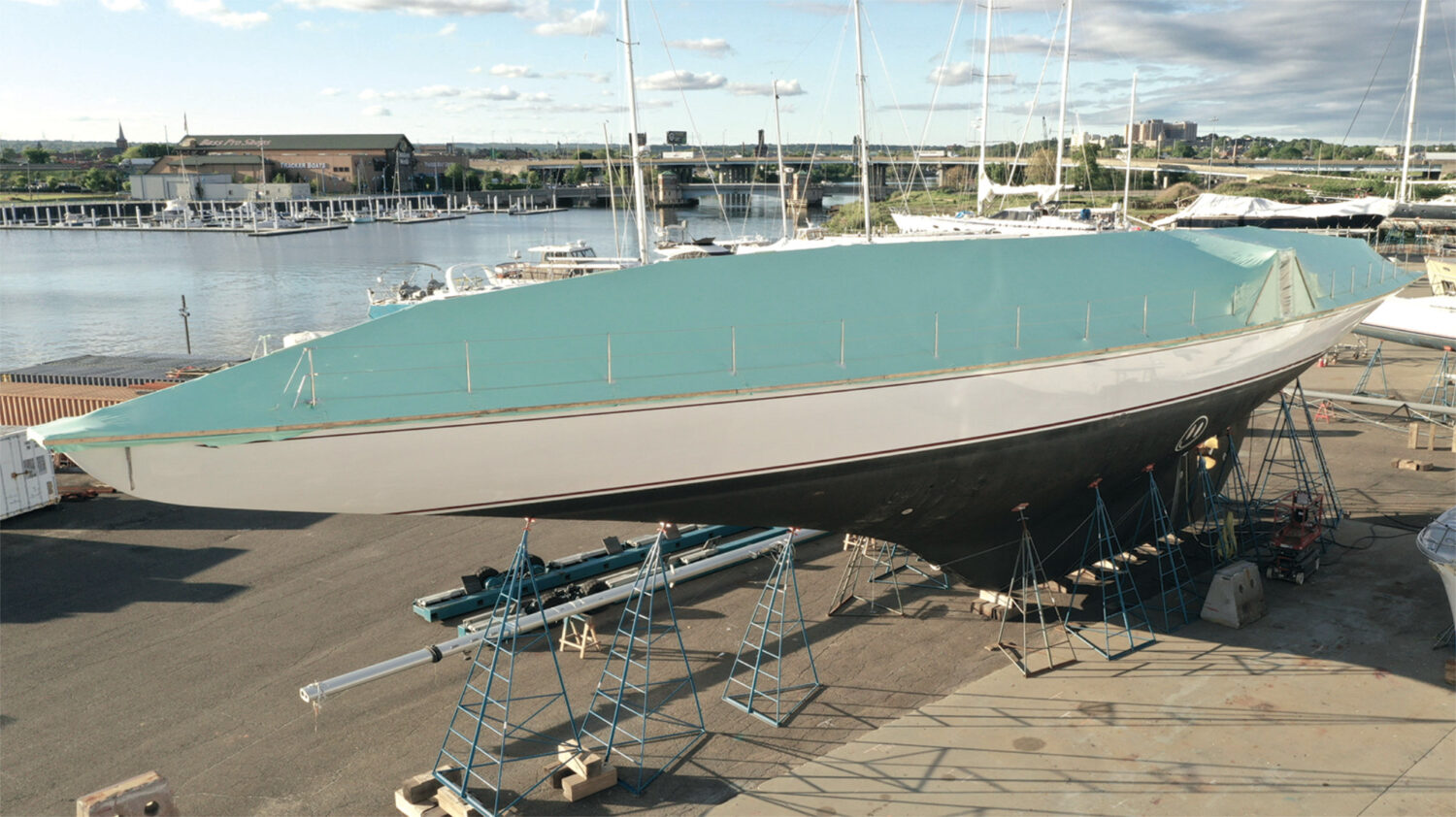
Bioaqualife is identifiable by its distinctive green hue.
This used shrinkwrap lands at one of several outlets around the country, which pay roughly 15 cents per pound for it. Then the real recycling happens. Or does it? One of the most popular of these facilities is New Jersey-based TerraCycle, which promises to turn boatyards’ discarded plastic into raw materials that can be used in new manufacturing processes. After years of accepting delivery of hundreds of thousands of pounds of shrink-wrap and other plastics shipped from around the country, TerraCycle revealed in 2021 that its warehouse had filled up with products that weren’t recyclable. Much of the plastic they’d collected had particles of dirt, chemicals, or contaminants that prevented it from being processed. That left TerraCycle literally holding the bag with tons of waste. Several lawsuits later, TerraCycle had to settle out of court over allegations of unlawful and deceptive recycling claims.
Alternative recycling outlets are sparse but do exist, including a Virginia-based plant that’s currently accepting a lot of the shrinkwrap from the East Coast. This NexTrex facility processes shrink wrap into “lumber” for Trex Decking, the composite deck boards, railings, and outdoor furniture used for residential houses. Sold at major retailers such as Home Depot and Lowe’s, Trex claims its products are made of 95 percent recycled materials, so the company relies heavily on relationships with commercial entities in industries laden with plastic waste—such as the marine industry. But no one seems to have calculated the carbon footprint of hundreds of trucks full of plastic waste driving hundreds of miles to these processing facilities.
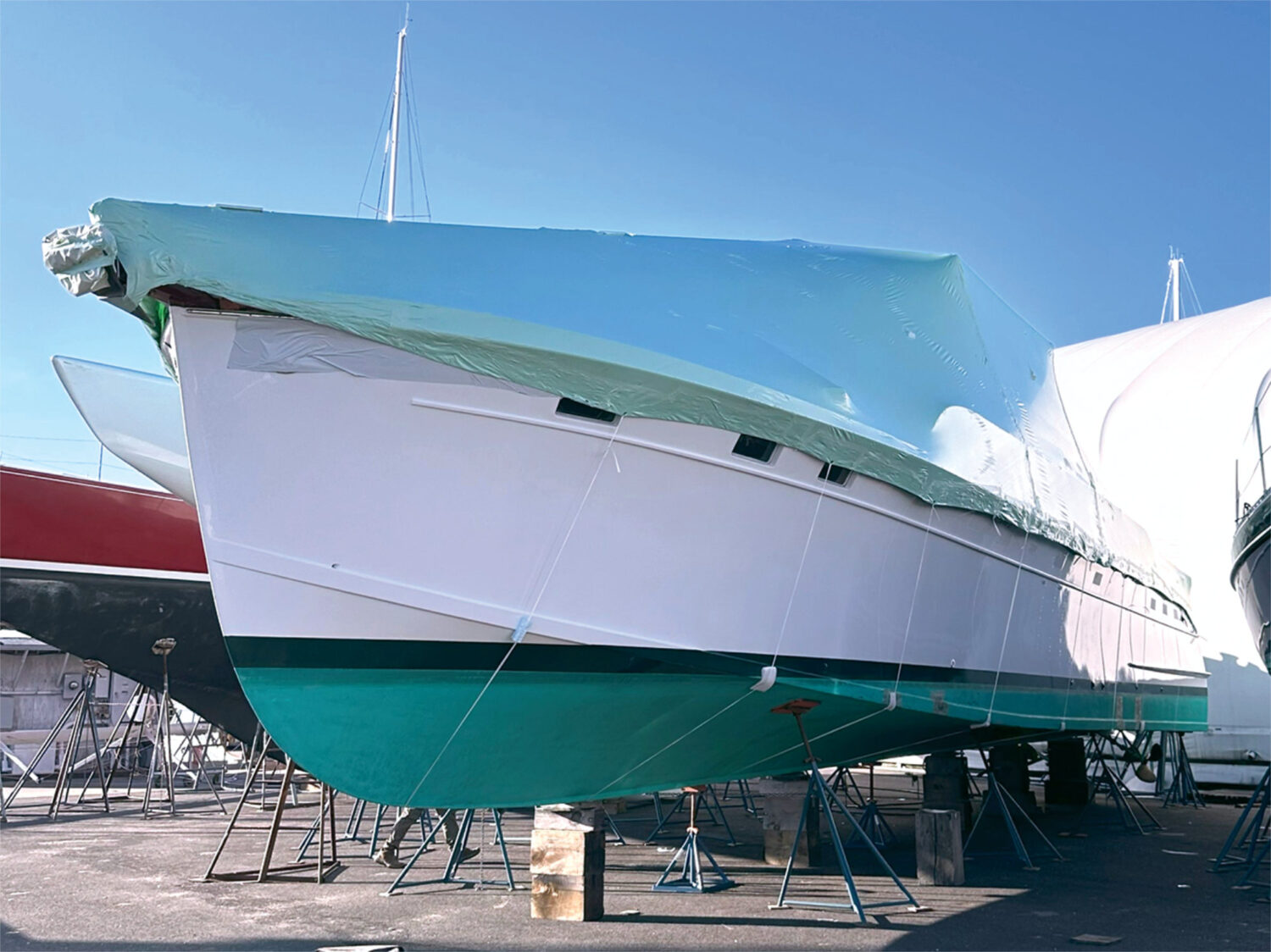
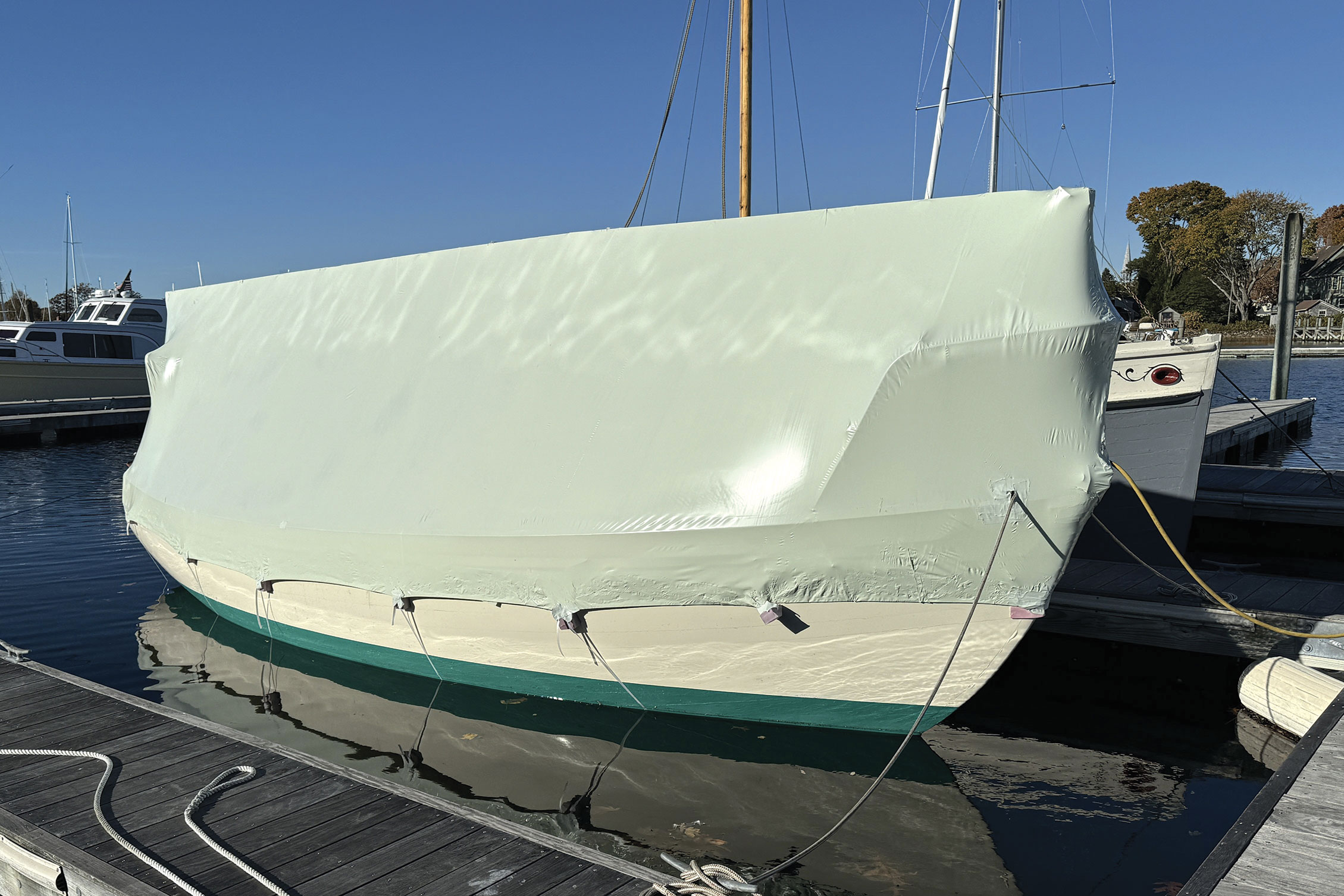
Clearly, the existing recycling practices are far from perfect. And the truth remains that a landfill continues to be a less expensive, easier option. A Rhode Island-based company called Bioaqualife is hoping to change the product we use, instead of the process. Founder Simon Milne launched a biodegradable shrinkwrap alternative into the marketplace just over a year ago. Easily identifiable by its pale green hue, Bioaqualife wrap is currently available in the marine and construction markets for boat winterization, tenting, and vapor barriers. The “biowrap” purports to be fully decomposed within three to five years of its end-of-life interment in a landfill.
That’s right: used Bioaqualife is intended to go to the nearest dump instead of hundreds of miles away to a recycling processor. It’s installed on boats the same way traditional wrap is, so it can replace products without disrupting any existing practices at a boatyard. It’s tear- and puncture-resistant, pliable, and purportedly requires less heat than conventional shrinkwrap for installation. And, no, it won’t break down while it’s on boats, even over long periods of time outdoors in the sun and elements. Bioaqualife’s proprietary ingredient requires landfill conditions to attract microorganisms that ultimately consume the wrap, leaving nothing behind—not even microplastics. The wrap essentially turns into microbe meals.
 Bioaqualife
Bioaqualife has plans to reduce other boat-related waste, including that generated by vacuum-bagging.
Milne is still cooking up new recipes for success in the marine market. “If we really look at what we do, we can make even more products biodegradable,” he says. Think vacuum bags in boatbuilding. “That’s one of our goals in the future.”
Bioaqualife is currently distributed by Kellogg Marine Supply at a cost that’s about 10–12 percent higher than that of other shrink-wrap. This extra expense is comparable to the recycling costs of regular shrinkwrap, at approximately $14 for the average boat. All of the products are biodegradable in the landfill—including wrap used in painting or sandblasting that’s too contaminated to be recycled. Could this mean we’ll have guilt-free trips to the dump?
I asked a friend who works in waste-management policy development for her thoughts. She was hesitant to offer an opinion because the product is so new and still in the early stages of scientific testing. Perhaps, she suggested, there are some even newer technologies on the horizon? With high hopes, she sent out an information-seeking email to 10 environmental professionals from state, university, and nonprofit organizations that are on the cutting edge of sustainability innovation. She asked them to share with me any success stories, new ideas, or emerging technology addressing the problem of shrinkwrap. The email generated a palpable silence. Eventually one researcher replied diplomatically that, “it’s still a tough go, to get shrinkwrap material back into some useable form,” before extoling the “great opportunity for leadership” available to whatever innovative entity or person who may come up with the answer we are all quietly waiting for.
That silence gets louder as yet another shrinkwrap season begins. Journalists, politicians, and industry leaders are talking resoundingly about microplastics, climate change, and ocean warming. Busy boatyard managers are understandably spending more time attending to the health of their businesses than to the health of our industry or our oceans, but we can’t stick our fingers in our ears and ignore it. The bravest among us listen intently and become early adopters of new technologies—and we owe them our thanks. For the rest of us, let’s keep open ears and minds. 
Nicole Jacques is a longtime sailor who lives in midcoast Maine. She has dedicated her career in communications to strengthening the boating industry.
This review is adapted from one that originally appeared in the online newsletter of the American Boat Builders and Repairers Association.