
 JOSEPH ANTINUCCI
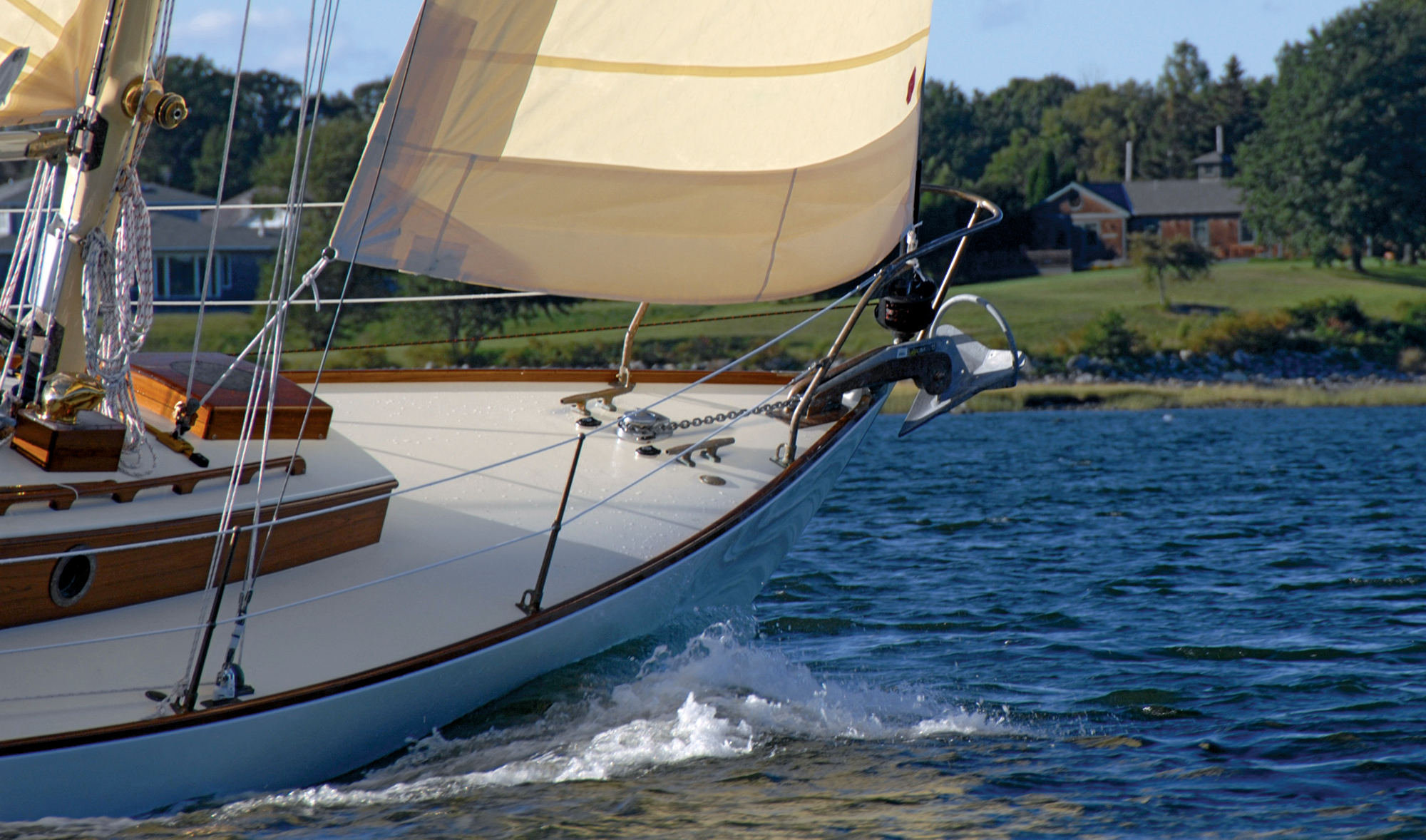
The crisp, clean look of a well-finished deck is as much about function as it is about aesthetics. Like the Alerion 26 described in this article, this Nathanael Greene Herreshoff–designed Newport 29, built by the author, has a plywood deck sheathed in fiberglass cloth set in epoxy, providing a durable, stable surface, with nonskid compound added for sure footing.
How boat decks should be built is the subject of ongoing debates. What are the forces driving the decisions regarding methods and materials? If a boat’s hull is traditionally built, should it have a traditional laid deck? If so, is it to be laid teak, or quarter-sawn pine covered with canvas and painted? If the hull is cold-molded, should the boat have a “modern” deck built of plywood ’glassed over? Should it have a teak overlay?
We could all sit around drinking beers and discussing which method is best. There is no debate, though, that once the decision has been made to use plywood, the deck must be sheathed in some way. These days, even those doing traditional boat restorations often choose plywood decks for a number of reasons, among them the prevention of freshwater leaks into the deck structure and the structural stiffness that a plywood deck can add to a hull.
Here, we’re showing the process that I’ve come to prefer over the years and the one we use most often in my shop. For this Nathanael G. Herreshoff–designed Alerion 26, redesigned by Halsey Herreshoff as a fullkeel boat instead of a centerboarder, the deck is built of two layers of plywood, the first 3⁄8" and the second 1⁄4" epoxy-glued over the first. After the preparation work is completed, the deck is covered with 8-oz fiberglass cloth set in epoxy.