

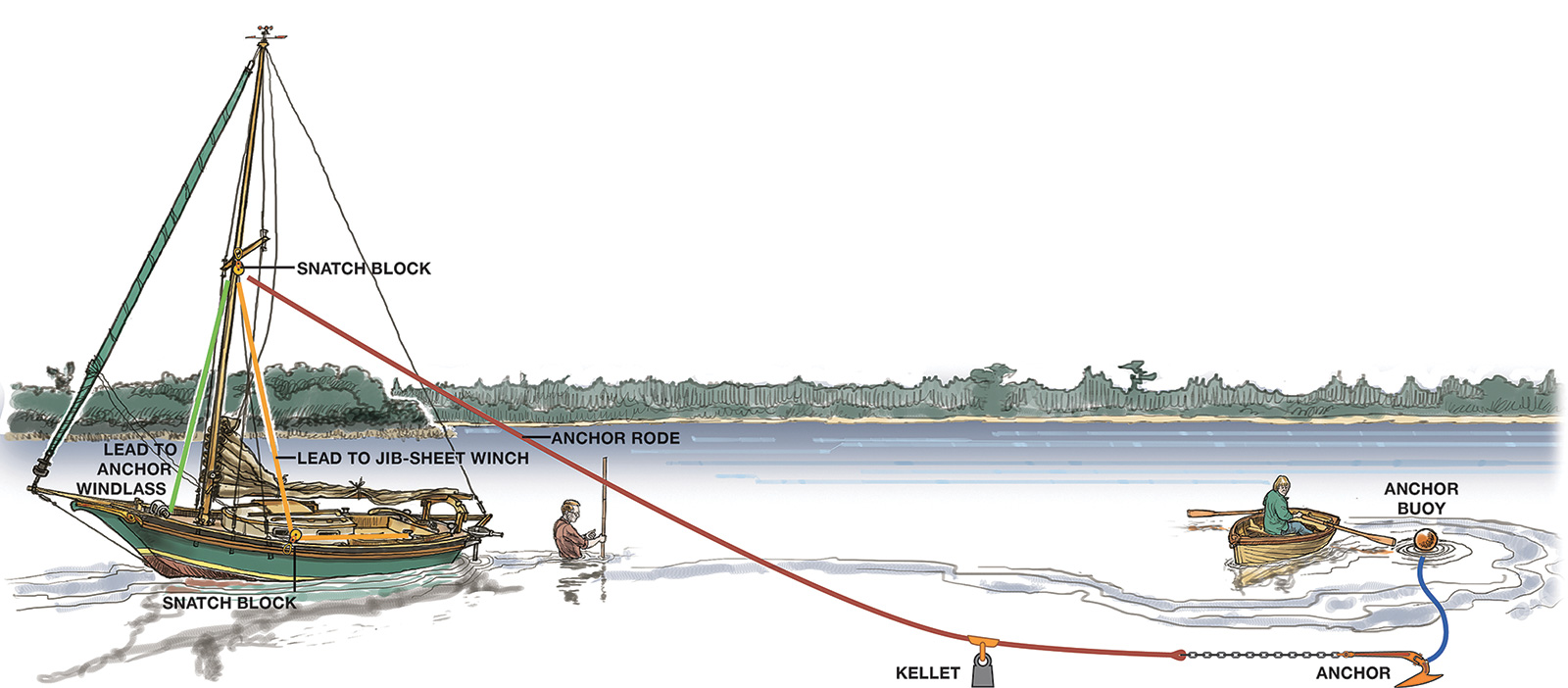
Even with charts and vigilance, experienced sailors sometimes run aground. The more adventurous near-shore exploration you indulge, the more likely your acquaintance with the bottom will become. Even passionate gunkholers, slipping in under tree branches over paper-thin water, don’t want to run aground. They avoid it. But the possibility of an accidental grounding should be given credence and respect. When a bump announces that your hull has encountered the seafloor, know what to do and do it quickly.
Your boat’s particular underbody and propeller pose particular grounding factors. What is its profile and how well does it protect itself? Is the propeller retractable? Is it on an outboard motor? Is it protected above a skeg, or offset to one side? A spade rudder is a vertical cantilever, vulnerable to a rock strike or pounding. Does your rudder’s pintle extend below your skeg? Bilge keels may sit squarely on a bottom; fin keels may “hook” rock forms; wing keels may place extraordinary stress on the keel and its bolts. Lead keels may conform and “stick” to rock, while an iron keel may slide more easily. Keep these factors in mind when you visualize grounding problems.