
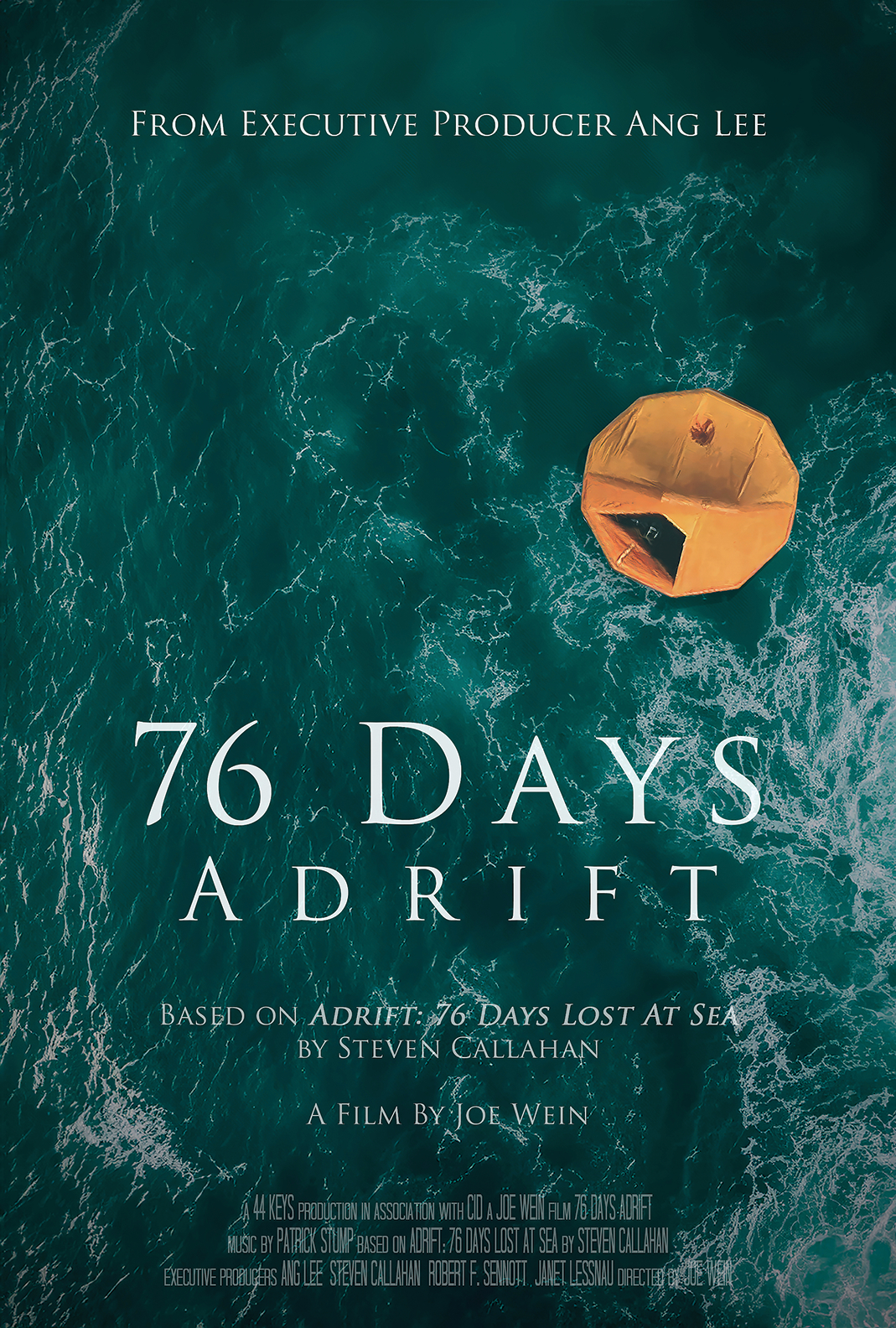
76 Days Adrift
Directed by Joe Wein
Written by Steven Callahan
Executive Producers Rob Sennott and Ang Lee
75daysadrift.com
Running time: 1 hour and 40 minutes
Imagine yourself at sea, far enough out that you have a 360-degree view of the horizon—a straight line where the water meets the sky, unbroken by any land. Now imagine that you are completely alone, separated from family, friends, and all of the support networks that humans as social beings regularly live with. Now picture that you are in a rubber raft, unable to steer and at the mercy of the wind and current, with a few cans of fresh water, a small amount of tinned food, some knives, a rudimentary survival kit, and one seat cushion that you were able to grab from your sinking boat. It is a level of isolation and vulnerability that, luckily, few of us will ever experience and which Steven Callahan confronted at age 30 when he survived the sinking of a boat, which he designed and built, during a solo transatlantic.
In the years following the publication of Adrift, the bestselling book he wrote about this experience, Callahan did his best to put the shipwreck behind him, even returning to the sailing life. But decades later his book is still in print and circulating well beyond the niche world of dedicated sailing readership. Then along comes the Los Angeles–based filmmaker Joe Wein who reads it, and then notices Callahan’s name as a consultant for Ang Lee’s film adaptation of Life of Pi. He reaches out and finds that Callahan has held onto the fragmentary journal of his days in the raft as well his speargun and a few other objects that had sustained him while he was drifting at sea. (Callahan had donated the raft and other objects to the Peabody Essex Museum in Salem, Massachusetts, at which I am a curator, in the 1980s.) Perhaps Wein’s biggest stroke of luck, though, was his discovery that Callahan is an affable, even charming, guy who is willing to be interviewed on camera. What Callahan initially thought would be a couple of weeks of conversation ultimately turned into a multiyear engagement, the result of which is a film, 76 Days Adrift, documenting his ordeal.
 www.76daysadrift.com
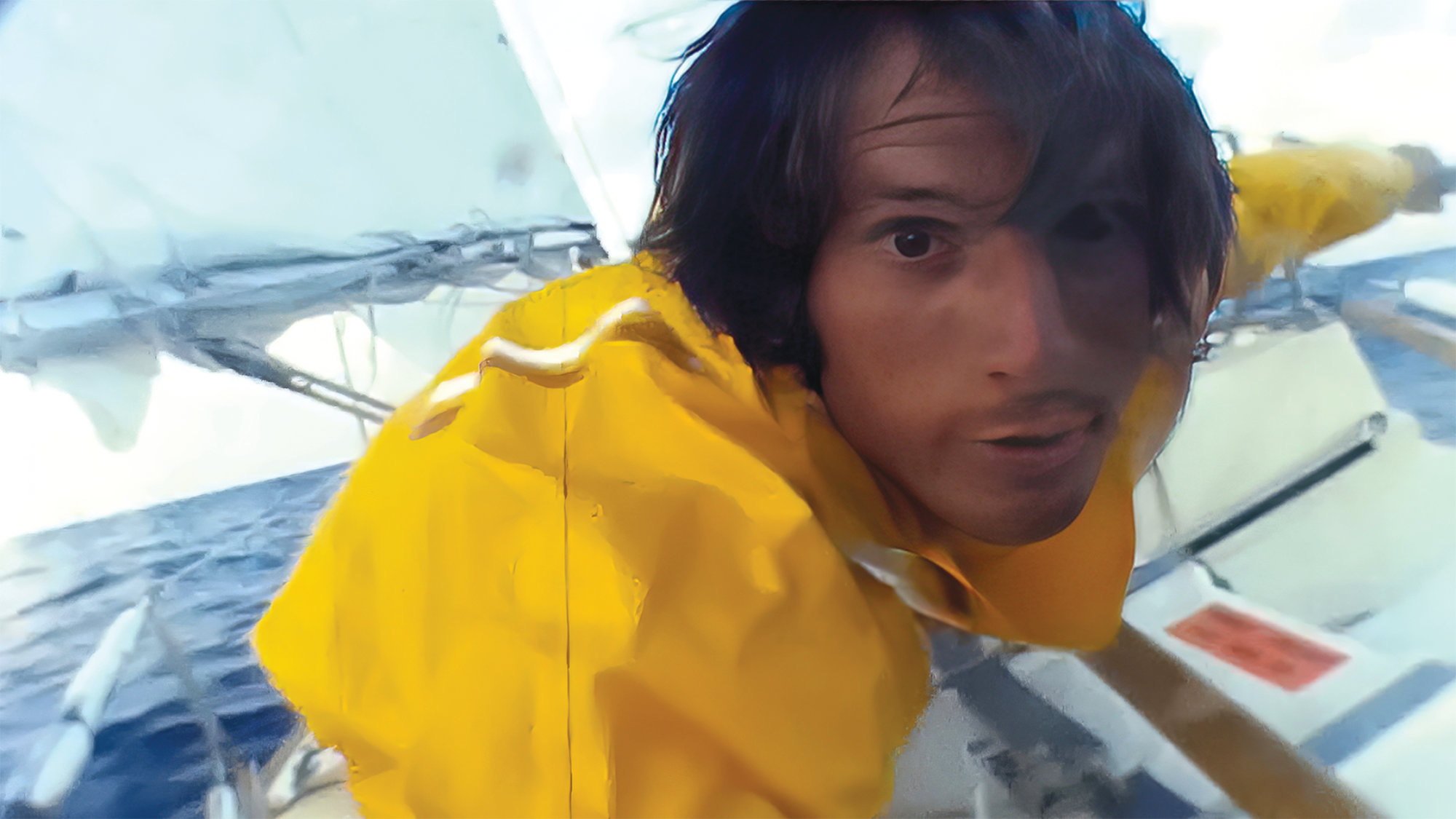
In 1981, Steven Callahan survived the sinking of his boat, NAPOLEON SOLO, during an attempted transatlantic voyage.
Callahan comes off as self-effacing and ready to confront his role in whatever unlucky decisions and misjudged situations came his way during his lengthy ordeal, and there were many. He was looking for a mental break from a failed marriage, unfulfilled career, and generally listless existence when he decided to enter the 1982 Mini Transat Race from Cornwall, England, to the island of Antigua. He designed and built his 21′ (6.5m) sloop NAPOLEON SOLO and departed Newport, Rhode Island, for a new lease on life. He got more than he had bargained for.
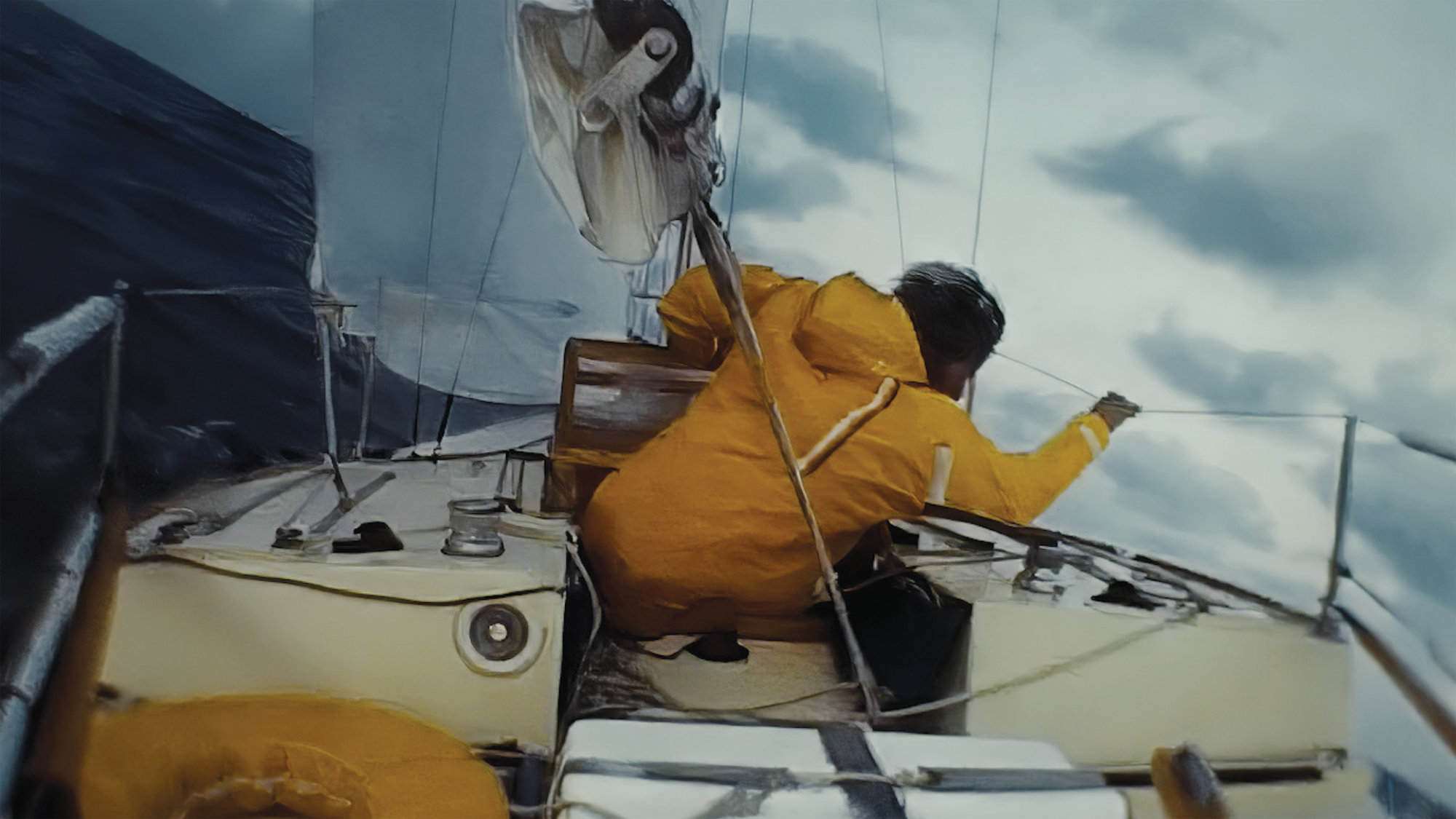
We are familiar with a sampling of those who have suffered through similar situations through newspapers and other accounts, and Callahan’s experience can’t really be described as unique, except by using qualifiers to define the parameters of his circumstances. In June 1812, two sailors were picked up near the African coast, having floated on the swamped deck of their dismasted vessel for 191 days as their crew-mates slowly died. Several incidents during World War II left sailors adrift for long periods, though usually not alone. Seaman Basil Izzi and two Dutch sailors survived 83 days in a raft with two of their companions dying along the way. And given what we know about events after the sinking of MEDUSA—in which 146 survivors on a raft were reduced to 15 in just 13 days through starvation, dehydration, murder, and cannibalism—perhaps the solo Callahan was lucky not to have had other hungry or power-mad companions to contend with. More recently, a Mexican fisherman named José Salvador Alvarenga survived 438 days drifting across the Pacific in his 23′ skiff, subsisting on sea birds that his fishing partner could not digest and so died. These recorded tales of woe come from unlucky sailors who were compelled to be at sea, whether for their livelihood in commerce or participation in war. But Callahan, a recreational sailor seeking adventure and new experience, ended up there as the result of a series of voluntary—and perhaps foolhardy—decisions. Wein leans into the solo nature of Callahan’s odyssey to great effect, delving into his loneliness as well as his thoughts, self-doubt, and anxieties about how he could easily have avoided his grueling ordeal.
 www.76daysadrift.com
Filmmaker Joe Wein explores the solo nature of Callahan’s odyssey, delving into themes of loneliness and self-doubt.
Published shipwreck-survival narratives have constituted a substantial subcategory within the genre of nautical nonfiction, and books such as Archibald Duncan’s multivolume The Mariner’s Chronicle: Containing Narratives of the Most Remarkable Disasters at Sea (first published in 1804) was enormously popular with seamen and landlubbers alike. Historians of the genre tend to analyze them in terms of several motivations: to extol the glories of God through personal salvation; to seek psychological closure following trauma; or simply to make money. Each perspective imbues a text with the suspicion that it may be skewed to achieve a specific end. But Wein’s presentation of Callahan’s modern personal saga appears to be free of all that. The filmmaker sat inside a 1980s-vintage life raft identical to Callahan’s to film scenes of his bare legs and feet, the sopping wet interior, stormy seas viewed through the flapping hatch cover and other first-hand visuals of Callahan’s experience that evoke the degree of anguish and thought processes that we can only wonder about in historical examples. Any financial remuneration that came Callahan’s way was hard-earned, and making documentary films today is a relatively selfless act.
Original footage is limited to the sloop’s doublehanded passage west to east to get to the starting line, but Wein avoids the repetitive panning and repanning of still footage that has become such a common trope in contemporary documentaries. Callahan’s own sketches of his situation more than fill that void. And underwater scenes looking up at the raft from considerable depth, with dorado flitting by, as well as aerial drone shots from high aloft, emphasize that the raft was merely a speck floating precariously on a vast and menacing sea. These emotionally stirring vistas are interspersed with scientifically precise visual inventories of the articles of equipment and food he had along with him.
 www.76daysadrift.com
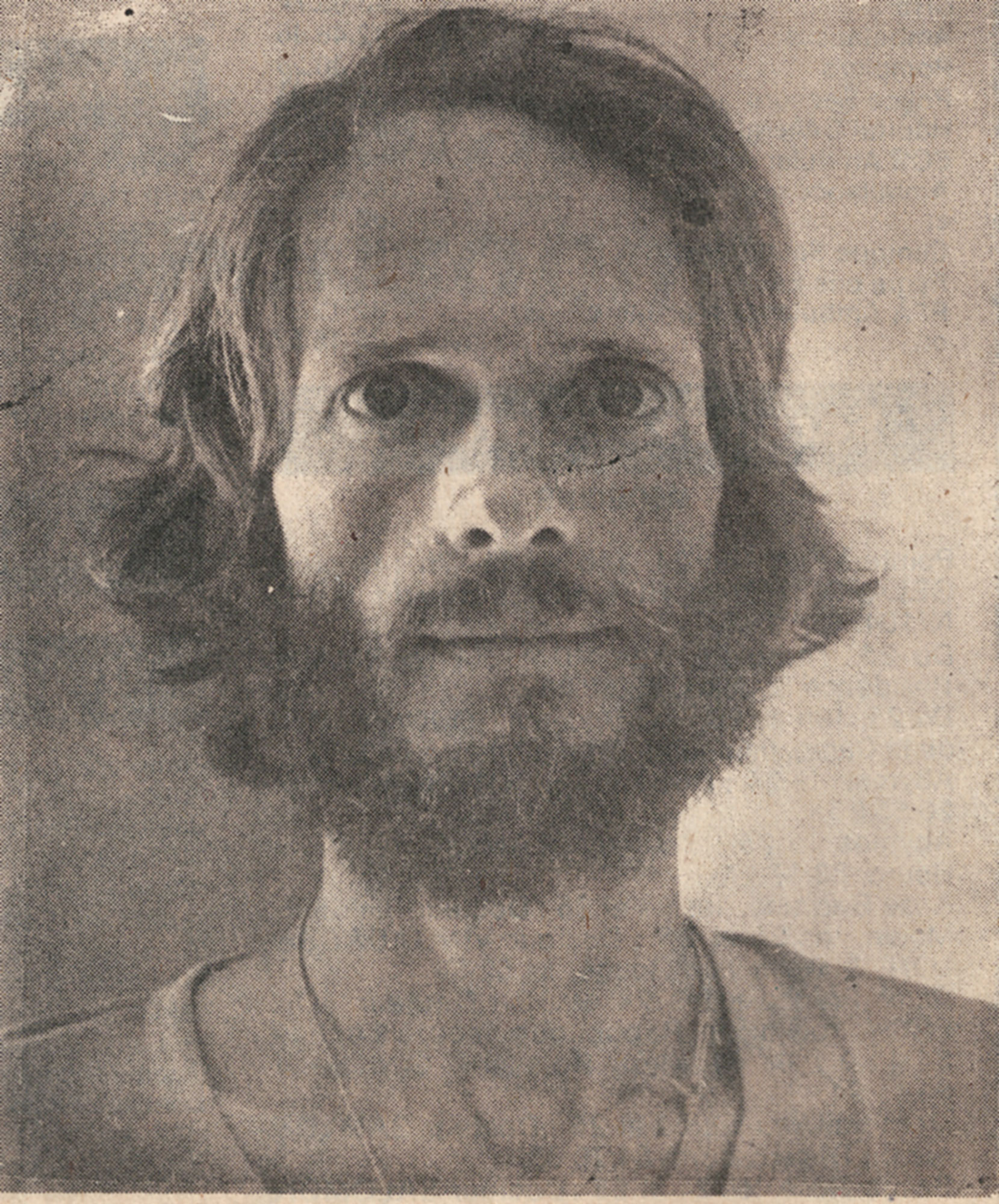
Wein’s treatment of Callahan’s story emphasizes mental fortitude over disaster; achievement over tragedy.
Many sailors do not like films, books, or even paintings about shipwreck, preferring to remain in the mental realm of control over the sea’s challenges. But in this reviewer’s opinion, Wein’s telling of Callahan’s story prioritizes mental fortitude over disaster and achievement over tragedy. As Callahan said at a recent presentation, his misadventure changed his life in such dramatic ways that he can’t at this stage even say that he regretted it.
 www.76daysadrift.com
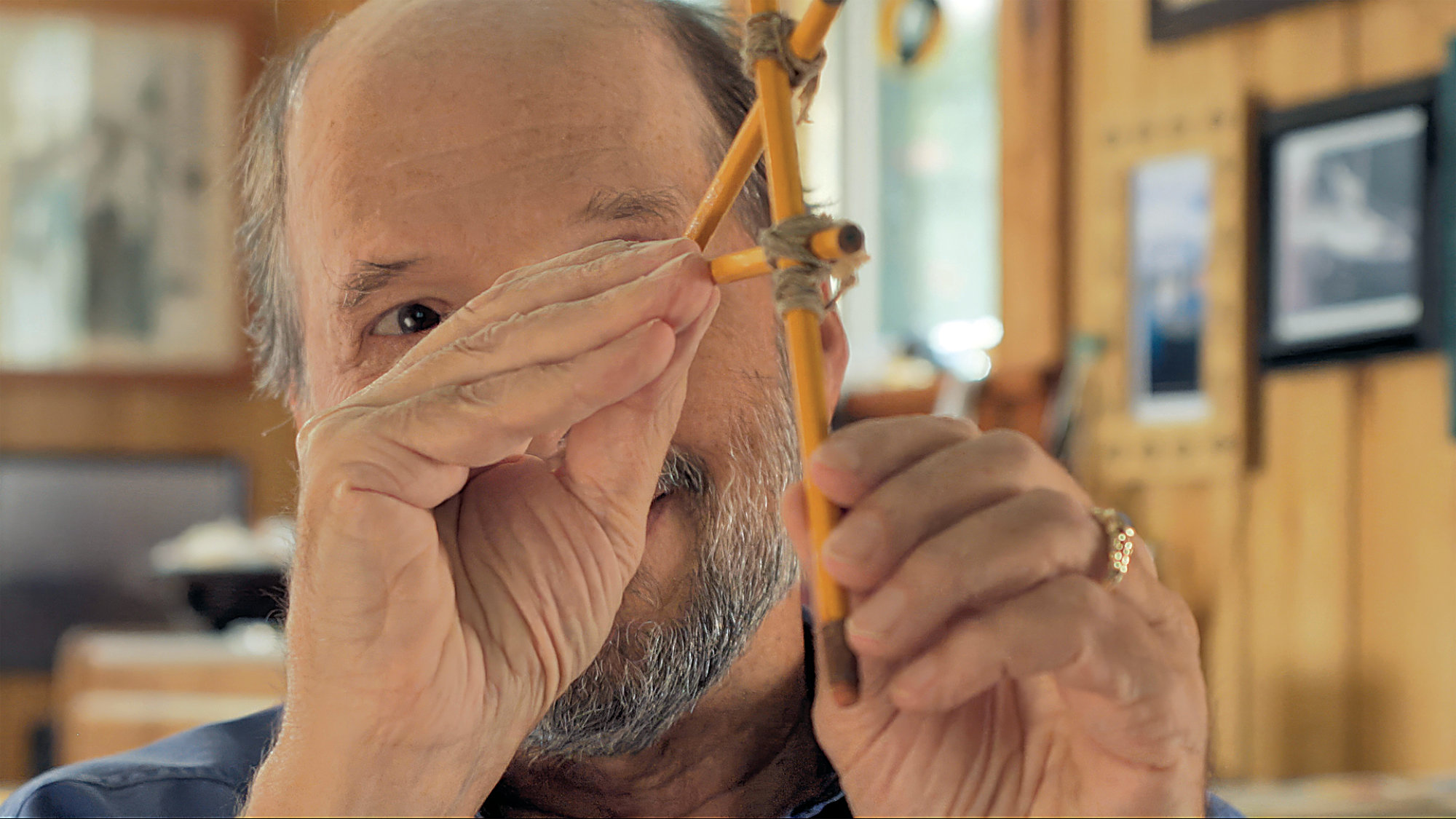
Wein’s film offers precise descriptions of the articles of equipment that aided Callahan’s survival, including the protractor cobbled from pencils that allowed latitude-tracking noon sights of the sun.
How would you respond to being in this seemingly hopeless situation, bound to die—either in an instant, with the onslaught of the next incoming mountainous wave or the approaching hungry shark; or slowly, as dehydration takes its toll on your physical strength and ability to think rationally. How do you know how you would respond until you are in that situation? Would you rise to face each challenge valiantly as it comes? Or, encountering seemingly insurmountable odds, would you just give up? Seventy-six days is a long time, and at 1 hour and 40+ minutes, so is Wein’s film, which is set to a pace that clicks off the days sometimes one at a time. Each passing day presents a new challenge or problem to be solved, but throughout the film we are reassured that Callahan will surmount—or work his way around—each obstacle, because we know he survived to tell his tale.
Daniel Finamore is the Russell W. Knight Curator of Maritime Art and History at the Peabody Essex Museum in Salem, Massachusetts.
76 Days Adrift is currently scheduled to be shown in limited theater openings around the United States and abroad—including at the Port Townsend Wooden Boat Festival on September 5, 2025. For more information and a complete schedule, visit www.76daysadrift.com. 