
 Jan Adkins
Electronic devices do something we can’t: count small. Circuits create frequencies and count pulses to allow division of the unforgiving minute into smaller and smaller increments. Our GPS positions depend on comparing nanosecond pulses from multiple satellites measuring distances as a function of the speed of light between us and geosynchronous orbit. On a coarser scale and an older electronic device, the transducers of familiar depth sounders send out a distinct frequency sonar pulse that bounces back from the bottom, is received by the transducer, and registers on a depth scale. Even old depth sounders with a light on a spinning arm can register the difference between a soft, hard, or broken rock bottom.
We’re all grateful for electronics, though few of us know just how those clever electrons slither through circuits. Faith in technology runs deep, and most of us are satisfied with the results. That’s well and good, but there are arguments for old-school simplicity. Indeed, WoodenBoat is a seed bank of what worked and what still works.
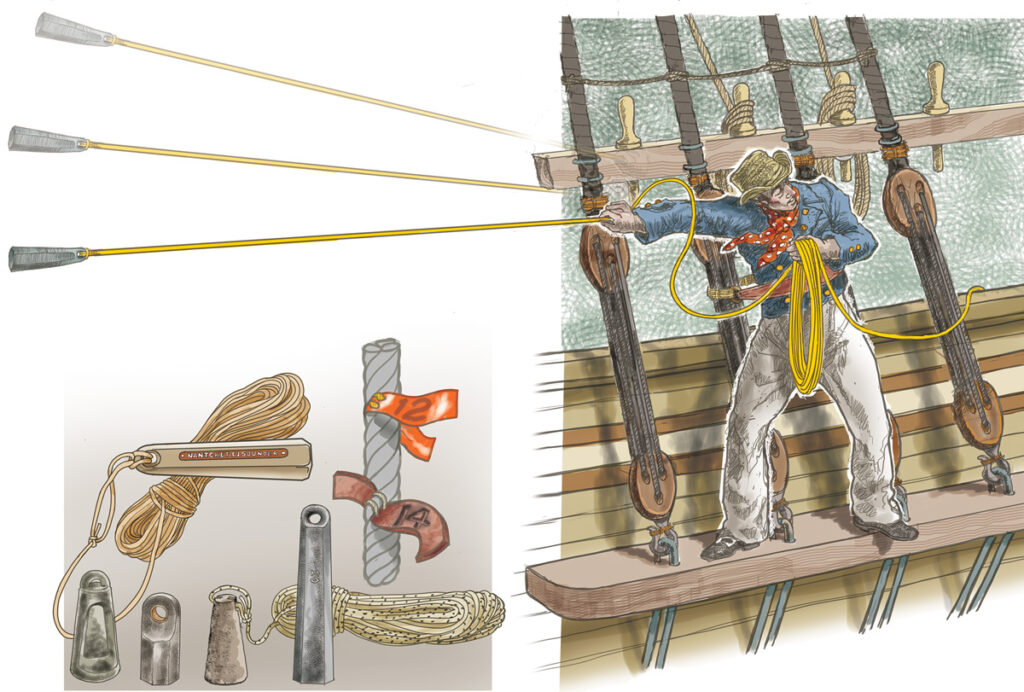
As a system increases in complexity, the likelihood of failure increases proportionally. Throughout your contemporary boat’s complexity lurks the likelihood of a rogue electron, a power surge, a loose bolt, or a misplaced cotter pin. Batteries die. Oars could break but it’s rare. Having fallback skills from another age could extract a happy outcome from a grim situation.