
Introduction coming from MATT…..
GRATITUDE
Photo by Collette Robertson (above), Bill Fleming (below)
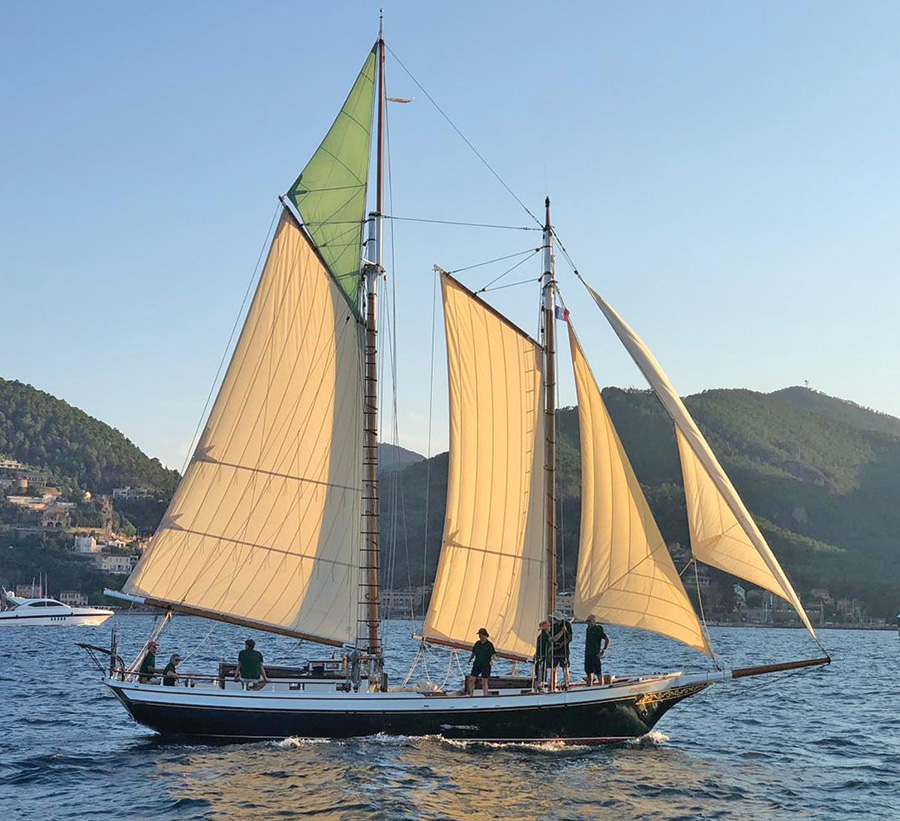
 “Yeah, just wanted a schooner.” Sometimes the reason for building a boat is as simple as Andrew Rhodenizer put it. The Lunenburg, Nova Scotia, boatbuilder works in the Big Boat Shed, where the legendary schooner BLUENOSE was built in 1921. Andrew took the inspiration for his schooner from other boatbuilders in his family, among them a cousin, Jim Rhodenizer, and his step-grandfather, Steve Slaunwhite, who designed and built Tancook schooners. Andrew’s schooner measures 26′6″ on deck with a sparred length of 31′ and beam of 8′. Her hull is carvel-planked with pine over frames of locust and hackmatack. The project started with harvesting materials in the woods and moved forward in between other projects with the help of a few Big Boat Shed hands. Finished with linseed-oil paint, GRATITUDE was launched in summer 2025 in time for the annual Nova Scotia Schooner Association races.

Pacific Power Dory
Photo by Cassiopeia Johnson
Mark Condon of Humarock, Massachusetts, has spent a lot of time underwater. As a scuba diver, he has more than 4,000 dives to his credit. Retired now after his career as a diving instructor and charter-boat captain, he wanted a boat that he could use for family outings and diving adventures with his friends. He built the 23′× 8′4″ plywood hull to plans for the Pacific Power Dory from Spira International (now closed). To provide the space required for four divers, eight tanks, and the rest of their gear, Mark left out the center console often built into the Power Dory and chose a tiller-controlled 90-hp outboard. This is the sixth boat he has built and, with the help of his wife, Margaret, and a friend, Neil Fratus, the build went well. NEW HERON motors on the coastal waters of Massachusetts Bay southeast of Boston.

Q.E.D.
Photo by Mike Brooks
When Mike Brooks of Kinston, North Carolina, decided to build his sixth boat, he wanted to get away from the plywood construction he had been using. For this Harry Bryan–designed Trout, a 23′ V-bottomed garvey, he resawed and milled Atlantic white cedar for everything in the boat except for the white-oak frames and locust floor timbers. He made one concession to plywood: the cockpit sole; however, he said he found working with rough-cut lumber much more satisfying. Mike spent three and a half years working part-time on the project and launched the boat in May 2025. Set up for shallow-water sport fishing around Cape Lookout, the garvey, christened Q.E.D., is powered by a 50-hp outboard and can reach 19 knots.
KJERSTIN
Photos by Kristoffer Albrecht
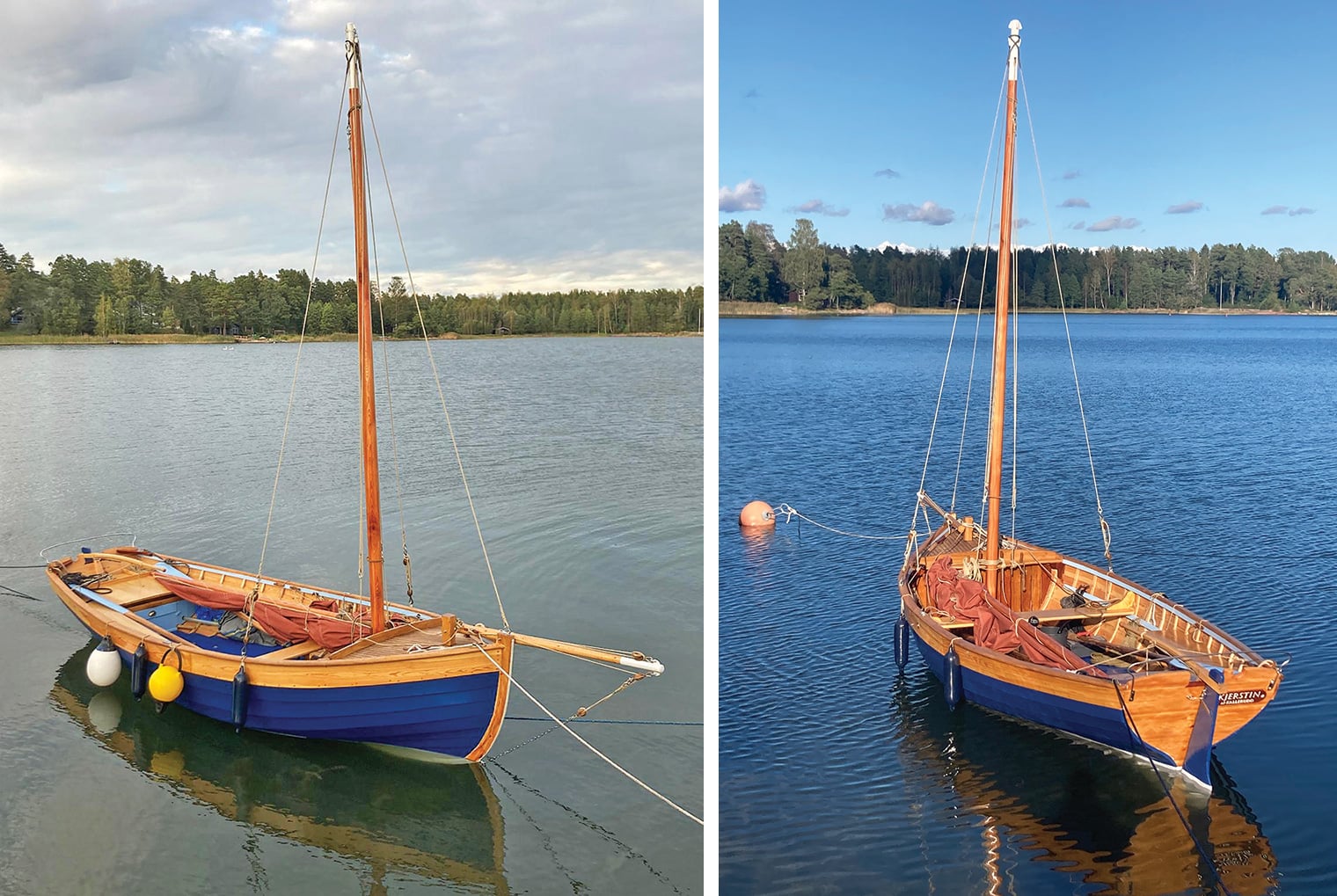
Kristoffer Albrecht, who lives near the village of Ingå on the south coast of Finland, wanted a small boat that he could easily launch in the spring and haul out before ice formed in winter. In the winter of 2023−24 he began drawing the skiff he had in mind, taking inspiration from the traditional Bohusjulle boat of Sweden’s west coast and incorporating features of English and Breton workboats. He began building in early 2024. Although this was his first boat, he had most of the tools he needed and plenty of relevant woodworking experience in making guitars, mandolins, and violins. The hull, lapstrake-planked in pine and framed with steam-bent oak and ash, came together in a shed at his home. During the winter of 2024−25, when the shed was too cold for work, he sewed the sails indoors. KJERSTIN was launched in September 2025.
PHEATHER 2
Photos by Matt Morris
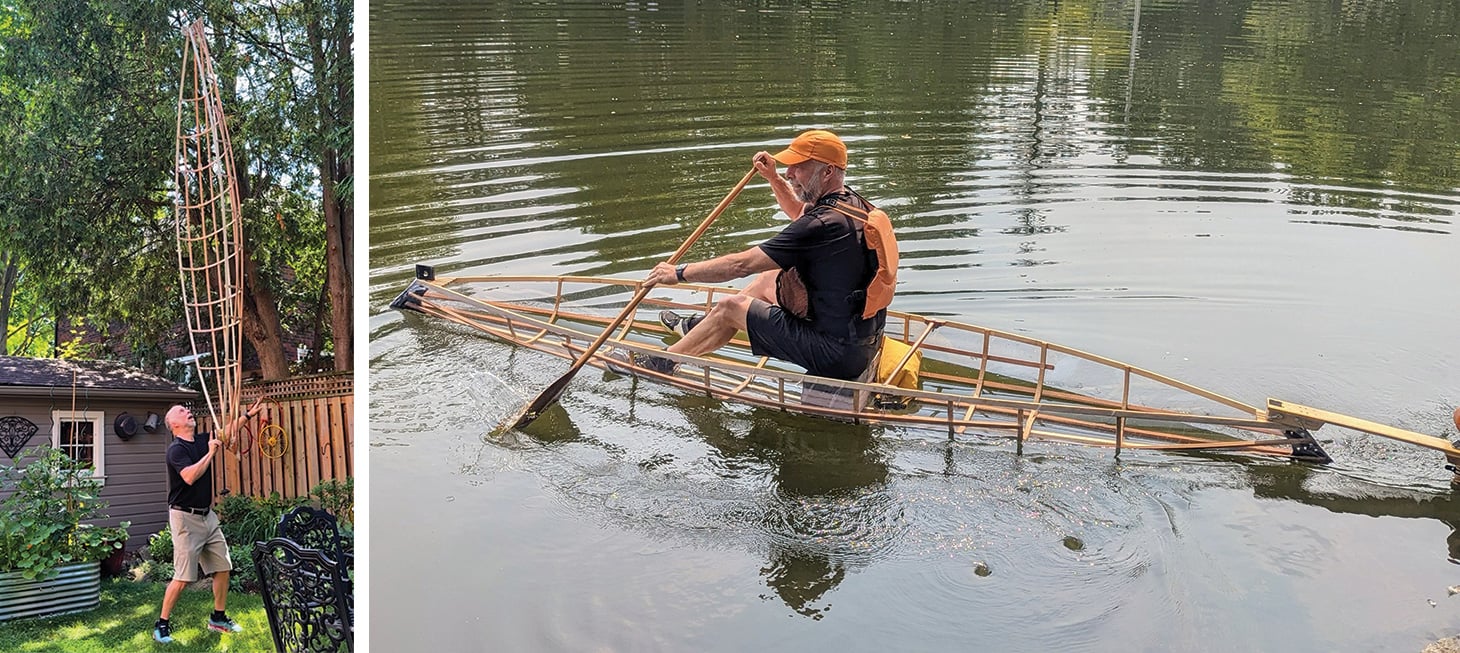
Matt Morris of Waterloo, Ontario, lives between two lakes: Silver Lake, a mile to the north, and Victoria Park Lake, two miles to the south. An avid cyclist, he often rides a path that connects the two lakes. In 2020, he designed and built a nesting, sectional, skin-on-frame rowboat and a custom-fitted wooden trailer that he could tow behind his bike. A year later, he built PHEATHER, a 12′, 25-lb canoe that he could tow without a trailer, upside down, by attaching skateboard wheels to its sternpost. His latest creation is PHEATHER 2, a 12′5″ canoe with reverse-rake stems that weighs just 11.6 lbs. It, too, has skateboard wheels for towing. Supported by cedar stringers on nine ash steam-bent ribs, the canoe’s skin is transparent 20-gauge vinyl. PHEATHER 2 was launched on Victoria Park Lake in July 2025.
4′ lapstrake plywood pram, with rockers
Photos by George Waldmann
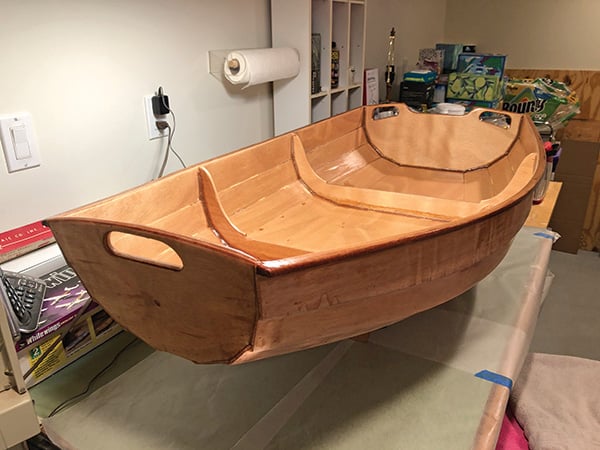
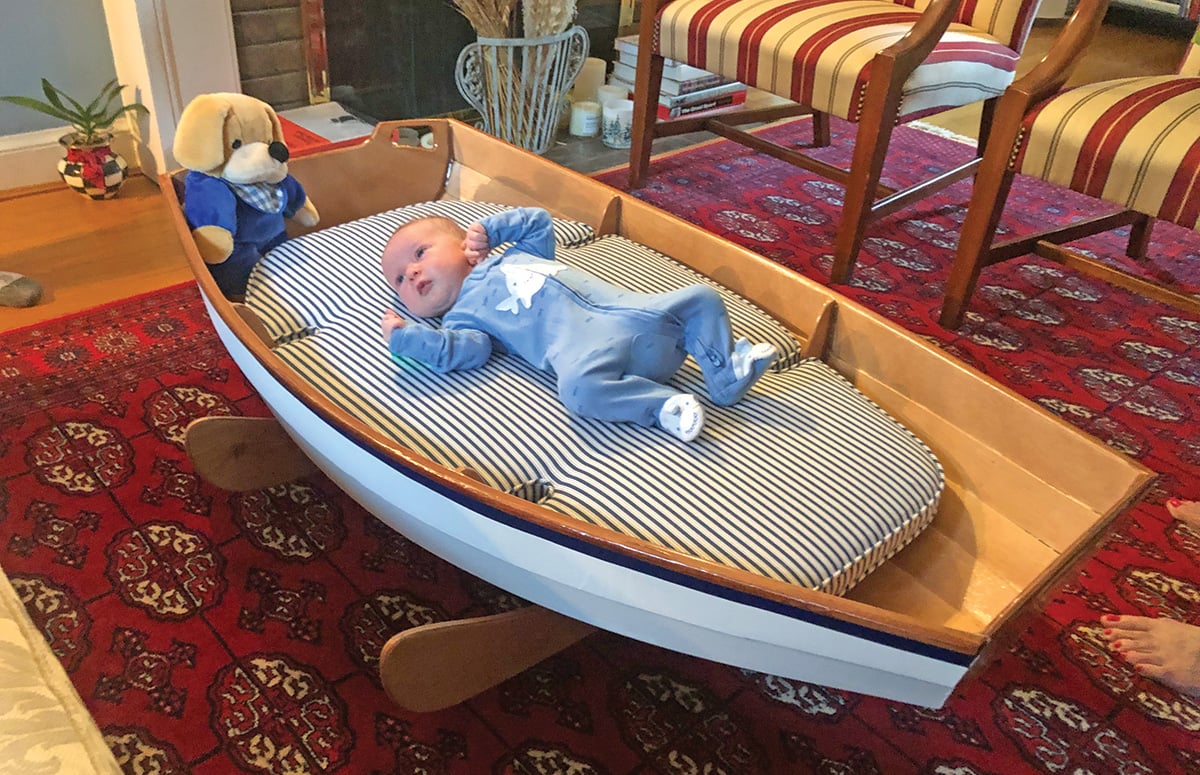
Thirty-five years ago, George Waldmann of Bethesda, Maryland, built a plywood cradle boat for his newborn daughter, Jenny, using The Expectant Father’s Cradle Book as his guide. In 1991, WoodenBoat published a photo of the 3′ single-chine pram (WB No. 101). Four years later, the boat carried the Waldmanns’ second-born daughter, Kate. In 2025, while grown-up daughter Jenny was expecting her first child, George prepared for the grandchild by building another cradle boat, this one a 4′ lapstrake plywood pram, with rockers, from a kit by Chesapeake Light Craft. Aunt Kate took care of the paint and varnish. The boat and grandson Henry were both “launched” in May 2025.

CHRISTI J
Photos by Ed Rogala
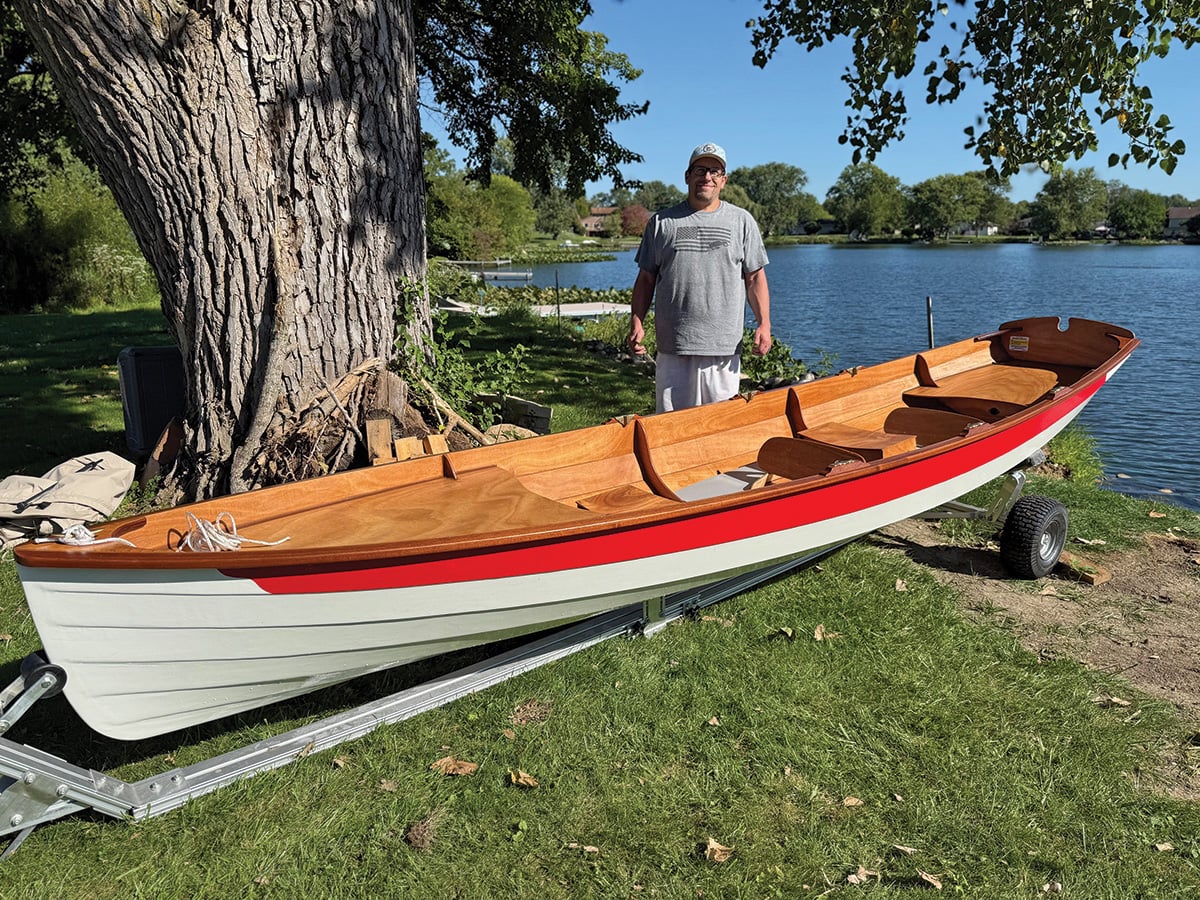
Adam Rogala, 42, clearly still enjoys spending time with his dad, Ed. The two drove more than 12 hours from the northwest corner of Indiana to Annapolis, Maryland, to spend a week building a Chester Yawl at the Chesapeake Light Craft shop. Ed had wanted to build a boat for years, and building a kit boat in a class in a well-appointed shop was as direct a path as he could want to fulfill that dream, even with both 700-mile drives. By the end of the week, the 15′ stitch-and-glue lapstrake plywood skiff was complete and ready to be strapped onto the roof racks for the drive home. All that remained to do at home was to seal the wood with epoxy and then apply paint and varnish. Father and son now row CHRISTI J on a lake that borders Ed’s back yard. They haven’t tired of spending time together and already plan on another class and another boat.

C. Dworsky Wooden Boat
Photos by Cyrus Dworsky
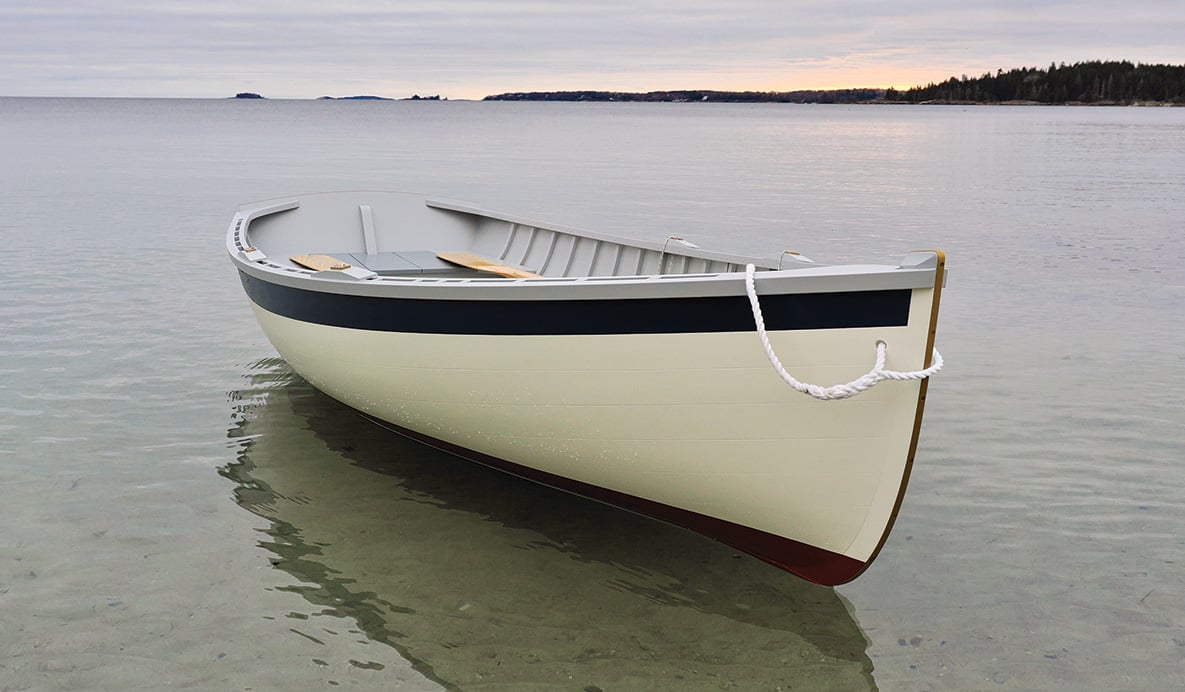
Born and raised on the islands of Penobscot Bay, Maine, Cyrus Dworsky went lobstering with his father from an early age and may well have followed in his father’s wake if not for a longing to design and build wooden boats. He moved across the country to study at the Northwest School of Wooden Boatbuilding in Port Hadlock, Washington, and several years later moved back to Midcoast Maine to set up shop as C. Dworsky Wooden Boats. In 2018, while still in Washington, he sketched out a rowboat that would have good carrying capacity and perform well under oars. He got the first few planks on the cedar-on-oak carvel hull and then put the project on hold. He brought it back to Maine and finished the build in November 2024. Even after such a long time getting the boat afloat, he’s well pleased with its performance.

FAIR HEATHER
Photos by Jim Bracken
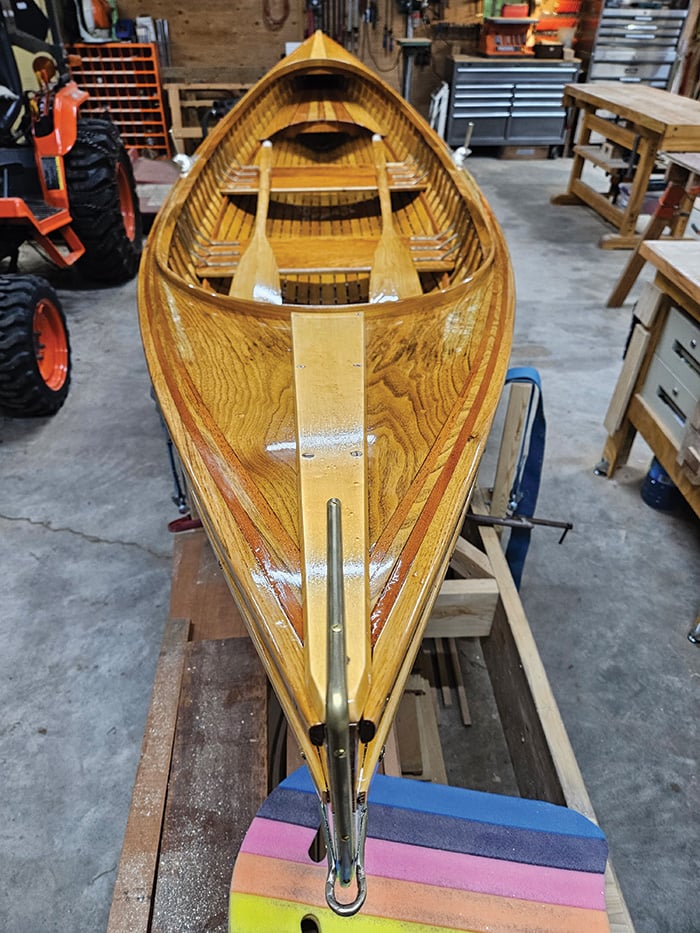
Having grown up on the banks of the St. Lawrence River, David Tolton of Mallorytown, Ontario, has admired St. Lawrence River skiffs all his life. In March 2021, he began building one for himself, following plans for ANNIE, a 17′9″ × 3′3″ version built in 1885 and now in the Mystic Seaport Museum collections. He bought or built some of the tools required as he went along and acquired new skills by taking several WoodenBoat School courses as well as a bronze-casting class at the Antique Boat Museum in Clayton, New York. The project, from lofting to varnishing, took four and a half years and included shaping a pair of oars and casting all of the bronze fittings. David launched FAIR HEATHER in September 2025 and will row her among the Thousand Islands at the head of the St. Lawrence River.
FYPPER
Photos by Ken Inglis
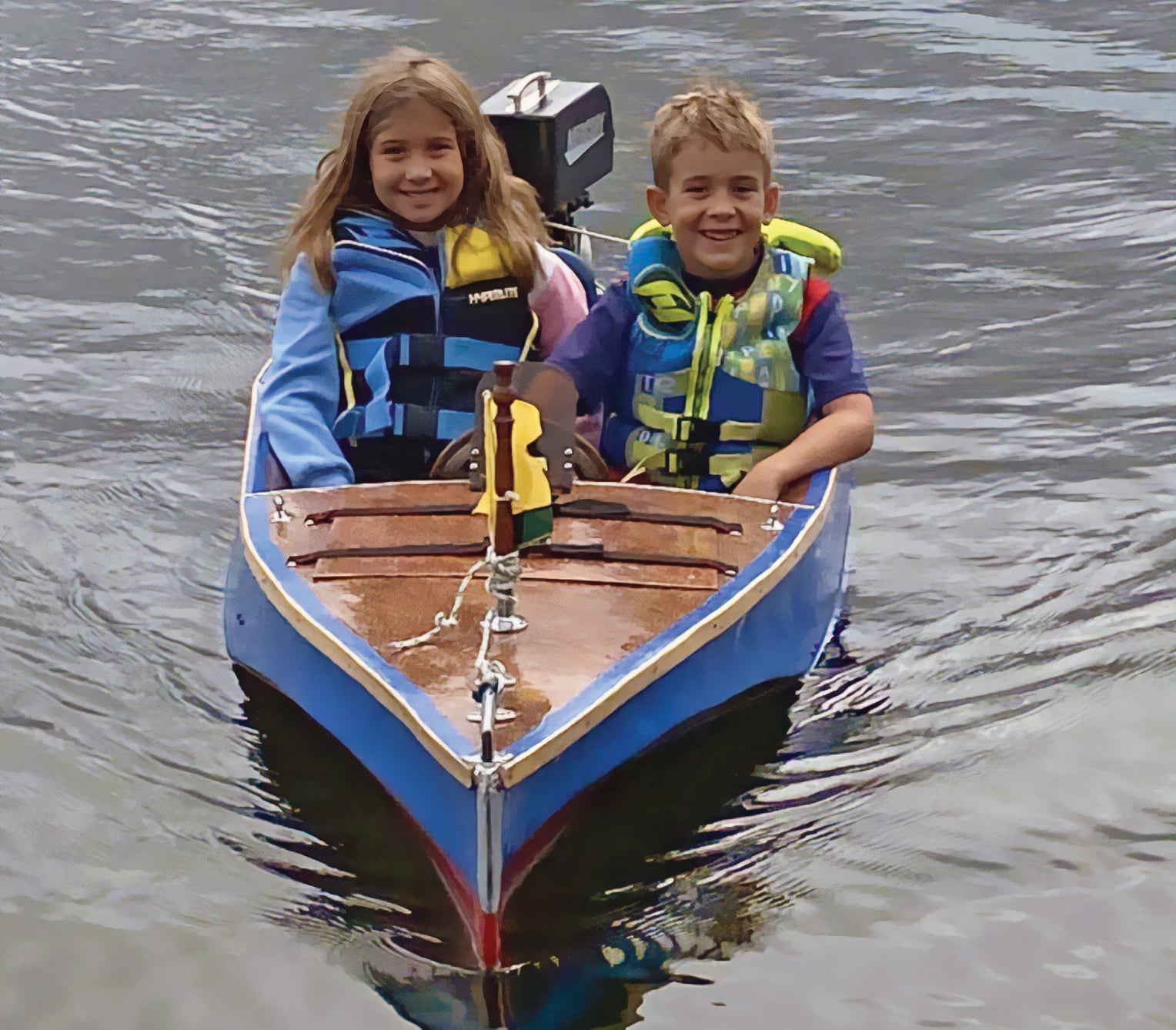
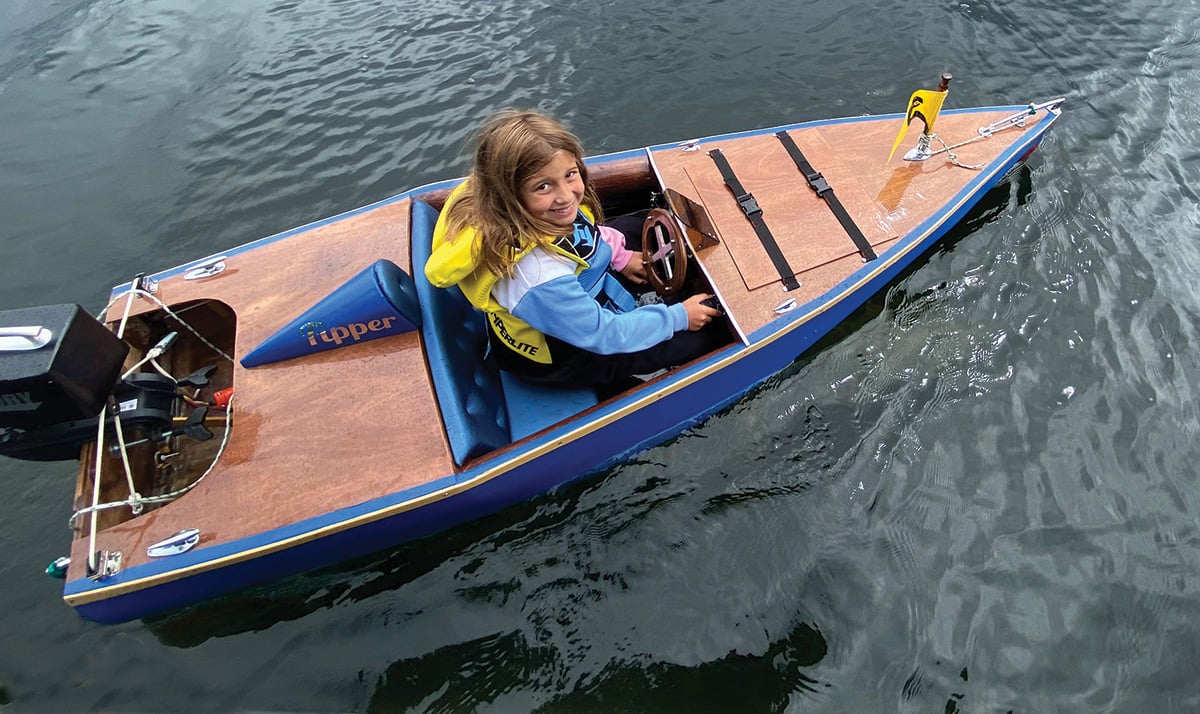
For years, Ken Inglis’s grandchildren had enjoyed the 8′ electric runabout he had built for them to use at the family’s summer cottage on Four Mile Lake, 100 miles north of Toronto, Ontario. After the grandkids grew out of the boat, the neighbor’s 9- and 7-year-old children started using it occasionally. Water from wet bathing suits often pooled in the bottom and rot set in along the keel. Ken scrapped the boat in fall 2023. The following summer, the neighbor kids asked where the boat was, and when Ken informed them he had taken it to the dump, their looks of disappointment hit him hard. He promised he’d make a new boat over the winter. He kept his word, and in July 2025 launched a new 8′ runabout, christened FYPPER after the first names of his two young friends, Fynn and Piper.


Phil Bolger−designed pirogue
Photos by Christopher Cunningham
Built in Seattle, Washington, by an amateur builder in 1997, this Phil Bolger−designed pirogue languished for years on an asphalt boat-storage lot surrounded by cyclone fencing. When the boat faced eviction for not being used as required, at least a few times every year, it was offered to Christopher Cunningham, WoodenBoat’s Launchings editor. The pirogue badly needed sanding, painting, and varnishing. The plywood brackets on the rubrail and chine that hold the leeboard had delaminated; rather than replace them, Chris installed a daggerboard trunk to free the hull of the obstruction that had been created by the brackets. He added the thwart and outriggers that Bolger had included in the plans for rowing the pirogue and modified the fixed-blade rudder to kick up for beach launchings and landings. The pirogue was afloat and underway again in February 2025.
SARAH ANN
Photo by Chris Sly
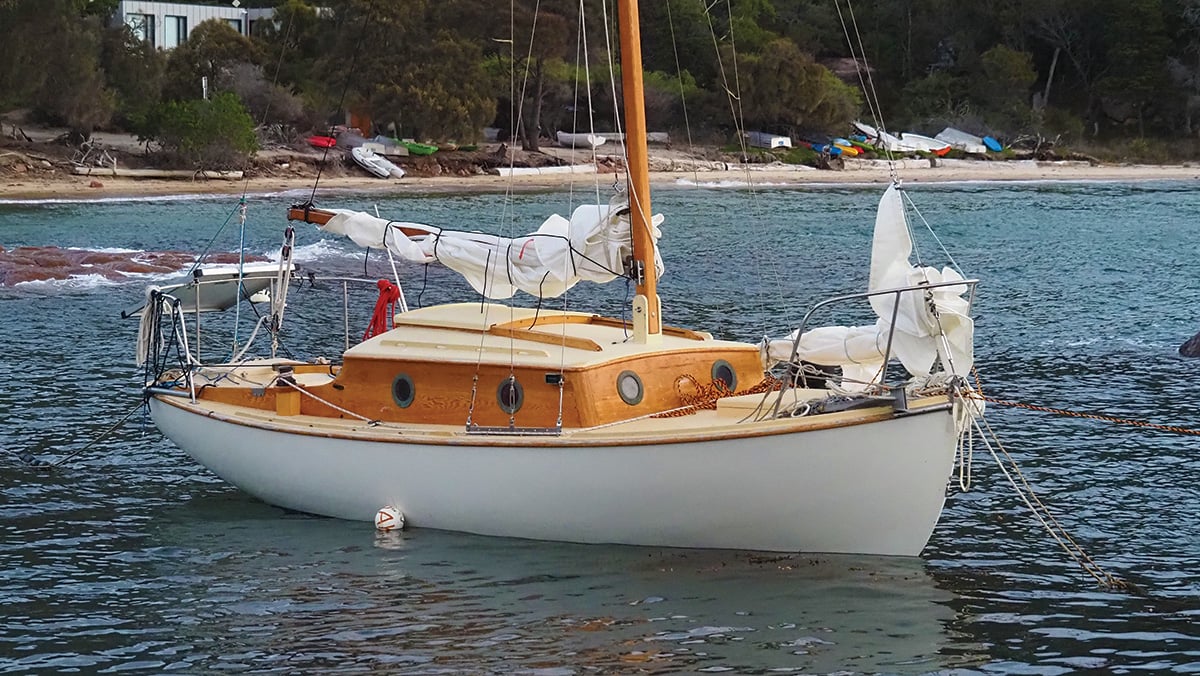
SARAH ANN is an 18′ strip-planked Herreshoff-inspired daysailer built by John Philp in the 1960s and launched at Gravelly Beach, a rural community on Tasmania’s north coast. Chris Sly remembers the boat from the years of his youth spent in the Australian island state. Chris later moved to Queensland on the mainland’s east coast. SARAH ANN spent a half century in a shed, ever drying out with the passing years. She was hauled to Queensland and ended up not far from Chris’s home. He recognized the sloop immediately and soon acquired her to tow her back to Tasmania and restore her where she belonged. The restoration took one and a half years, and included closing seams, replacing her canvas deck, and replacing the missing ballast and engine. He relaunched SARAH ANN at Gravelly Beach and sails her once more on her native Tasmanian waters.
COASTER III
Photo by Royce Collection
COASTER III is a 41′ schooner, the third and smallest of three COASTER schooners designed and built by Murray Peterson. He built COASTER III at the F.F. Pendleton yard in Wiscasset, Maine, launched her in 1935, and sold her in 1945 to Dr. Stephen W. Royce of Newport, California. She has remained in that family since then, having been passed first to Dr. Royce’s brother and finally to his son, Stephen M. The younger Stephen has lived aboard since the 1960s when he was 18 and attending university in Santa Cruz. After school he set out with friends to sail around the world. They sailed south to the Panama Canal and crossed the Atlantic, but upon reaching the Mediterranean, Stephen decided that the boat was in no shape to continue. He settled on the French coast and began a complete restoration that would occupy the next 37 years. COASTER III was relaunched in November 2024 and rerigged in 2025, making her ready to complete her circumnavigation at last.
These pages, along with the Boat Launchings section of www.woodenboat.com, are dedicated to sharing recently launched wooden boats built or restored by our readers. If you’ve launched a boat within the past year, please email us at launchings@woodenboat.com, or write us at Launchings, WoodenBoat, P.O. Box 78, Brooklin, ME 04616.
Please include the following information:
- The boat’s length and beam;
- The name of its design class or type;
- The names of the designer, builder, owner, and photographer;
- Your mailing address along with an email address or phone number;
- The port or place of intended use;
- Date of launching; and
- A few sentences describing the construction or restoration. Send no more than five photographs (jpg images at 300 dpi) and enclose a SASE if you want anything returned.
Hints for taking good photos of your boat
- Set your camera for high-resolution images. We prefer jpg format, at 300 dpi minimum.
- Stow fenders and extraneous gear out of the camera’s view. Ensure the deck is clean and uncluttered.
- Take your photographs in mid-angle sunlight for best results. Mid-morning or mid-afternoon usually work well.
- Keep the horizon level and the background simple and scenic so your boat stands out from its surroundings.
- Take some pictures of the boat underway and some at rest. Often a vertical format works well for sailboats. Shoot a lot of images, then send us your five favorites.
We enjoy learning of your work—it affirms the vitality of the wooden boat community. We receive so many submissions that there is not room in the magazine for all of them to be published. Launchings not printed in the magazine can be seen at www.woodenboat.com/boat-launchings.
