
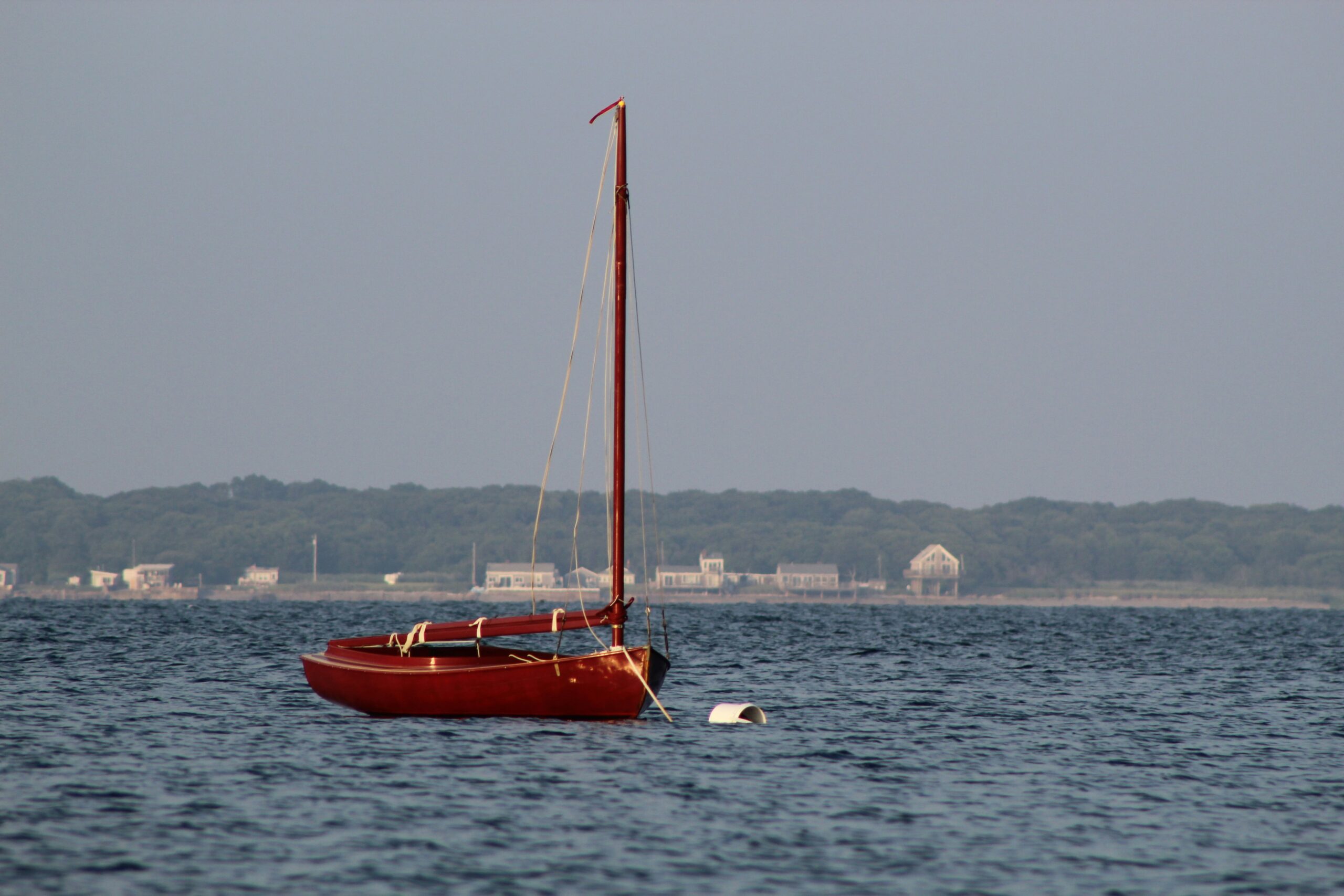
 Photo by Calvin Stevenson on Unsplash
...
Life expectancy in the 18th century was short: 34 years for men and 42 for women. If you hoped to become accomplished in the arts or sciences, you had to start as a child. Wolfgang Amadeus Mozart (1756–91) exemplifies this conundrum, having produced more than 800 musical compositions in his 35 years on Earth. More fortunate in longevity was Swiss mathematician Leonhard Euler (1707–83), but—in sync with the times—he also got an early start, helped along by famous scientist Johann Bernoulli. By age 16, Euler was awarded a master’s degree, and at age 19 he completed his doctorate. In the following year, he entered a prestigious Paris Academy Competition that posed the question of how to find the best way to place masts on a ship. If Euler had won that prize, he would have achieved a position at the University of Basel. Unfortunately, he was awarded second prize and accepted a faculty position in Russia, where he spent much of his career, only later returning to his home country of Switzerland.
Considered to be one of the greatest mathematicians and theoretical physicists of all time, Euler may have remembered his teenage foray into ship masts when, in 1757, he developed his theory regarding the buckling of slender columns. Known today as Euler’s critical-load theory, it is given by the formula Pcr = π2EI/(KL)2, where Pcr is the critical compression load, E is a measure of stiffness in bending (wood scientists usually call this modulus of elasticity, MOE), I is the minimum second moment of cross-sectional area, and KL relates to column length. What is most important to recognize is that only bending stiffness, not bending strength, is critical to avoiding Euler buckling. Euler may have first recognized this when considering ship masts stabilized by stays and shrouds that add compression load but provide critical stiffness.