
 Truman Forbes
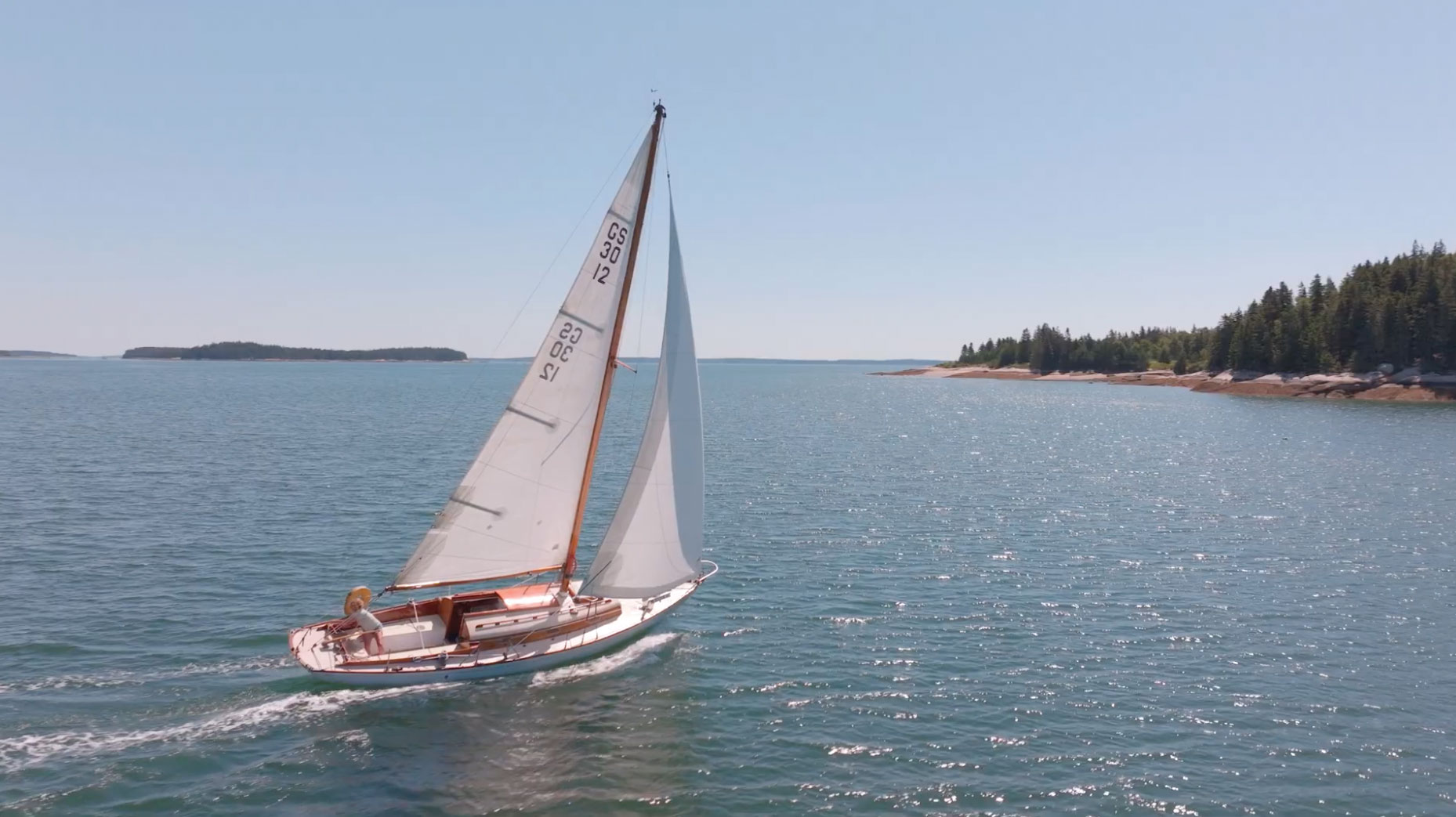
ADVENTURESS is a Sparkman & Stephens–designed Gulfstream 30 sloop that was built by Norman Hodgdon in East Boothbay, Maine, in 1959.
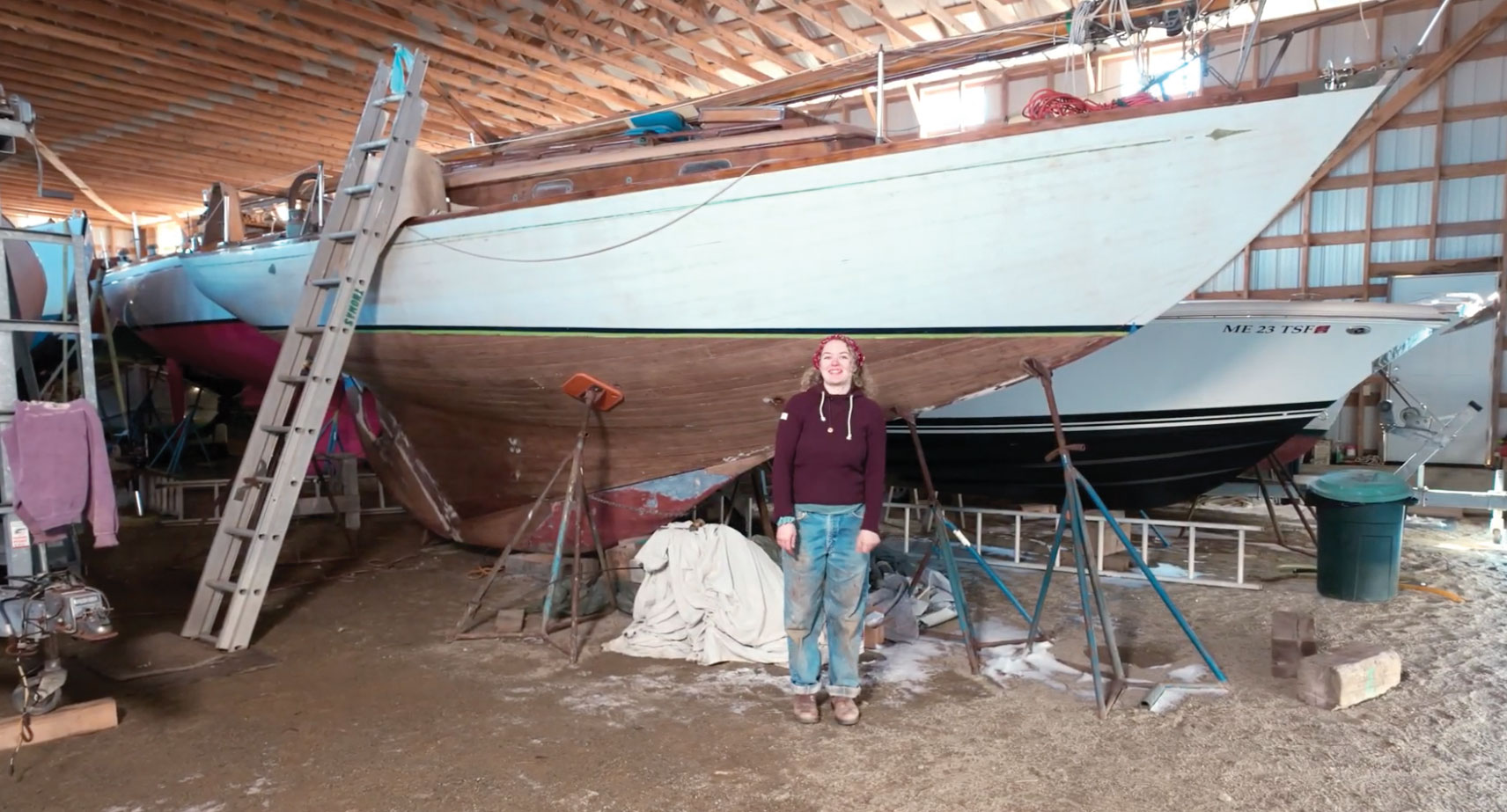
When I first found ADVENTURESS in November 2024, she had been out of the water for about 20 years. She sat on her stands, dry and patient, red bottom paint falling off, caked in dust, and inhabited by mice and filled with forgotten sails. She hadn’t been sailing since I learned to sail as a child in the early 2000s.
ADVENTURESS is a Sparkman & Stephens Gulfstream 30. Unlike the other boats of this design built by Robert Derecktor, she came from Norman Hodgdon’s shop in East Boothbay, Maine. She’s mahogany-planked on oak frames. She’s the only Gulfstream 30 Hodgdon built, and he couldn’t resist a few departures from the original design: a cockpit about 1′ longer than specified, a mast 6″ taller, and a more-rounded house. These small differences add up; Hodgdon’s hand in her is vivid.
When I bought her, her frames were dry but sound, her mahogany planks surprisingly tight, and her fastenings mostly if not all bronze. The hull was tight enough that I could run a putty knife along most seams without it vanishing. For a 1959 carvel-planked boat that hadn’t floated in a generation, that was something.
 Truman Forbes
ADVENTURESS had been out of the water for more than two decades when Jasmine acquired her.
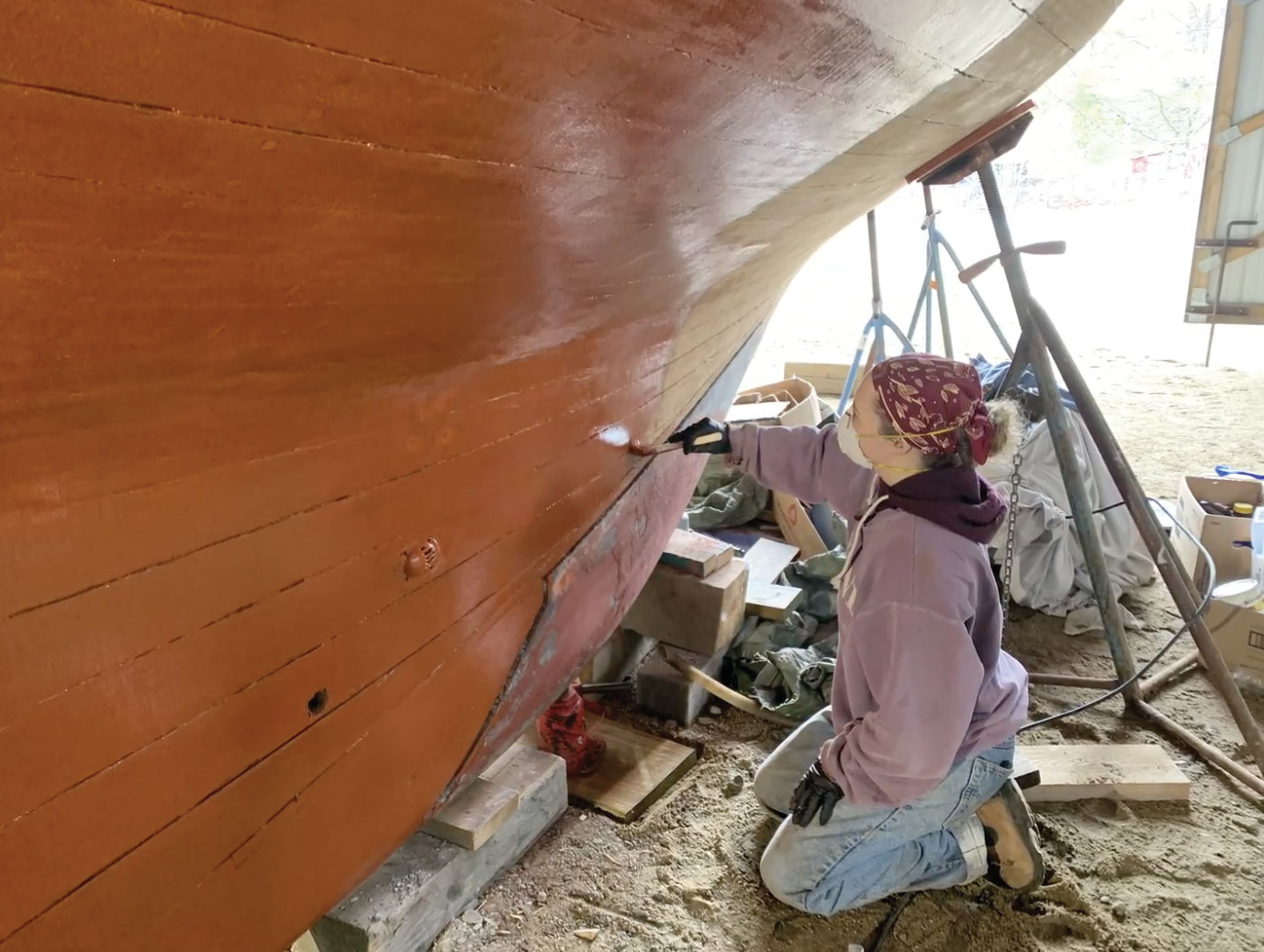
I started with what Greg Rössel might call the “triage phase”—the work you do so that you can take her sailing and keep her afloat. Her bottom paint was too far gone to guess at, so in March 2025 I invited nine friends to help me hand-scrape the bottom down to bare wood. It took one afternoon, followed by 16 hours with a 6″ orbital sander attached to a shop vacuum. Next, I recaulked with cotton caulking any seam sections from which I was able to dig the old caulking. I applied Interlux underwater seam compound to every seam below the waterline, and my dad and I applied epoxy to a couple of deadwood areas that were neither structural nor would be affected by the swelling of the wood once the boat was launched.
Once the mahogany was clean, I primed the bottom with Pettit Tie Coat 6627 (see Review, WB Jul/Aug 2025, No. 305), and followed this with two full coats of Pettit’s hybrid antifouling paint, Unepoxy. Next, I moved above the waterline to sand, scrape, varnish, and paint just about every surface. The deck paint had no nonskid and was a bright but peeling peach color, which isn’t my deck-color preference. While scraping the deck to prep for paint, I found a few problem areas where the fiberglass sheathing had cracked and allowed water in. While the deck was still dry, my dad and I patched these areas with a few coats of epoxy. The deck and coach roof received two coats of nonskid paint, preceded by a coat of two-part water-based epoxy primer (see Review, WB Jan/Feb 2026, No. 308).
 Truman Forbes
Much of the initial effort involved cleaning and organizing, followed by careful assessment and treatment of the plank seams, lots of scraping and painting, and a thorough overhaul of the engine.
Before launching, I also needed to have a running engine and enough of an electrical system to at least run bilge pumps. The boat has a 1996 Beta Marine 20 diesel engine, which was the replacement for an Atomic 4 that had caught fire in the late ’90s. The Beta had only a couple of hundred hours on it when I acquired the boat. I had the starter and alternator rebuilt at Bonded Auto in Ellsworth, Maine—a local gem of a specialized shop for starters and alternators. New batteries rounded out the electrical overhaul, and I replaced the V-belt, water impeller, and fuel and oil filters. My dad and I also added a mesh strainer for the raw-water intake; the boat, as I bought it, did not have one. He and I debated taking the heat exchanger apart to clean it, as well. We were apprehensive about possibly breaking it and needing to buy a new one. We found a series of YouTube videos showing the process, and were inspired to try. One afternoon, my dad bravely got it apart. It cleaned up well with some vinegar.
After changing out all the fluids, replacing a few obviously worn hoses, and putting the engine back together, we put the raw-water-intake hose into a jug of water and tried starting her up, but it just wouldn’t start. We figured there was air in the fuel line, so for a few days tried starting her while bleeding air, to no avail. One Saturday afternoon, my partner and I visited the boat, determined to start the engine. We tried bleeding air from the fuel system a couple more times, with no luck. We then resorted to spraying ether into the air-intake. Like a dragon taking its first breath, it came to life and kept running. It was immensely satisfying to hear the purr of that engine for the first time.
Before I dared launch the boat, I began watering the bilges. Every morning for a week, I filled her with wet towels, rags, and sheets, and poured buckets of water onto her keelson to swell the planks from the inside. When I went on a short trip in June 2025, I asked a few neighbors to help—two to water my boat, another to water my garden. By the time ADVENTURESS launched, she was leaking very minimally from the inside out, which unfortunately was not predictive of her leaking from the outside in.
 Truman Forbes
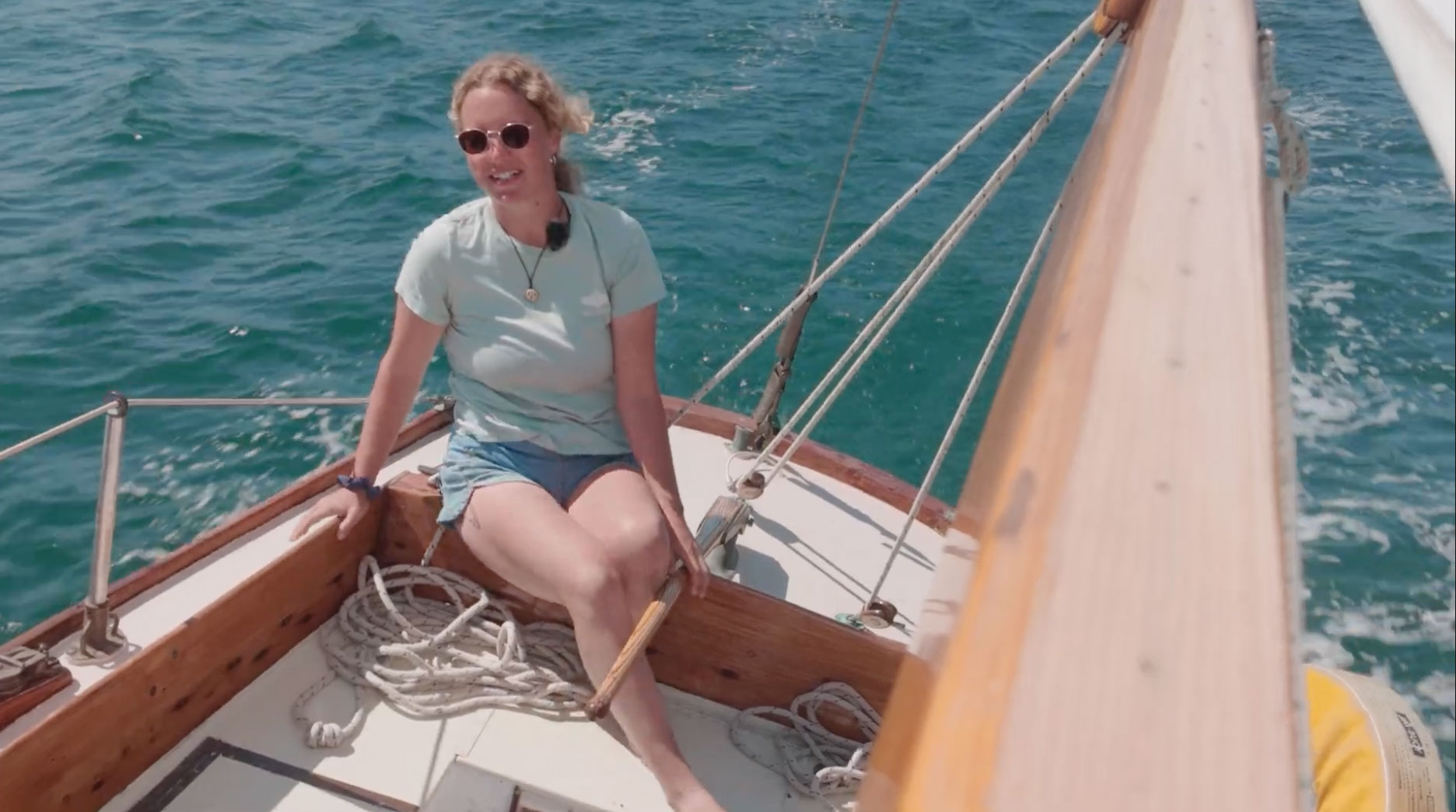
Jasmine Thomas spent a good part of last winter rehabilitating her 30′ sloop.
The first time I saw ADVENTURESS floating, I felt like a mother watching her child learn to walk, just as much in awe as absolutely terrified that she would fall. As she remembered how to swim, I spent about every night aboard for the first month and a half. Since then, I’ve learned the difference between restoration and resuscitation. The former belongs in shops and books; the latter is not glamorous; it happens deep in the bilges. It’s hard to distinguish seam compound from bruises gained from countless painful hours replacing fuel hoses.
But sailing her is worth every bit of blood, sweat, tears, and frustration. It feels as if she is happy to be back on the water. The magic of adventuring with her both solo and with friends is indescribable. She speaks clearly about what she needs and wants, and responds to sail trim and helm adjustment just as clearly. I am currently rebuilding an 1851 farmhouse in Maine with my partner, and in many ways a house such as this is just like a big old boat—just on land. This place will soon become ADVENTURESS’s home as well. I still have many hours of work ahead of me bringing the house and ADVENTURESS back to their full glory. As I progress, I’ll often think about and live by what Greg Rössel wrote: anything can be fixed, but you have to ask if you want to. I want to. 
Jasmine Thomas is WoodenBoat’s editorial assistant.
Read Jasmine’s review of the deck paint she used on ADVENTURESS, Pettit Tuff Coat.
Learn more about Jasmine’s ongoing restoration of ADVENTURESS in a newly launched video in WoodenBoat’s Mastering Skills collection (skills.woodenboat.com).