
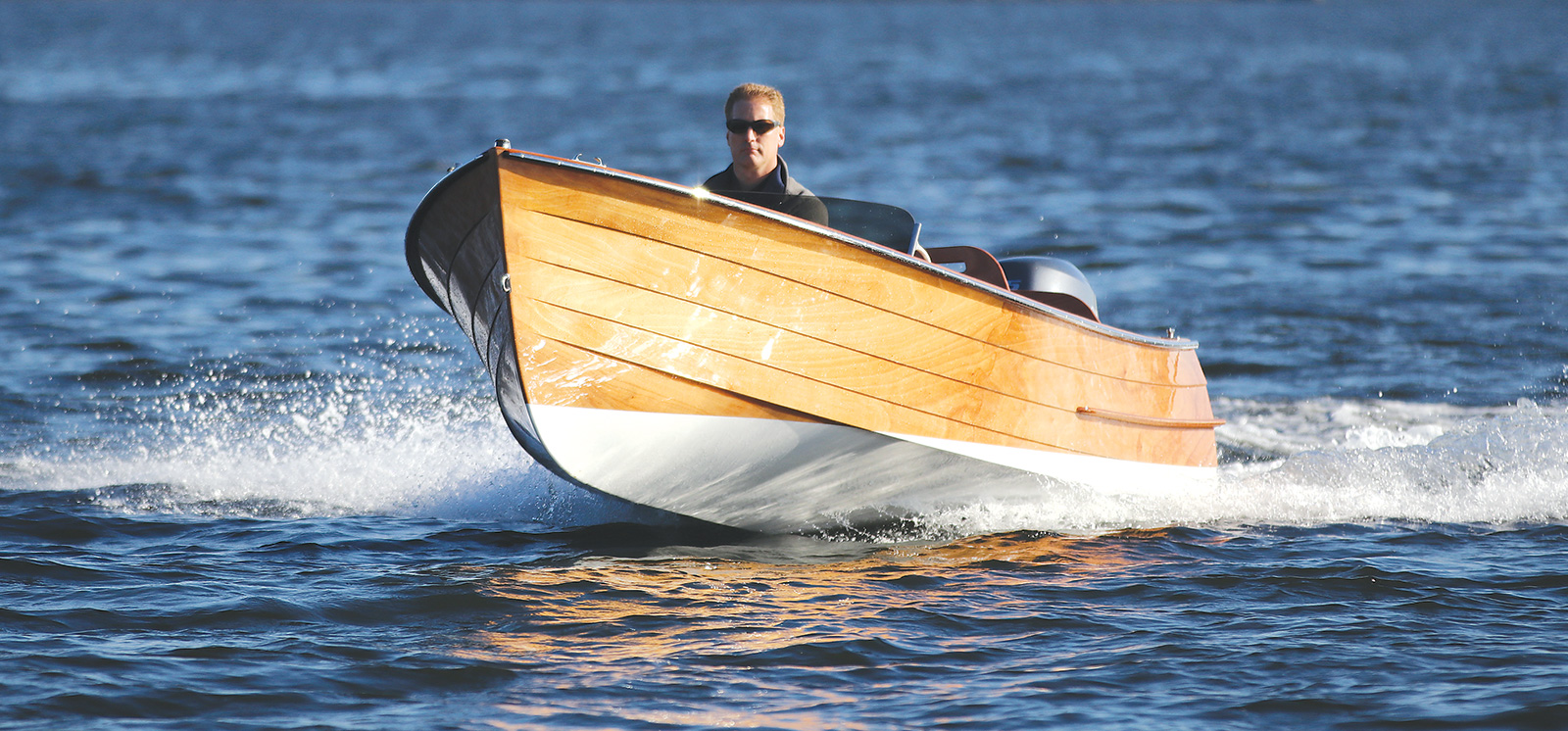
Rhode Runner combines classic style with modern construction, and it runs efficiently with modest power.
This striking outboard runabout might be described as an exercise in nostalgia. Yet we’ll build it with long-lasting and easily maintained contemporary materials. It will run efficiently when powered by a relatively small (15–25 hp) outboard motor—gas or electric.
Designers John C. Harris and Dillon Majoros, of Chesapeake Light Craft (CLC), have brought the style and grace of a 1950s runabout to the present. Majoros describes the result as a shapely hull with purpose: “Water-shedding flare forward transitions to elegant tumblehome near the transom. Traditional lapstrake topsides are married at the chine to a contemporary, high-deadrise running surface.”
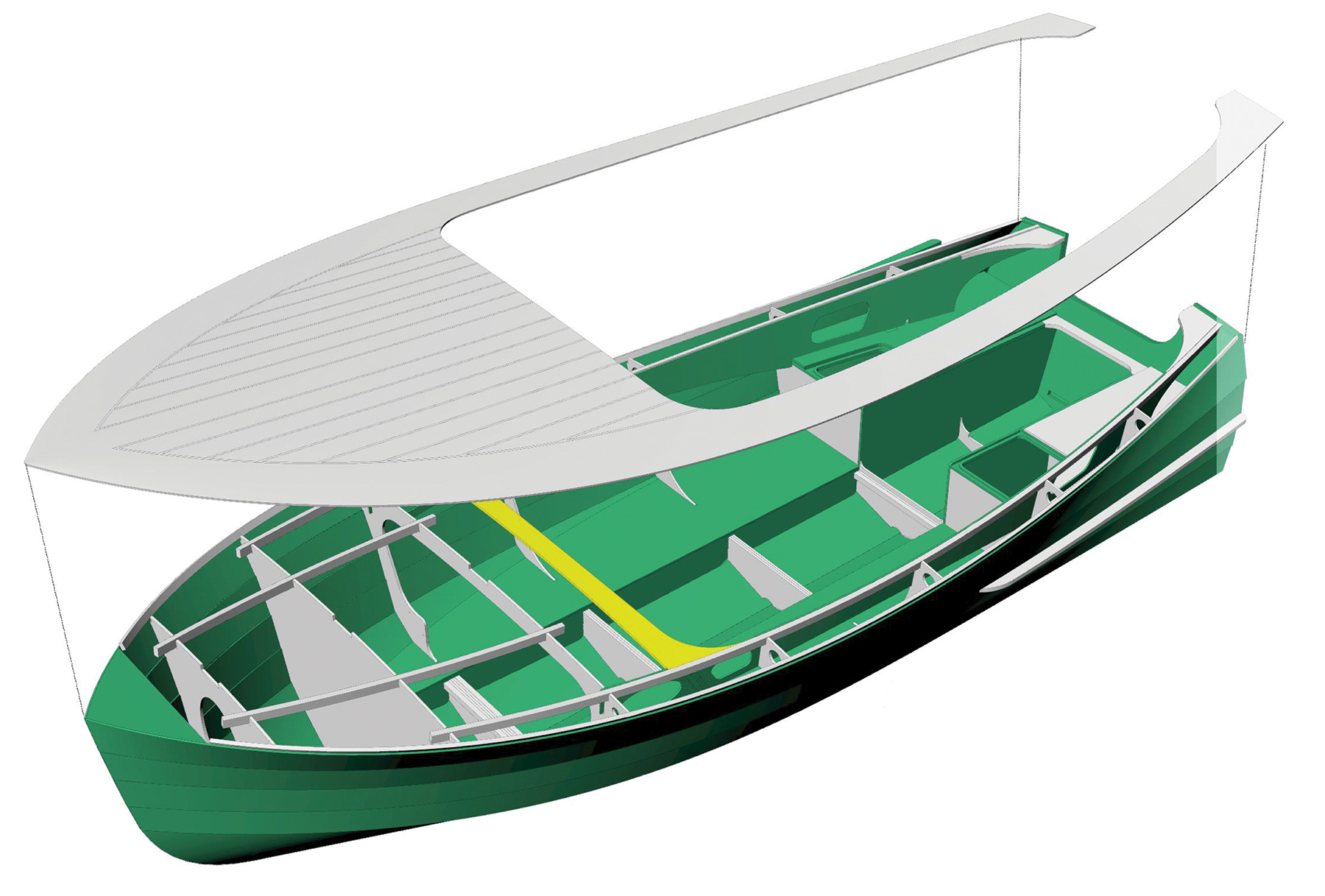
The complex and carefully engineered components of Rhode Runner’s hull structure argue in favor of a CNC-cut kit for fast and accurate construction.
Designer Harris is responsible for the strong sweep to the sheerline: “Why did I do that? Most 1950s runabouts had relatively straight sheerlines. If I attend a classic powerboat show, I want to be able to pick the Rhode Runners out of the crowd!” Many of us will agree that this distinctive feature looks good.
Despite its traditional appearance, Rhode Runner goes together in stitch-and-glue fashion. We’ll need high-quality mahogany plywood and epoxy.
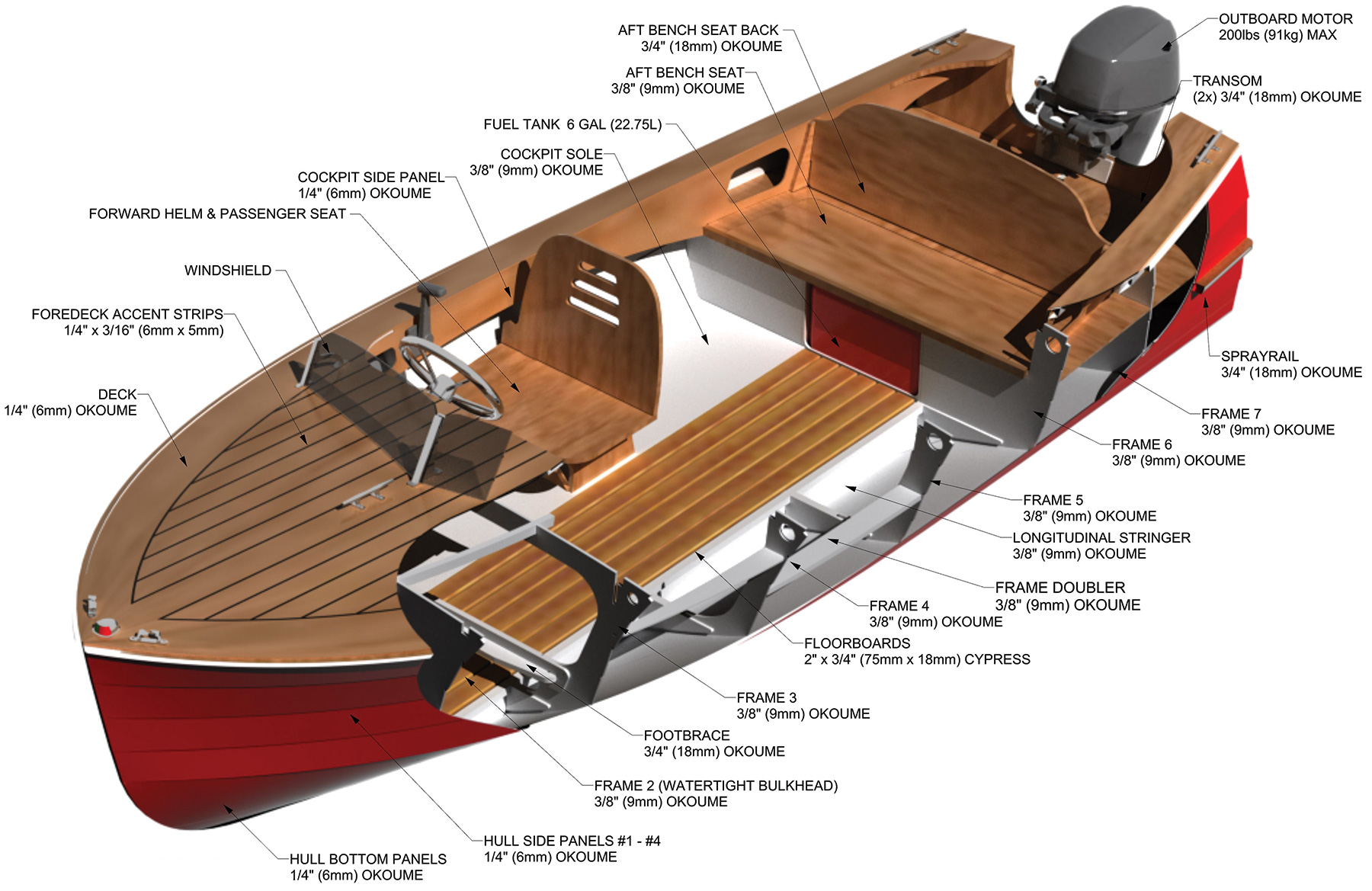
We can build directly to the Rhode Runner plans or we can obtain a kit from CLC. For most jobs, I prefer starting from scratch with paper sheets of drawings spread on my workbench. However, in this case, I’ll strongly suggest that we purchase a kit.
This hull shows us classically simple and elegant lines. Yet its internal structure consists of complex and carefully engineered components. For the kit, CNC machines produce these parts with incredible precision. Could a human builder match the machines’ work? Even a slight inaccuracy at the beginning of our project might cause serious problems.
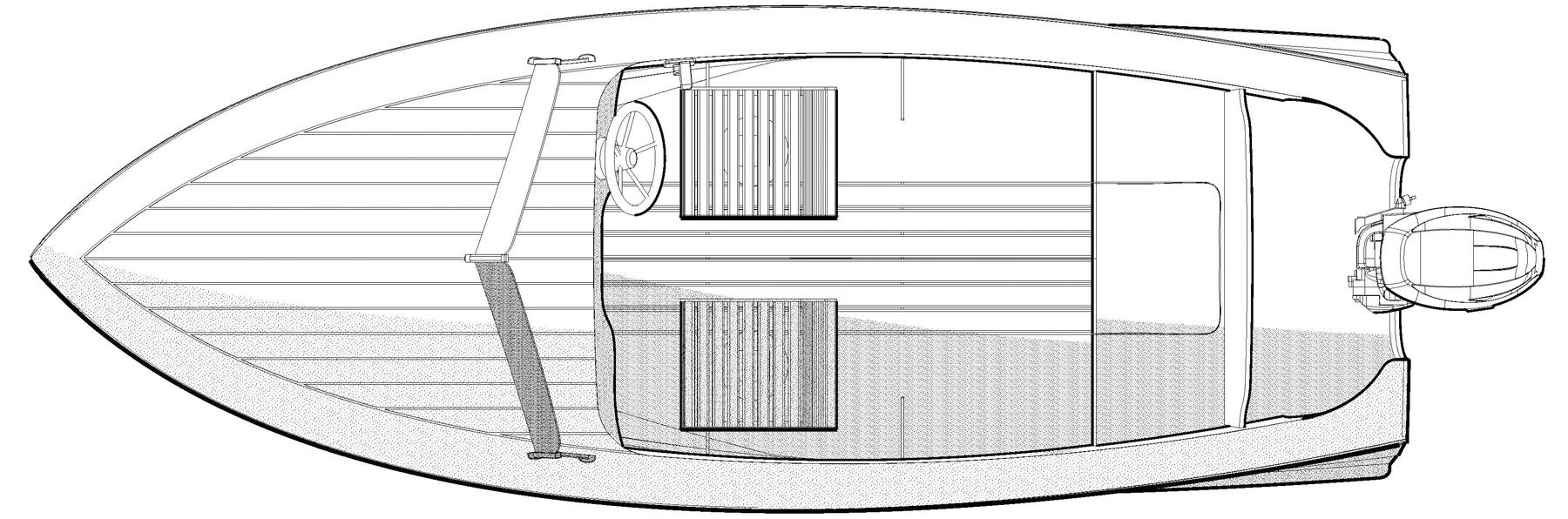
An open layout, with two comfortable seats, ensures good visibility from the wheel.
Don’t worry, machines won’t take over our entire project. We’ll keep the fun of setting up the structure, planking, and finishing the hull. This will require time, a steady hand, epoxy…and (as with many “epoxified” builds) plenty of sandpaper. Harris suggests that prospective Rhode Runner builders ought to be familiar with stitch-and-glue construction and should have “already built a couple of boats.”
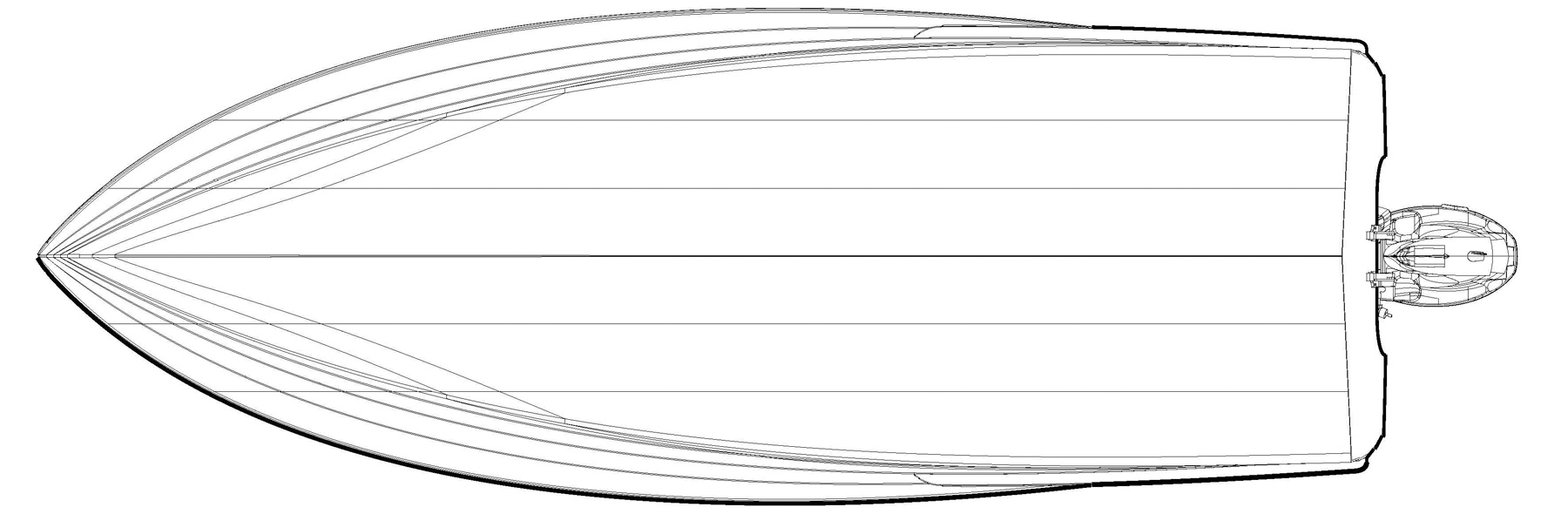
The hull lines show plenty of flare forward and considerable running surface aft. Rhode Runner rides well and planes easily.
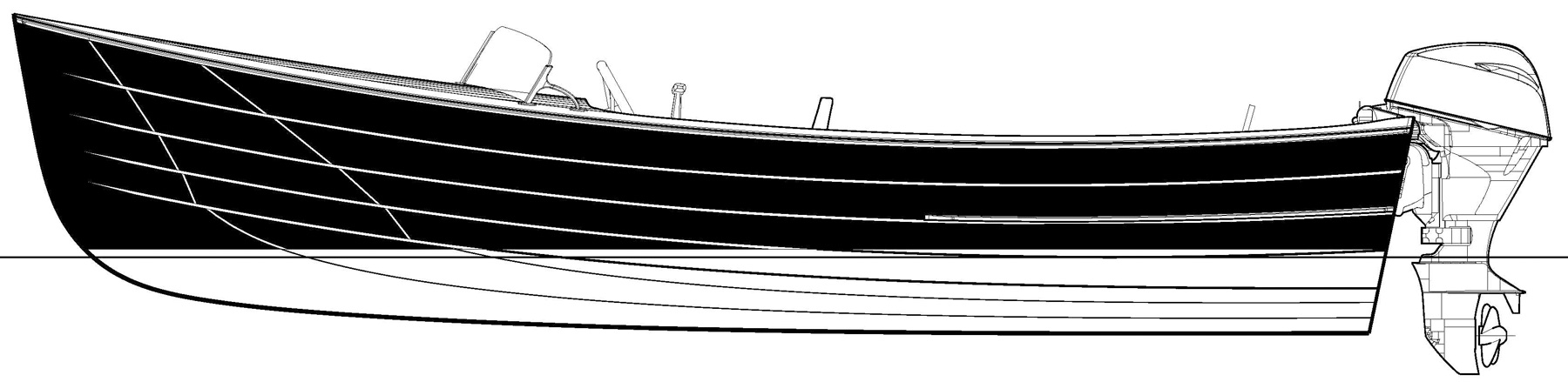
The boat has a striking profile; lapstrake topsides accentuate the sweeping curves of this hull.
Co-designer Majoros, who performed the intricate 3D modeling in CAD, has put together an impressive 37-page assembly guide for this design. It’s available to download at the CLC website. Warning: The manual contains many evocative full-color renderings of Rhode Runner. You might feel compelled to clear out the garage immediately and get started.
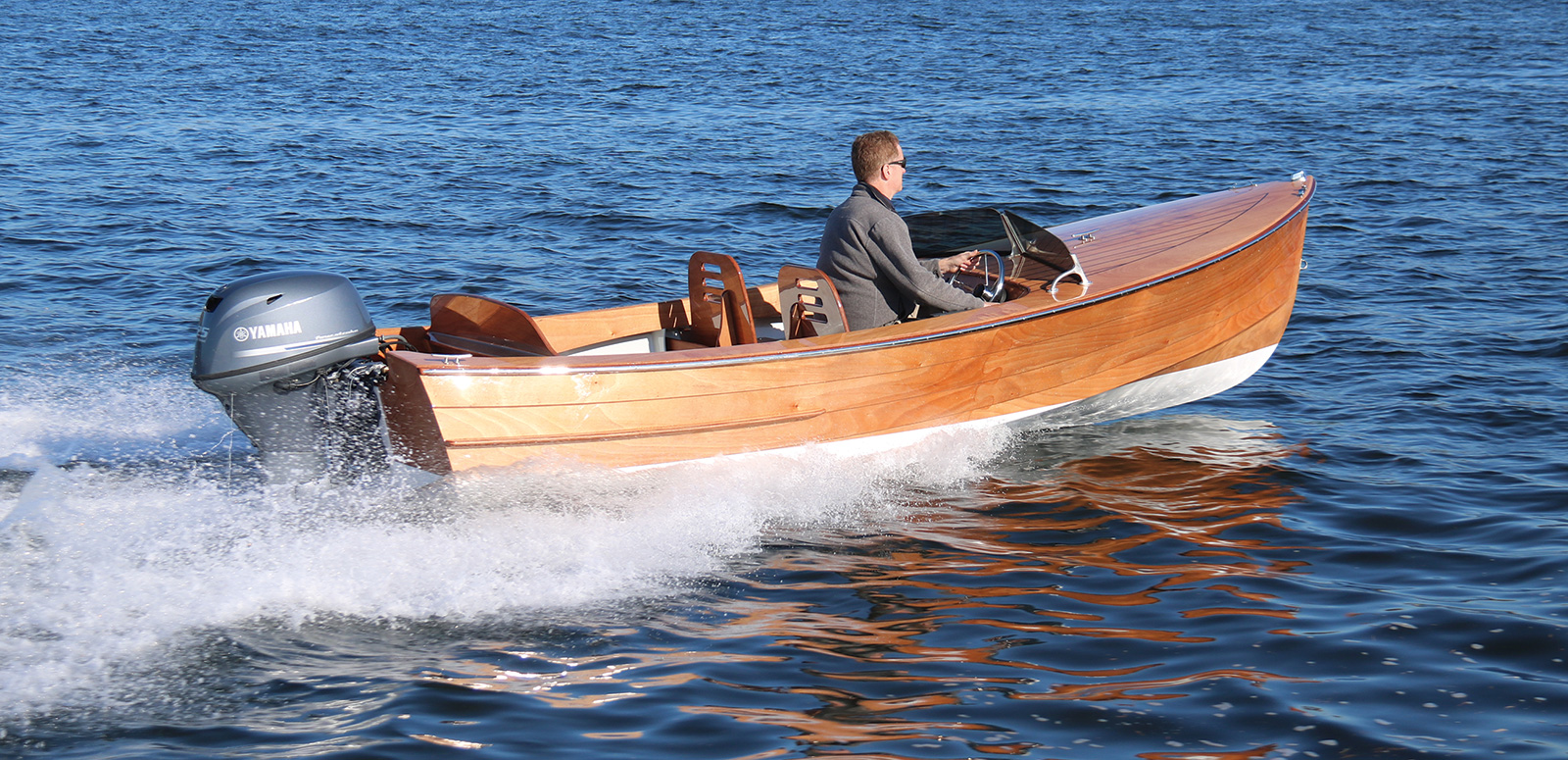
Rhode Runner skims across the Severn River with designer John C. Harris at the controls.
This is an elegant runabout worthy of our best efforts in the shop. With the creation of Rhode Runner, Harris and Majoros have moved forward to the past.
Particulars
- LOA: 14′9″
- Beam: 5′5″
- Draft: 1′3″
- Weight: 350 lbs
- Power: 15–25 hp

Mike O’Brien is boat design editor for WoodenBoat.
Contact designers John C. Harris and Dillon Majoros at Chesapeake Light Craft, 1805 George Ave., Annapolis, MD 21401; 410–267–0137.