
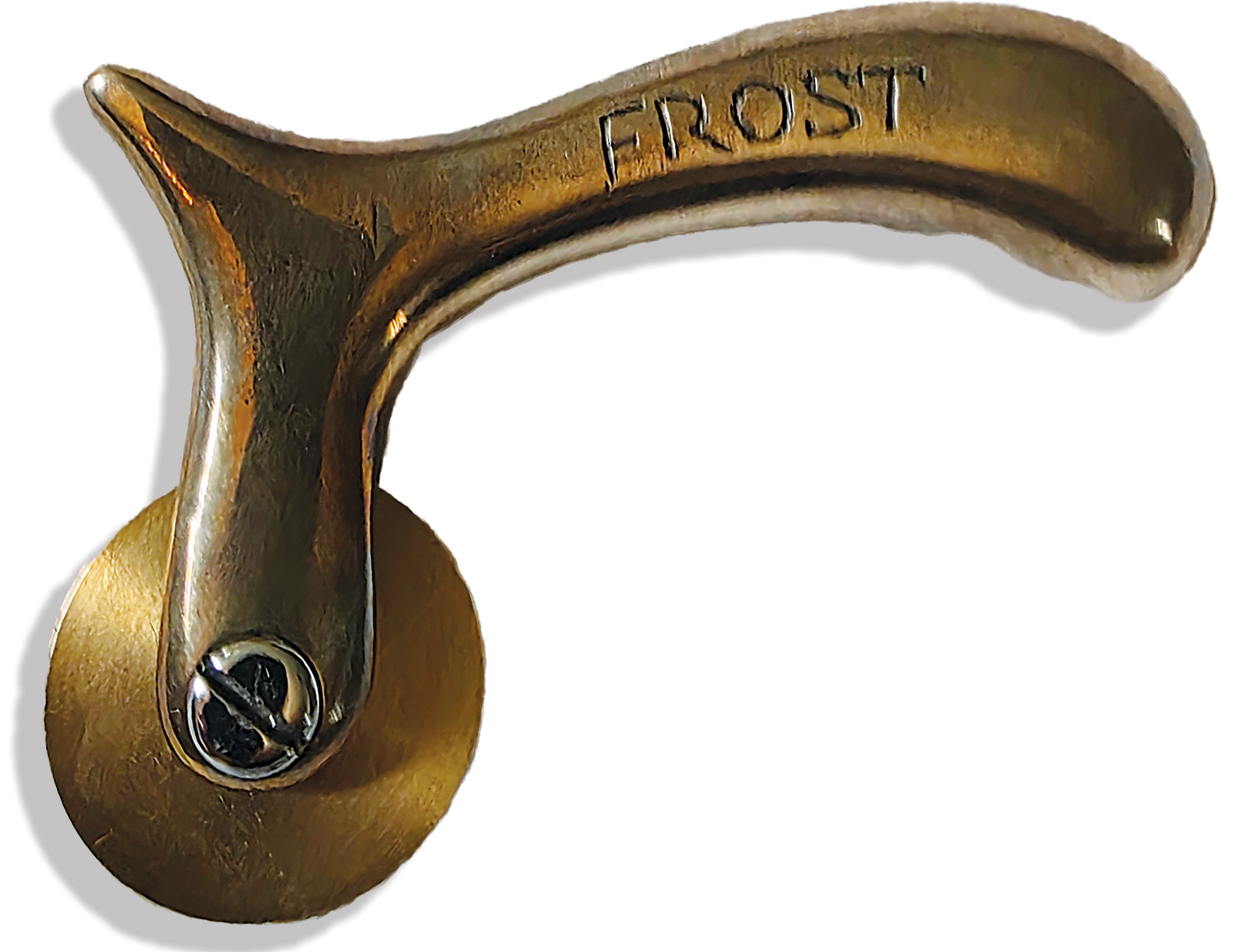
Back in the late 1970s, when I was learning the boatbuilding trade, there was always one operation that I approached with trepidation: caulking the hull, especially on small craft. Using mallet and iron required nuance and (for me) a lot of practice. The lingering concern was that an overenthusiastic blow to the iron could break out the inside face of the soft cedar planking. And there was all that hammering clatter….
One day, by sheer serendipity, I picked up a copy of Royal Lowell’s book, Boatbuilding Down East. Lowell, a highly respected designer and builder of lobsterboats, was also a grandson of William Frost, “the Wizard of Beals (Island),” who was considered the originator of the Maine lobsterboat hull design. I quickly turned the pages to see if he would reveal a better and perhaps quieter technique to install the cotton between the plank seams.
And, indeed, he did. He offered advice on preparing the cotton from the skeins in which it is purchased and on how and where to use it. Additionally, there was the requisite information on using the irons and mallet and, most important, sage information on using the “caulking wheel.” There are two versions of this handy tool. The commercial one is a wheel on a stick, much like the hardware-store tool used to install insect screen in a door. Then there is the pistol-grip, or pizza-cutter style like the one his grandfather fashioned, with a body made from lignum vitae. “A word about caulking wheels,” Lowell wrote. “I prefer a pistol-grip type. I made a pattern for my present one, and had it cast in bronze. This has been ideal. As it has good weight, fits my hand perfectly and rolls the cotton deeply with less effort, or at least it feels that way to me.”
This sounded pretty good to me. Lowell helpfully provided an illustration of the device after which I rendered a rough copy with a white-oak body, a fender washer for the wheel, and a copper rivet for the shaft. Although the wheel was a bit wobbly (even with washers as stabilizing shims), the tool worked exactly as described. The deal is that the ergonomic pistol grip wheel provides plenty of downward and direct pressure—probably more than that of iron and mallet) from your arm, wrist, and upper body. It silently and easily drives the cotton into the seam. Indeed, one can even roll cotton into the face of a cedar plank that has no seam at all, which is a useless boatbuilding operation but neat cocktail party trick that illustrates the tool’s power. I still use my funky shop-made version, though I’ve often wondered what it would have been like to use one of the originals.
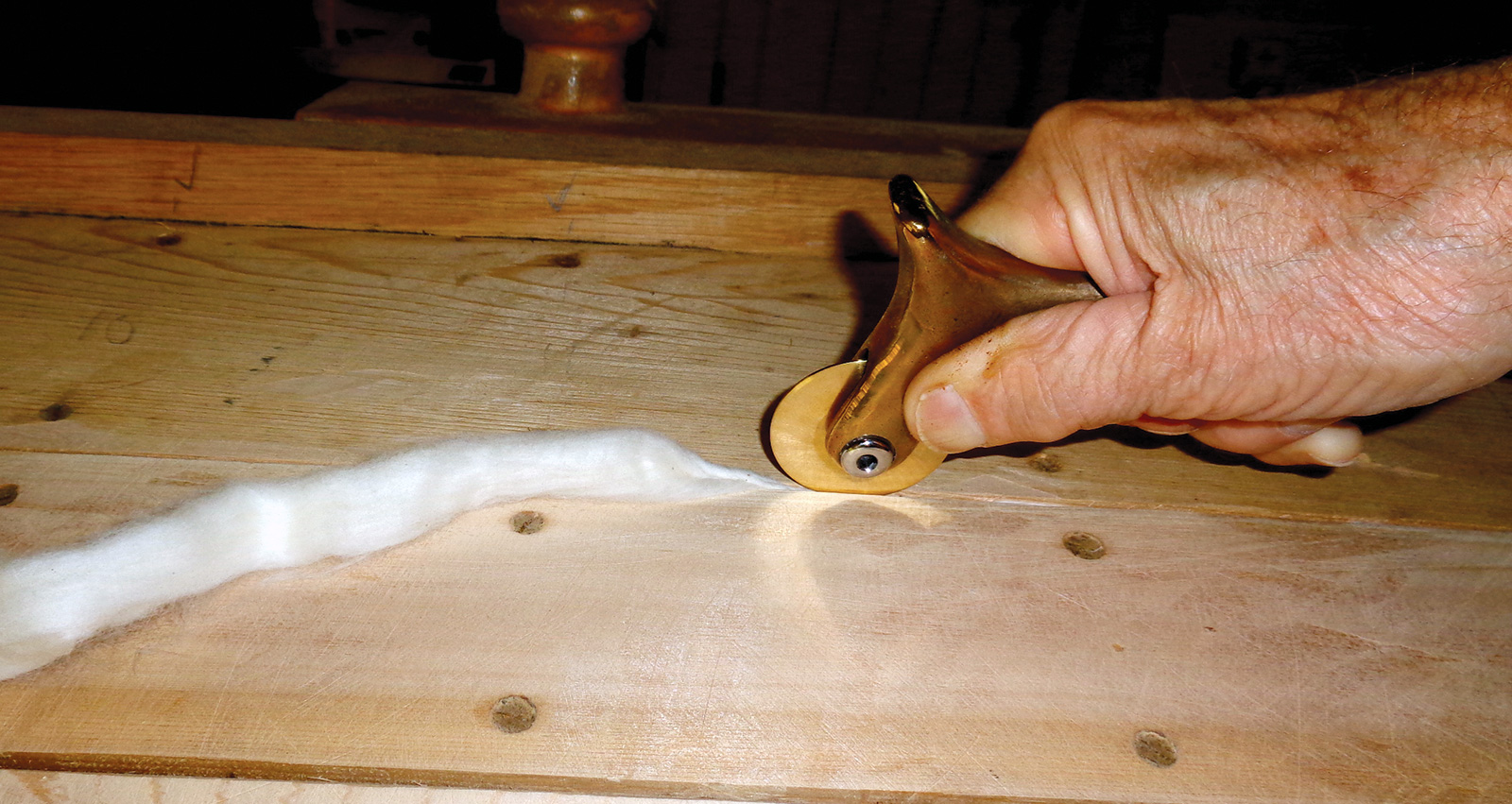
Recently, that question was answered with a phone call from Jamie Lowell, who is now building replicas of the family caulking wheel. Lowell told me: “In the 1940s, William Frost made a series of the wheels for his grandsons including my father Carroll Lowell. I grew up using this tool created by my great-grandfather in my father’s shop.” He decided to create a replica of the tool for himself and his brothers before the original wore out. That led to making them available to other builders as a “useful heirloom.”
There was no need to “reinvent the wheel,” because the original worked so well. First, Lowell made a silicone mold from the original tool. From the mold, he cast the body from high-density polyurethane. The piece was primed and painted in preparation for delivery to a foundry, where they created a mold to use in their investment casting in naval brass. The wheel provided a challenge because of its taper, which is similar to the wheel on a pipe cutter. The solution was a chance find of a piece of 1¾″ bronze shafting that Lowell had CNC-cut and milled at a machine shop. The bearing is a 316 stainless-steel shoulder bolt that was modified.
After sanding and buffing the bodies, the wheels and bearing bolt are fitted and assembled. The resulting implement is clean and elegant. The grip part of the handle is roughly 5″ long and weighs about 1 lb. The polished disc runs straight and true, with no wobble. The tool feels good to the hand and works well at its intended task. Like any quality tool fashioned by hand, it is not inexpensive. But, as the old saying goes: You get what you pay for. If you’re planning to do any amount of caulking of carvel-planked hulls, it’s an investment worth considering. Given the track record of the original, your kids might be using it 80 years from now. 
Greg Rössel is a regular contributor to WoodenBoat.
The Frost caulking wheel costs $320, and is available from Lowell Building and Design, 138 Leighton Rd., Pownal, ME 04069; 207–653–9142; www.lowell.design