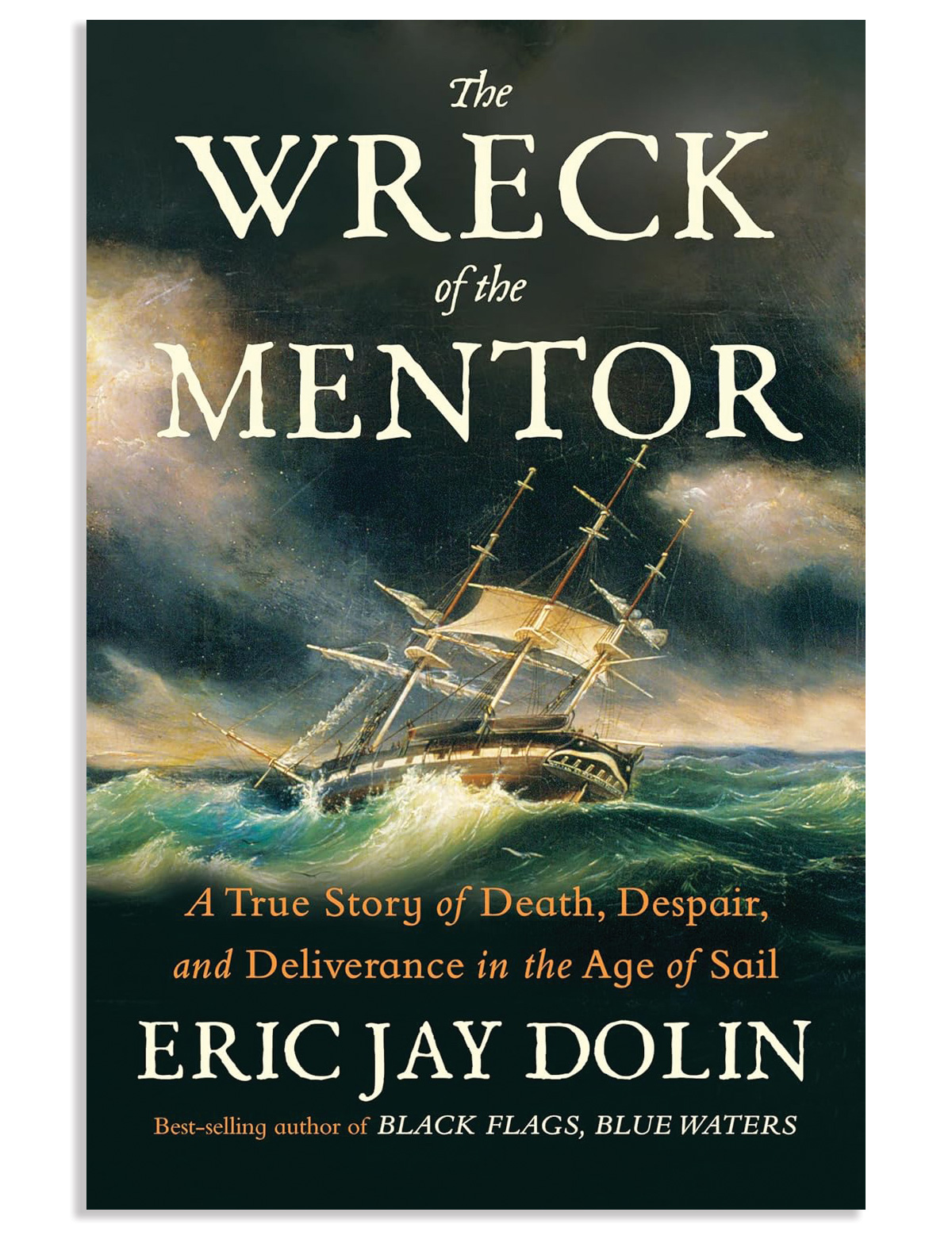
The Wreck of the Mentor: A Story of Death, Despair and Deliverance in the Age of Sail, by Eric Jay Dolin. W.W. Norton, www.wwnorton.com. 272 pp., illus., $27.99.

Eric Jay Dolin’s newest book, The Wreck of the Mentor, A True Story of Death, Despair, and Deliverance in the Age of Sail, is a richly illustrated adventure story telling the tale of a New Bedford whaleship cast away on the islands of Palau in the western Pacific in 1832, and the crew’s harrowing ordeal that followed. It covers the long and complex history of Western mariners’ encounters with the people of Palau dating back to the late-18th century; he summarizes those encounters and their aftermath in 23 chapters ranging from Palauan geographical and cultural history to the intricacies of American whaling, British commercial voyages in the region, and ultimately the role of the U.S. Navy in the rescue of some of MENTOR’s crew. Dolin outlines the biographies of most of the people involved, including Palauan individuals as were best recorded at the time.
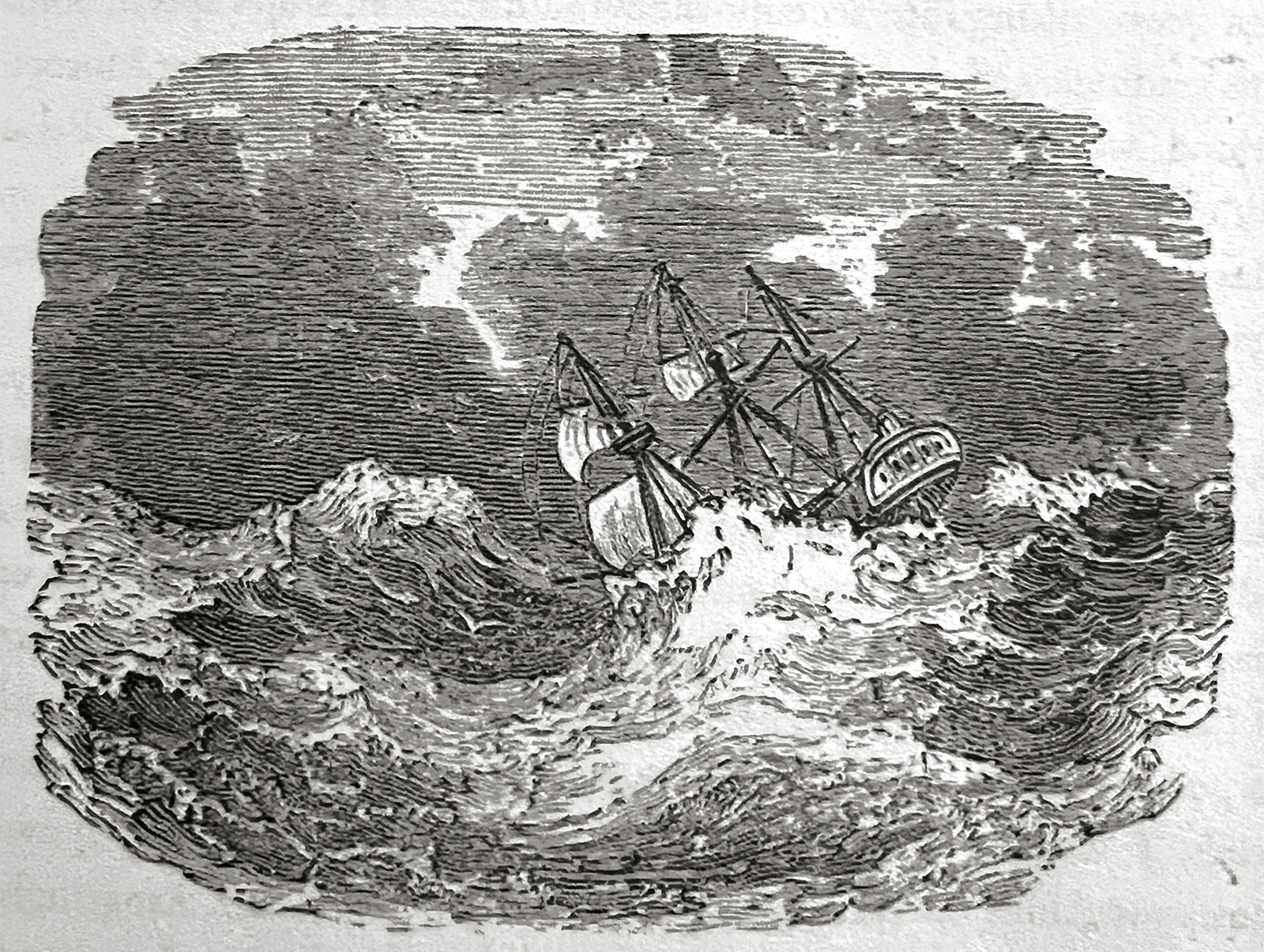
MENTOR, in the storm that wrecked her.From The Wreck Of The Mentor

MENTOR, in the storm that wrecked her.

The story is very well documented with primary sources, including the published narrative of two of the American survivors, an unpublished manuscript by MENTOR’s captain, Edward C. Barnard, a long account of the wreck of the East India Company ship ANTELOPE at Palau in 1783, and other related sources such as Capt. Amasa Delano’s Narrative of Voyages and Travels (Boston, 1817). Dolin consolidates it all into one inclusive narrative delving into the complex cross-cultural relations in the Pacific, particularly the trade in firearms, during an important time in world maritime history.

MENTOR was one of more than 130 vessels that made up the American whaling fleet sailing from 17 ports that year. William Rotch Rodman (1811–50) a Quaker whaling merchant specializing in sperm whaling, with a controlling interest in more than 50 voyages during his career, owned MENTOR. On this particular voyage, Edward C. Barnard (1799–1844), an experienced whaleman and navigator, was master. Ostensibly on a voyage to the South Atlantic and Indian Oceans, Barnard crossed into the East Indies intending to hunt around the rich sperm-whaling grounds of the Celebes Sea. He lost his reckoning in a storm, and while he knew of the general whereabouts of the Palau islands, the treacherous currents surrounding them drew MENTOR onto a reef. Eleven men drowned trying to escape the wreck when their whaleboat capsized. The remainder of the crew, in desperate circumstances, then dwelt with the native islanders for over a year in Palau, where they witnessed firsthand the upheavals caused by conflict with Westerners.

Horace Holden escapes to the ship BRITANNIA.From The Wreck Of The Mentor

Horace Holden escapes to the ship BRITANNIA.

A survivor of the wreck, Horace Holden, famously told his story in a little book titled A narrative of the shipwreck, captivity and sufferings of Horace Holden and Benj. H. Nute; who were cast away in the American ship Mentor, on the Pelew Islands, in the year 1832; and for two years afterwards were subjected to unheard of sufferings among the barbarous inhabitants of Lord North’s Island (Boston, 1836). Holden and his companion, both young New Hampshire men, were forcibly tattooed during their captivity.

In re-examining this classic story of seafarer’s tribulations, Dolin makes it clear that the introduction of firearms into Palauan culture caused great turmoil and internecine conflict. It is not simply the story of a shipwreck. It’s a story of 22 souls, many of them young whalers from the New England countryside, finding themselves 9,000 miles from home, thrown violently onto a coral reef, with those few who escaped drowning becoming enmeshed in the conflicts of a culture itself in the throes of assimilation into a burgeoning Western influence. Once Capt. Barnard had made it off the island and back to the United States, he raised the alarm; in response, in 1835 the sloop-of-war U.S.S. VINCENNES was dispatched under the command of John H. Aulick to negotiate the return of the surviving crew members, who remained in captivity. Of MENTOR’s crew, seven men survived. Some took advantage of passing British merchant ships to seek rescue, and some were deliberately rescued by the U.S. Navy.

Dolin’s storytelling is smooth, easy, and instantly engaging, and he includes the essential reference of a nice map. A “Cast of Characters” lists the names of crew members aboard MENTOR and ANTELOPE, plus other people and voyages of importance. This matters greatly as the story gets complicated with many tribal actors and places. Events, especially 19th-century encounter events in the Pacific, rarely stand alone. There’s often a precursor event that sets the stage for the next hapless Western navigators venturing in range of people and places they don’t understand. This story is no exception, so the name list is very helpful.

At the outset, Dolin is careful to explain the fragility of such cross-cultural historical storytelling, which often relies upon documents compiled by Westerners to the exclusion of Native voices. Even so, he takes pains, especially in Chapter 2, “Palau,” to accurately identify and spell the placenames, individuals’ names, and other facets of this western Pacific culture with integrity. Such care is essential to this and any other such narratives describing the complex interactions of Western mariners with Pacific cultures. Indeed, it’s central to the narrative, as by the time Barnard, Holden, Nute, and the rest were cast away, they had become unwitting pawns in a generations-long cultural disturbance starting in the late 1700s involving firearms, gunpowder, bits of iron, and the power struggles of Palauans wanting these things.

As Dolin consolidates this into one cohesive narrative, he out­lines a pattern of interactions involving accidents and the resulting rough-hewn and off-kilter diplomacy. The pattern essentially ends when the U.S. Navy gets involved, firmly beginning the envelopment of the peoples of Palau under the umbrella of Western influence. The MENTOR affair would figure largely in the U.S. Congress eventually agreeing to fund the 1838 U.S. Exploring Expedition to chart the Pacific Islands once and for all and to provide naval protection to American navigators.

For readers of WoodenBoat magazine, of particular interest are the many passages describing the efforts of the castaways (both English and American) to repair their existing whaleboats, build boats using whatever tools and bits and pieces of wreckage they could salvage, or adopt Native boatbuilding to their needs. These boatbuilding efforts led Holden and Nute to attempt escape from Palau, but they instead wound up held as prisoners 300 miles away on Tobi Island, which Holden knew as “Lord North Island,” as it had been named after a British merhant ship some decades earlier. It was there that their greatest physical torments, including the tattooing, took place.

The Wreck of the Mentor is a good overview of an important time in world history, when Western commercial fleets were sailing the world, spreading attitudes and technology and injecting elements of political economy into realms such as Palau, whether it was wanted there or not. It opens the door to a further reading list of published primary sources fundamental to understanding the development of Western influences in the Pacific and the results of that influence.  Article ends.


Michael Dyer is curator of maritime history at the New Bedford Whaling Museum.