
 Alizé Jireh
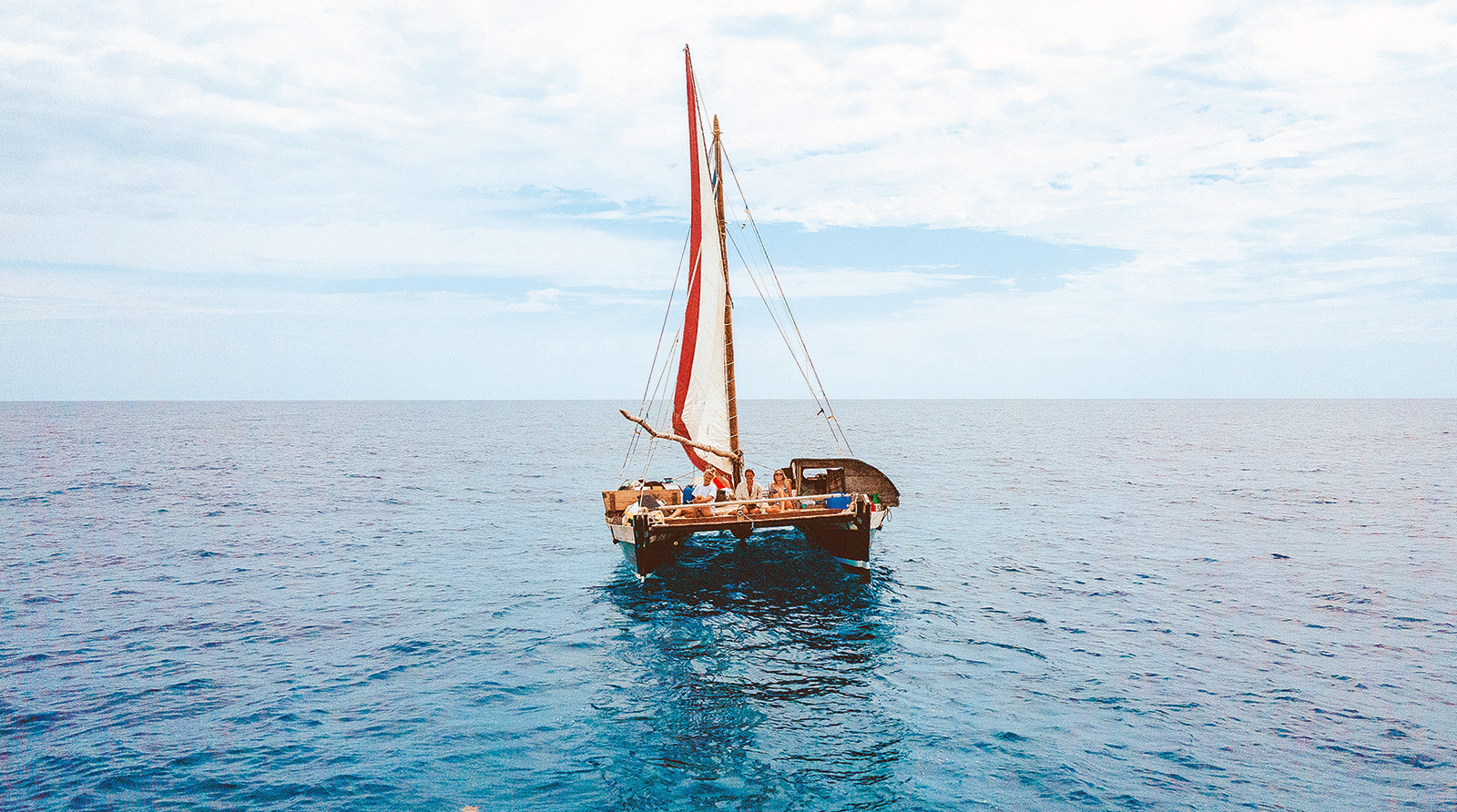
The film Women & the Wind traces the voyage of three women across the Atlantic in a James Wharram–designed catamaran.
Women & the Wind, directed by Alizé Jireh.
www.womenandthewind.com. 1:38 running time.
Rent for $6.99; buy for $14.99.
Take three women. One has recently taught herself to sail. The second sailed with her parents as a child. The third has only ever been on a boat once in her life. Put them on a 50-year-old home-built Wharram catamaran and ask them to sail across the North Atlantic. Sounds like a recipe for disaster, doesn’t it?
In many ways, the voyage described in the film Women & the Wind feels like an accident waiting to happen. The crew is inexperienced, there is no safety equipment to speak of, the boat is in questionable condition, and the rig…well…let us just say that the boom is made from a long, spindly tree trunk, bark and all.
Most hardened sailors will spend much of the movie flinching at the lack of lifejackets and harnesses, the rusty anchor and anchor chain, the poor condition of the sails, the lack of GPS, EPIRB, depth sounder, or even (quite soon) VHF.
And yet, not only does this trio of sailors manage to get the boat out of the yard and sail it across an ocean without any major mishap and still be friends at the end of it, but they also make an outstandingly beautiful film in the process. How many of us hardened sailors can say the same?
There are mitigating factors. Kiana Weltzien was a real-estate manager who in 2016 decided to take a year off from her well-paid job to see the world. She soon met her “mentor,” Hans, who lived aboard a 73′ Polynesian catamaran, which she describes as a “piece of art,” and moved on board with him. It was her first experience of living aboard a boat, and she loved it so much that in 2018 she decided to buy her own: a 40′ Narai MkI designed by the modern multihull pioneer James Wharram back in the 1960s.
 Alizé Jireh
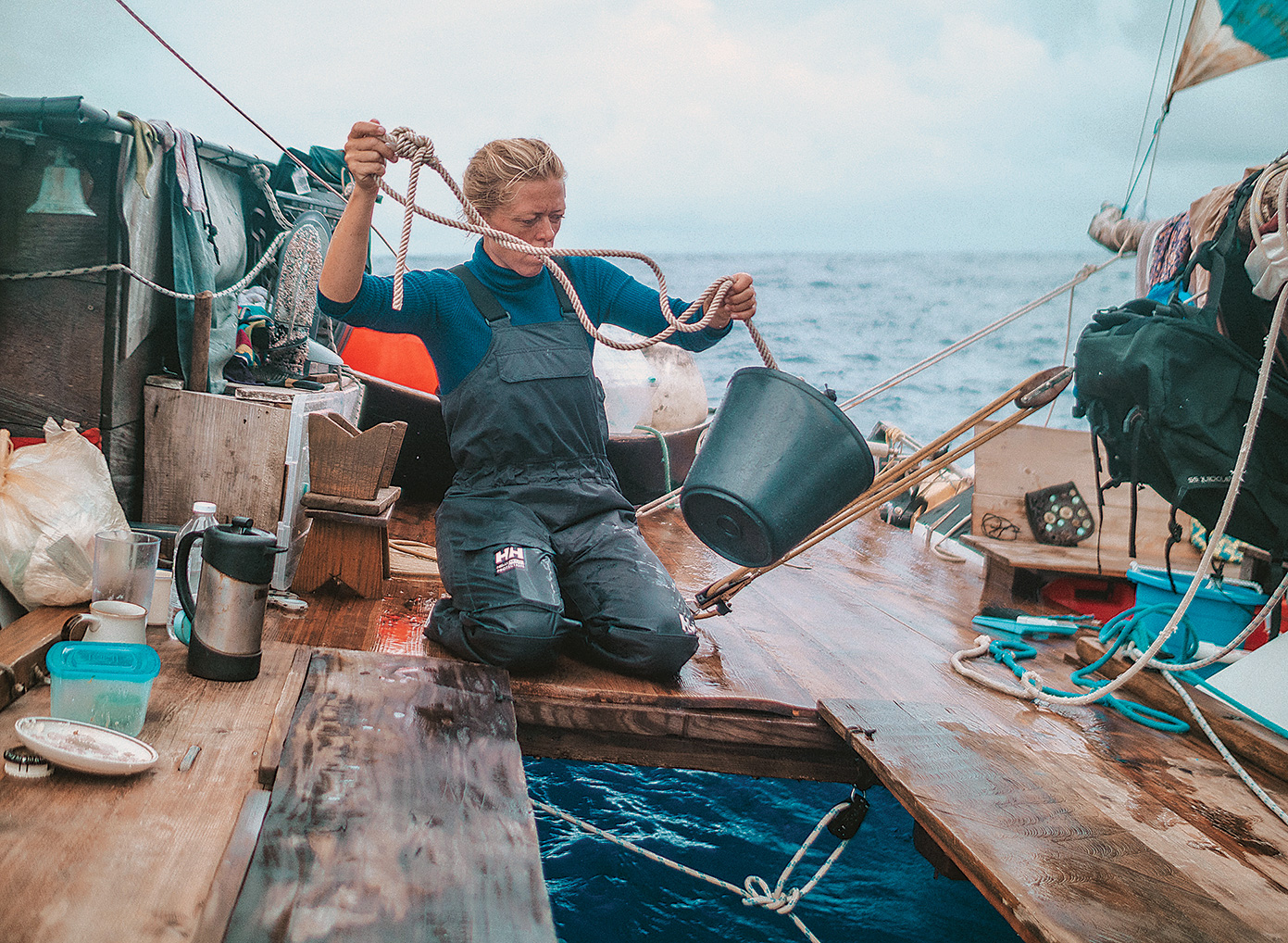
Lærke Heilmann was surfing in the Canary Islands when she joined the Women & the Wind project.
MARA NOKA was built in 1974, and by the time Kiana found her in Panama she was already well-used. Despite knowing almost nothing about sailing, she sailed the boat singlehanded to Colombia, Haiti, the Dominican Republic, and the British Virgin Islands, mostly in company with Hans. She sailed solo because she didn’t want someone with more knowledge coming aboard and taking command of her boat, and yet she didn’t feel confident enough to take responsibility for someone with less knowledge than her.
“It really felt like the boat was sailing me,” she says.
Eventually she plucked up the courage to sail (still singlehanded) across the Atlantic to the Canaries. And it was here that she met the eco-activist Lærke Heilmann. Born in Denmark, Lærke had sailed with her parents as a child and had moved to the Canaries to work with the Clean Ocean Project. Her first impression after meeting Kiana was, “What a badass woman!” The pair discussed various projects to highlight the amount of pollution in the ocean before hitting on the idea of tracing the journey of plastic across the North Atlantic.
 Lærke Heilmann
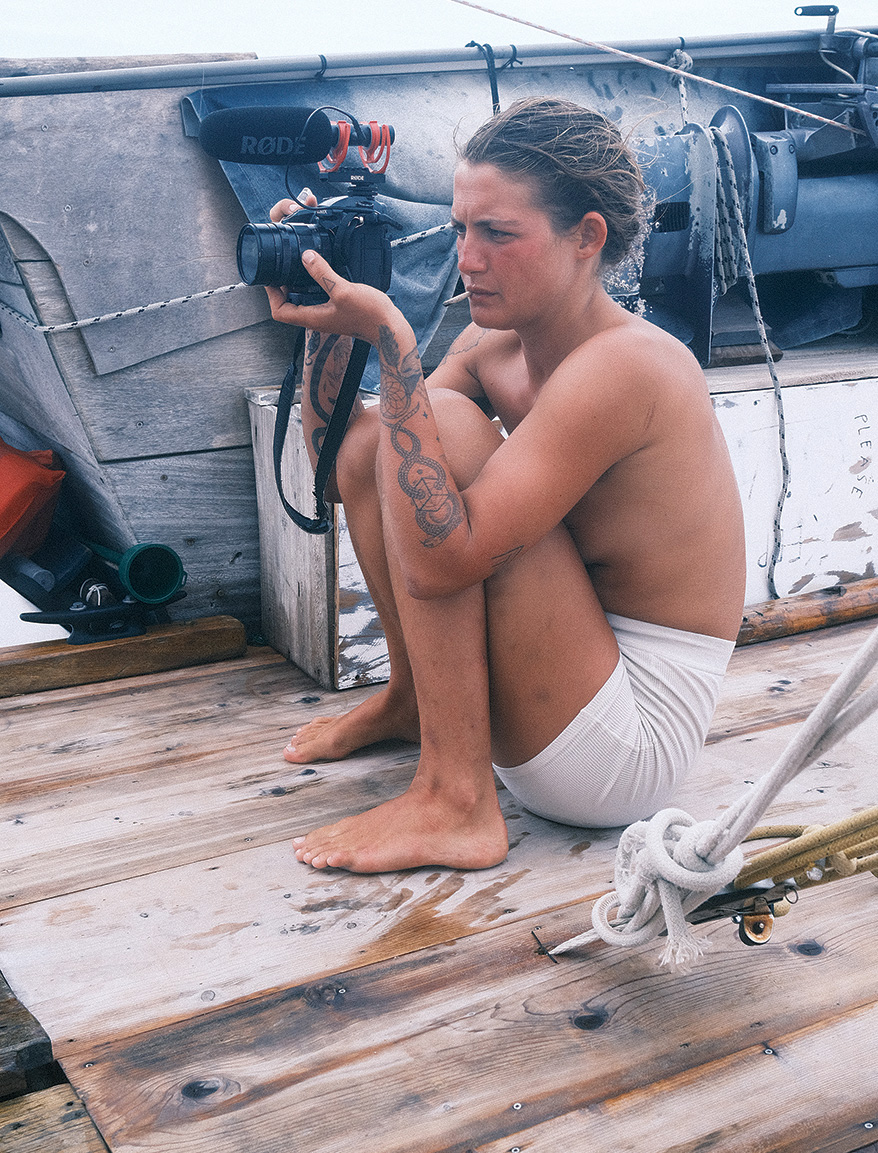
Alizé Jireh filmed and directed Women & the Wind.
A few months later, Kiana took MARA NOKA out of the water in St. Augustine, Florida, to paint the bottom. She called Lærke to tell her she’d be ready to leave in two weeks, so Lærke duly sold her surfboard and her car (the board was apparently worth more than the car) to join her. But as the women worked on the boat, it soon became apparent it needed a lot more repairs than expected. “Two weeks quickly turned into a full year,” Lærke says, as they peeled the old Cascover sheathing off the hull and replaced it with epoxy and fiberglass. They also completely replanked the deck and made new crossbeams.
It’s no doubt significant that Kiana decided to do this work before embarking on a major voyage with crew. Sailing on her own, she had been happy to bail the boat out regularly with a bucket; the extra responsibility of sailing with less-experienced crew seems to have sharpened her sense of risk.
 Alizé Jireh
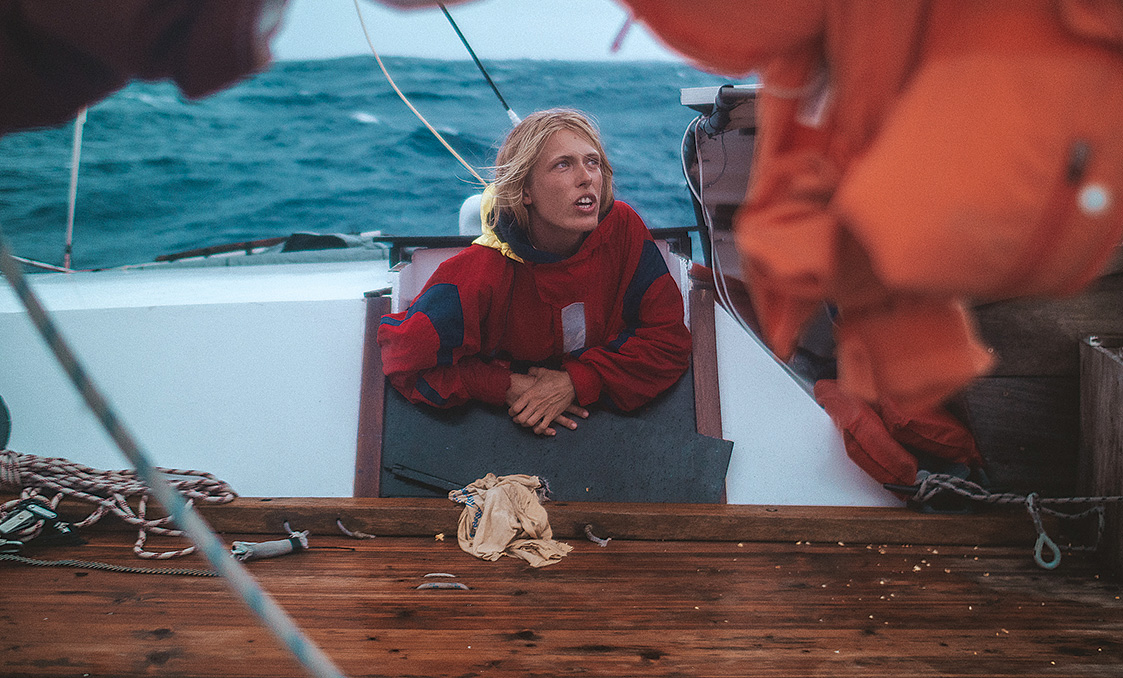
Kiana Weltzien, who began sailing in 2016, was captain of the Women & the Wind voyage.
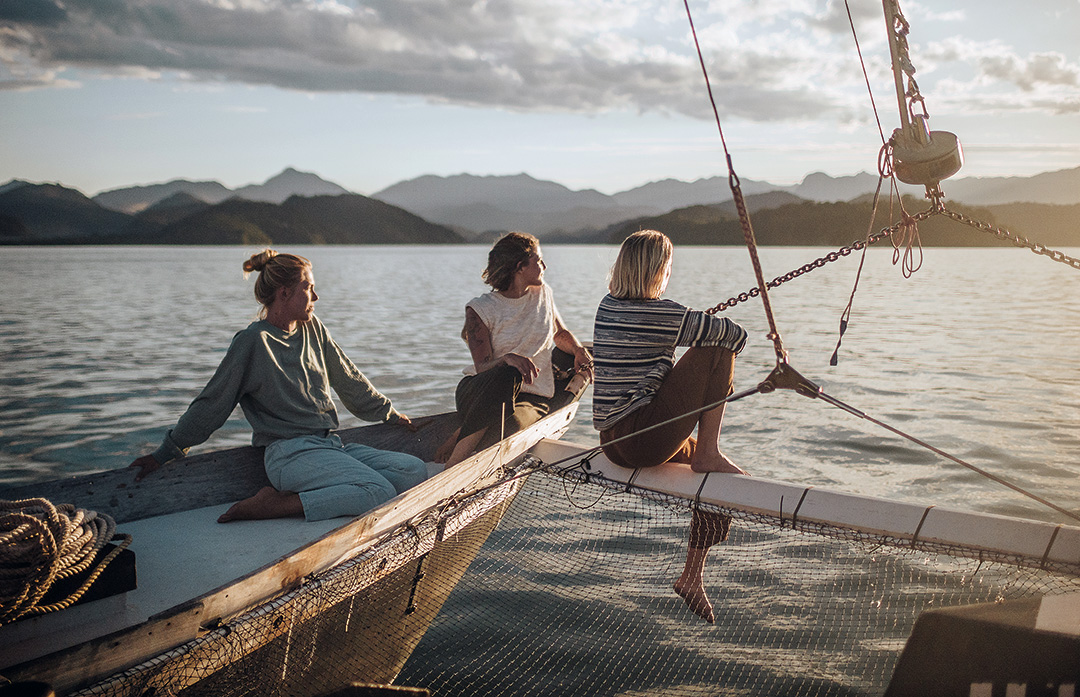
Not that she was going to go for a conventional yachty fitout. Following in the footsteps of her mentor, and Wharram himself, Kiana went for “rustic and simple,” using affordable materials that got the job done rather than top-of-the-range kit that would turn her into a wage slave. The rebuilt MARA NOKA was more of a scrubbed-pine affair than a varnished-mahogany kind of boat. Yet, by the time the boat was relaunched in May 2022, she was as strong as Kiana could make her. Kiana herself already had two solo transatlantic crossings under her belt, so she knew what she was doing.
 Alizé Jireh
Kiana gained significant experience sailing alone before embarking on a major voyage with crew.
The last piece of the jigsaw was finding someone to film the voyage. Kiana had spotted the photographer and filmmaker Alizé Jireh on Instagram, and the pair had briefly met when Alizé visited the boatyard in St. Augustine. Born to American parents in the Dominican Republic, Alizé spent her teenage years in the U.S. Midwest and had no sailing experience whatsoever. Yet, when Kiana asked her if she wanted to sail across the Atlantic, her response was, “Heck, yeah!”
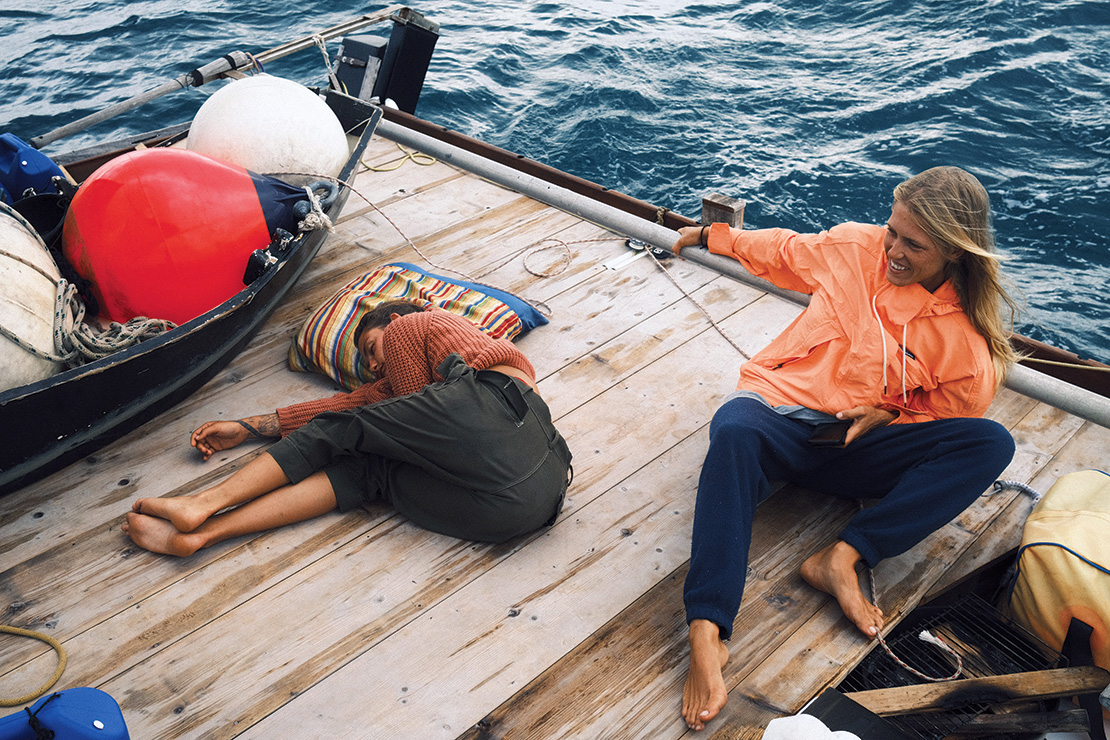
It sounds mad to sail across the Atlantic in a small boat with no previous experience, and Alizé was predictably seasick for the first two weeks. But there’s no doubt that it was this naiveté, this lack of knowledge, that made the resulting film so special. As Kiana told one interviewer, “She wasn’t capturing the ocean for sailors; she was capturing it for everyone.”
 Lærke Heilmann
Alizé (seen here, left, with Kiana) was predictably seasick in the early voyage. Her learning gives the film a special quality.
The result is a cinematic treat, which is less about tracing plastic (though they do keep a log of every bit of plastic they encounter) and more about the deep relationship forged between three friends. The sea’s mesmerizing combination of beauty and danger is beautifully captured, as are the flux and flow of human relationships and the intimate personal details of life at sea.
The final word goes to Kiana, who does a good job of explaining why the three of them took the risk—if only because the risk of not doing it would have been even greater.
How miserable would it be to live your entire life feeling uncomfortable, feeling like there’s something else out there but you’re afraid to leave maybe a relationship or a job or your hometown—a false sense of comfort. Because the unknown is scary, but it’s not scary any more as soon as you let it go, as soon as you dive in, it’s not scary. I never felt afraid. Sometimes I felt worried, but I never felt afraid. Because you’re fighting for your life, but in a positive way, in an intrinsic human animal way, surpassing fear and understanding that fear is not fear; it’s a mourning of the idea of letting go of what you know, and that as soon as you do, there’s a whole other experience you can experience, until you feel that feeling again and you let go of that one. I think it’s so important to just trust yourself all the time. Don’t waste time on what you think you should be and just go for what you feel should be. 
Nic Compton is a regular contributor to WoodenBoat.
You may rent, buy, or learn about hosting a community screening for Women & the Wind by visiting www.womenandthewind.com.