
Table of Contents
FROM YARD TO SEA
Including: Coronet, Europa, Greorg Stage, Pioneer, Ripple and news from around the world.
TODAY’S BRISTOL CHANNEL PILOTS
By Peter Rolt
Say ‘Bristol Channel pilots’ and one instantly thinks of sturdy cutters battling the elements in search of inbound vessels in the days of sail. But the work of the pilots did not cease with the introduction of steam and, later, diesel engines. Today, the Bristol Channel pilots may not have to ‘seek’ their clients but their work is still vital, their skills still remarkable. The author joins one of Bristol’s longest-serving contemporary pilots to learn more about their connections with the past and their roles in the present.
THE FAERINGS OF NORWAY
By Jean-Pierre Guillou
The small working boats of Norway, with their elegant lines, unique construction, simplicity of form, and efficiency of performance, are familiar to admirers of traditional wooden craft everywhere. Directly descended from the vessels of the Vikings, the frings have changed little through the centuries. The author looks into the remarkable geography and social history that gave rise to an independent maritime people and some of the most distinctive boats in the world. (See also Maritime No 21.)
THE LOSS OF THE STEAMSHIP ARCTIC
By David W. Shaw
Less universally known but no less tragic, the sinking of the Arctic in the northwest Atlantic occurred fifty years before that of the Titanic. She went down with all but twenty-two of her passengers; yet, despite the enormity of the loss, no one was called to account. David Shaw tells a moving and intimate tale of human tragedy.
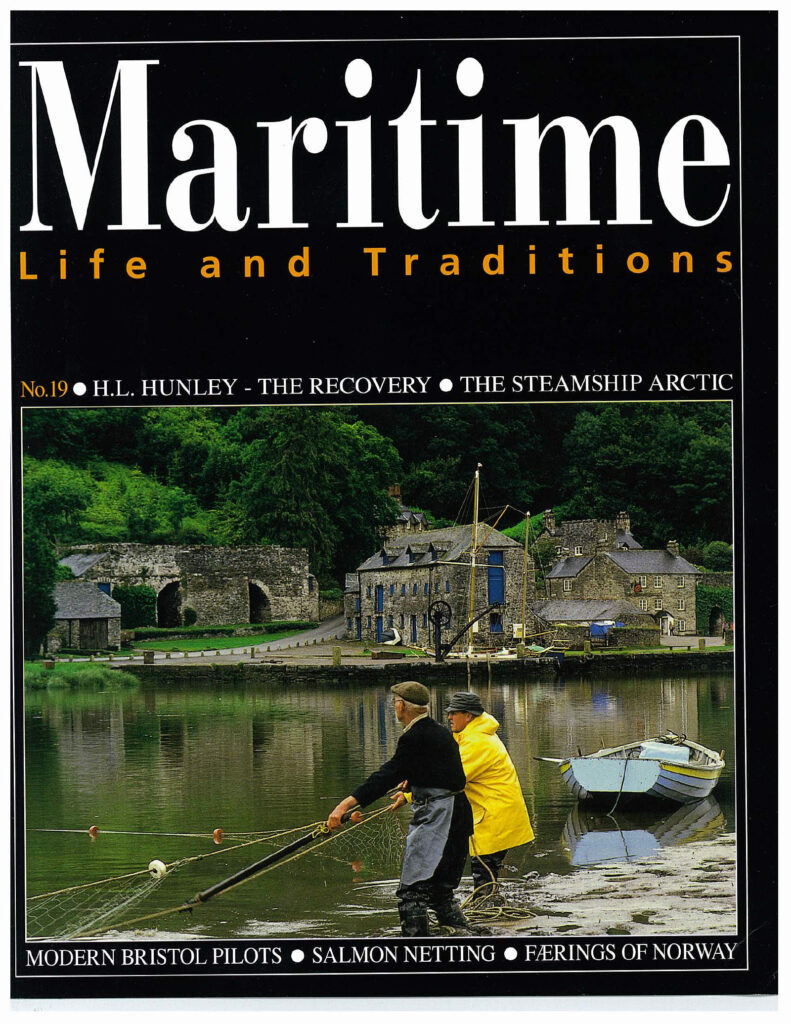
SALMON NETTING ON THE TAMAR
By Susan Pittman
Men have netted salmon from small open boats on the River Tamar in southwest England for centuries, but their trade is now under threat like never before. Fish stocks have fallen dramatically and conservation measures have curtailed the season to just a few weeks every summer. Many of the fishermen who continue to work the river come from families who have passed their skills and experience from father to son through the ages. But, asks the author, could we now be seeing the end of a once thriving practice?
H.L. HUNLEY – THE RECOVERY
By Brooks Townes
In Maritime No. 14 Brooks Townes told the story of the Confederate submarine Hunley, how she was built, used, and lost off the South Carolina port of Charleston. In this second feature he tells how, more than a century later, the remains of the Hunley and her last crew were discovered and raised from their watery grave.
ARTHUR BRISCOE MASTER MARINE ARTIST
By James Taylor
A talented and versatile artist who was equally capable with pen and ink, etching, watercolours, oils, and print, Arthur Briscoe brought a unique intimacy and personal understanding to his maritime art which often focused as much on the human subjects as on the vessels they worked. The author looks at his personal and professional life around the turn of the twentieth century.