
 JOSÉ MACEDO
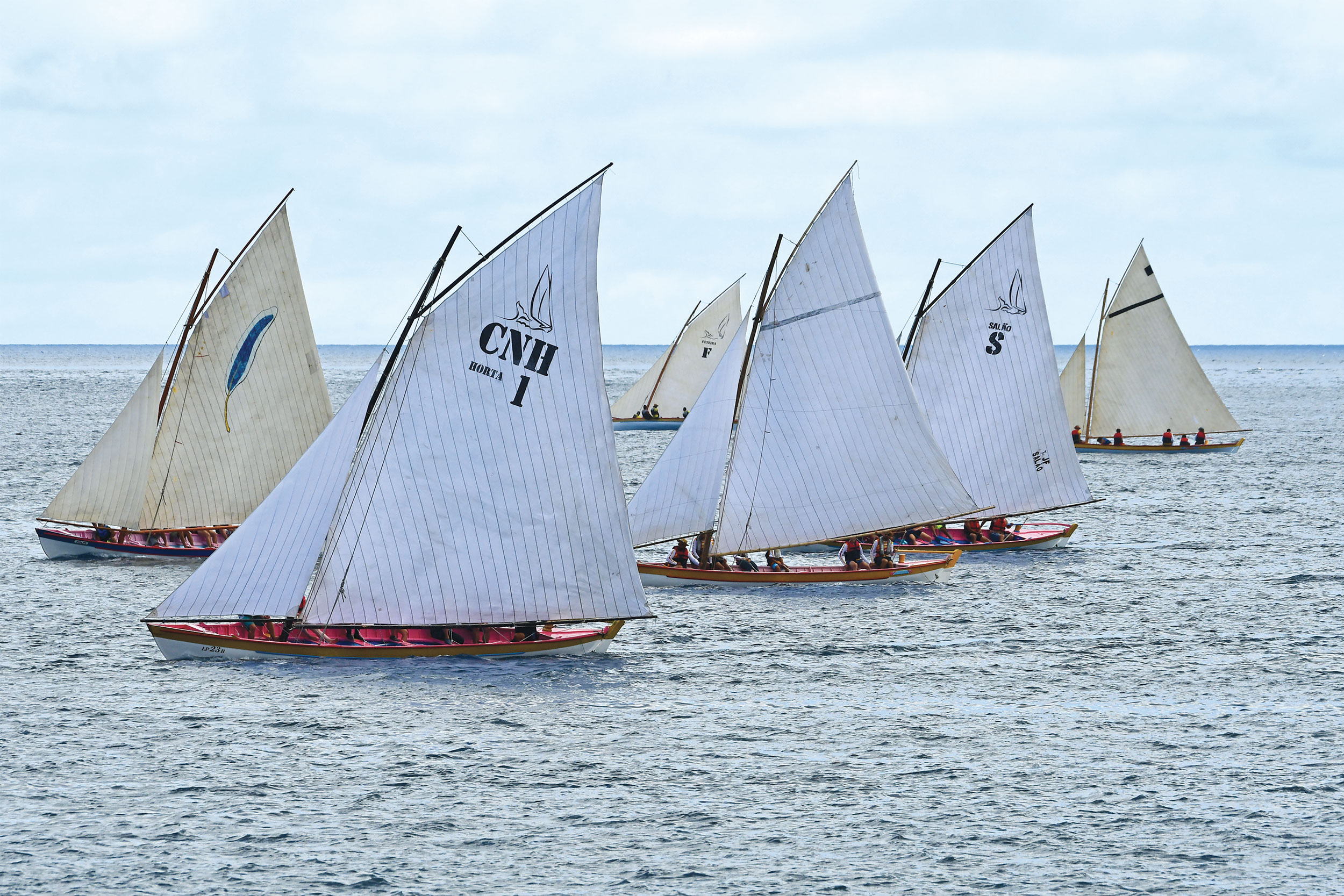
Azorean whaleboats celebrate the maritime heritage of the Portuguese islands, and racing under sail or oars is common during events such as Sea Week 2025, which was held August 9 in Horta, Faial Island
The scene was still common in the very early 20th century: 1905 photographs show the MORNING STAR, a brig employed as a whaler, docked at New Bedford, Massachusetts, after two years at sea. Its small fleet of double-ended whaleboats, normally on deck or slung from davits along the ship’s sides, were brought dockside and tied together, presumably for maintenance after hard use at sea. Barrels of whale oil, still valuable as a high-quality lubricant despite competition from land-based petroleum, were lowered to the pier to await transport to a refiner nearby. Tourists visited the ship; some bought scrimshaw and other souvenirs from the Portuguese crew; others snapped pictures with their Kodak box cameras.
A century and a quarter later, the faded pictures give us a glimpse of various technologies—sailing a square-rigged ship to pursue whales on distant seas, building wooden whaleboats, and manning these boats at sea in one of the world’s most dangerous fisheries—that made 19th- and early-20th-century whaling profitable enough to persist until the whales were nearly gone.