
 Thomas Madsen
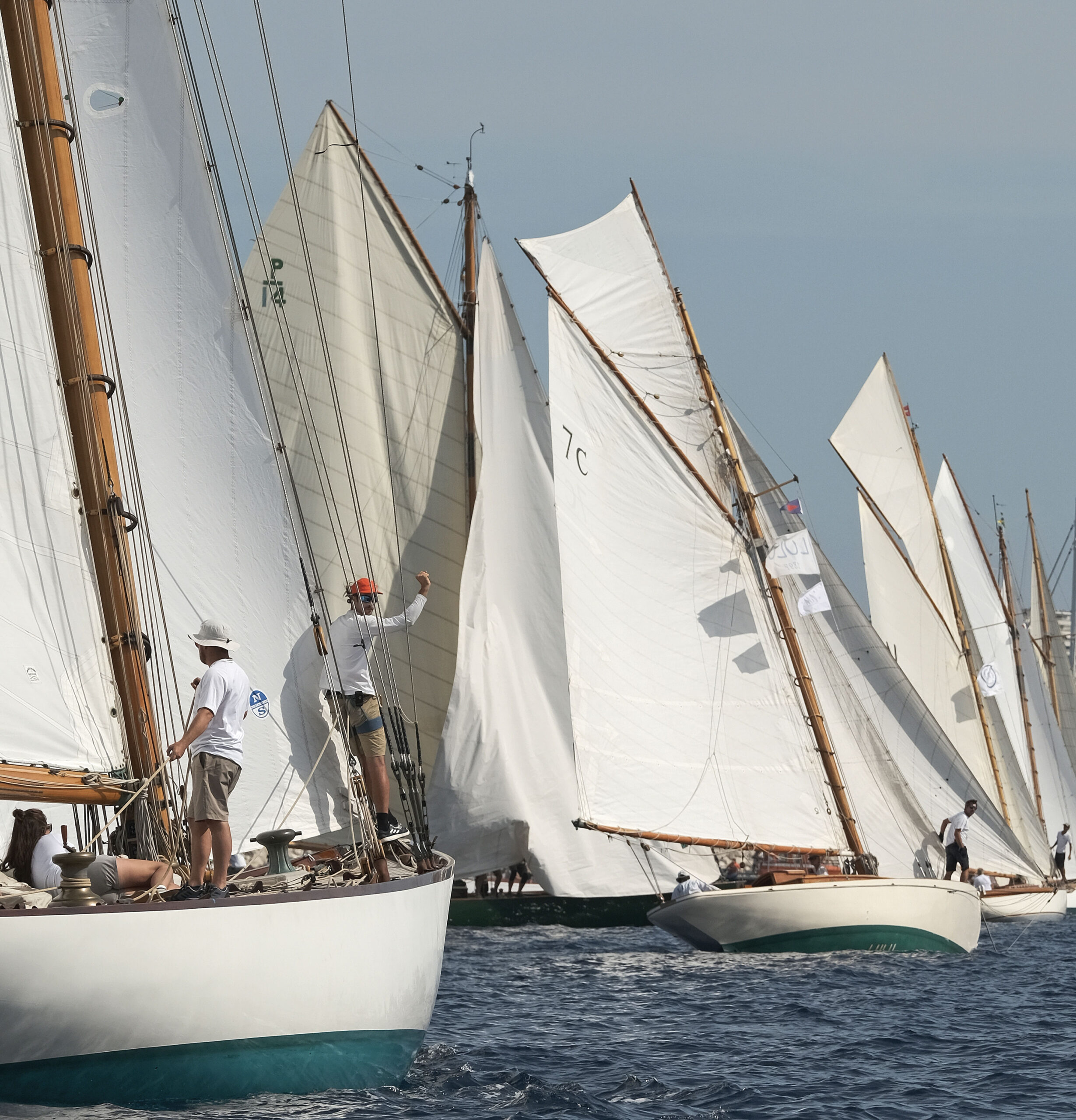
What began 40 years ago as an informal race for classic yachts in the Mediterranean has grown into a season-long series of events—the so-called “Mediterranean Circuit.” The events have inspired a number of restorations, and a racing rule that considers originality as one of its factors.
Recent decades have seen a slow but steady increase of classic yachts in the Mediterranean Sea, where a number of regattas over the course of the sailing season draw boats from all over the world. Many visiting participants have found new homes along the Mediterranean coastline.
It all started about 40 years ago with a casual race that became established as an event called La Nioulargue. Later renamed Les Voiles de Saint-Tropez and sailed in early fall, this remains the capstone event of the season. La Nioulargue gave rise to a movement to restore old sailing yachts, some more than 100 years old. Rules were established, as was a handicapping system that allows boats of varying shapes, sizes, weights, and age to race together. Today, the circuit of Mediterranean events includes stops in Italy, Monaco, and France. Some owners spend six to eight years restoring yachts, with the aim of sailing in Les Voiles de Saint-Tropez.
The circuit begins in France with a few small regattas, and gains steam with Les Voiles d’Antibes—the biggest event of the spring season. This is also the opening regatta for The International Mediterranean Committee (CIM) as well as for the Vintage and Classic Yacht Club (VCYC). With the magical 10th-century ramparts of the port of Antibes as a backdrop, the regatta draws about 65 yachts, and and it’s where I began my Mediterranean regatta coverage in 2023.
Toward the end of the season, I went to Cannes for Régates Royales—an event founded in 1929 when local yachtsmen held a week of racing to honor Christian X, King of Denmark, who raced the 6-Meter DANA. I was invited to sail aboard the legendary TUIGA. The air was calm, but we readied TUIGA for racing and waited for the wind—which never came. The race was canceled, but there was a big cheer on deck at the announcement, because she’d won the three races before, making her overall winner of the Big Boat Class.
A couple of days later, I headed for Les Voiles de Saint-Tropez, the final regatta on the circuit and the end of the Mediterranean’s classic yacht racing season. Compared to Antibes, this event is a little bit crazy, with as many as 250 yachts, 2,500 sailors, and nearly 50,000 spectators taking up every inch of the harbor area. Indeed, the social aspect is a big part of these regattas. Yes, the crews come to race, but equally important is the connection of like-minded sailors. For me, this event was the perfect culmination of my time on the Mediterranean circuit.
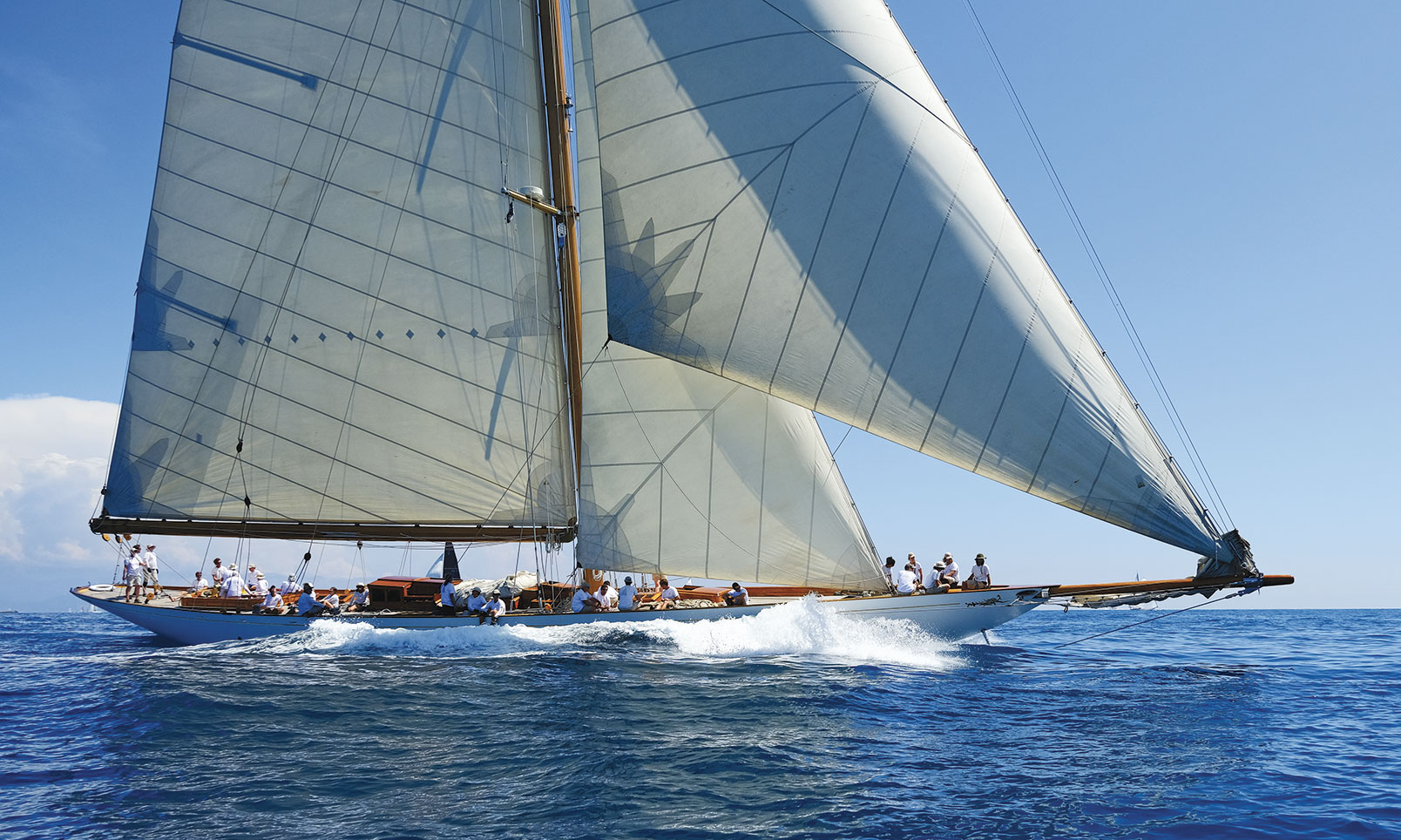
CAMBRIA
LOA 135′, beam 20′ 5″, draft 9′ 3″
Launched in May 1928, CAMBRIA was the first of a new generation of large cutters. She was comissioned by Sir William Berry, a British publisher, and designed and built by the legendary yacht builder William Fife III in Scotland. She is often referred to as Fife’s flagship. CAMBRIA made her racing debut at Harwich, England, at the first event of the 1928 season and soon became a fixture on the south coast of England. She retired from racing in 1936, when she left British waters for Turkey. In 2001, her then-owner, John David, shipped her back to England, to Cowes, where she received a new rig that complies with the dimensions allowed under the 1930 Universal Rule’s J Class specifications. She sailed in the AMERICA’s Cup Jubilee in 2001, which was the first time she’d raced in Great Britain since the 1930s. David also started to race her on the Mediterranean classic yacht circuit, where she’s been a competitor ever since. In 2023, she won her class at Les Voiles d’Antibes. At the time of this writing in March 2024, she is in Flensburg, Germany, in the final stages of restoration at Robbe & Berking Classics (see WB No. 258).
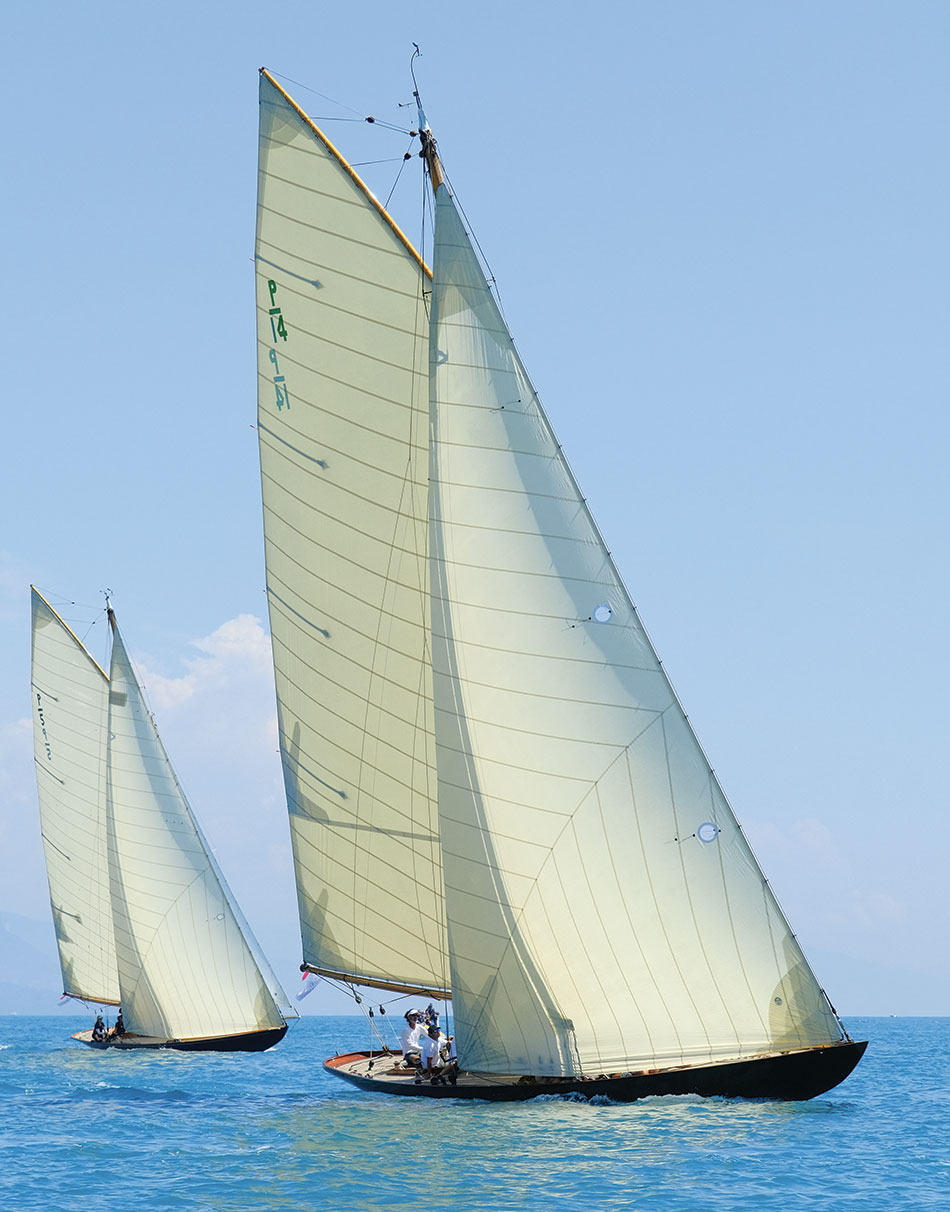
OLYMPIAN
LOA 53′ 6″, beam 10′ 6″, draft 7′
The 110-year-old P-class sloop OLYMPIAN was designed by William Gardner in 1913 and built by Wood & McClure of City Island, New York. She has spent most of her life in the United States, but in 2012 was shipped from Newport, Rhode Island, to Genoa, Italy, and won her first race at Les Voiles de Saint-Tropez; she has been very successful in this regatta ever since, and is one of only two boats to win the event’s Centenary Trophy—a contest for boats aged 100 or more years—more than once. OLYMPIAN took that prize in 2014, 2019, and 2021. Today she sails from Marseilles, France.
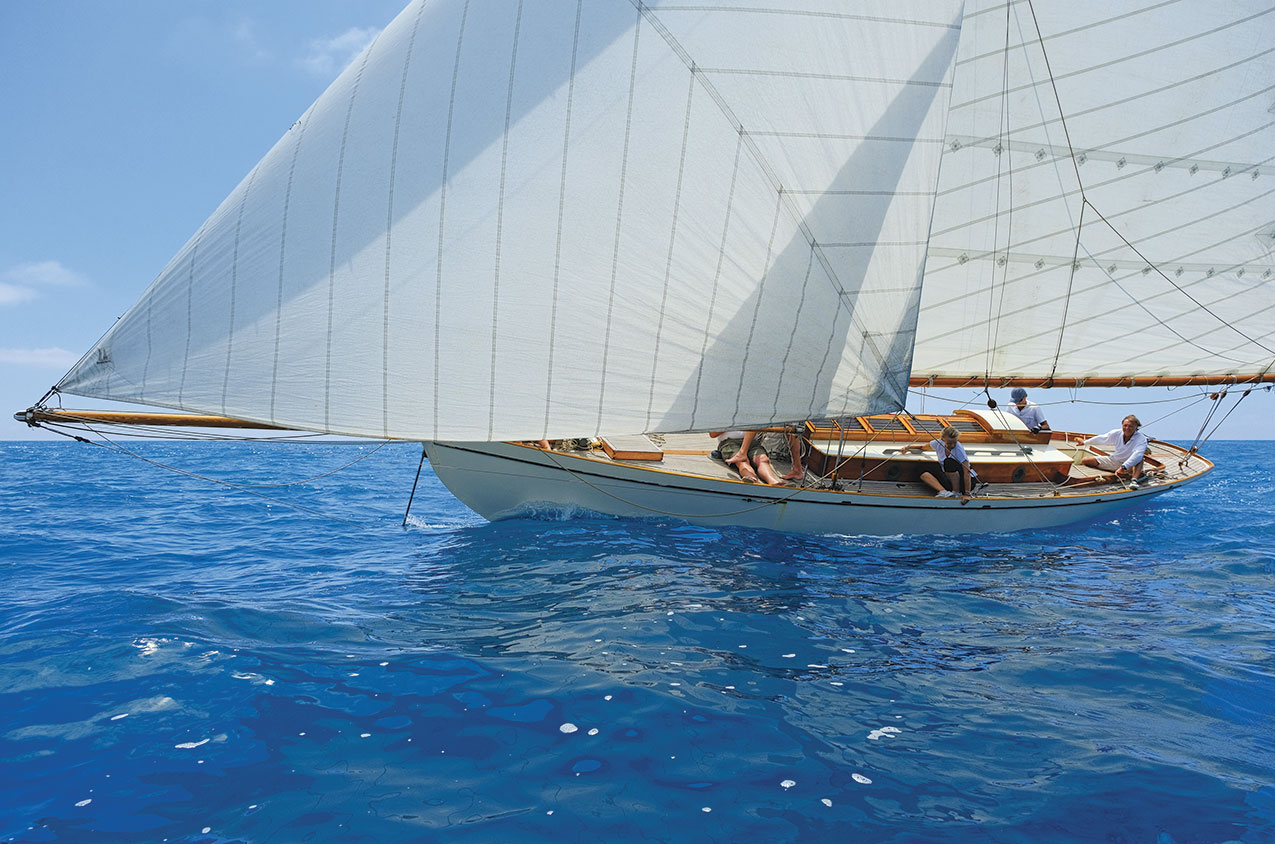
LULU
LOA 48′ 2″, beam 9′ 2″, draft 1′ 11″
Built near Paris in 1897 and designed by Thomas Rabot, a friend of the Impressionist painter and yacht designer Gustave Caillebotte, LULU may be the oldest existing French sailing yacht; some say she is, and none say she isn’t. She sailed in the Olympic Games in Paris in 1900. In 1993, she was classified as a historic French monument. Today, she is owned by a syndicate and sails under the flag of Yacht Club de Porquerolles in various regattas around France with one of the owners, Alan Beaume, at the helm.
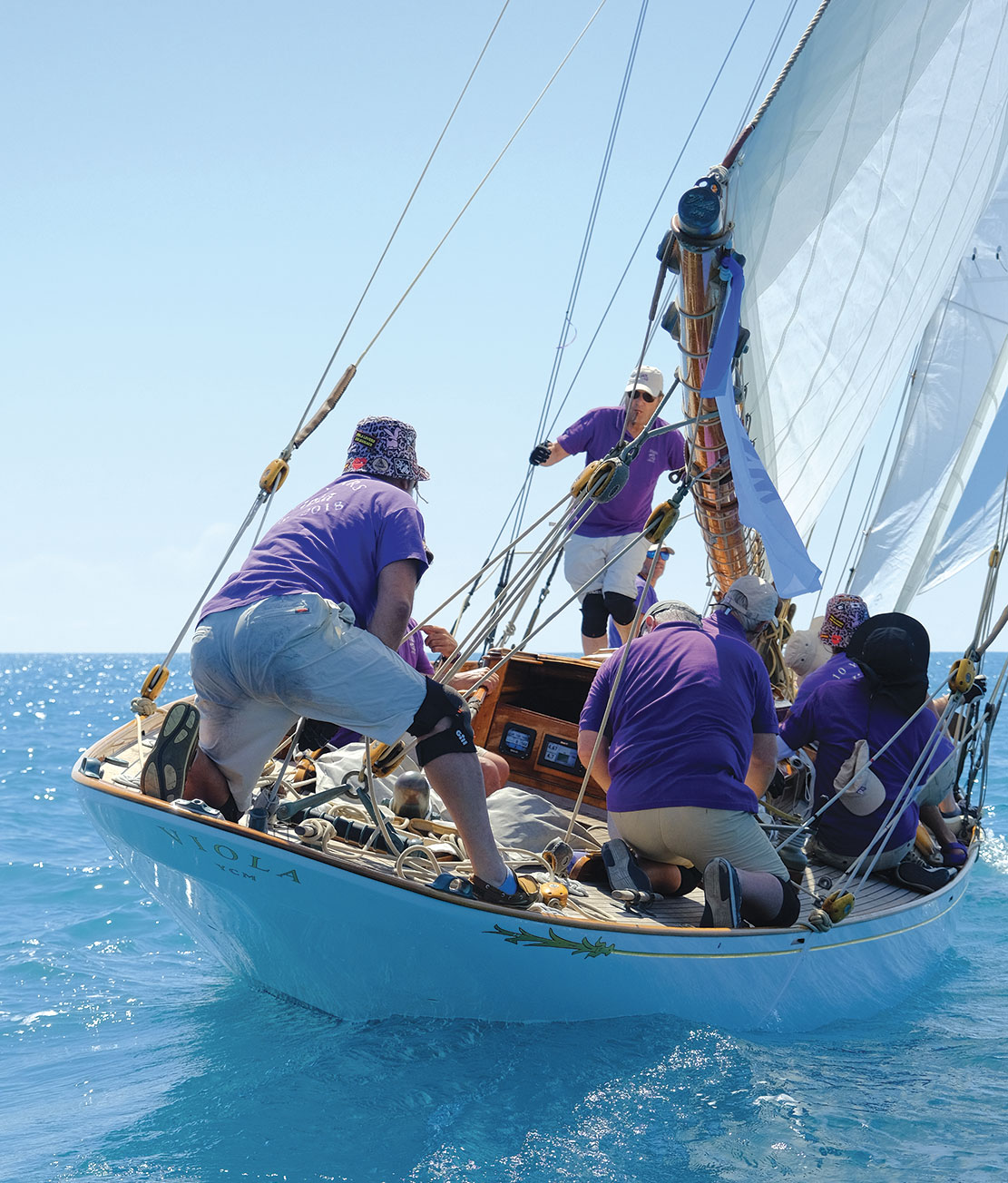
VIOLA
LOA 41′ 9″, beam 9′ 6″, draft 6′ 3″
VIOLA was designed and built in Scotland by William Fife & Son in 1908 and was originally registered in Glasgow. Although designed as a cruising yacht, she has had great racing succes. She now hails from France, where she has been a historical monument since 1993. Her fun-loving crew wears a distinctive purple uniform—a theme duplicated in her spinnaker. If you get close enough, you might spot a cigar or two dangling in the mouths of some of the crew members during a race. She won her class in the 2023 Les Voiles d’Antibes. (For more on VIOLA, see WB No. 289.)
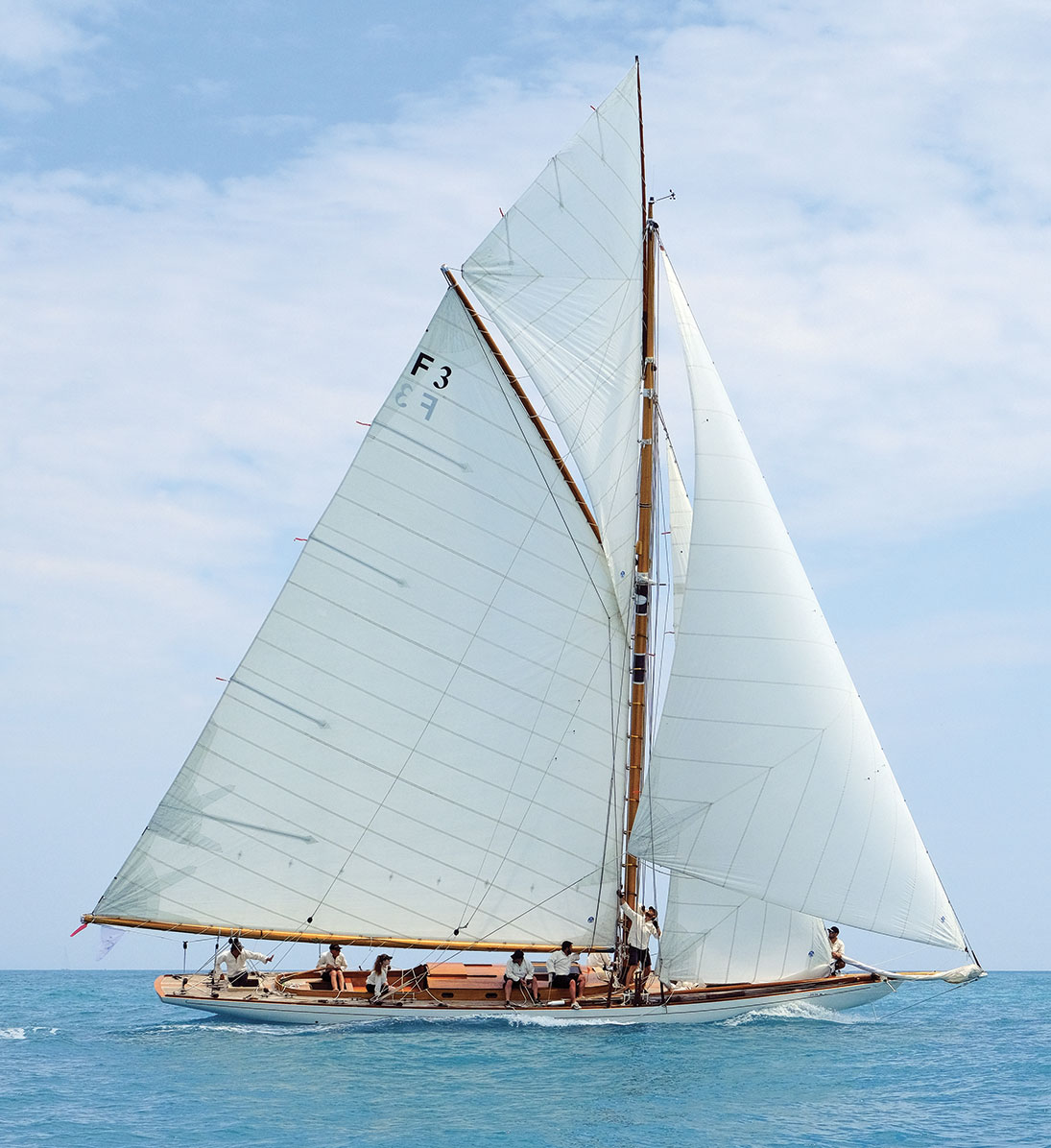
MARGA
LOA 42′ 3″, beam 9′ 2″, draft 5′ 11″
MARGA was designed by C.O. Liljegren and built by Hästholm Boatyard in Sweden in 1910. The first owner was Fredrick Forsberg, a Swedish diplomat. Measuring as an International Rule 10-Meter, she sailed in the 1912 Olympic Games in Stockholm. She was purchased in Denmark in the early 2000s by an Italian engineer who shipped her to Rome. Her restoration began in 2010, and she was relaunched in 2015 and raced in Les Voiles de Saint-Tropez that same year. She continues to race under the Italian flag.
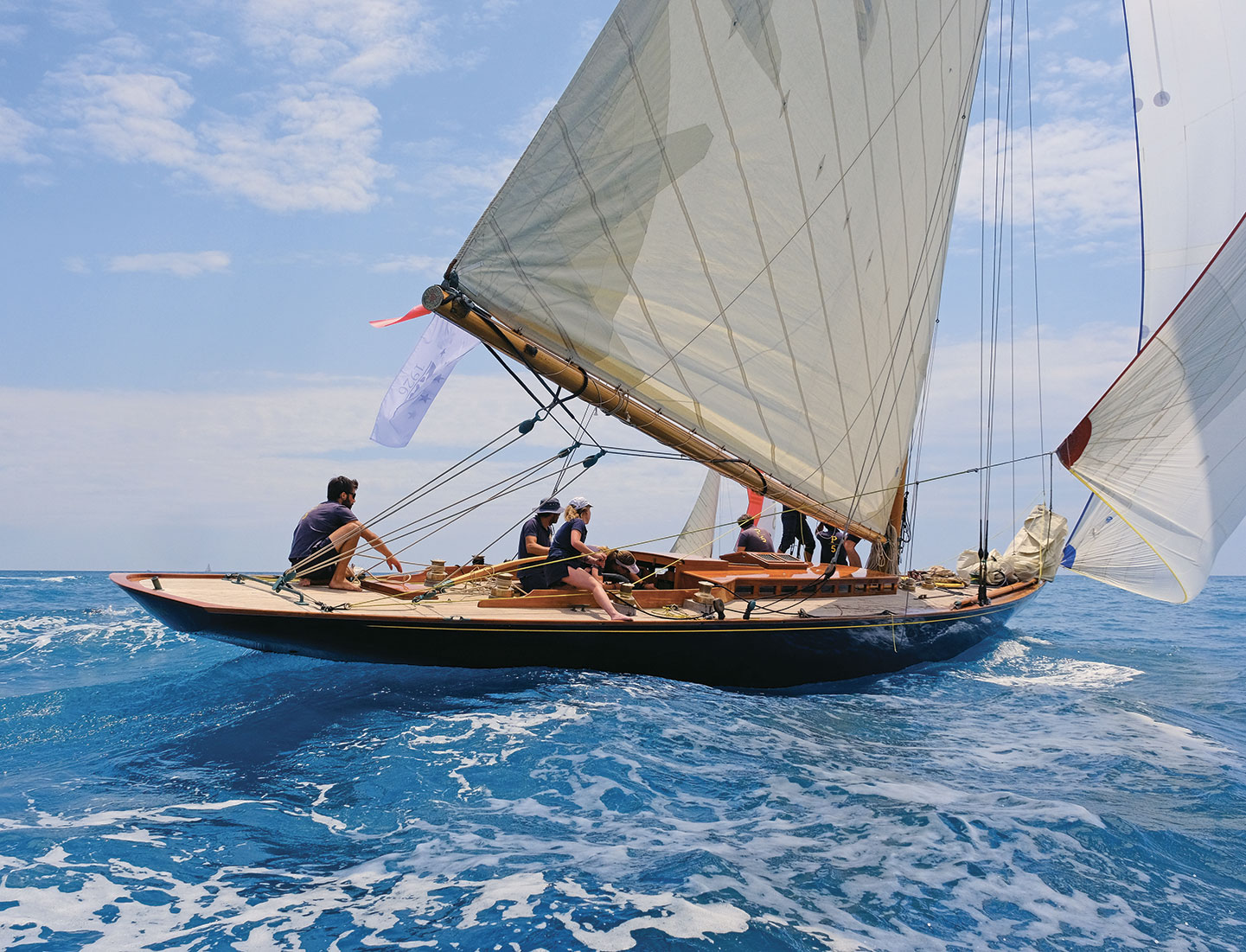
CORINTHIAN
LOA 54′ 4″, beam 10′, draft 7′ 1″
The Universal Rule P-class sloop CORINTHIAN was designed by Nathanael Herreshoff and built by Herreshoff Mfg. Co. in 1911 for a member of the Seawanhaka Corinthian Yacht Club in New York. She later moved to Marblehead, Massachusetts, where, as NUTMEG II, she won three seasons—three “legs”—of the coveted Lipton Cup for P-boats, handing ownership of this silver punchbowl to her owner, Allan C. Jones. P-boats were popular at Marblehead from 1908 until the American entry into World War I; after the war, they were eclipsed by smaller R-boats. This 54′ vintage gaffer is now privately owned in France and often races against her fellow P-class yachts OLYMPIAN and CHIPS.
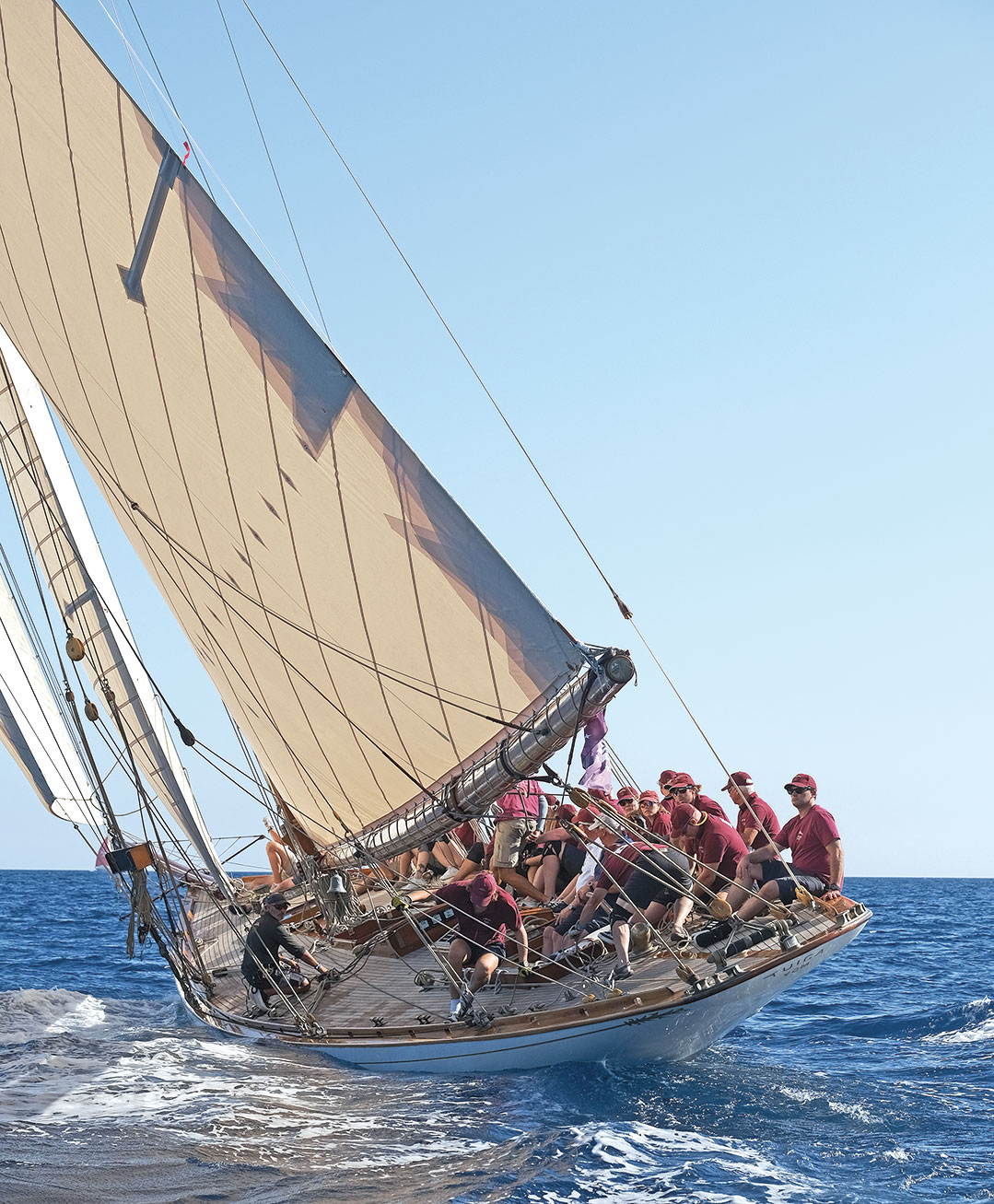
TUIGA
LOA 92′, beam 14′ 1″, draft 9′ 10″
The 15-Meter class gained traction in 1909 with the construction of six yachts—including HISPANIA, which was commissioned by King Alfonso XIII, designed by William Fife III, and built in Spain. A close friend of the king, the Duke de Medinaceli, ordered an almost identical boat to be built by Fife. In just a few months, the yard turned out TUIGA’s beautiful “composite” hull of mahogany planking bronze-riveted to steel frames. HISPANIA and TUIGA spent the following year competing against each other, and they continue to do so today. TUIGA, which has had a very successful career on the Mediterranean classic yacht circuit, has belonged to the Yacht Club de Monaco since 1995.
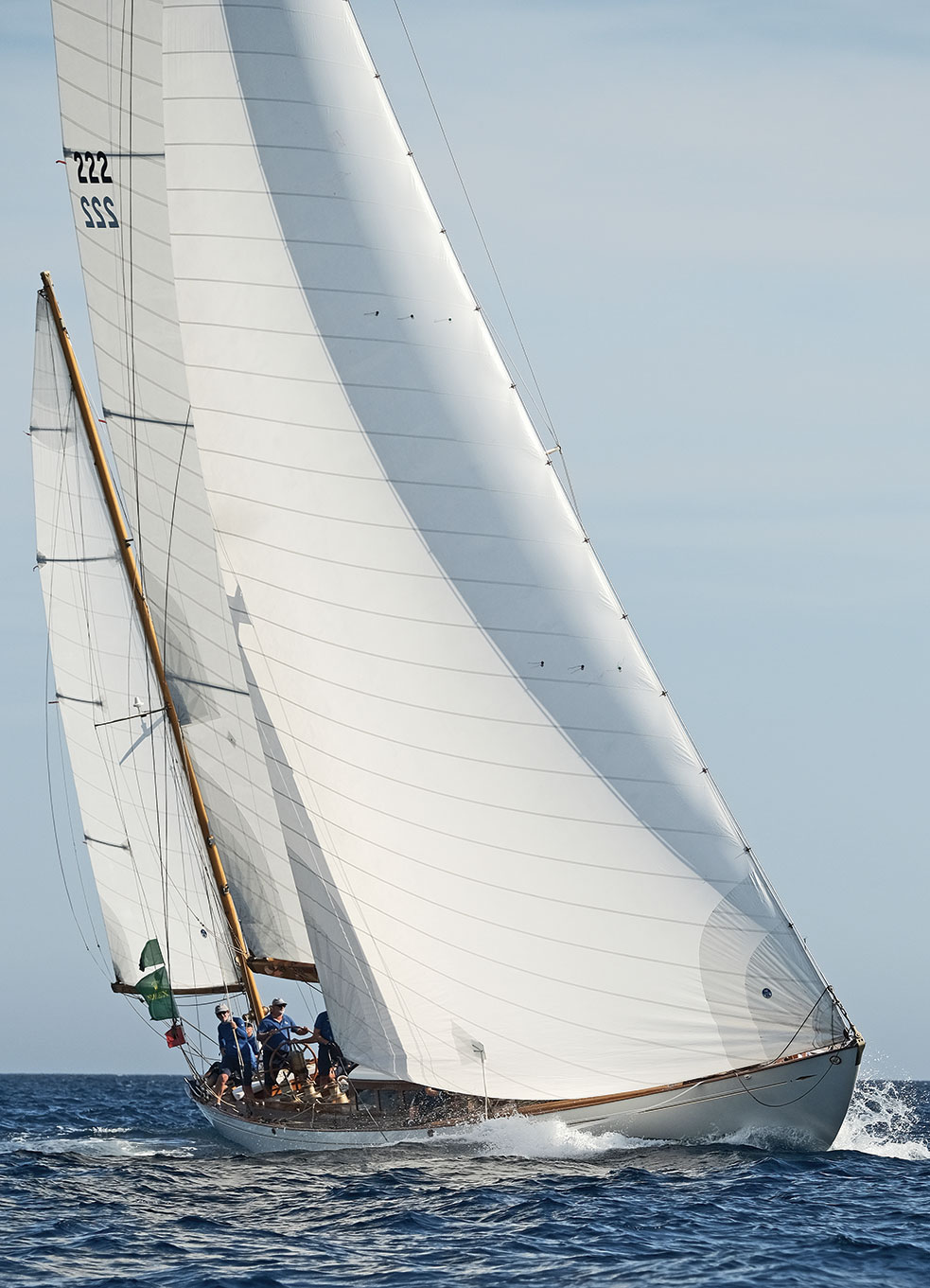
BARUNA OF 1938
LOA 72′, beam 15′, draft 9′ 2″
The Sparkman & Stephens–designed Bermudan yawl BARUNA OF 1938 (launched as BARUNA) was built in 1938 at the Quincy Adams Yacht Yard in Quincy, Massachusetts, specifically to win the Newport Bermuda Race—which she did by a margin of eight hours ahead of the rest of the field the year of her launching. In 2015, her current owner found her in poor condition in California. After an eight-year restoration begun at Robbe & Berking Classics and completed at VMG Yachtbuilders in Holland, BARUNA OF 1938 returned to racing on the Mediterranean circuit. She is often moored in company with the classic motoryacht BLUEBIRD, a 103-footer designed by George L. Watson and also launched in 1938.
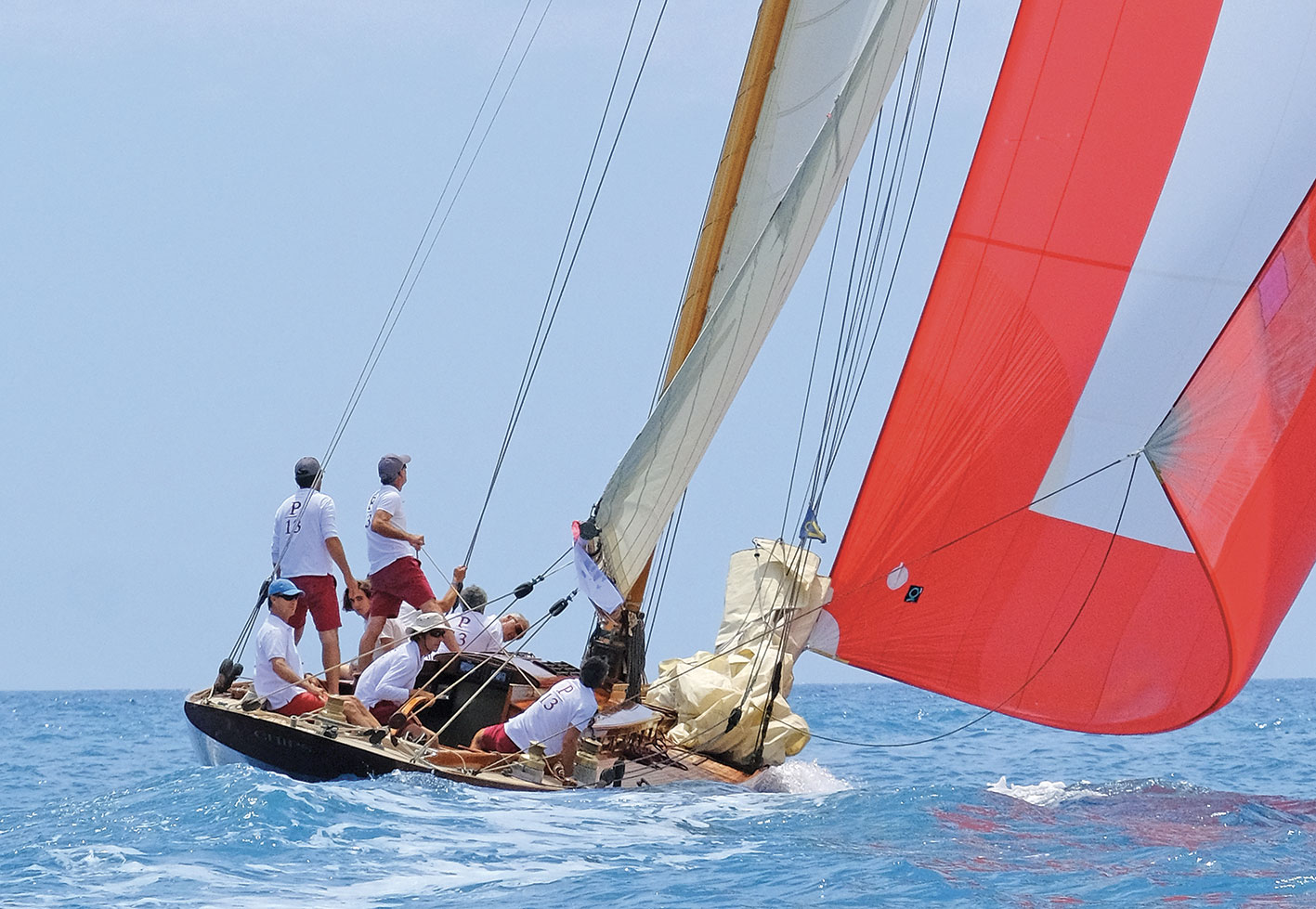
CHIPS
LOA 50′ 3″, beam 10′ 3″, draft 7′ 7″
This 1913 P-class sloop was designed and built by W. Starling Burgess as ONDA III. She races in the United States as well as in the Mediterranean and has taken first or second places in many regattas. After a thorough restoration by John Anderson in Warren, Maine, she joined her fellow P-boat OLYMPIAN in France.
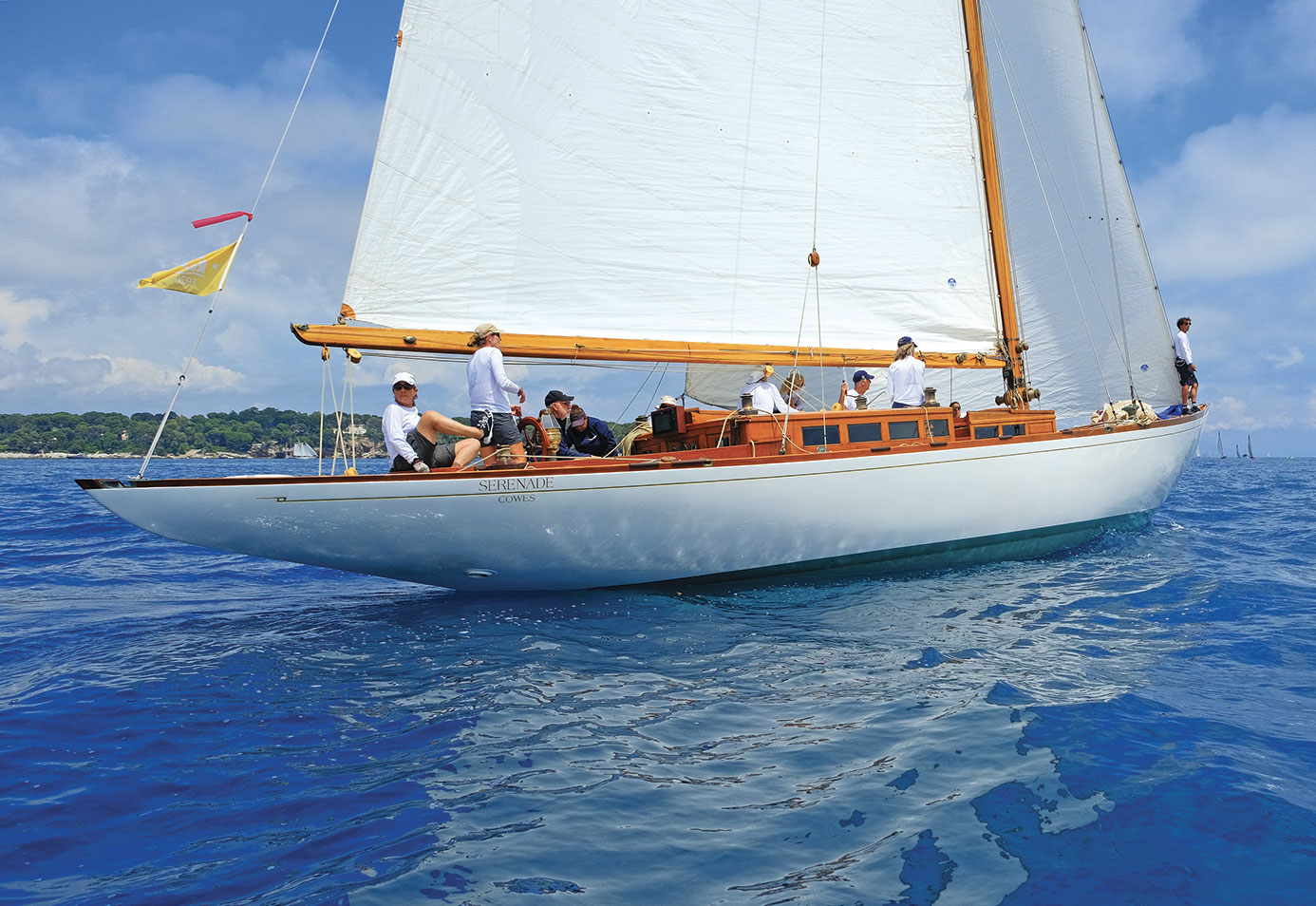
SERENADE
LOA 62′, beam 13′, draft 8′ 4″
SERENADE was built at Wilmington Boat Works in California as a sloop for the 1938 Transpacific Yacht Race from Los Angeles to Honolulu. She was designed by Nicholas Potter and commissioned by the Lithuanian-born violinist Jascha Heifetz. Her very fitting name is now accompanied by musical notes imprinted on her spinnaker. Now homeported in France, she has had two major refits—the first in 1999–2000 by William Cannell Boatbuilding in Camden, Maine, and the second in 2015–16 by Chantier Naval Pasqui in France. She is now homeported in France.
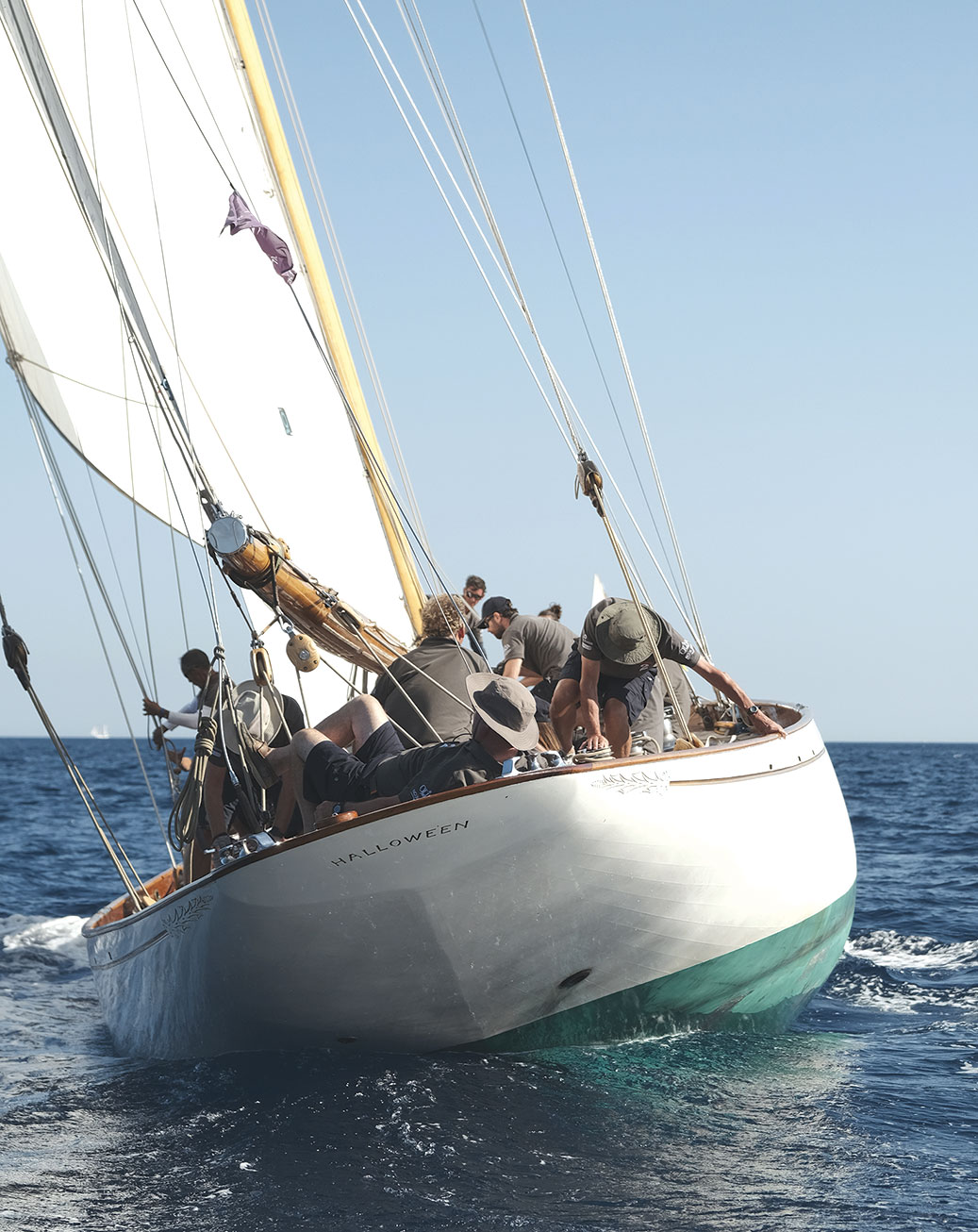
HALLOWE’EN
LOA 71′ 3″, beam 14′ 6″, draft 9′ 3″
The cutter HALLOWE’EN, designed by William Fife III for British Army Lt. Col. J.F.N. Baxendale, was launched in 1926 just in time to compete in the Fastnet Race. Fife said “HALLOWE’EN is the perfect gentleman’s yacht. She is a jewel.” Later, rerigged as a yawl and sailing from Marblehead, Massachusetts, under the name COTTON BLOSSOM IV, she dominated ocean racing for many years. She was thoroughly restored in Newport, Rhode Island, between 1989 and 1991, given back her original name and rig, and now races and cruises in the Mediterranean.
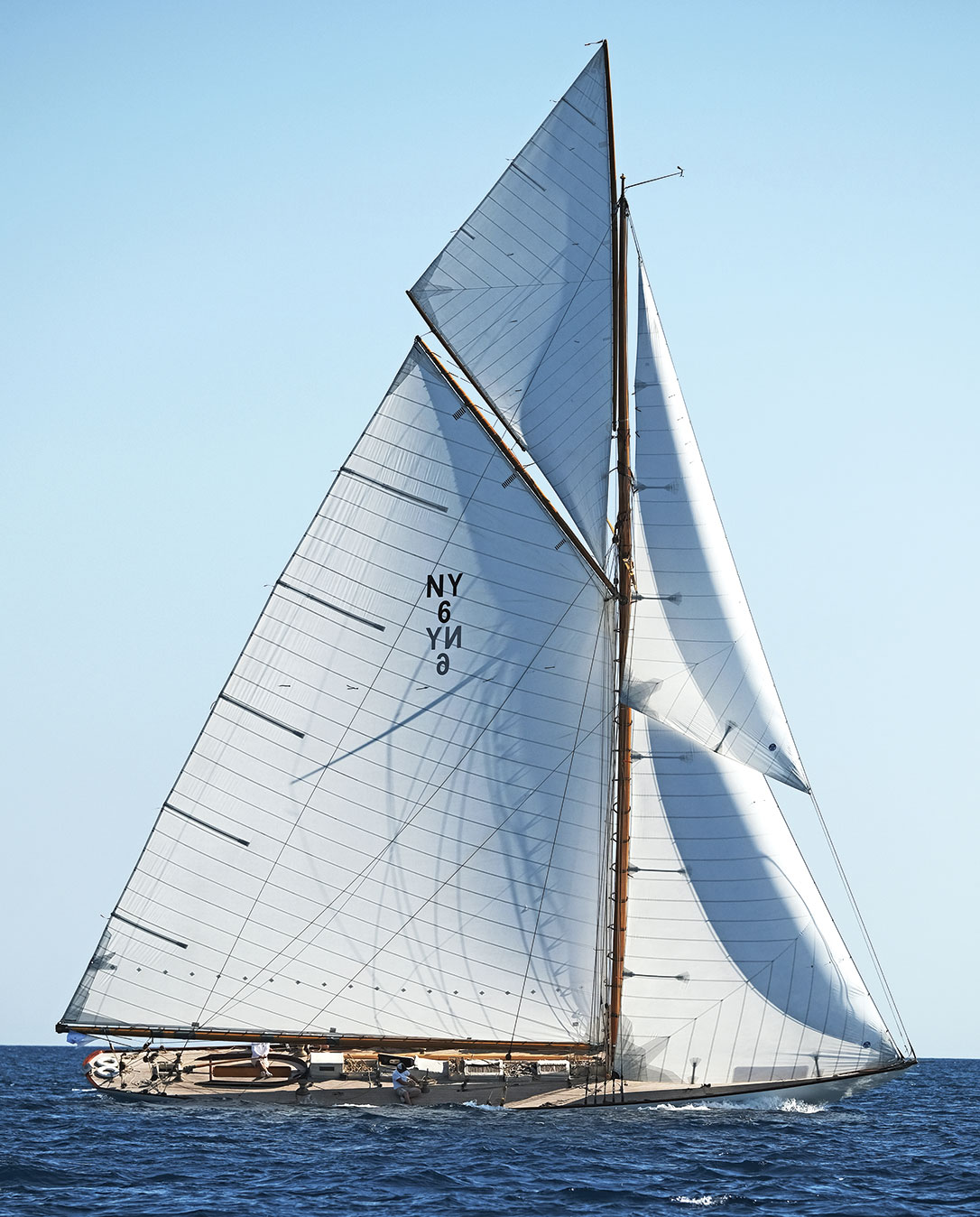
SPARTAN
LOA 72′, beam 14′ 6″, draft 9′ 9″
SPARTAN, designed by Nathanael Herreshoff and built by Herreshoff Mfg. Co., was one of nine New York 50s commissioned by members of the New York Yacht Club in the winter of 1912–13. Today, she is the only one left. Her restoration, begun in the 1980s by MP&G of Stonington, Connecticut, stalled for 16 years beginning in 1989. With a new owner, the project was restarted in 2005. Upon relaunching, she continued to race off the U.S. East Coast and now sails in the Mediterranean circuit. At the 2023 Régates Royales, she won her class, an achievement she repeated at Les Voiles de Saint-Tropez as the true thoroughbred racer she was designed to be.
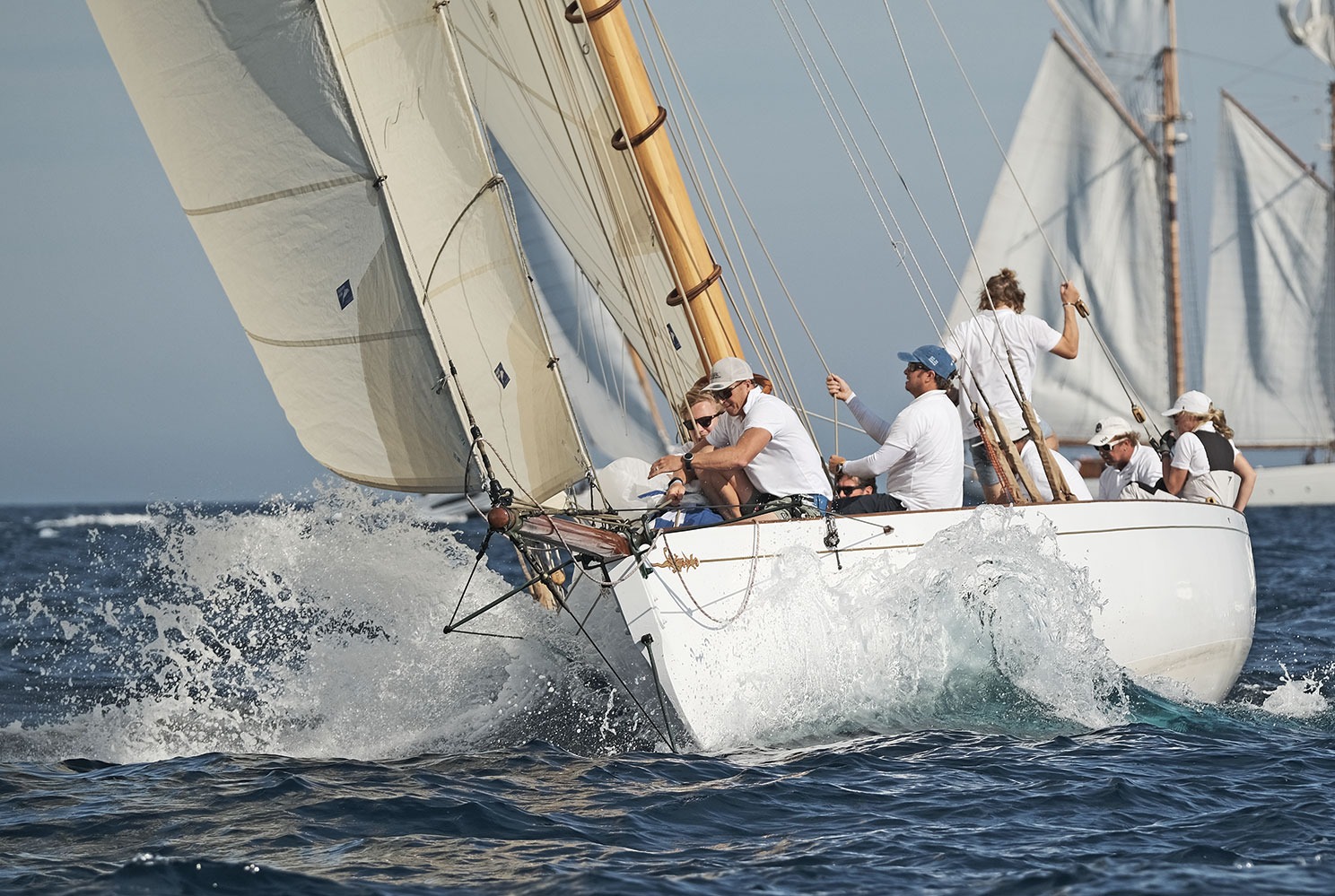
KISMET
LOA 40′ 7″, beam 9′ 11″, draft 7′ 4″
Originally built as a cutter, this 125-year-old beauty was designed and built by William Fife III in 1898. She sailed for 50 years before being laid up in 1949 and used as a houseboat. She escaped the fate of many yachts during World War II that were cut up and their keels used to make ammunition, and in 2004 was restored from near-wreck condition. Relaunched in 2008, she entered the race circuits in both the U.K. and the Mediterranean.
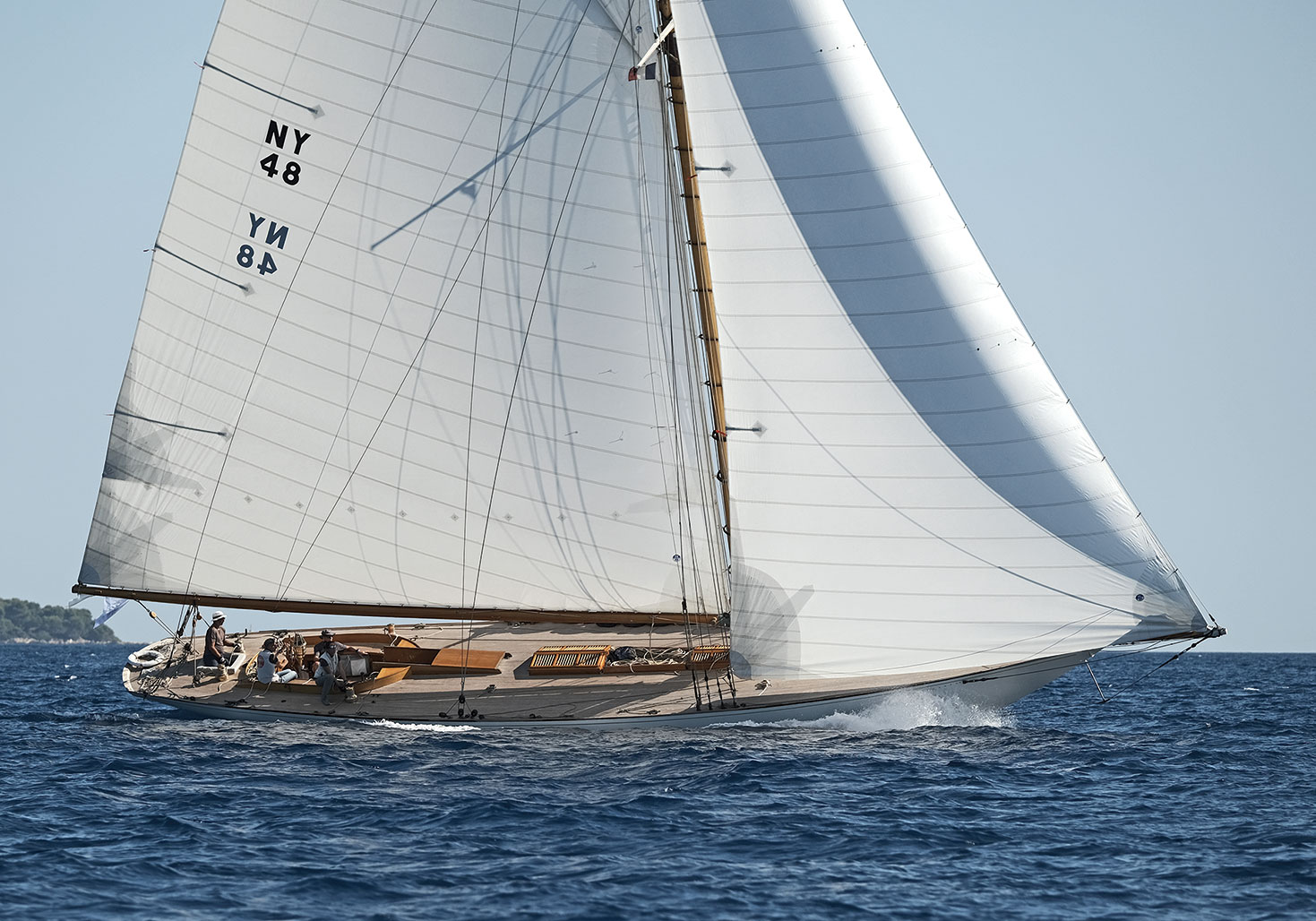
CHINOOK
LOA 59′, beam 14′ 5″, draft 8′ 2″
CHINOOK, originally named PAULINE, is one of 12 New York 40s designed and built by Herreshoff Mfg. Co. in 1916. She was built for Oliver G. Jennings of the New York Yacht Club. (Two more New York 40s were built in 1926.) In 2010, a group of owners found her lying in Mystic, Connecticut, and after a two-year restoration in Tunisia she made her racing debut in the Mediterranean in 2013. She is, together with her sistership ROWDY, a pristine survivor of the class nicknamed “The Fighting Forties.”
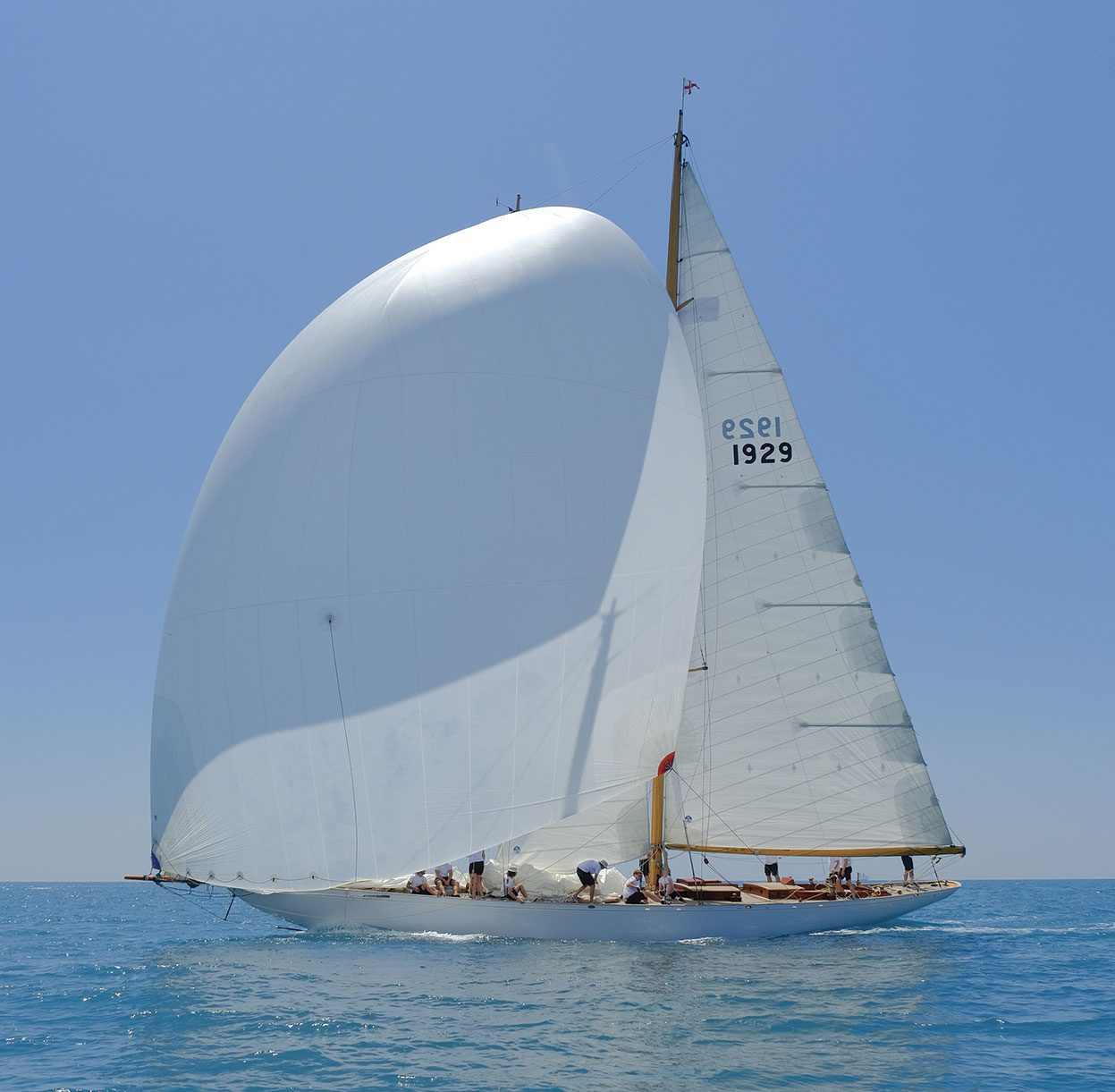
VIVEKA
LOA 72′ 8″, beam 14′ 3″, draft 9′ 3″
This schooner, launched as JOAN II for F. Haven Clark and originally hailing from Nahant, Massachusetts, was designed by Frank Paine when he was in the partnership of Paine, Belknap, and Skene. She was built by F.D. Lawley, Inc., in Quincy, Massachusetts, in 1929–30, and is double-planked with an inner layer of cedar and and an outer layer of mahogany on oak frames. Under the name SEAWEED, she was requisitioned by the U.S. Navy for coastal patrols during World War II. Later, after completing a circumnavigation between 1992 and 1999, she became a longtime fixture on San Francisco Bay. She underwent a five-year restoration at Rutherford’s Boatshop in Richmond, California, and was relaunched in 2020 for a new British owner who sails her in the Mediterranean.
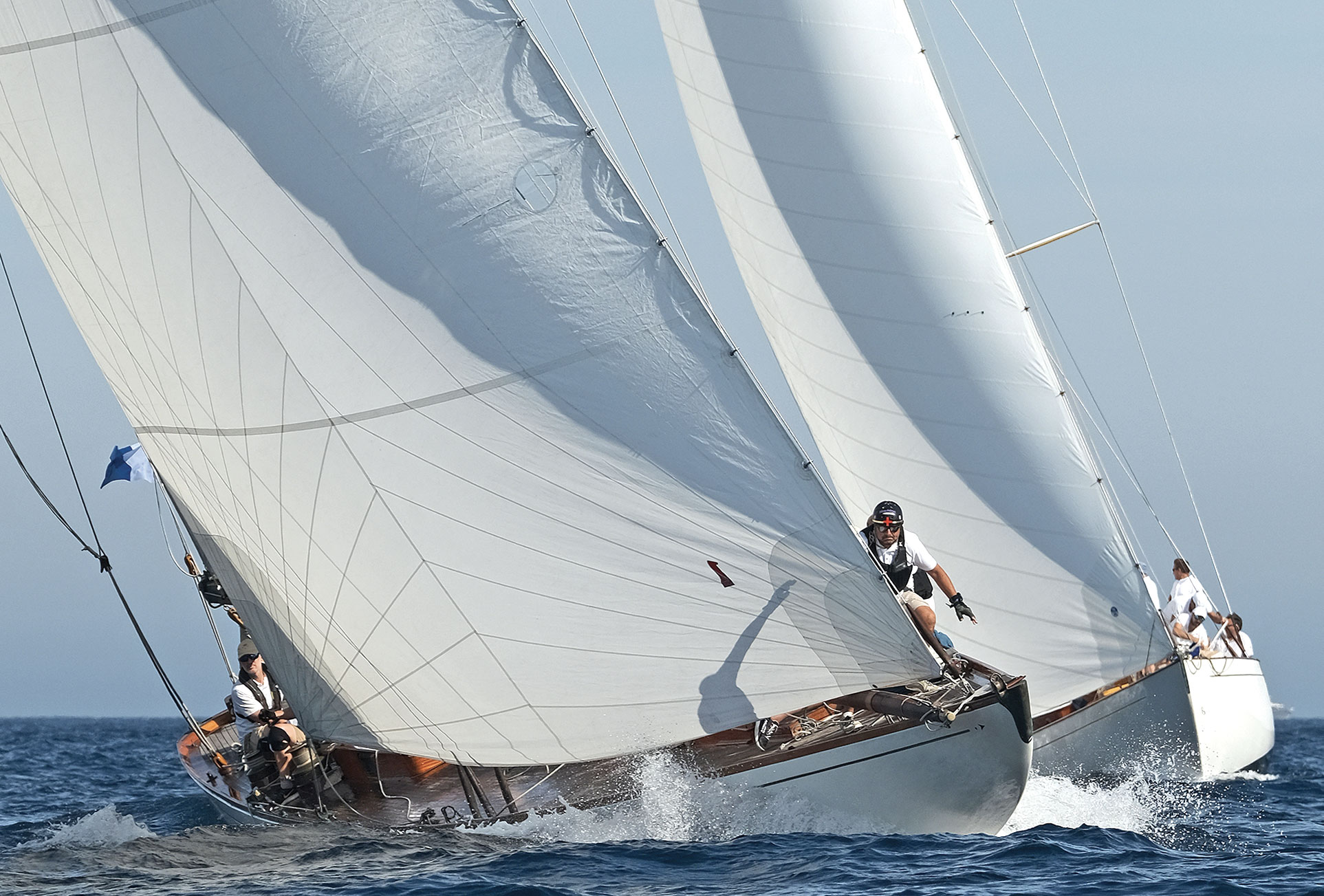
THEA
LOA 65′ 3″, beam 11′ 6″, draft 8′ 7″
The 12-Meter-class sloop THEA, originally named SANTA, was designed and built in Norway by Johan Anker in 1918. She was designed as a Scandinavian S-rule boat, but modified to measure as an International Rule 12-Meter when that rule was adopted in 1919. THEA is one of only four surviving 12-Meters of the 20 that Anker designed and built. She has always hailed from Nordic waters—first from Norway until 1970, when she moved to Denmark—her current home. Under her Danish ownership, she has been well maintained and undergone major restoration; her interior has been brought back to almost original configuration. She is a keen racer in Scandinavian and Mediterranean regattas.
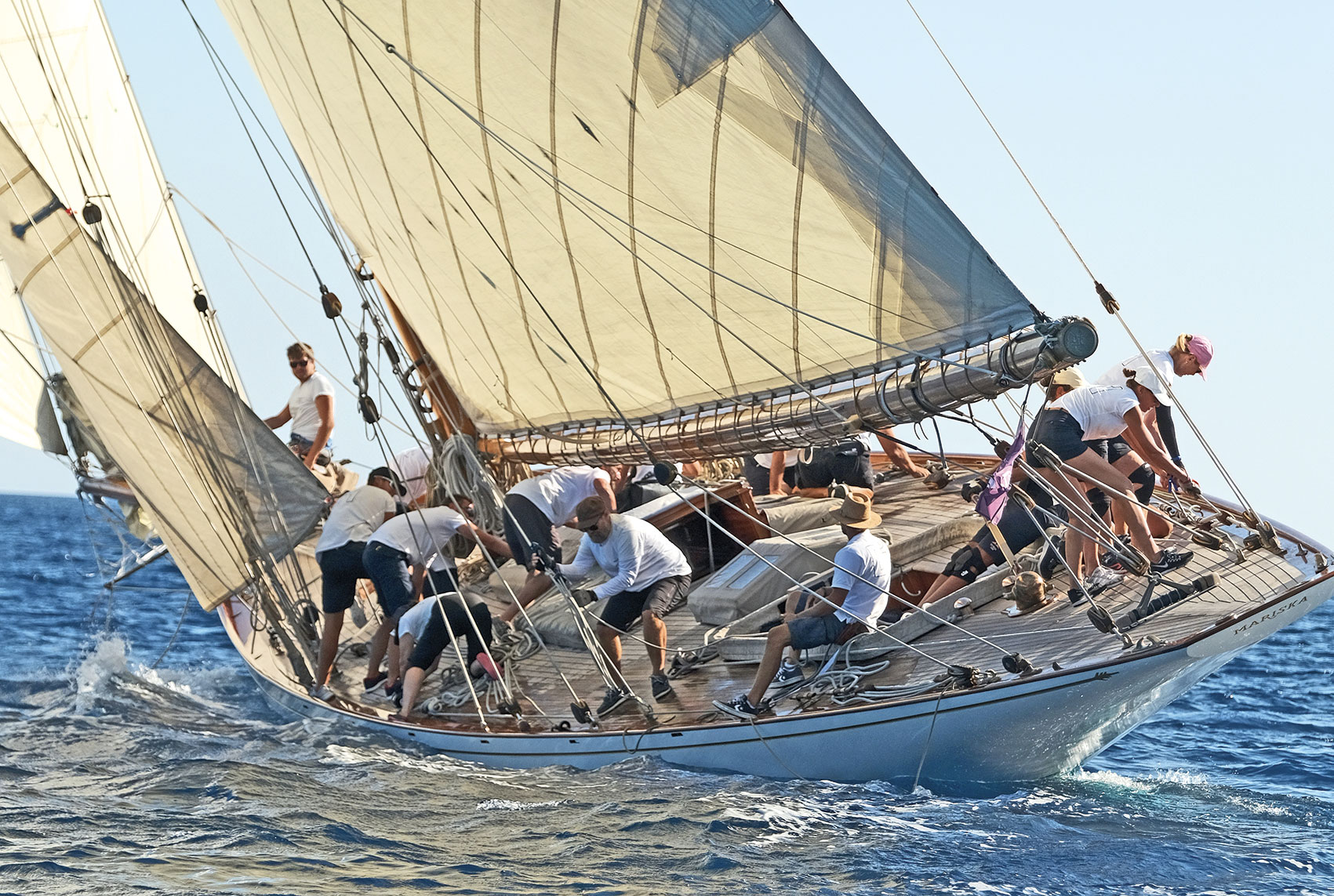
MARISKA
LOA 90′ 6″, beam 13′ 9″, draft 9′
MARISKA is another of the four surviving 15-Meter yachts, the others being TUIGA, HISPANIA, and THE LADY ANN. Commissioned by A.K. Stothert, she was designed and built by Willam Fife III in 1908. Stothert, one of the most prominent yachting figures of his era, had been collecting racing yachts and notching up victories since 1894. In 1923, Carl Mathiessen bought MARISKA, took her to Stockholm, and converted her into a yawl. This marked the end of MARISKA’s racing career, which had lasted from 1908 to 1923. She would remain a cruising yacht into the 2000s; between 2007 and 2009, she was thoroughly restored and is now racing in the Mediterranean. 
Thomas Madsen is a journalist and photographer based in Sweden. He has a keen interest in yachting topics.