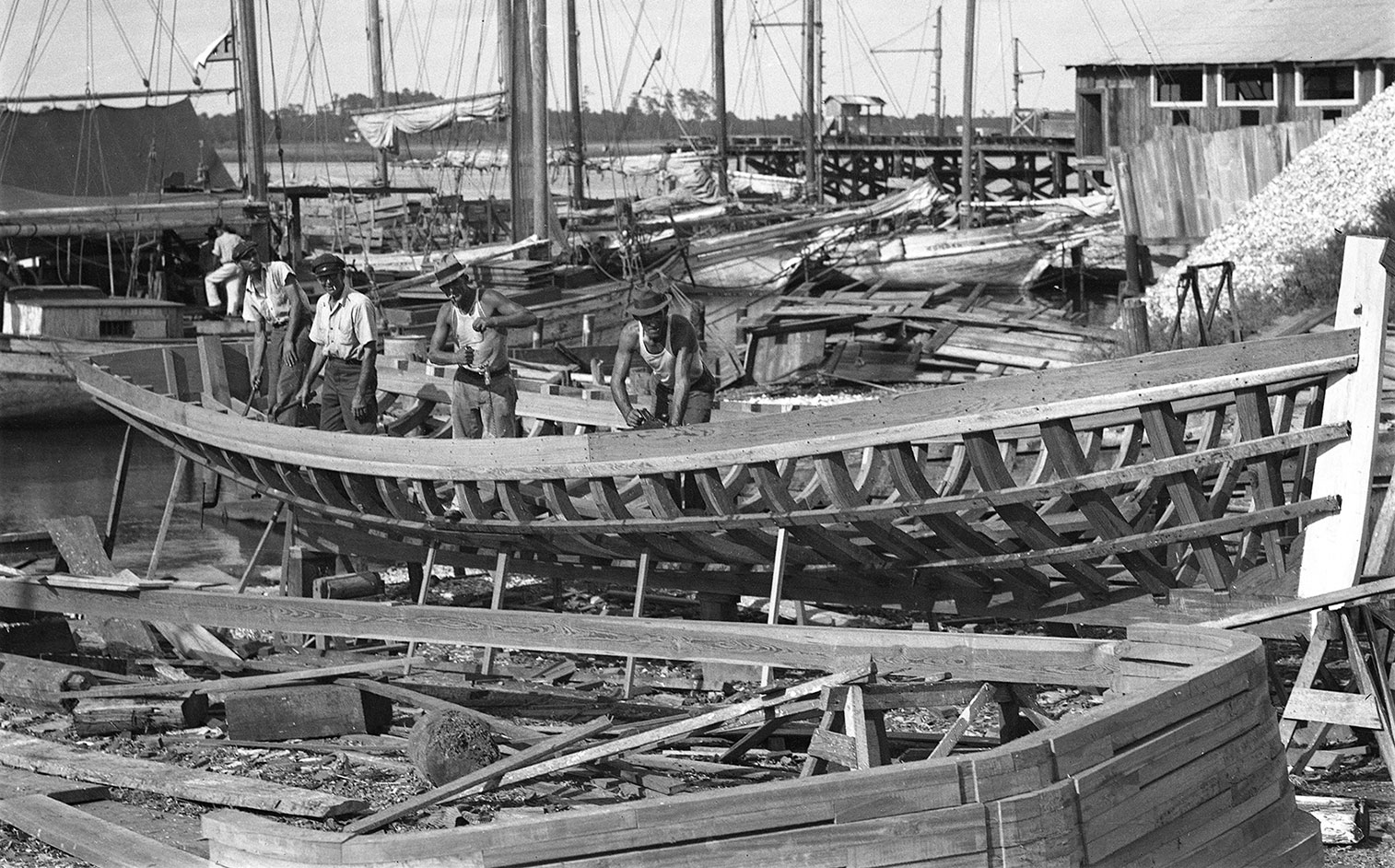
The waterfront of Biloxi was crowded with boatbuilders and fishermen, including what is identified in this undated photo as the Kelly-Galle boatyard.

The Back Bay boatyard in this photo is unidentified, and the year unknown. By the late 1800s, many Biloxi boatbuilders were skilled immigrants who had learned their fishing and boatbuilding in Croatia.

Open-air construction was common in Biloxi, and the city’s sheltered Back Bay waterfront, on the north side of the peninsula that Biloxi occupies, was a favored area for founding boatyards.

The luggers emerged in the last half of the 19th century, and despite their rigs and the rapid adoption of engine power, people continued to call them “luggers” even after sail was abandoned.

With a lugger, two men could dredge for oysters or run a trawl from an affordable boat; luggers largely displaced the larger schooners that had been owned by canneries.

Oystering was a major industry for Biloxi, which had large cannery operations, but luggers were also used as shrimpers, especially with the advent of otter trawls in about 1914.

The heavily laden EUSTIS McMANUS was built in 1936 by Tony Jack Covacevich, son of Back Bay Croatian-American boatyard founder Jacky Jack Covacevich.