
 Jill Burley
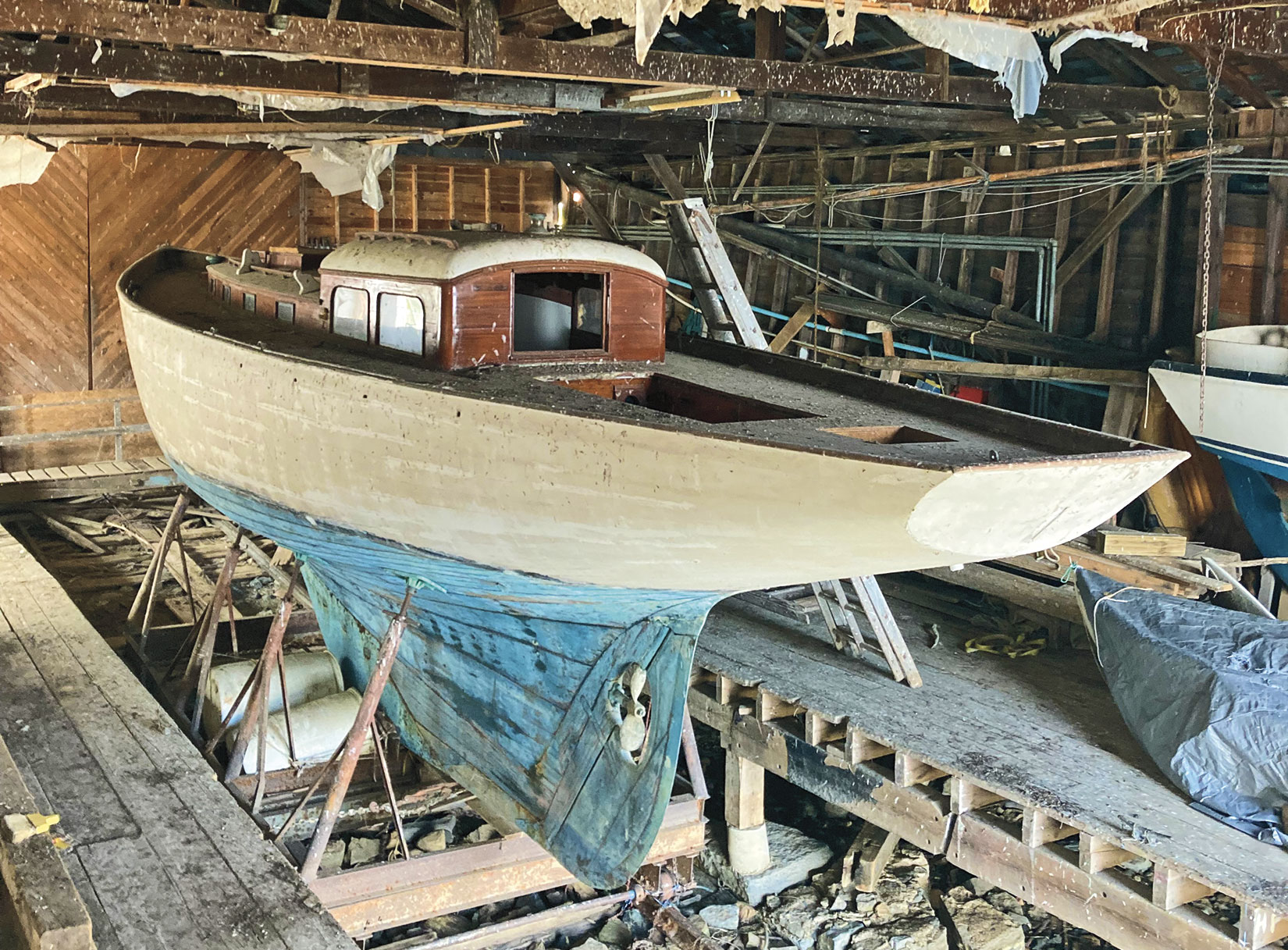
CIRRUS, a 1939 Sparkman & Stephens Voyager sloop, has been stored in a Lake Champlain boathouse in New York for many years.
For legendary 1930s boatbuilders such as George F. Lawley & Son, building several boats to the same design brought the unit cost down and, in theory, boosted sales, which helped the yards recover from the Great Depression. Another sign of the changing times, besides such “standardized” offerings in both power and sail, was the push toward family cruising; instead of shouldering the salary of a paid hand, the owner and his family took on their boat’s entire operation and in some cases the maintenance as well.
The Sparkman & Stephens Voyager design, despite being a step up in size and comfort from her builder’s smaller standardized sloop called the Weekender, never achieved widespread popularity. It was a bit large for coastal cruising, and its galley was forward of the mast and adjacent to a forecastle laid out for a paid hand’s residence—the old-school layout. Nevertheless, as the Burley family demonstrated over a half century of use, CIRRUS and her sister Voyager-class sloops and yawls with their comfortable, aft-placed owner’s staterooms and separate entrances still made fine family cruisers and racers. Drawings should be available from Mystic Seaport Museum.
 Jill Burley
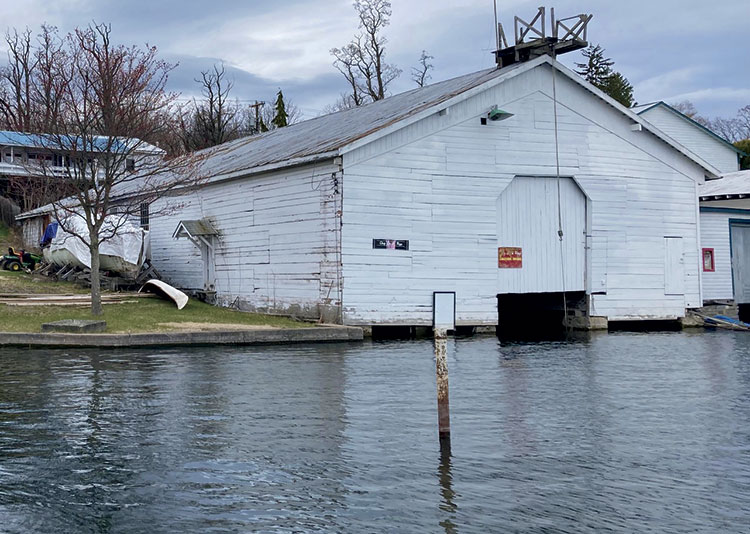
The Lake Champlain boathouse itself is also on the market.
Launched originally as KATHMAR for David Sloss of Detroit, Michigan, this boat moved to salt water for a couple of decades after World War II before the Burleys moved her in 1968 to Lake Champlain, where she still resides. “Residing” in her case means being stored for more than 20 years inside a boathouse, where repairs and upgrades were started but never finished. The planking remains in place, however, and she appears sound enough for launching from the railway that she’s on and to be floated on her own bottom (with air-bag flotation and the bilge pumps running) to the nearest Travelift.
 Jill Burley
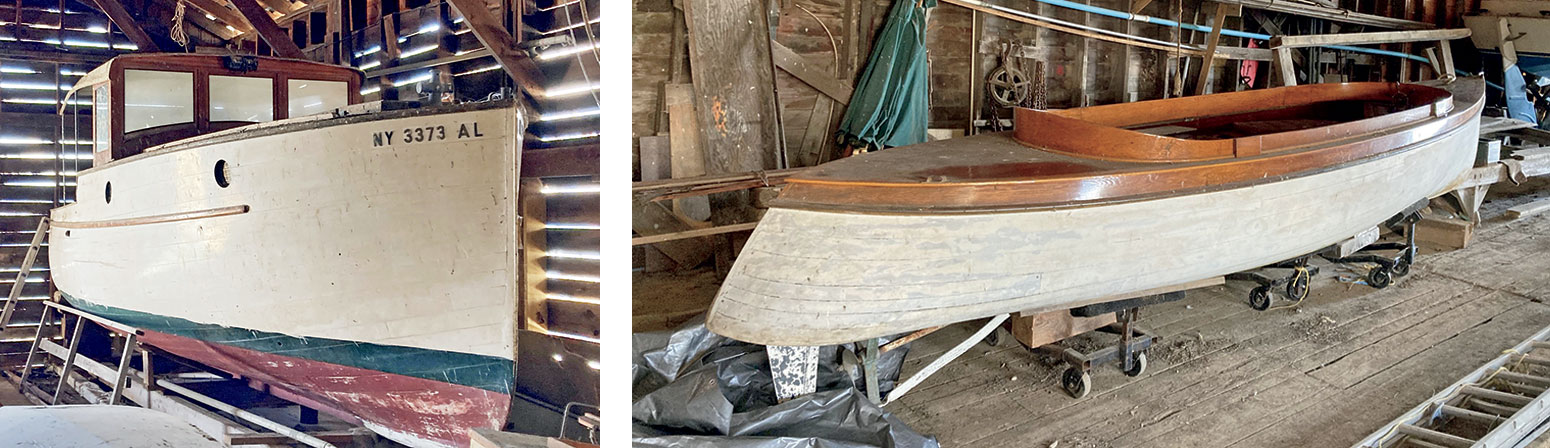
CIRRUS’s owners have many other boats also looking for new homes—including a 1927 Elco 26’ power cruiser (left) and a Fay & Bowen 26’ double-ended launch of 1906 (right).
Yes, CIRRUS must be moved. She’s the biggest item in this “barn find,” and the waterfront barn, aka boathouse, she’s in is on the market, as are the remaining boats within it: a 34′ Matthews power cruiser of 1910; a 26′ Elco power cruiser of 1927; a 22′ Fay & Bowen double-ended launch of 1906; another Fay & Bowen, a 26′ “Special” launch; an Adirondack guideboat; an Old Town canoe of 1935; a 12′ Penn Yan cartopper dinghy; and a few more. These other boats also might be of interest, as might the entire Essex, New York, waterfront setup, contents and all. Restoring what’s there could surely fill one’s retirement years!
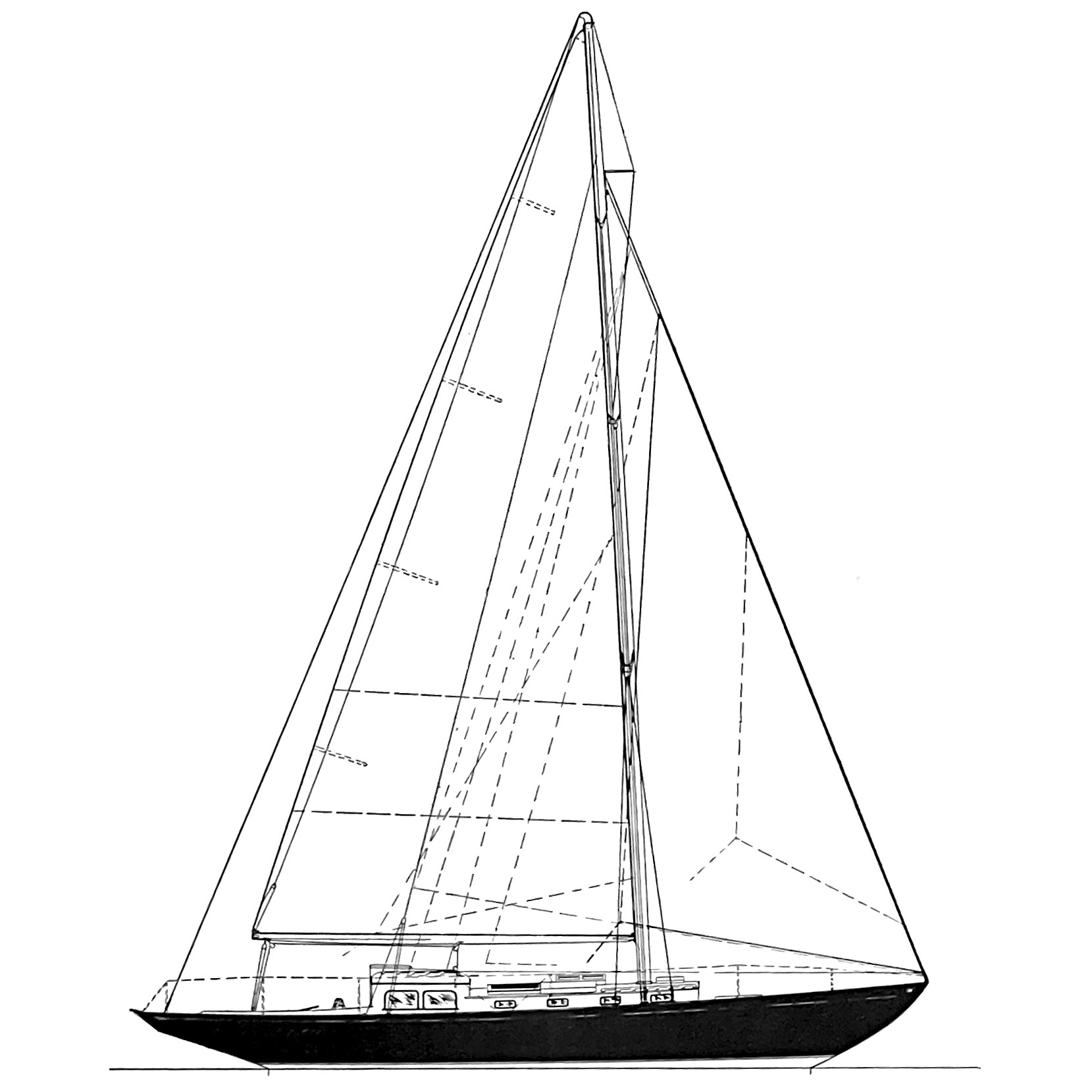
CIRRUS Particulars
- LOA: 44′ 3″
- LWL: 30′ 3″
- Beam: 10′ 7″
- Draft: 6′ 3″
- Sail area: 825 sq ft
- Designed by: Sparkman & Stephens, Inc.
- Built by: Geo. F. Lawley & Son, Neponset, Massachusetts, 1939 (Hull No. 1150)

Maynard Bray is WoodenBoat’s technical editor.
For more information or to make an inspection, contact Jill Burley at jillb@burleypartnership.com or 802–793–5305.