
 WoodenBoat School
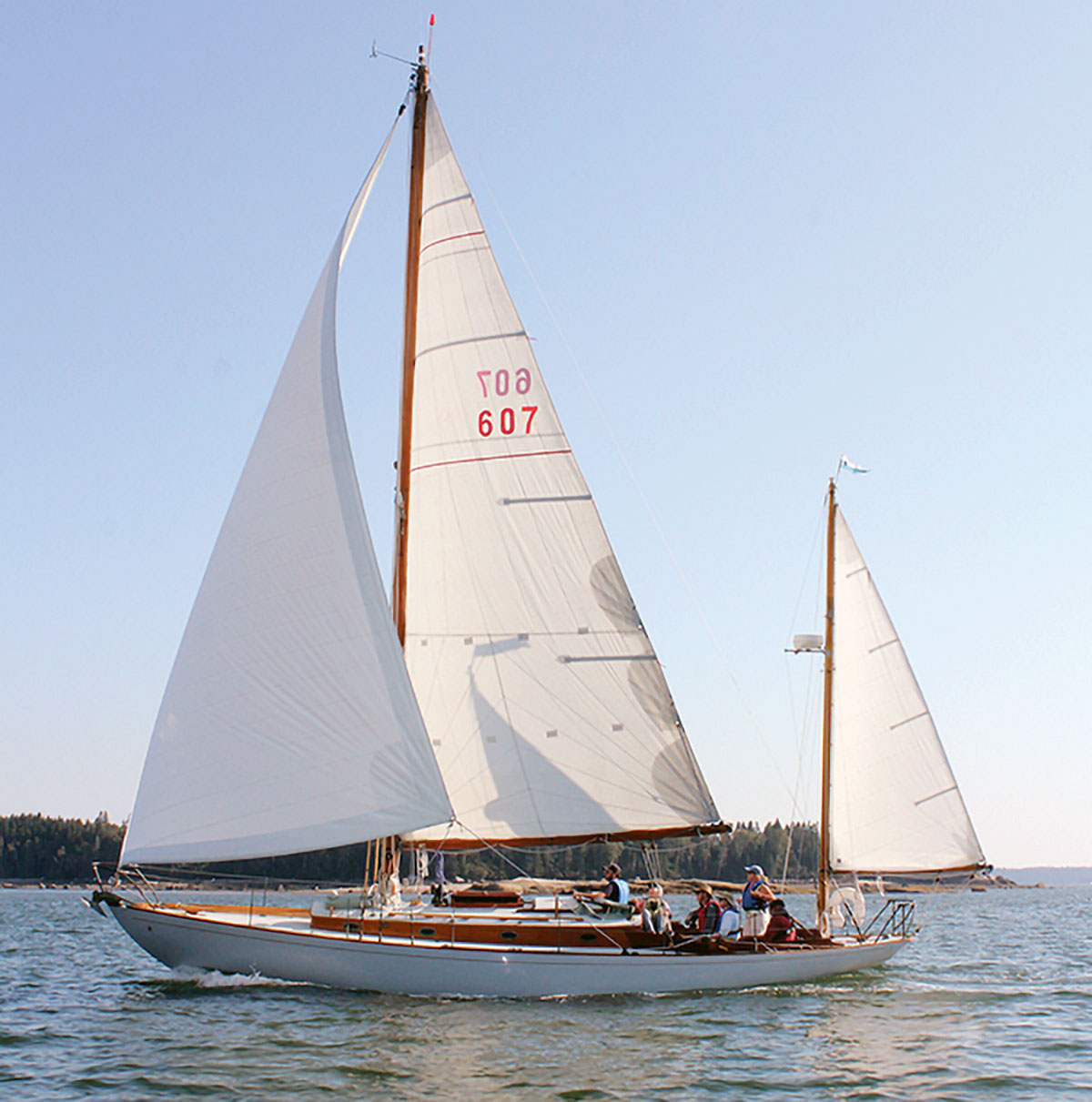
Queene Hooper Foster has used her Concordia yawl, MISTY, to teach sailing and cruising classes at WoodenBoat School for 15 years.
Waldo Howland broke records when, between 1950 and 1966, he imported and sold almost 100 brand-new, German-built yachts designed for the Concordia Company in Massachusetts. These Concordia yawls, as they were called, were bargain-priced and of superior construction, and they not only won races but also proved to be perfect for family cruising. The majority are still dearly loved and sailed by owners who value simplicity and aesthetics over shine, systems, and technology. Yet as they approach their seventh or eighth decade, major work lies ahead for those Concordias not already upgraded. Repairing and maintaining such perfectly put-together boats is costly—and passion, not economics, drives that bus.
There’s lots to be passionate about. Their beauty alone will stop you in your tracks. Elegant functionality shows inside and out. Belowdecks, you’re surrounded by carefully selected pieces of knotty pine and locust, showing off their grain through layers of satin varnish. Real wood—no veneer, plastic, or plywood—entertains your eye. Interiors are cozy and soothing, the perfect place to be in any weather.
Here’s what my friend Queene Hooper Foster, a Concordia owner, says in tribute to these wonderful yawls:
Why I Love the Concordia Yawl
I know from nearly 30 seasons of Concordia-yawl ownership that it is not only the up-close gleam of brightwork that brings the joy of ownership, or even the harmonious hull lines. Fine varnish may be a marker of a classic yacht, but it is also the definition of superficial and is no comfort in a Gulf Stream squall.
I learned how to be a skipper on a Concordia and how to navigate as if my life depended on it. I learned to race, competing in Newport-to-Bermuda races and around the buoys in classic-yacht regattas. My Concordia yawls also taught family and friends how to read the wind, calculate the tides, and be at home on the watery world.
My current Concordia, MISTY, No. 66 of 1959, has proved to be the very finest of sailing instructors, and the students from my 15 years of teaching at WoodenBoat School in Brooklin, Maine, might agree. For example: how do you set a mizzen staysail? Try it, and the boat will show you just how it works.
Concordia yawls do this and much, much more, because they are the product of decades of deep knowledge and experience, developed by a collection of some of the finest American sailors. Waldo Howland’s heritage stretches back to 19th-century whaling—the Howland family whaleship was named CONCORDIA, which gave the famous yawls their name. He worked with Ray Hunt to develop a well rounded racer-cruiser yawl, a rig he favored by experience. Hardcore skippers have added to their legacy, for example by winning numerous Bermuda Race trophies. More important, however, are the families who continue to make new sailors out of young kids by spending days and weeks together out on the water.
Although I’ve put an oversized portion of my life’s savings into the ownership of Concordias and other classic boats over the years, those numbers are now forgotten when weighed against the adventures shared with family and friends. Years of ownership of classic sailboats have repaid me many times over!
 Maynard Bray
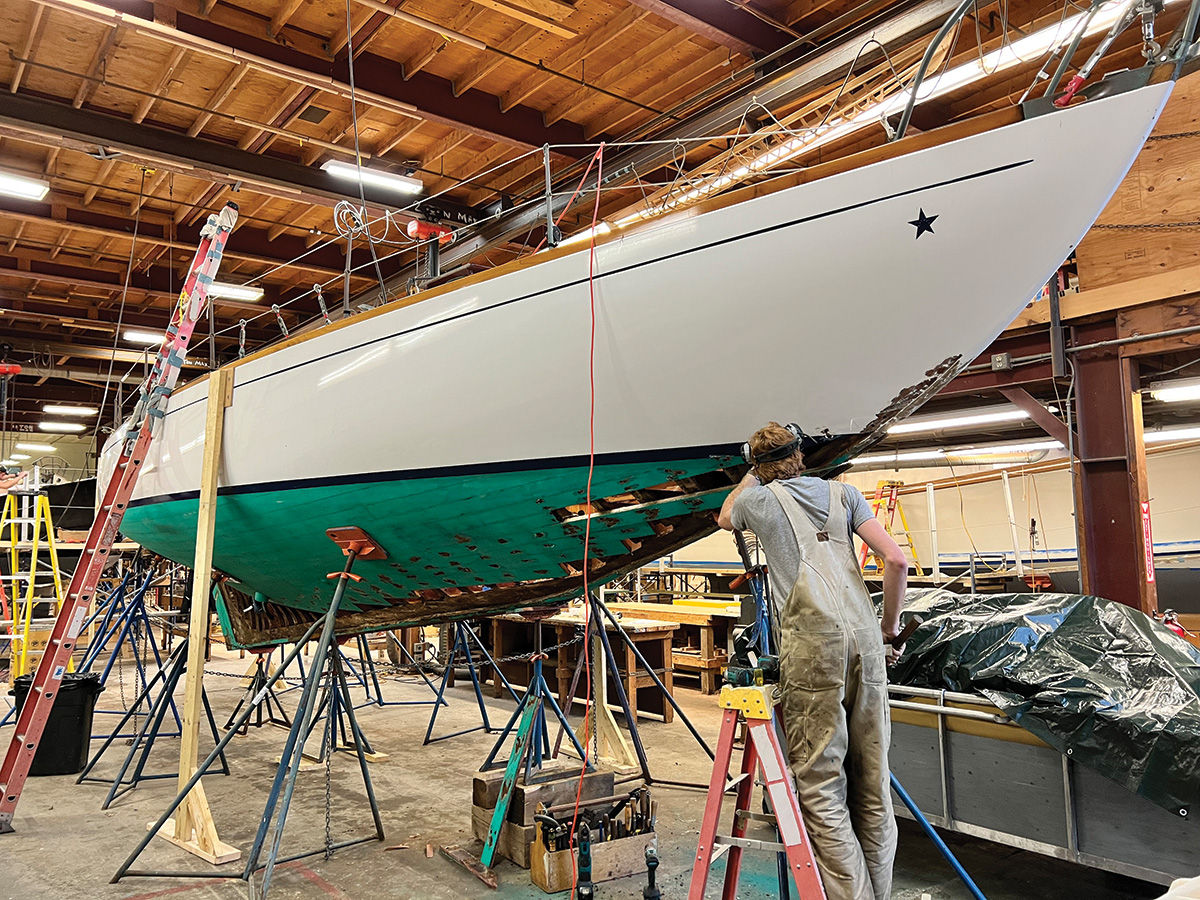
MATINICUS, built in 1960, will go for free to a new owner with the wherewithal to complete a timely restoration. She lies at Rockport Marine in Maine.
I urge you to learn about Concordia yawls and to consider acquiring one. There are loads of good books about them, especially Howland’s A Life in Boats: The Concordia Years (Mystic Seaport Museum, 1988). Concordias have been written up in many articles, including mine in WB No. 80. There are numerous museum resources, among them a glorious 15′ model at the New Bedford (Massachusetts) Whaling Museum. In
addition, all 76 issues of the owners’ association magazine, The Concordian, can be viewed on the Concordia Company website,
www.concordiaboats.com. The website presents a rundown on each and every yawl and shows 16 currently for sale by a variety of brokers and for a range of prices, including four “restoration candidates” requiring complete rebuilds. And also consider the Concordia yawl MATINICUS, which
Rockport Marine in Maine (info@rockportmarine.com) is offering, free, to a person willing to complete the needed work in a timely fashion. 
Maynard Bray is WoodenBoat’s technical editor.