
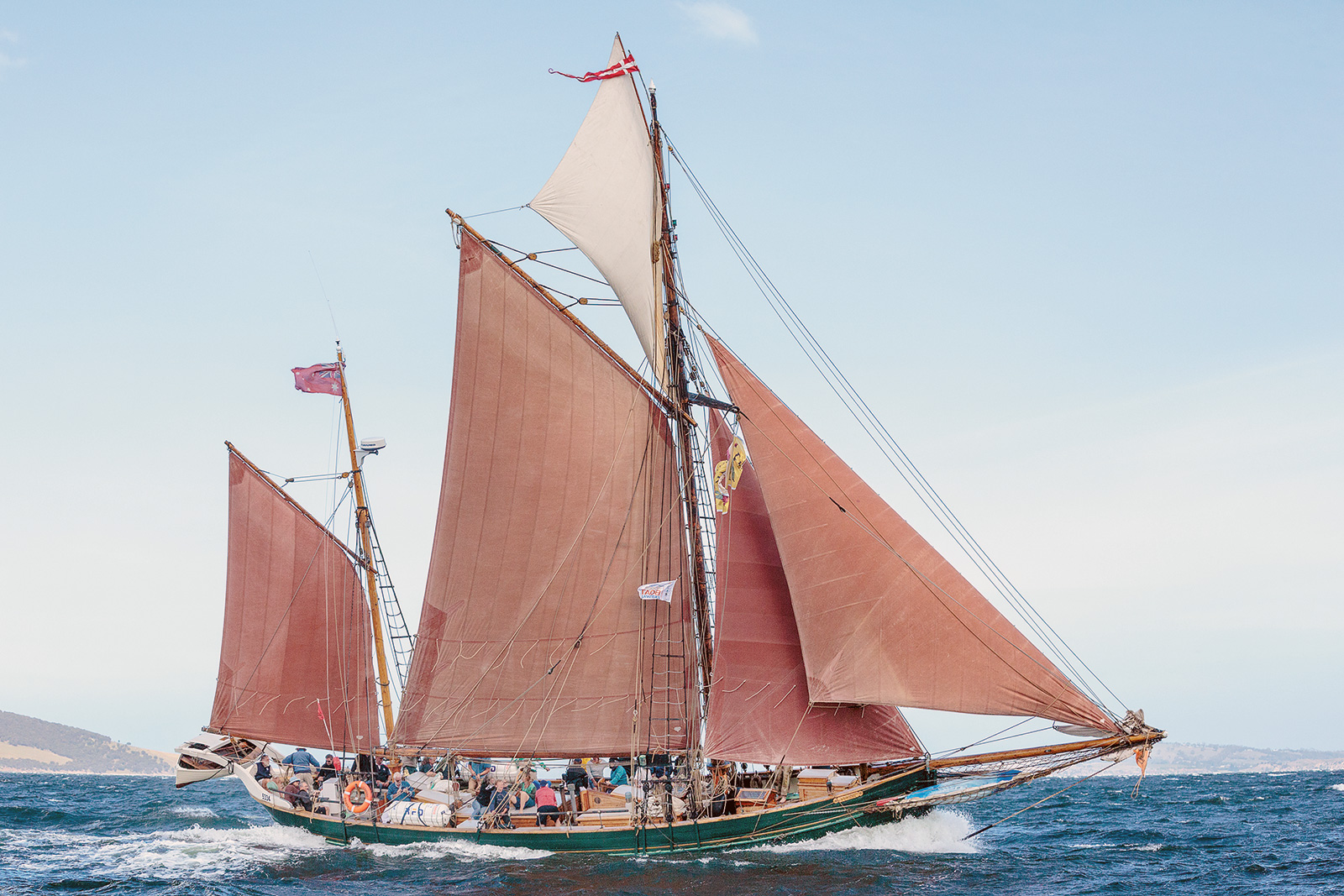
 Yukon Tours
David Nash and his family rebuilt the 1930, 54-ton ketch YUKON between 1997 and 2004. Four years after completing that project, they resolved to sail the boat around the world. That voyage would include a years-long stop at the Australian island state of Tasmania.
In 2008, my wife, Ea, and I, along with our sons, Kristopher and Aron (eight and five at the time), decided to circumnavigate the globe. I had been in Denmark for 16 years, during which time we’d restored our 54-ton, 60′ ketch, YUKON (see WB No. 220). Originally named ELLY, YUKON was built of oak on oak in Denmark in 1930. She was launched with a 67-hp auxiliary diesel engine, a member of the inaugural generation of auxiliary Danish fishing trawlers called hajkutter, or shark cutters, in deference to their effectiveness at catching fish. From 1997 to 2004, we had thoroughly rebuilt her from the waterline up.
A world voyage was an exciting commitment that required a significant change from the life to which we’d become accustomed. At the time, we had an old, partially restored farmhouse on the island of StrynØ and a thriving charter business on our Danish home waters. But, after six seasons of charter life, a dull familiarity had begun to seep in. We wanted something more, given the personal and financial investment our family had made in YUKON. I recall saying “it seems logical,” when one owns a vessel of this tonnage and design, to want to cross an ocean or two in her. Otherwise it would be an opportunity missed and a regret we didn’t want.
We weren’t strangers to such voyages and lifestyle: Ea had crossed the Atlantic a few years before we married in 2000. Likewise, I had made several ocean crossings in traditional vessels and been a mate in my native Australia on the 200-metric-ton sail-training brigantine ONE AND ALL, and had also done my shipwright apprenticeship during her construction. We were both aware of the joys and challenges of long passages and wanted to give our two boys the chance to experience the world as mariners, with no airports. They would literally earn their miles, and sailing would give them a rare connection with the planet. And so we decided to go.