
Table of Contents
NEWLYN – A FISHING PORT ON THE WESTERN APPROACHES
By Mike Smylie
Newlyn in Cornwall, has grown from a remote medieval village to a modern port of prime importance to the UK’s fishing industry. Its past has been moulded by the seasonal movements of fish and the intrusion of competitors and bureaucrats. But what of its future? The author looks at the effects of changing policies.
‘THE BEST THING WE COULD SEE’
By John Rousmaniere
The New York photographers of the grand era of yachting did more than simply take beautiful photographs. They created a fascinating and tangible record of yacht design and technology. The author studies the works and methods of four of the most prestigious photographic artists the yachting world has ever seen.
THE SALMON’S KINGDOM NET FISHERIES OF NORTHUMBRIA
By Adrian Osler
For many centuries men have fished for salmon in the waters of Northeast England from small open boats. Inevitably falling stocks and rising legislative interference has seen the trade plummet from its heyday in the late nineteenth century but, against the odds, cobles are still to be seen shooting their nets off the coast of Northumbria.
SAILING WITH VIKINGS
By Phil Wood
Thanks to archaeological remains we have a strong and detailed record of Viking ships – their construction, the materials used, even the purposes for which they were built. There is, however, less reliable evidence relating to how they were sailed. The author explores contemporary artifacts and latter-day Scandinavian boat types to understand how the Vikings used their remarkable vessels.
THE CHINCHAS AND THE GUANO RUSH
By Richard J. King
Some 10 nautical miles off the coast of Peru, Las Islas Chinchas were the centre of a nineteenth-century boom in merchant shipping traffic. They were also the brutal and often fatal destination of imported workers and saw the near-demise of several species of birds. The reason for all the activity was the international exploitation of a natural product – seabird faeces.
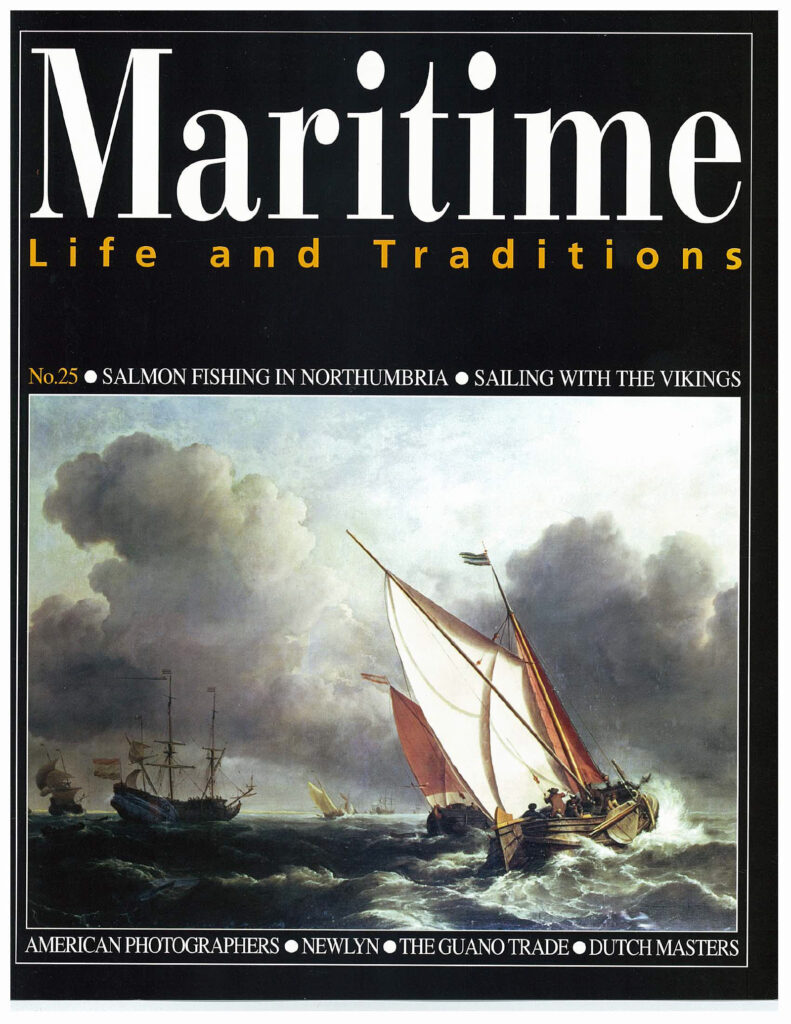
FROM VROOM TO VAN DE VELDE
By Ron J.W.M. Brand
In the second half of the seventeenth century Dutch marine artists travelled across the North Sea to settle in England. They were welcomed by society and their work was highly prized, even to the extent of enjoying royal patronage. Looking at the works of the van de Veldes and others the author considers the lives, techniques, and influences of these great masters.